





Brass Altar Candles
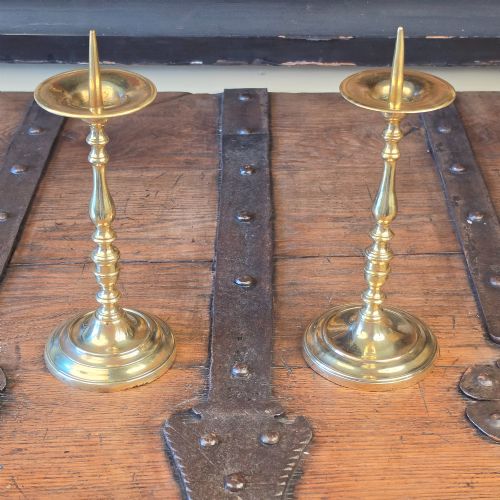
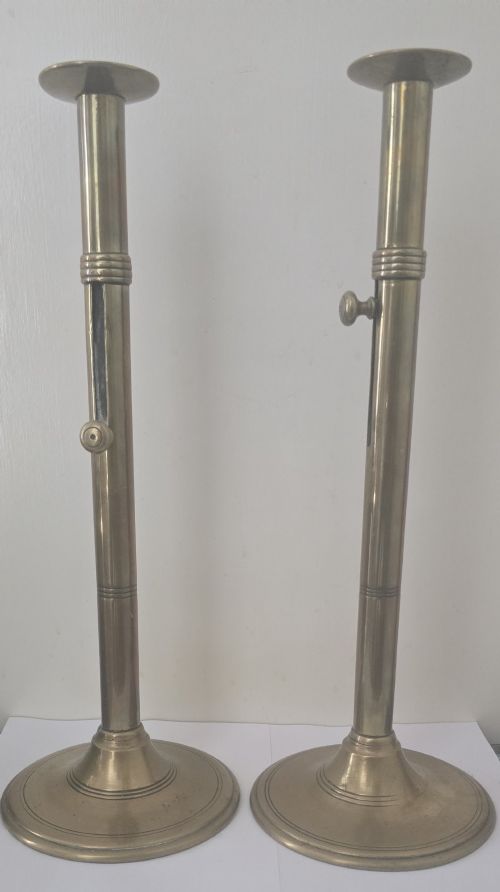
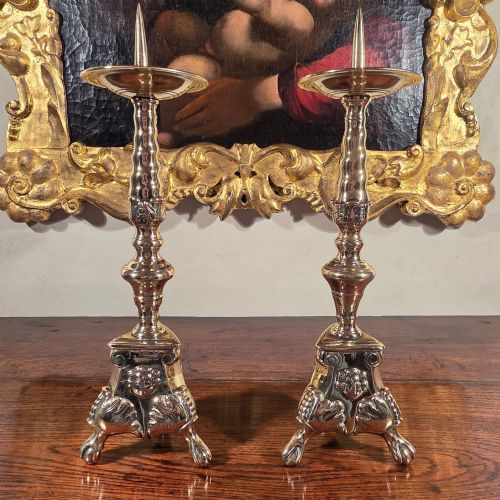
Brass altar candles materialise as tall, imposing ecclesiastical candlesticks and pricket sticks designed for churches and chapels.
Brass Altar Candles
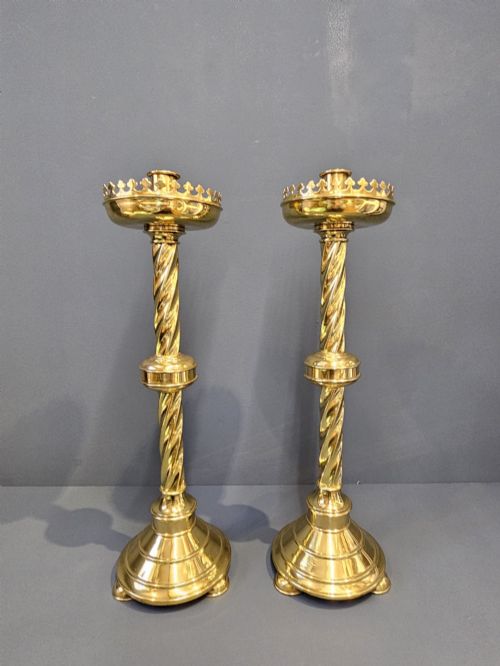
Brass altar candles bring ecclesiastical presence into domestic spaces through heavy, towering forms originally cast for religious settings. The majority of pieces met here belong to the Victorian era and the nineteenth century, often bearing the distinct architectural lines of the Gothic Revival style.
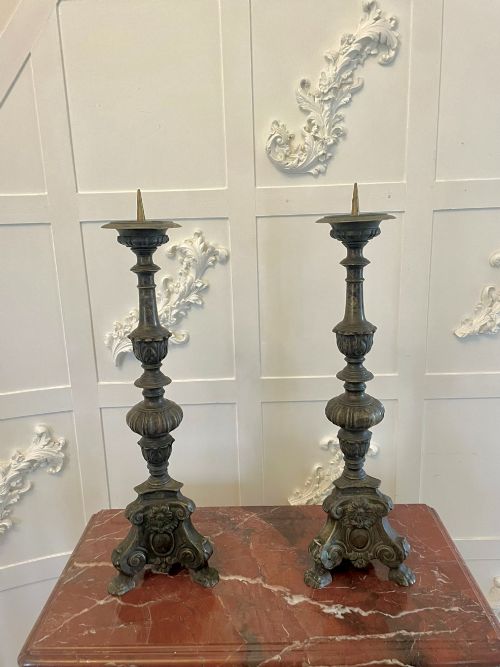
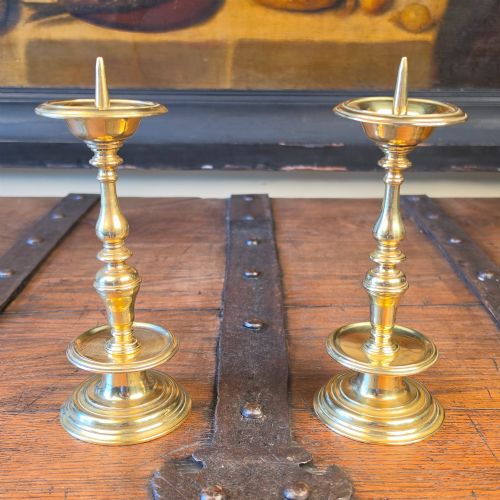
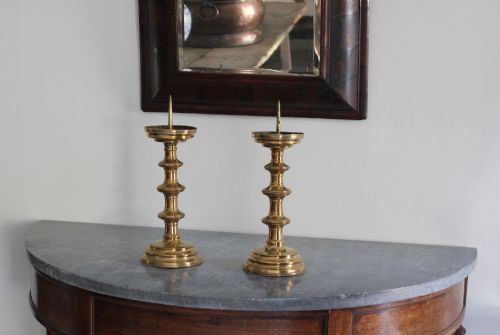
Buyers encounter standard candlesticks alongside pricket sticks, which feature a sharp metal spike designed to hold large wax candles rather than a socket. Alongside brass, listings include examples incorporating bronze, gilt brass, and combinations with oak or wrought iron.
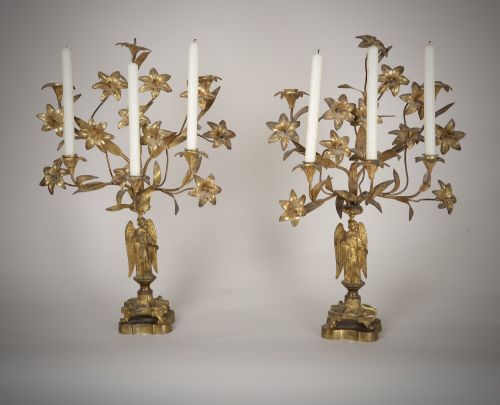
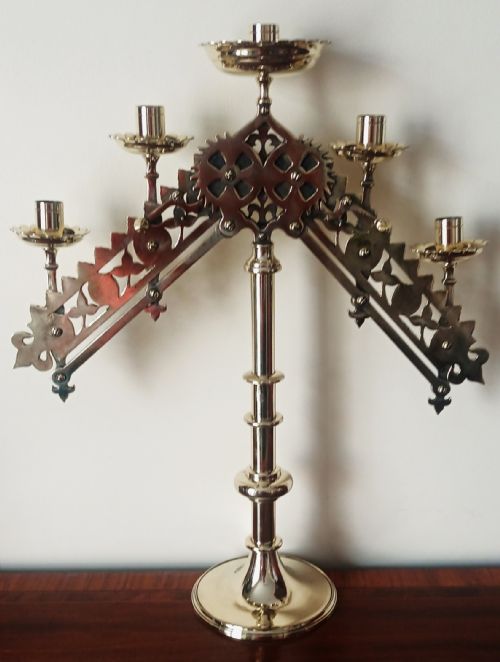
Forms stretch from tall church candlesticks and candelabra to converted table lamps and standard lamps. Pieces span periods from the seventeenth century and its revivals up to the early twentieth century, including Amsterdam School and Arts and Crafts interpretations.
How They Were Made
Foundry work relies on metal casting, producing solid brass and bronze components that provide the substantial weight required for tall altar candlesticks. Workers combined cast sections with turned elements, threading components together or soldering joints to build up graduated columns.
Surface decoration involved chasing, engraving, and applying finishes such as gilding or ormolu to brass and bronze surfaces. Workshops also paired metal with turned oak, wrought iron, and painted details to achieve specific revival aesthetics.
Brass Altar Candles Retail Price Guide 2026
Typical asking prices for brass altar candles among the pieces listed under this phrase on Sellingantiques today, from the lower quarter to the upper quarter. They describe what is for sale here now, not the wider market.
Listings feature brass altar candles spanning from the seventeenth century to the 1940s, encompassing Victorian Gothic Revival and Amsterdam School styles.
What Varies in Quality
Mass and proportion dictate the standing of a piece, separating heavy, well-balanced church candlesticks from lighter domestic adaptations. The clarity of cast ornament, from crisp Gothic tracery to finely chased Corinthian capitals, marks superior foundry work.
Originality of components elevates a set, particularly matching heights in graduated groups and retaining period pricket spikes or side ejectors. The integrity of assembly and the depth of the metal patina indicate the care taken in the original workshop.
The Brass Altar Candles Glossary
- Pricket
- A metal spike on a candlestick designed to secure the base of a thick candle. This form predates socket candlesticks and remains common on church altars.
- Gothic Revival
- An architectural and decorative style drawing on medieval forms, featuring pointed arches, trefoils, and ecclesiastical motifs. It dominates nineteenth-century church metalwork.
- Ormolu
- Finely ground high-carat gold applied to a bronze or brass base using a mercury amalgamation process. It yields a rich, warm surface finish.
- Candelabra
- A branched candlestick holding multiple candles on separate arms. These pieces offer a wider spread of light than single sticks.
- Amsterdam School
- An early twentieth-century architectural and design movement known for expressive forms and organic use of metals like brass and iron. It represents a departure from strict historical revivals.
Brass Altar Candles: Frequently Asked Questions
What is a pricket candlestick?
A pricket candlestick uses a sharp metal spike at the top to impale and hold a candle, unlike standard socket holders. This design originates from medieval church lighting where large wax tapers required secure mounting.
These pieces were standard on altars and are commonly found in heavy brass or bronze configurations dating from the nineteenth century.
How do I date these candlesticks?
Dating relies on stylistic clues such as Gothic Revival tracery, Amsterdam School geometry, or Georgian ejector mechanisms. Construction methods, including casting marks and the method of joining components, also point to specific periods.
Comparing the base weight, proportions, and surface finish against known nineteenth and early twentieth-century examples helps narrow down the production era.
Were these used outside of churches?
While the heavy forms and pricket spikes were made for ecclesiastical settings, many find new purpose in large domestic rooms. Interior designers utilise their height and presence as decorative floor or table objects.
Some pieces have been professionally converted into table lamps or standard lamps while retaining their original brass columns.
What materials are used alongside brass?
Workshops combined brass with bronze, gilt brass, and ormolu to enhance visual depth and surface reflection. Listings also record pairings with turned oak, wrought iron, and painted wooden elements.
These mixed-material pieces often reflect specific movements like the Arts and Crafts style or Amsterdam School design.