




Bracket Foot Clock
A bracket foot clock is a portable timepiece designed to sit on a bracket or table, offering precision mechanics housed in rich timber cases.
Bracket Foot Clock
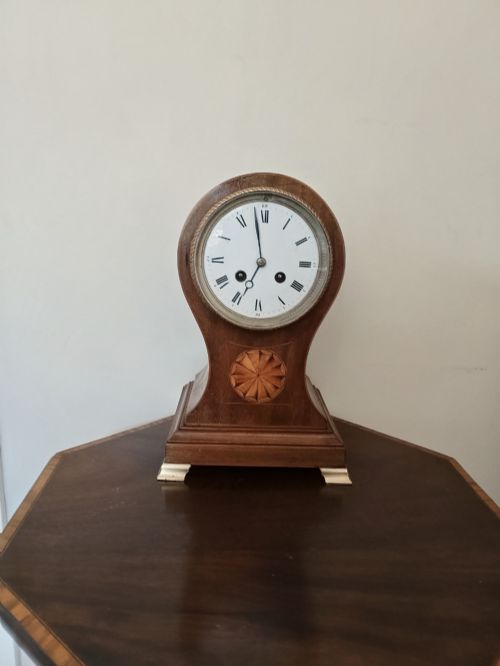
When you search for a bracket foot clock, you are looking at mantel and table timepieces housed in timber cases that often feature mahogany, ebony, or rosewood. The pieces on this page span the Georgian, Regency, Victorian, and Edwardian periods, including French and English workshops.
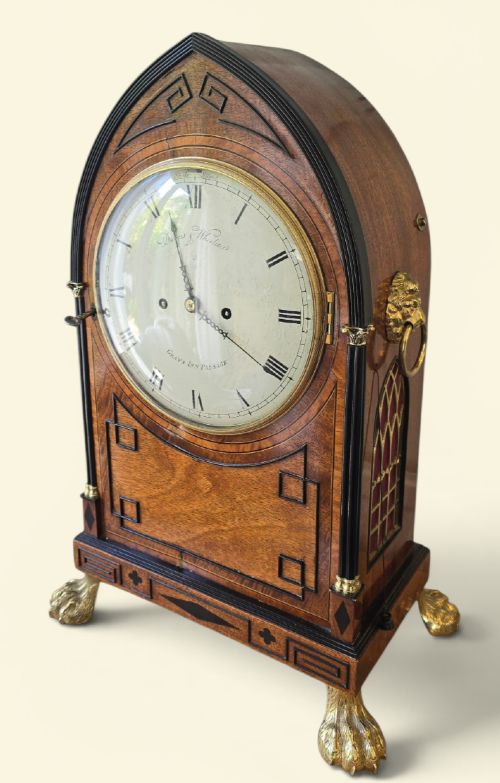
The forms range from small balloon styles and lancet-tops to break arch and library clocks. Most examples date from the nineteenth century, showcasing classical proportions and traditional dial configurations behind glass.
You will most commonly encounter mahogany cases fitted with brass details, enamel dials, and fusee movements. These domestic timepieces reflect the changing domestic tastes from the Georgian era through to the Edwardian period.
Materials and construction
The cases utilise dense timbers such as mahogany, ebony, and rosewood, sometimes accented with satinwood inlay. These woods provide a stable housing for intricate mechanical movements while displaying rich grain patterns.
Bracket Foot Clock Retail Price Guide 2026
Typical asking prices for bracket foot clock among the pieces listed under this phrase on Sellingantiques today, from the lower quarter to the upper quarter. They describe what is for sale here now, not the wider market.
Many a library clock was expected to keep ticking quietly while gentlemen debated politics in smoke-filled rooms.
Assessing the examples
The distinction between standard production and finer output lies in the crispness of the timber veneer work and the refinement of the brass mounts. Finer examples display meticulous attention to inlay and proportions, while simpler provincial pieces rely on plain timber surfaces.
Movement sophistication also dictates the standard of the piece, with twin fusee or striking mechanisms demonstrating greater horological ambition than straightforward timepieces. The integration of the dial, hands, and case reveals the maker's original intent and skill.
Bush of London·Desbois & Wheeler·Hyde of Salisbury·Louis Recordon·Joseph Jump of London·Leplastrier of London·Plumbly & Tupman
The Bracket Foot Clock Glossary
- Fusee
- A conical pulley used in spring-driven clocks to maintain an even pull as the mainspring unwinds. This device helps the clock keep accurate time throughout its run.
- Bracket clock
- A portable household clock originally designed to stand on a wall bracket to project sound more effectively. Over time, the term came to describe table and mantel clocks of this architectural form.
- Lancet-top
- A case shape featuring a pointed, gothic arch at the peak, resembling a lancet window. This silhouette is particularly characteristic of Regency and early nineteenth-century design.
- Break arch
- A dial or case top formed of a central arch flanked by small horizontal shoulders. This classical architectural profile appears frequently on Georgian and Edwardian clock faces.
Bracket Foot Clock: Frequently Asked Questions
What is a bracket foot clock?
A bracket foot clock is a portable timepiece housed in a wooden case, designed to sit on a table, shelf, or wall bracket. These clocks combine mechanical clockwork with decorative cabinet-making.
The examples on this page cover several periods, primarily utilising mahogany, ebony, and rosewood cases with brass and enamel details.
How do fusee movements work?
A fusee movement uses a conical pulley connected to the mainspring by a cord or chain. As the spring unwinds and loses tension, the chain moves to a wider part of the cone, maintaining consistent power to the gear train.
This mechanism was standard in better quality English table clocks to ensure accurate timekeeping between windings.
Where should I place my clock?
These clocks are designed for stable, level surfaces such as mantelpieces, sideboards, or dedicated table brackets. Keeping the clock away from direct sunlight and drafts helps protect the wood veneer and internal lubricant.
A steady surface is essential for the pendulum or balance wheel to maintain an even beat.
How do I wind an antique clock?
Winding requires a matching key inserted into the winding holes on the enamel dial. You turn the key gently until you feel resistance, taking care not to overwind the spring.
Different models have different power reserves, ranging from standard eight-day movements to daily timepieces.