
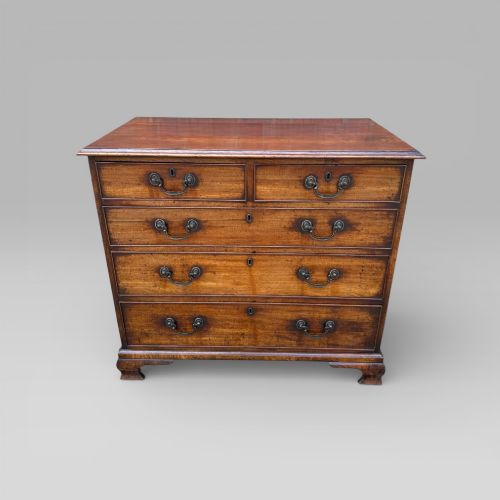
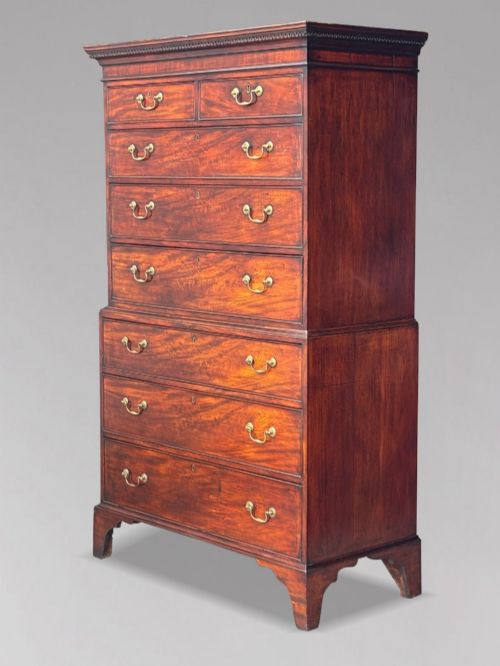
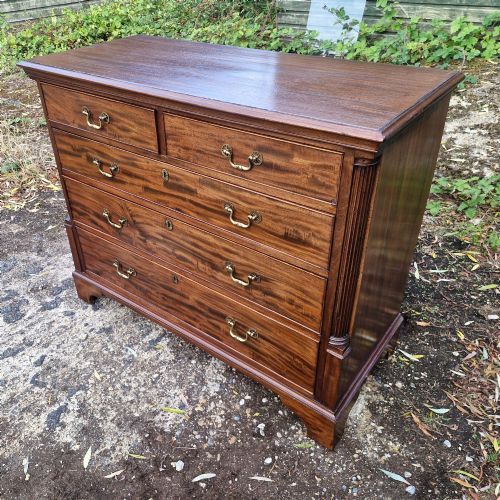
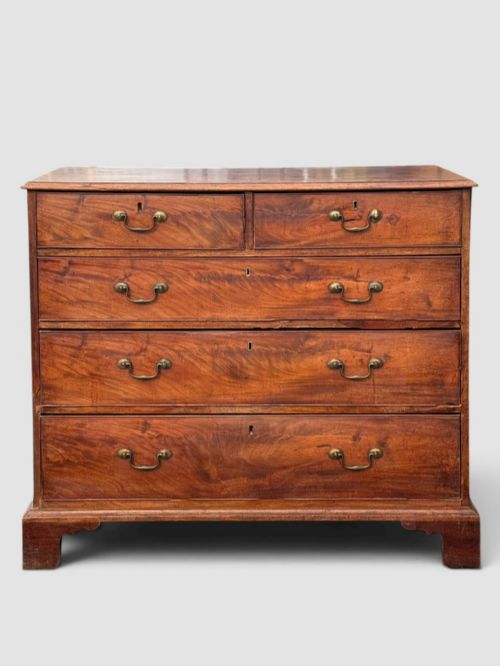
Bracket Feet Storage Chest
A bracket feet storage chest delivers solid proportions and timeless storage, uniting practical depth with architectural elevation.
Bracket Feet Storage Chest
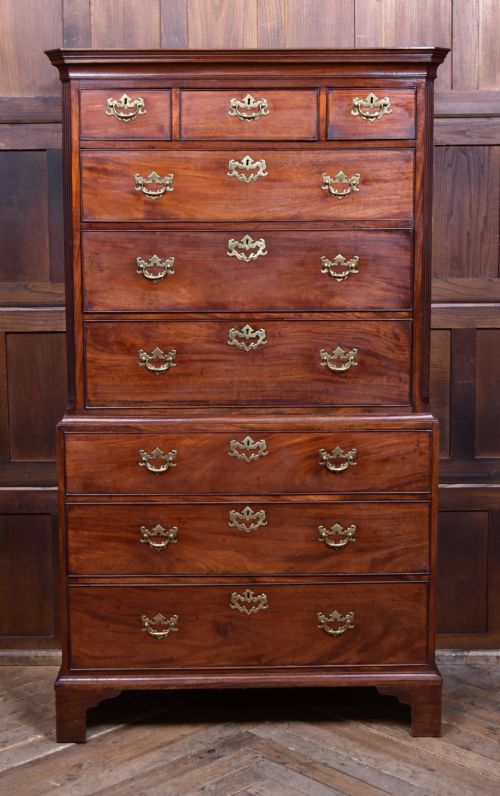
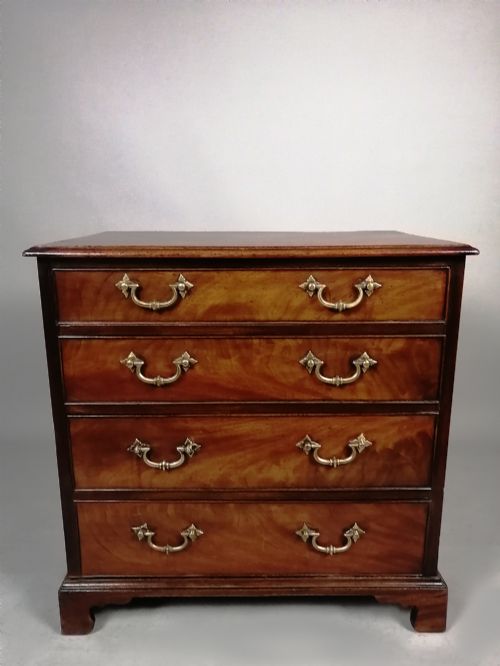
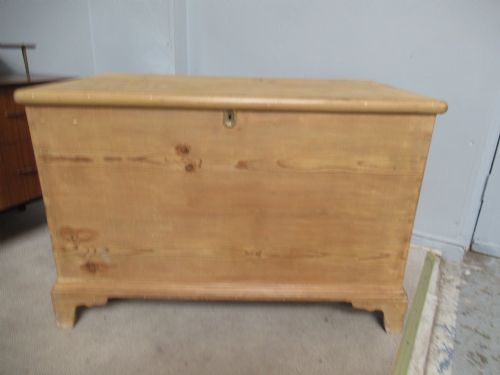
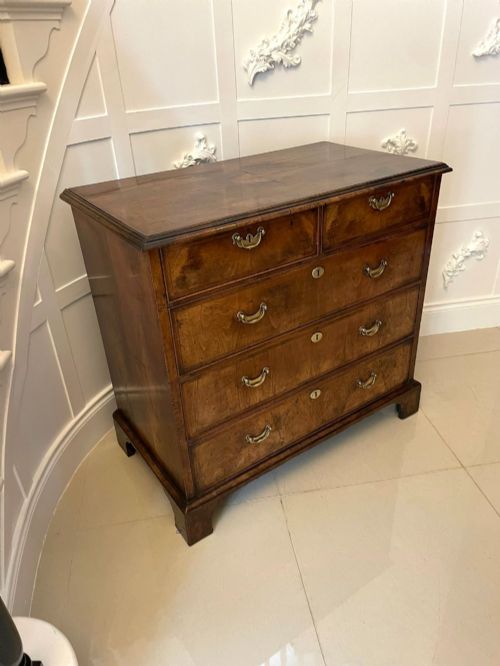
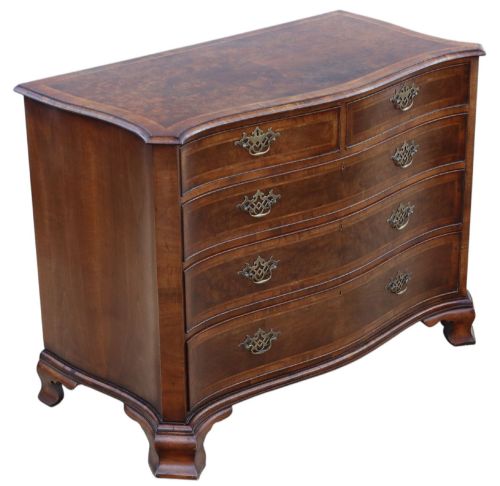
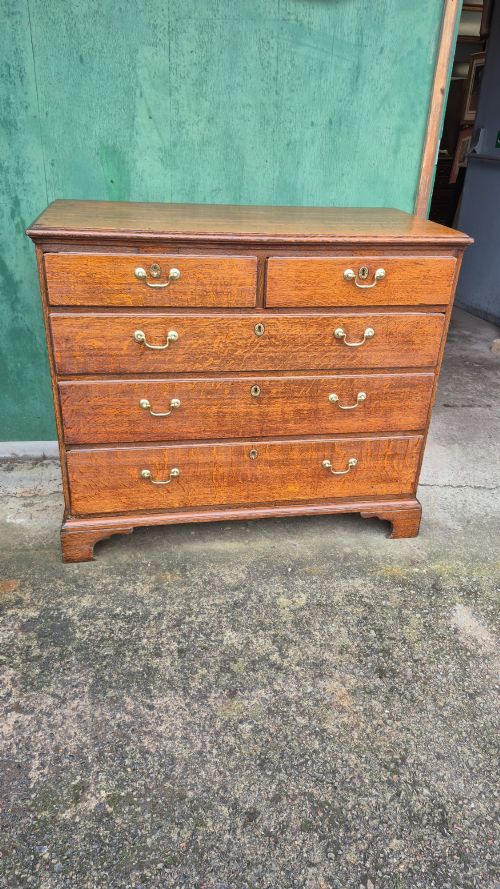
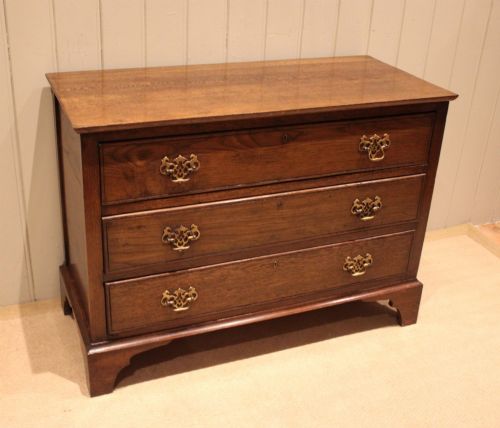
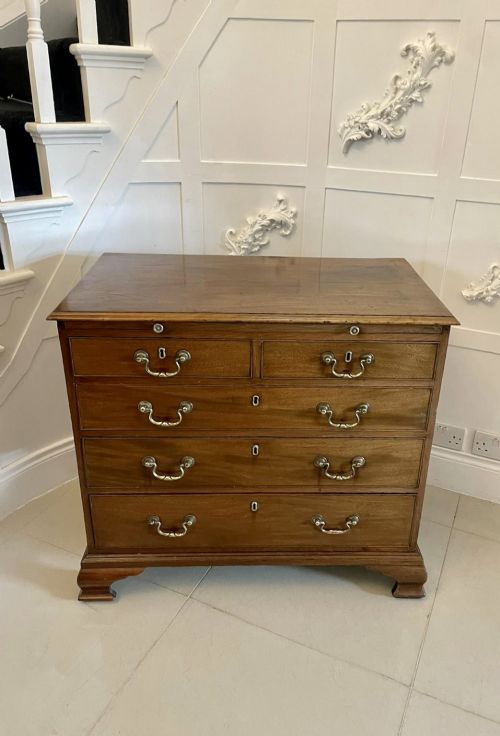
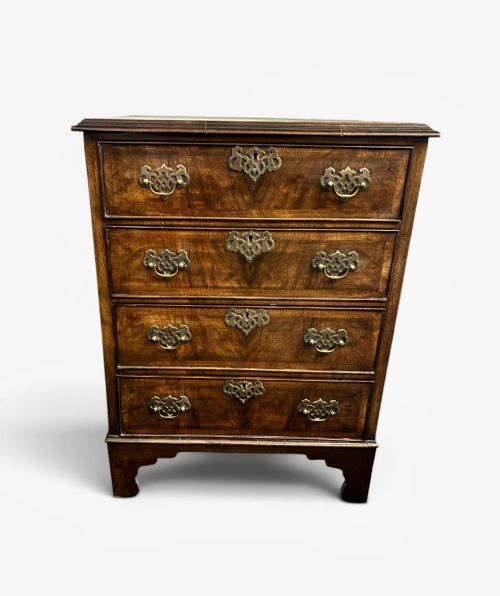
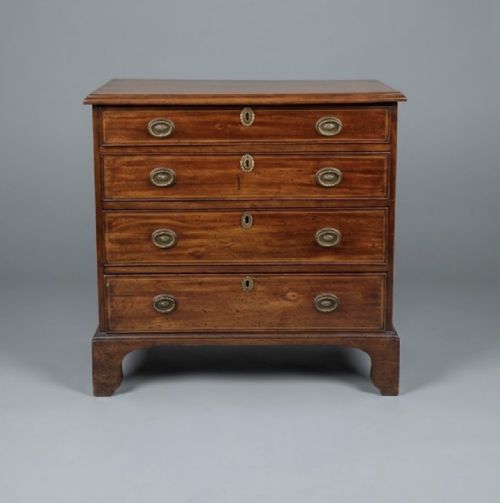
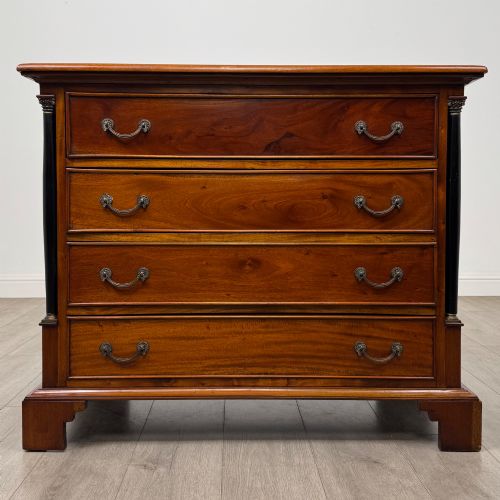
A bracket feet storage chest functions primarily as a chest of drawers, tallboy, or blanket box designed to raise a substantial timber carcase off the floor on shaped wooden feet. You encounter forms spanning the 18th century, Georgian period, 19th century, and Edwardian eras, alongside later revivals.
The materials span mahogany, oak, walnut, burr walnut, pine, cedar wood, and ebonised wood, often fitted with brass hardware. Pieces appear in various formats, including bedside tables, serpentine commodes, and chests of five drawers featuring brushing slides.
Materials and construction methods
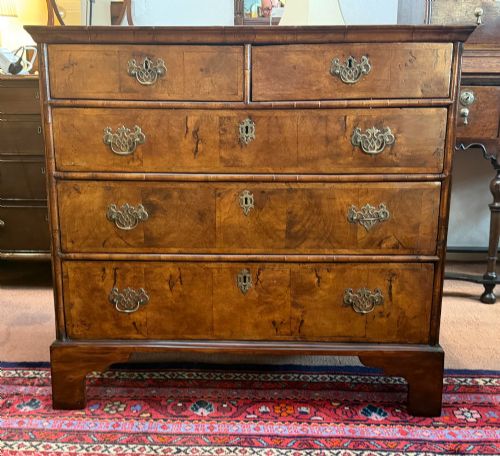
Cabinet makers utilised dense hardwoods like mahogany, walnut, and oak for the primary carcases, frequently embellishing surfaces with burr walnut veneers or crossbanding. Structural elements often rely on secondary timbers such as pine or cedar.
Joinery relies on traditional techniques to house drawers and secure the distinctive bracket feet to the base corners. Metal components like brass handles and escutcheons are integrated into the drawer fronts to complete the construction.
Listings feature 18th-century, Georgian, Regency, Victorian, and Edwardian periods alongside 1920s revivals.
Distinctions in quality and execution
The caliber of a bracket feet storage chest depends heavily on the selection of timber figure, such as highly figured walnut or well-matched mahogany grains. Superior examples exhibit precise crossbanding and harmonious proportions across smaller or serpentine forms.
J Moorcroft
The Bracket Feet Storage Chest Glossary
- Bracket foot
- A simple, corner-mitred foot shaped like a bracket, supporting chests and case furniture.
- Serpentine commode
- A chest of drawers featuring an undulating front line that curves inward and outward.
- Brushing slide
- A pull-out wooden shelf integrated above the top drawers, historically used for grooming or folding clothes.
- Tallboy
- A tall chest of drawers, often constructed as a chest on chest, maximising vertical storage capacity.
- Crossbanding
- A decorative border of veneer laid around the perimeter of a drawer front with the grain running perpendicular.
Bracket Feet Storage Chest: Frequently Asked Questions
What is a bracket feet storage chest?
A bracket feet storage chest is a timber case piece, typically a chest of drawers or blanket box, elevated on corner bracket feet. These items range from compact Georgian chests to larger Victorian and Edwardian examples.
They combine deep internal storage with raised architectural bases, utilising woods like mahogany, oak, and walnut.
How do I date a wooden chest?
Dating relies on observing timber choices, hardware styles, and overall construction methods. Pieces from the 18th century often feature dense mahogany or figured walnut, while later Edwardian or 1920s examples show different veneer patterns and secondary woods.
Hardware such as brass handles and the profile of the bracket feet also provide clear chronological markers.
Where should I place a storage chest?
These chests suit bedrooms, hallways, or living rooms where both surface space and concealed storage prove useful. Smaller versions function effectively as bedside tables or compact commodes.
Ensure placement avoids direct heat sources to protect timber carcases and delicate walnut or mahogany veneers.
What wood types are most common?
Mahogany and oak dominate the surviving examples, prized for their strength and durability. Walnut and burr walnut appear frequently on high-status decorative pieces with figured grain patterns.
Pine and cedar wood serve commonly as secondary timbers or for simpler blanket boxes and regional pieces.