

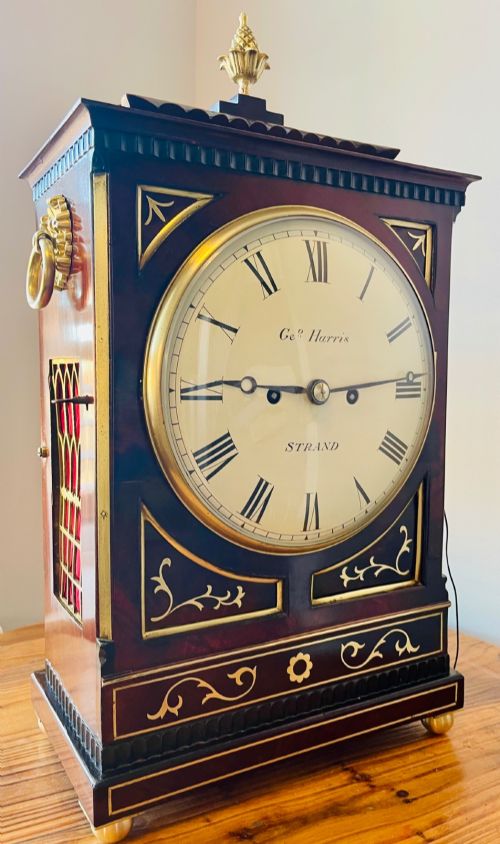
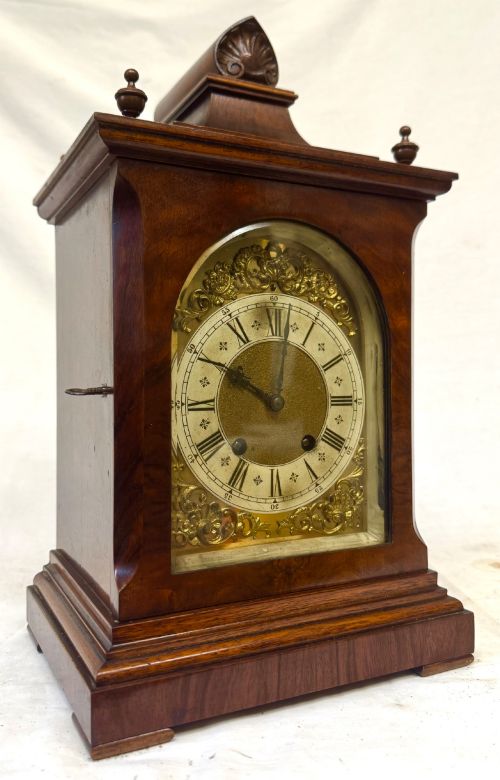
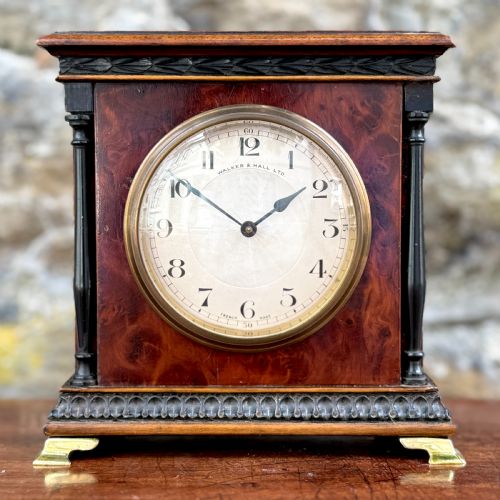
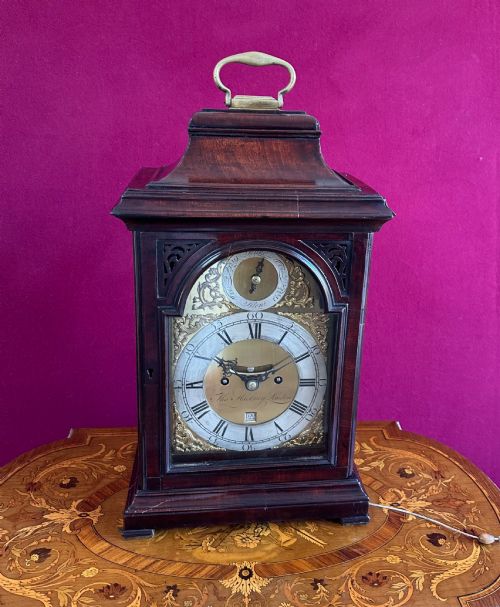


Bracket Clock Movement
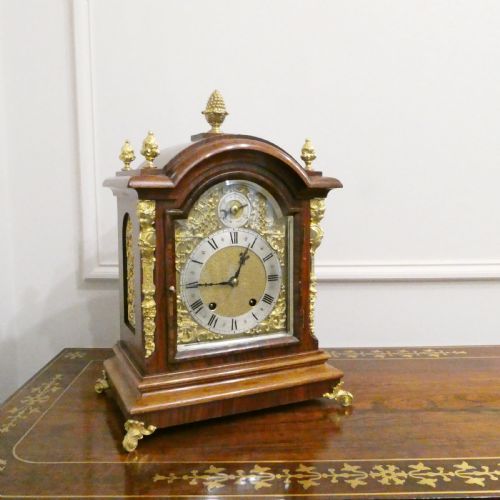
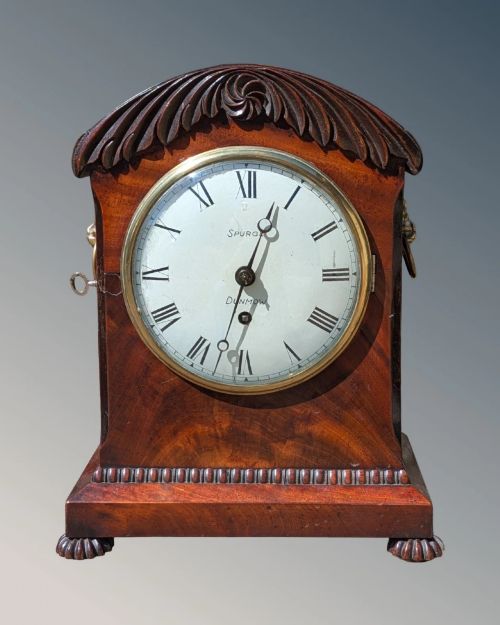
These bracket clock movement examples harness intricate brass and fusee mechanics inside timber cases, offering precise timekeeping alongside traditional craftsmanship.
Bracket Clock Movement
When you search for a bracket clock movement, you examine the internal driving mechanism and dial assembly designed for portable table clocks. These pieces span the eighteenth, nineteenth, and early twentieth centuries, reflecting changing domestic horology.
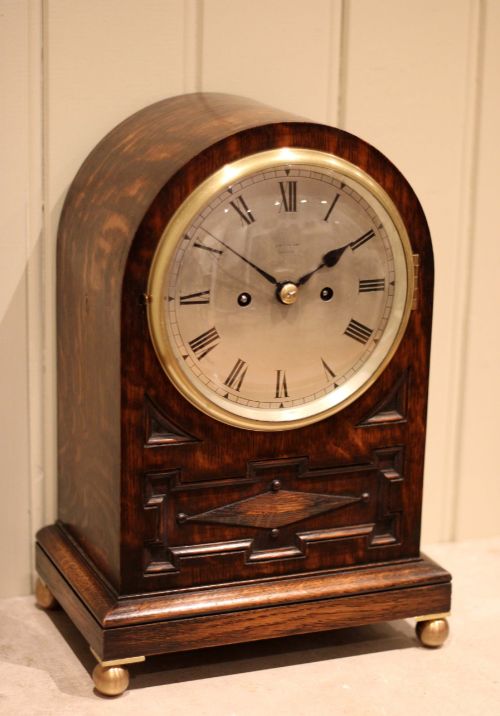
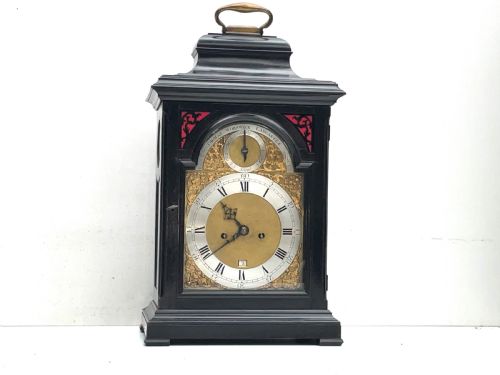
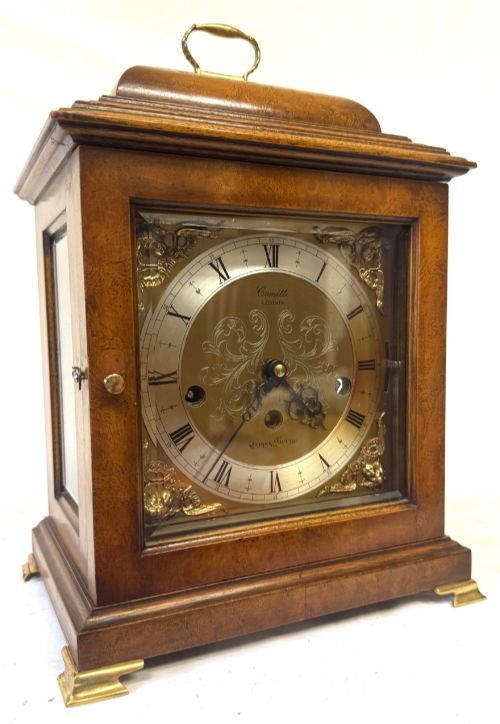
The versions most common on this page feature brass components housed within mahogany, walnut, oak, and ebonised wood cases. They include single and twin fusee configurations, alongside verge and anchor escapements.
Originating predominantly from English and continental workshops, these mechanisms range from simple timepieces to complex striking and musical variants. They represent the evolution of portable mechanical timekeeping across multiple decorative periods.
How they were made
Makers constructed these movements using brass plates, wheels, and gears, driven primarily by fusee and chain or cord mechanisms that equalised the pull of the mainspring. Dials incorporated silvered brass, enamel, or engraved brass plates, often protected by bevelled glass panels.
Enclosing these mechanisms required skilled cabinet work in mahogany, walnut, rosewood, and oak, occasionally embellished with ebonised wood or intricate marquetry. Cases frequently featured glazed side panels or five-glass library layouts to display the working train inside.
Bracket Clock Movement Retail Price Guide 2026
Typical asking prices for bracket clock movement among the pieces listed under this phrase on Sellingantiques today, from the lower quarter to the upper quarter. They describe what is for sale here now, not the wider market.
What varies in quality
Quality in these mechanisms rests on the precision of the wheel-cutting, the crispness of the engraving on the backplate or dial, and the complexity of the train. Superior examples incorporate intricate striking, repeating, or musical functions executed with fine tolerances.
Case construction similarly dictates value, separating standard production boxes from finely figured timber housings with gilt brass mounts and robust architectural proportions.
Comitti Of London·Lenzkirch·Walker and Hall·Schneckenburger·Dent·William Payne·W. Burton·Phillips Brothers·Winterhalder W & H·William Evans of Handsworth·Somersall London·Budgen Croydon·Chater & Son London·John Leroux London·John McGregor Wick·Hay London·Plumbly & Tupman London·Osborn of Bognor Regis·Edwards Of London·John Massey Strand London
The Bracket Clock Movement Glossary
- Fusee
- A conical pulley used in mechanical clocks to maintain an even pull as the mainspring unwinds. This device ensures more consistent timekeeping throughout the duration of the winding cycle.
- Verge escapement
- An early type of escapement mechanism that controls the release of the gear train using a crown wheel and pallet impulses. It is commonly found in eighteenth-century bracket clock movements.
- Twin fusee
- A movement layout utilising two separate fusee cones, one driving the going train and the other powering the striking or chiming train. This setup allows independent operation of time and sound functions.
- Five glass
- A style of table or library clock case featuring glass panels on the top and all four sides. This design provides maximum visibility of the internal movement from multiple angles.
- Striking
- A mechanical function that sounds the hours or quarters on a bell or gong. It relies on a separate train of gears released by a count wheel or rack mechanism.
Bracket Clock Movement: Frequently Asked Questions
What is a bracket clock movement?
A bracket clock movement is the internal mechanical assembly of gears, springs, and escapements that powers a portable table clock.
These movements were originally designed to sit on wall brackets or wooden table stands, allowing owners to move them between rooms.
How do fusee movements work?
A fusee movement uses a conical pulley connected to a cord or chain that links to the mainspring barrel. As the spring loses tension, the chain moves to a wider part of the cone, compensating for the drop in power.
This clever engineering maintains equal force across the gear train, resulting in more accurate timekeeping.
How do I care for an antique clock movement?
Living with these mechanisms requires regular winding according to the specific train duration, whether eight-day or year-going. Avoid placing them in areas subject to rapid temperature changes or dampness.
Professional servicing every few years ensures the brass pivots and steel arbors remain clean and properly lubricated.
How do I identify the period of a movement?
Dating a movement involves examining the shape of the brass plates, the style of the escapement, and any signature engravings on the backplate. Earlier eighteenth-century examples often feature verge escapements and pull-repeat systems.
Nineteenth-century pieces frequently adopt anchor escapements, chain fusees, and more standardised plate architectures associated with Victorian and Regency workshops.