



Boxed Silver Dishes
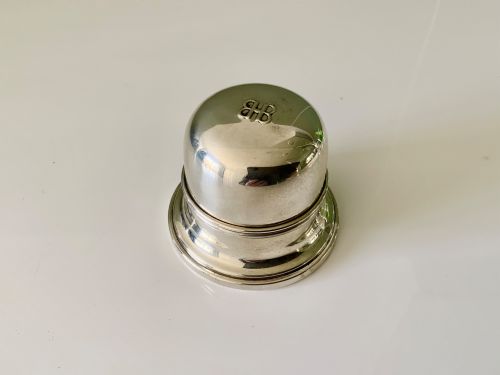
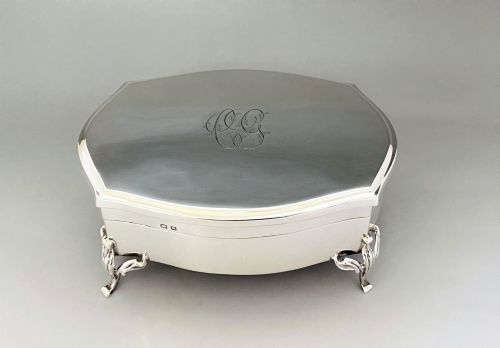
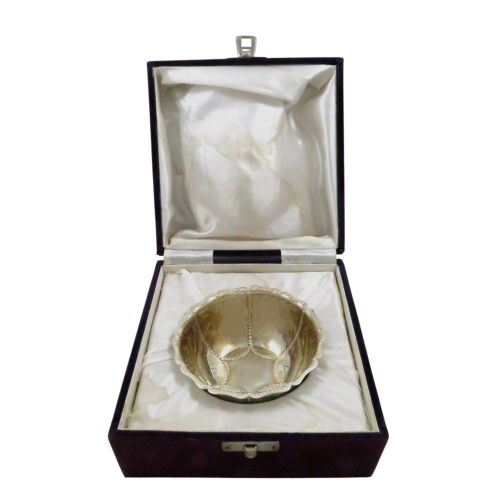
Boxed silver dishes bring together fitted containers and precious metalwork, offering protective cases for small valuables and dressing table items.
Boxed Silver Dishes
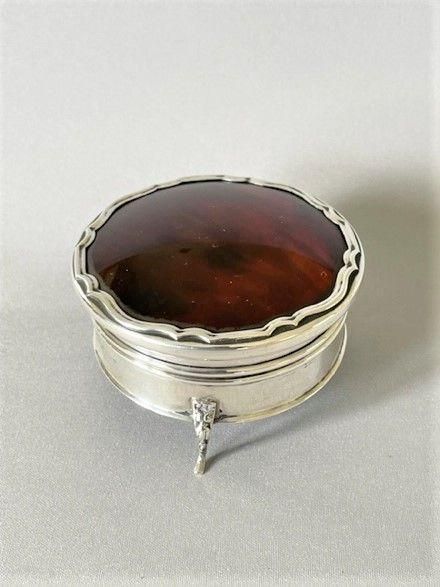
The most common versions met on this page date from the Victorian and Edwardian eras through to the Art Deco period. These items frequently combine sterling silver mounts with cut glass, enamel, or tortoiseshell bodies.
Materials and technique
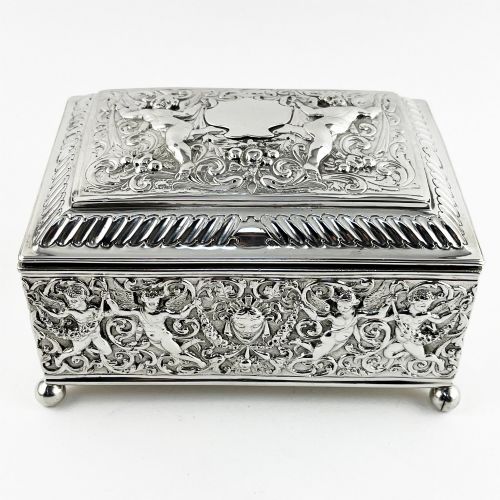
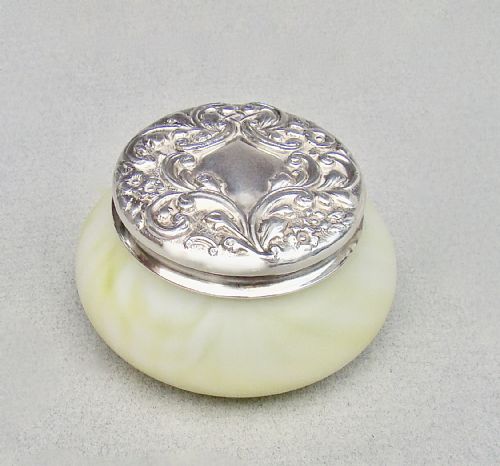
Silversmiths utilised sterling silver and solid silver for frames, lids, and mounts, often employing techniques such as casting, piercing, and repoussé decoration. Many containers incorporate glass elements, including cut glass, satin glass, and Kralik glass.
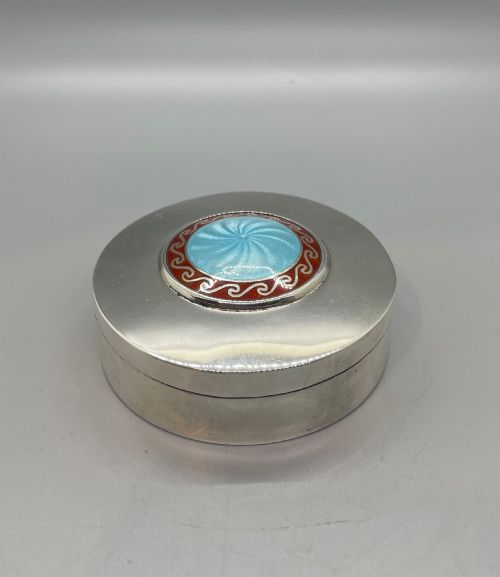
Decorative surfaces frequently make use of guilloche enamel, porcelain enamel, and inlaid tortoiseshell. Interior surfaces occasionally receive a gilt lining to protect the metal from tarnishing.
Boxed Silver Dishes Retail Price Guide 2026
Typical asking prices for boxed silver dishes among the pieces listed under this phrase on Sellingantiques today, from the lower quarter to the upper quarter. They describe what is for sale here now, not the wider market.
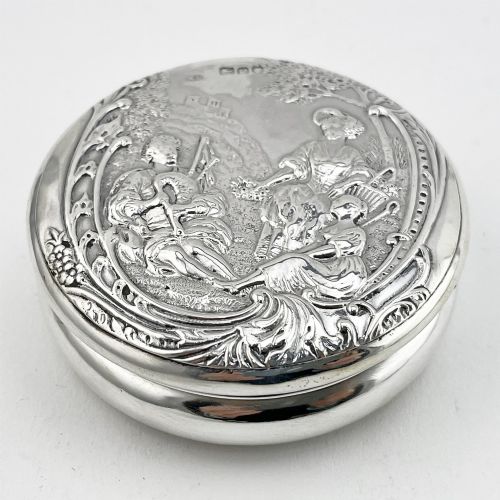
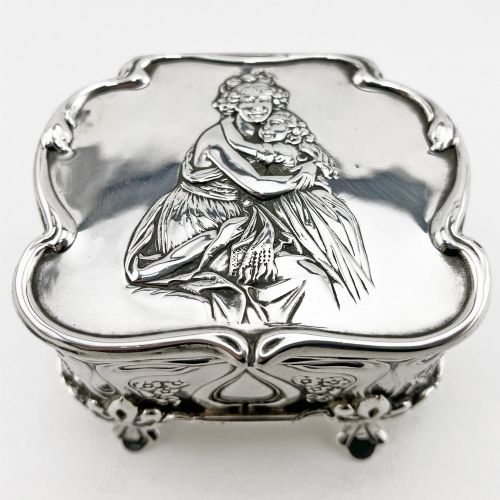
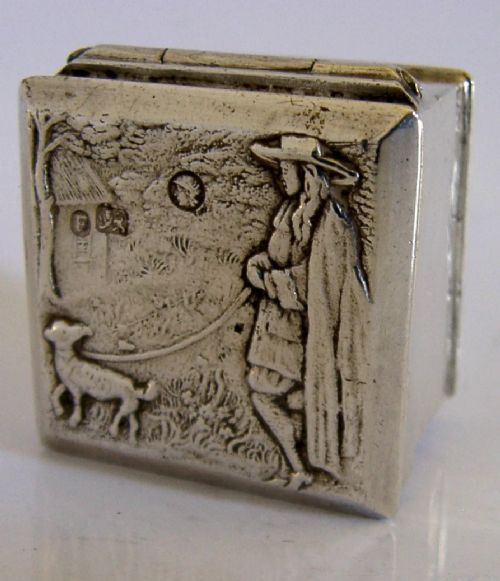
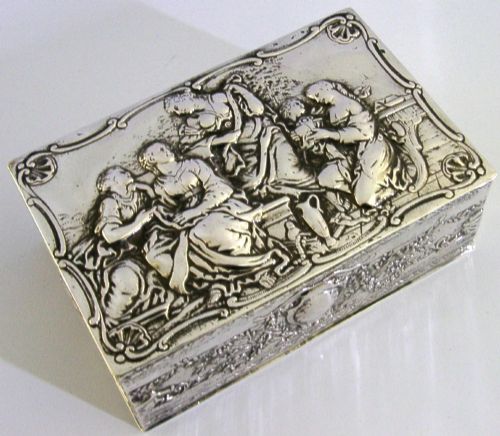
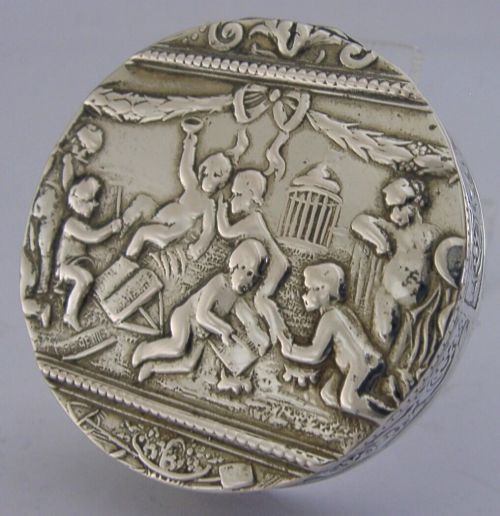
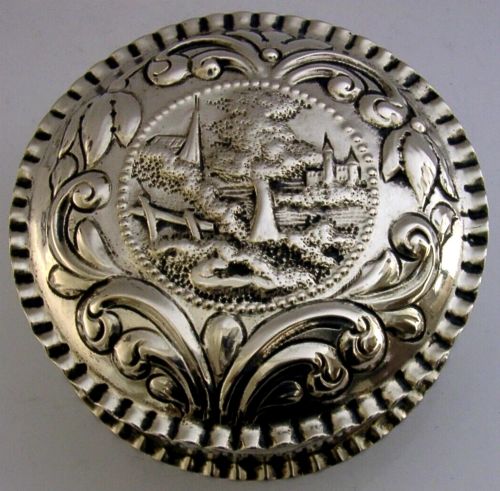
Several Victorian and Edwardian boxes depict dogs walking, cherubs, and mother and child scenes immortalised in solid silver.
Distinctions in quality
Quality rests upon the crispness of the chased or cast detail on the silver and the structural integrity of the hinges and fitted joints. Heavier gauge silver and substantial glass bodies denote superior manufacture.
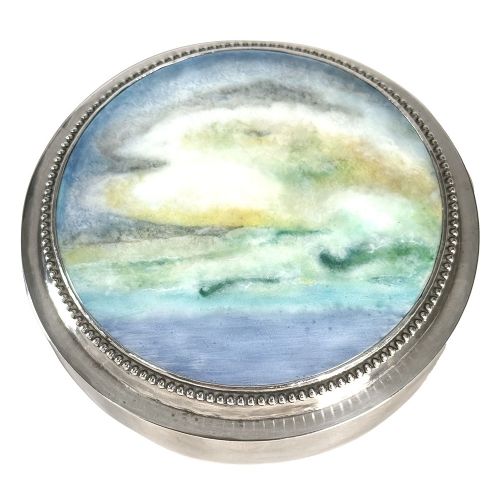
The integration of decorative panels, such as painted enamel plaques or figural scenes, separates standard production items from finer workshop pieces.
Guild of Handicrafts·A. J. Pepper and Co·A. Bromet and Co·William Comyns·A and J Zimmerman Ltd·Asprey and Co·Posen of Frankfurt and Berlin
The Boxed Silver Dishes Glossary
- Guilloche
- A decorative engineering technique where a precise, intricate repeating pattern is mechanically engraved into a metal surface under enamel.
- Repoussé
- A method of metalworking where the metal is hammered from the reverse side to form a raised design in relief on the front.
- Trinket box
- A small lidded container designed for storing rings, brooches, and other personal jewellery items.
- Gilt lining
- A thin application of gold wash applied to the interior surface of a silver vessel to prevent oxidation.
Boxed Silver Dishes: Frequently Asked Questions
What are boxed silver dishes used for?
These containers were originally created to hold small personal effects, pins, and vanity items upon dressing tables or desks. Fitted sets served specific dining and domestic purposes.
Today, they function as decorative storage pieces for modern jewellery and small keepsakes while adding period character to interiors.
How do I identify Edwardian silver pieces?
Edwardian items date from the reign of King Edward VII between nineteen hundred and nineteen ten. They often display lighter, refined Neoclassical Revival or Arts and Crafts motifs.
Assay office marks and date letters stamped onto the silver provide the exact year of manufacture and confirm the period.
What is tortoiseshell work on silver boxes?
Tortoiseshell involves the mottled brown keratin shell of the hawksbill turtle applied as an overlay to wooden or metal box structures. Master craftsmen often paired this material with inlaid silver piqué work.
Legislation now regulates the trade in antique items containing organic materials like tortoiseshell.
How should I clean silver and glass boxes?
Silver components require careful polishing with a non-abrasive cloth designed specifically for precious metals to avoid removing thin plate or detail. Enamel and tortoiseshell surfaces must be kept away from harsh chemical solvents.
Glass bodies can be gently washed in warm soapy water while protecting any attached silver mounts from prolonged moisture exposure.