
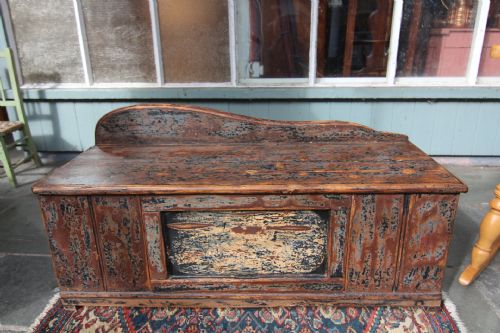
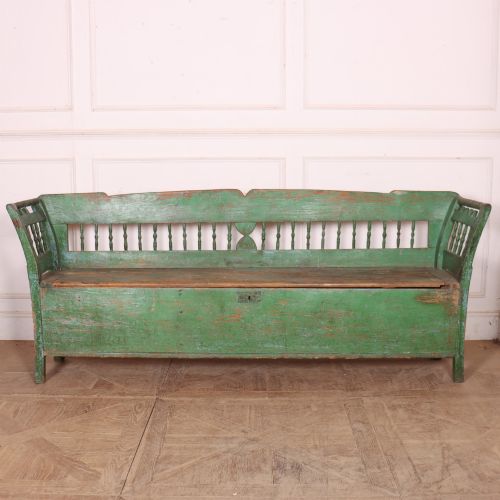
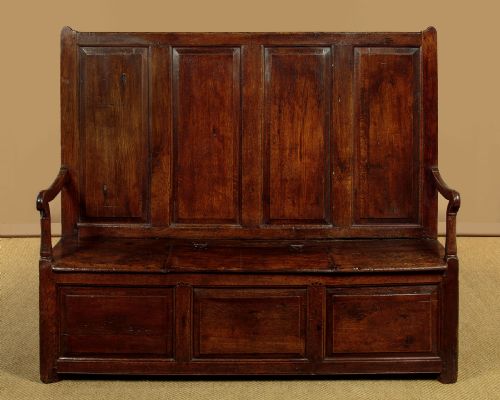
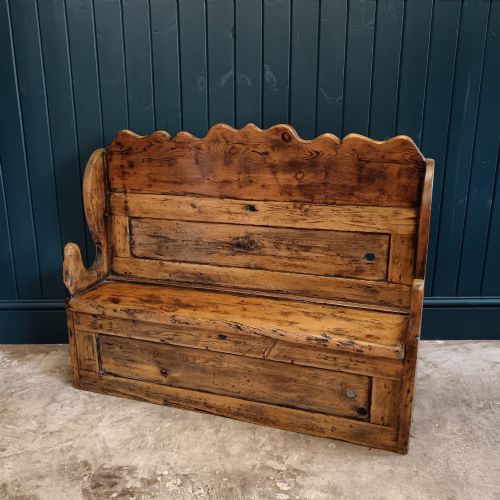
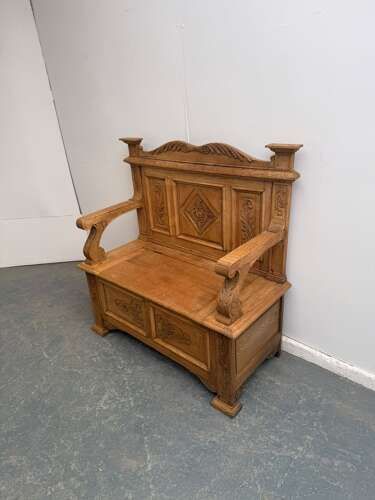
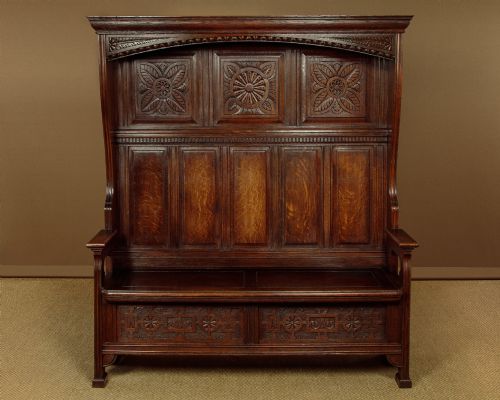
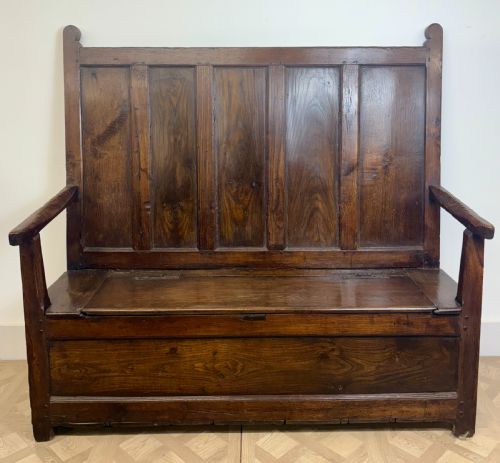
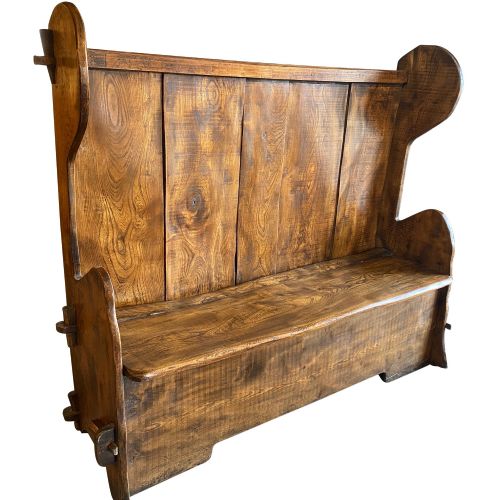
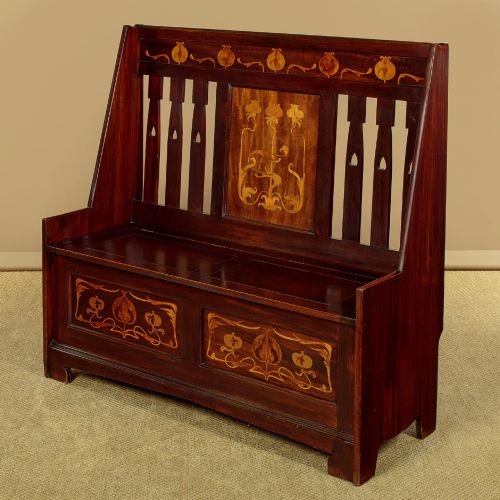
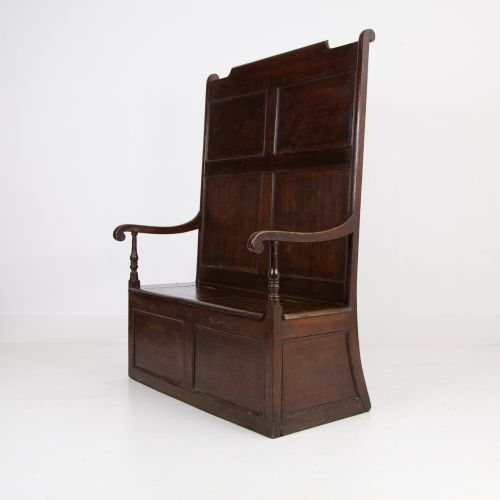
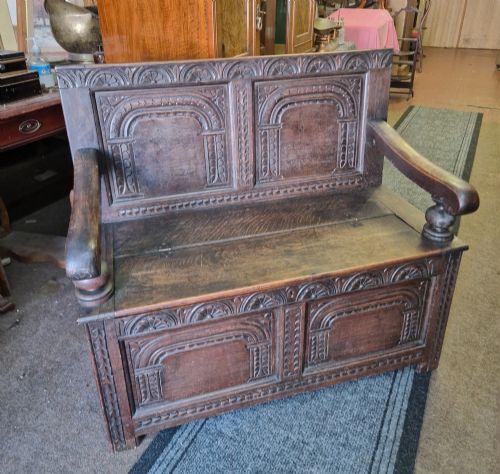
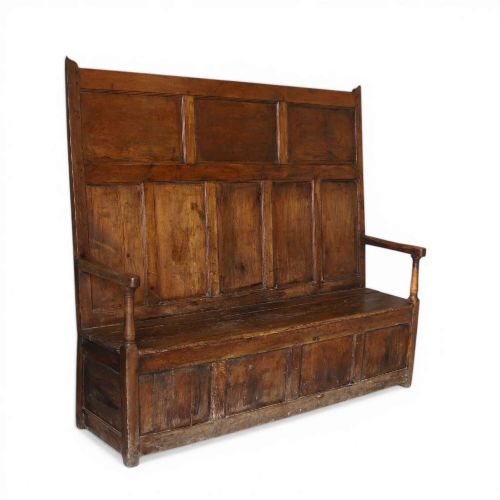
Box Settle Bench
A box settle bench combines seating and concealed storage, offering a practical antique for entryways and living spaces.
Box Settle Bench
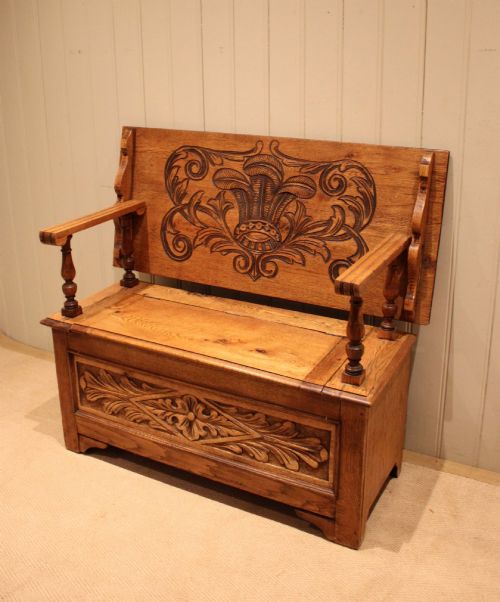
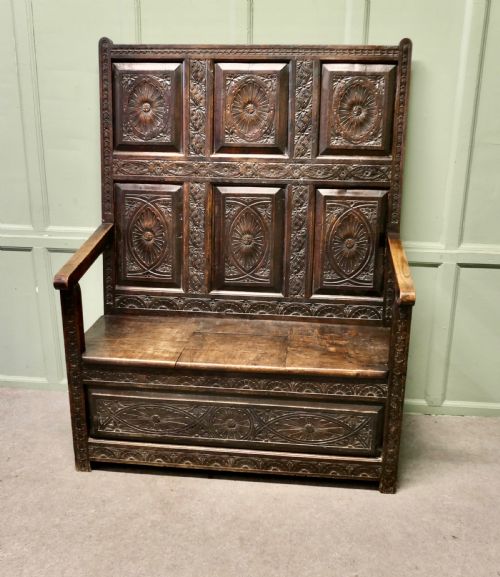
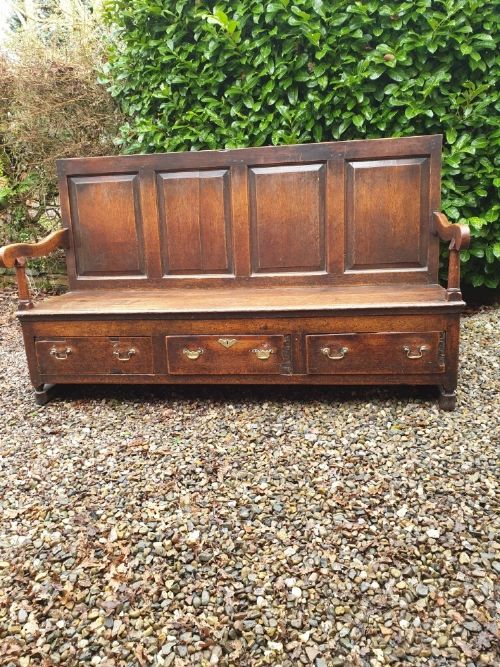
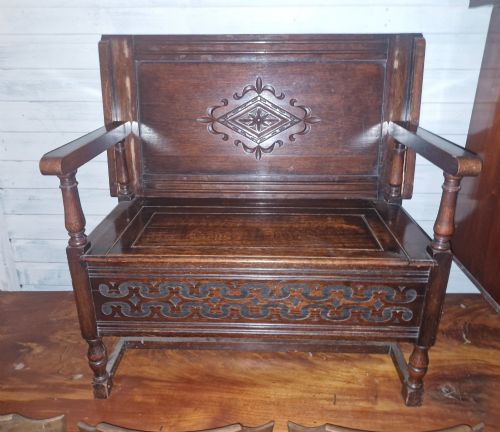
A box settle bench is a high-backed wooden seat incorporating a storage compartment beneath the hinged lid.
Examples span from the seventeenth century through the Georgian and Victorian periods into the early twentieth century.
Pieces range from rustic country pine and elm forms to panelled oak and carved walnut designs.
How They Were Made
Cabinet makers utilised native timbers including oak, pine, elm, ash, and walnut, often joining panels with traditional construction methods.
Many examples feature hand-carved details, panelled backs, and applied mouldings alongside iron hardware and brass fittings.
Regional variations span English, Welsh, French, Italian, and Hungarian country workshops.
What Varies In Quality
The standard of timber selection and the complexity of the joinery distinguish regional country pieces from refined workshop production.
Proportion, depth of carving, and the survival of original painted or waxed surfaces determine the character of individual pieces.
James Shoolbred and Co.
The Box Settle Bench Glossary
- Settle
- A wooden bench with a high back and solid arms designed to block draughts in hallways and kitchens. It often stands on a box base.
- Monks Bench
- A convertible piece of furniture functioning as a table with a fold-over top or as a seat with a high back. Later versions date to the early twentieth century.
- Panel Back
- A construction method utilising wooden stiles and rails to frame inset panels. This technique accommodates wood shrinkage and adds structural rigidity.
- Pitch Pine
- A durable softwood sourced from North America and Europe, utilised for country furniture and storage benches.
Box Settle Bench: Frequently Asked Questions
What is a box settle bench?
A box settle bench is a heavy wooden seat featuring a high back to block cold air and a hinged seat concealing storage underneath.
These pieces served historic households as functional seating positioned near firesides or in hallways.
How were box settles used historically?
They provided communal seating while keeping firewood, blankets, or household goods dry and out of sight inside the base.
The enclosed back protected occupants from draughts in open-plan historic rooms.
How do I date an antique settle?
Dating relies on observing construction marks, timber species, tool traces, and stylistic motifs such as Georgian panelling or Victorian carving.
Regional variations in pine, oak, and elm also offer clues to the origin and period of manufacture.
Where should I place a settle bench?
These benches fit well in hallways, boot rooms, and kitchens where their storage capacity and narrow footprint prove useful.
Sufficient wall clearance is necessary to accommodate the high back and hinged lid.