
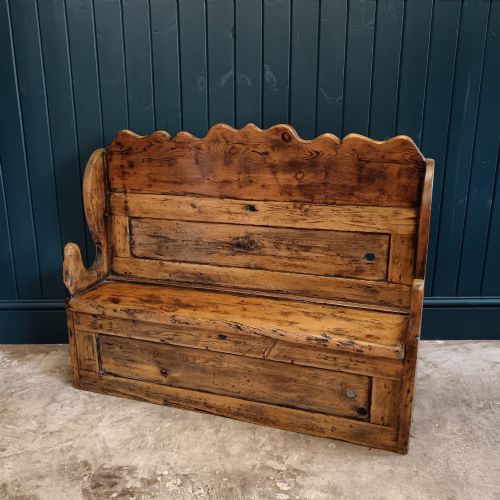
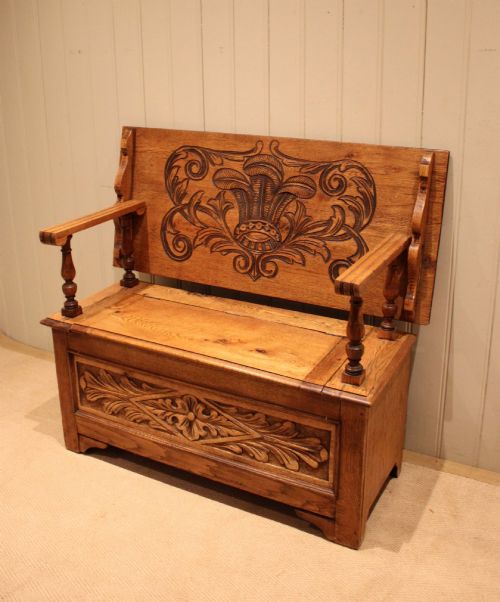
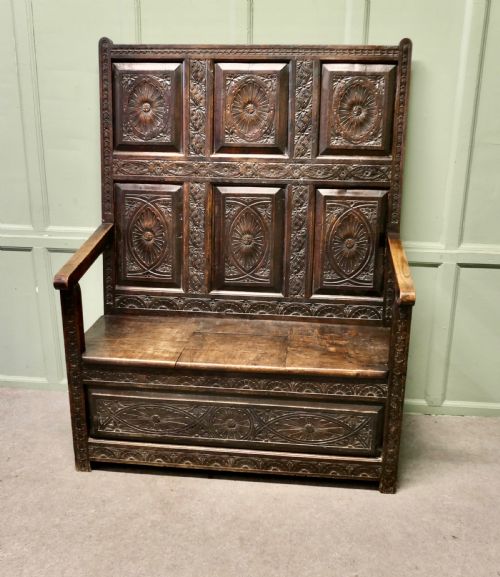
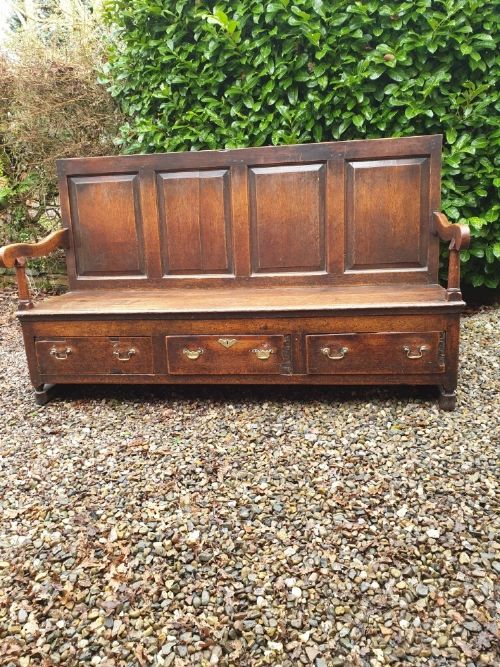
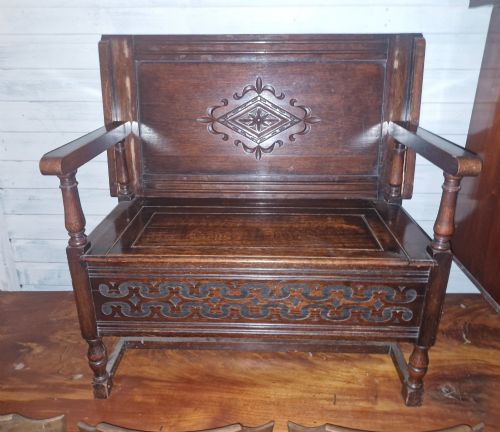
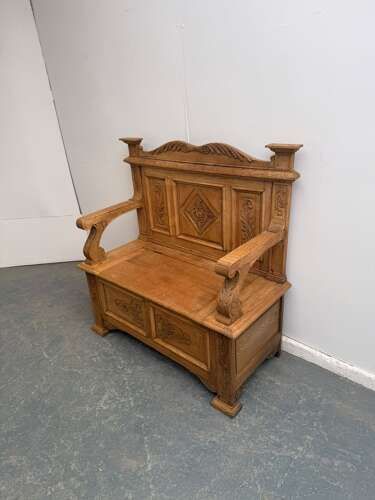
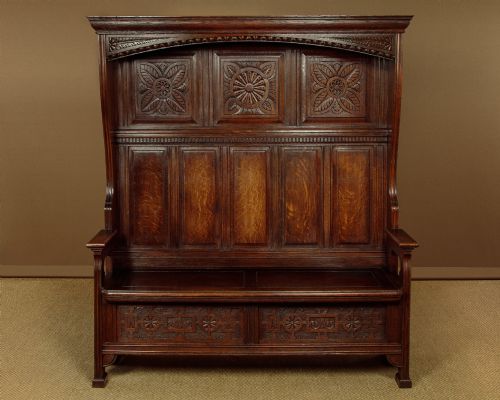
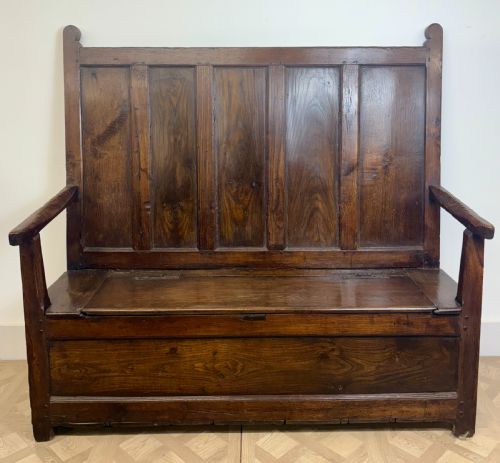
Box Seated Settle
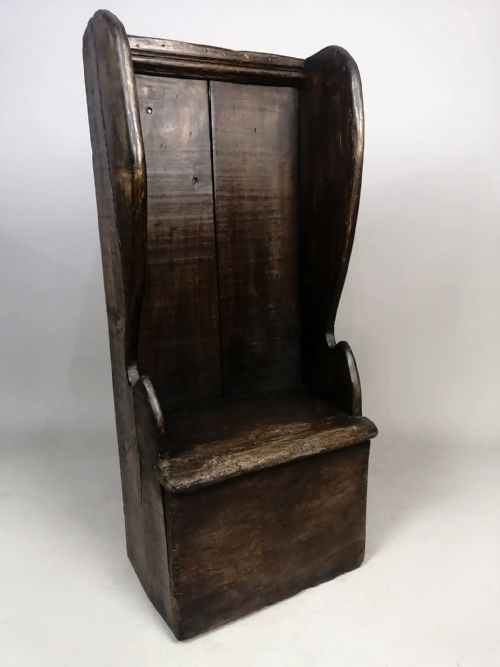
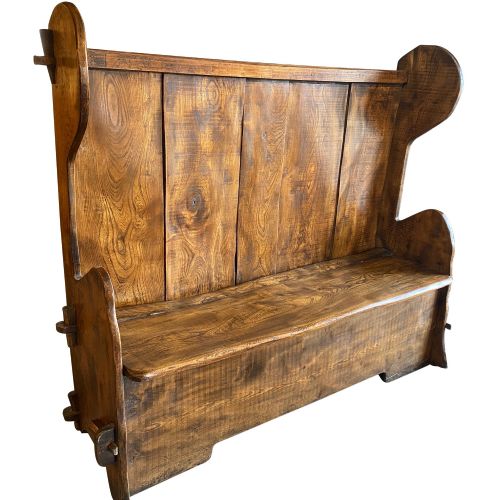
A box seated settle offers high-backed seating combined with concealed storage, grounding an entryway or living space with substantial presence.
Box Seated Settle
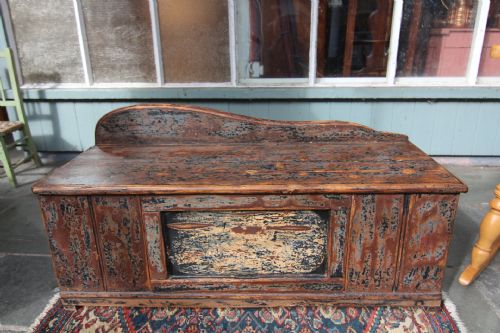
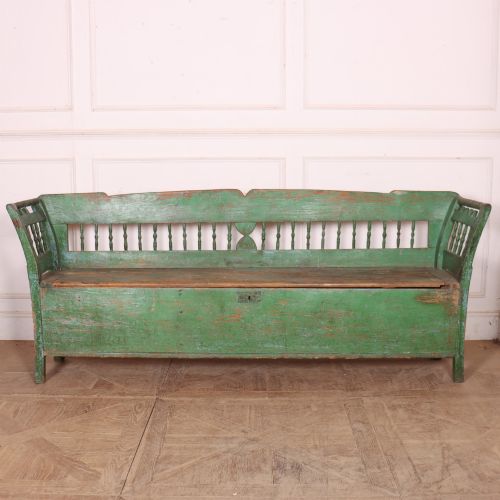
A box seated settle brings together heavy timber construction and a compartment beneath the seat, functioning as both bench and chest. The search for a box seated settle directs attention toward sturdy, high-backed wooden forms built to block cold draughts in domestic interiors.
Examples on this page span several centuries, with 17th-century, 18th-century, and 19th-century periods well represented alongside later revivals. Woods such as oak, elm, and pine predominate, often shaped into high-back formats or canopy tops originating from English, Welsh, and continental workshops.
Materials and Construction
Makers relied on native hardwoods and softwoods, predominantly solid oak, elm, and pine, joined through traditional mortise and tenon methods. Surfaces display natural wax finishes, painted treatments in grey or cream, or carved panel-back details executed with hand tools.
Structural integrity depended on heavy planking for the seat lid and sides to withstand daily use as a bench and a chest. Iron hardware occasionally reinforces hinges and lift mechanisms on the storage compartment.
Listings feature examples built from oak, pine, elm, and mahogany, spanning the 17th, 18th, and 19th centuries.
Evaluating Construction and Age
The standard of a box seated settle rests on the integrity of the timber and the retention of original structural elements, particularly around the lift-up seat and base compartments. Pieces retaining their early hinges, uncompromised floorboards, and period surface patination hold greater authenticity.
Carving depth and proportion distinguish regional workshop output from later revival pieces. Sharp, crisp relief work and balanced proportions elevate an example, while altered dimensions or replaced base panels alter the integrity of the piece.
James Shoolbred & Co
The Box Seated Settle Glossary
- Box settle
- A wooden bench featuring an enclosed storage compartment beneath the seat. This form protected sitters from floor drafts while containing household goods.
- Panel-back
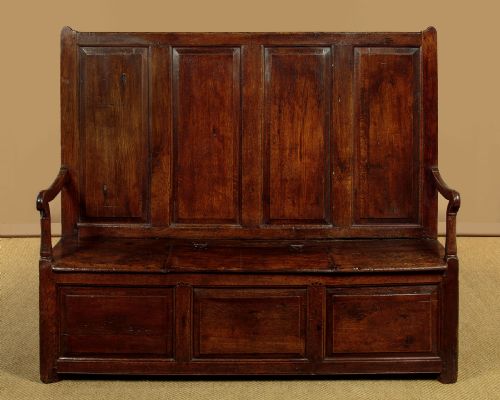
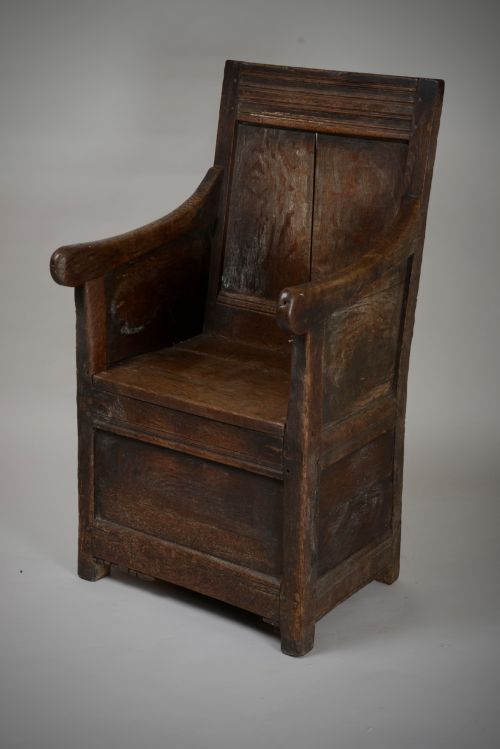
- A backrest constructed from wooden panels fitted within a framed structure. This technique allowed timber to expand and contract without splitting.
- Canopy top
- An overhead wooden hood projecting above the high back of a seat. It trapped body heat in cold medieval and early modern rooms.
- Lambing chair
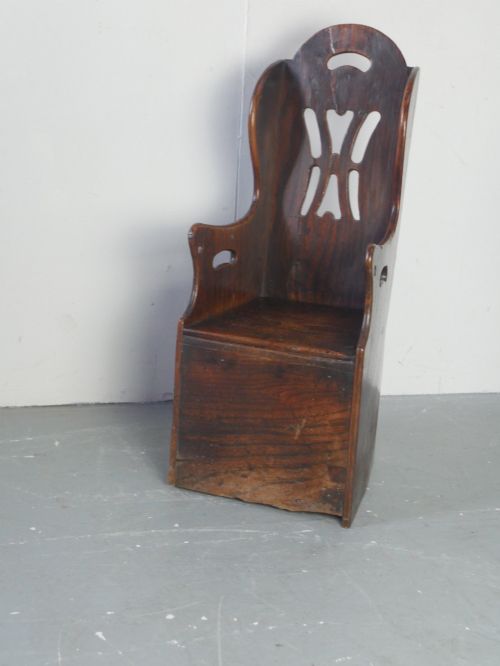
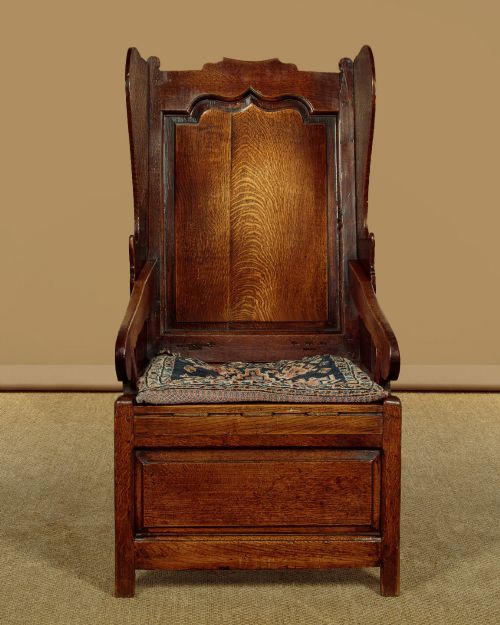
- An enclosed wooden armchair with solid wings and a storage base. It was traditionally used by shepherds or close to hearths for warmth.
Box Seated Settle: Frequently Asked Questions
What is a box seated settle?
A box seated settle is a high-backed wooden bench with a hinged lid that opens to reveal a storage chest underneath the seat. These dual-purpose items served as primary seating and storage in historic households.
They appear in various woods, including oak, elm, and pine, reflecting regional furniture-making traditions across Britain and continental Europe.
How were they used historically?
Historically, these benches sat near hearths to shield occupants from cold drafts blowing across stone floors. The high back and solid sides trapped warmth, while the enclosed base stored blankets, clothing, or household supplies.
In hallways, they provided a place to sit while removing outer garments, keeping everyday items out of sight.
How do I date an antique settle?
Dating relies on examining construction methods, tool marks, wood species, and fastener types used in the assembly. Hand-cut joinery, pegged tenons, and period timber shrinkage point toward earlier 17th-century and 18th-century origins.
Revival pieces from the Victorian era or the early twentieth century often display machine-sawn components, standardised hardware, and differing carving styles.
Where should I place one?
These pieces suit large entryways, hallways, or spacious living areas where their solid backs and substantial presence can anchor a room. Placing them against a blank wall highlights their architectural proportions.
The interior storage compartment remains practical for keeping shoes, linens, or seasonal items neatly contained.