
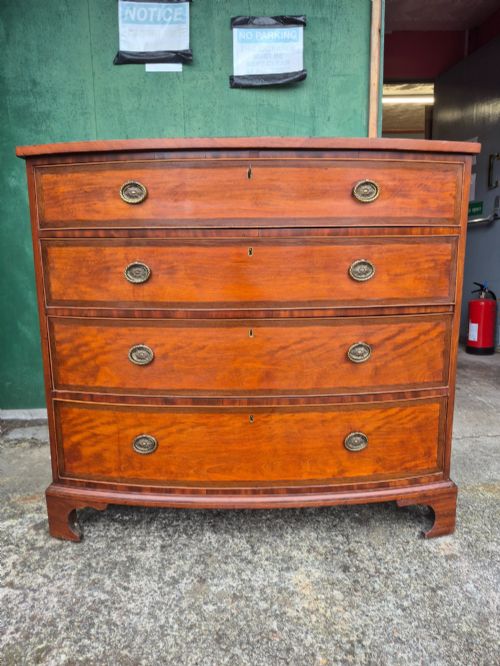
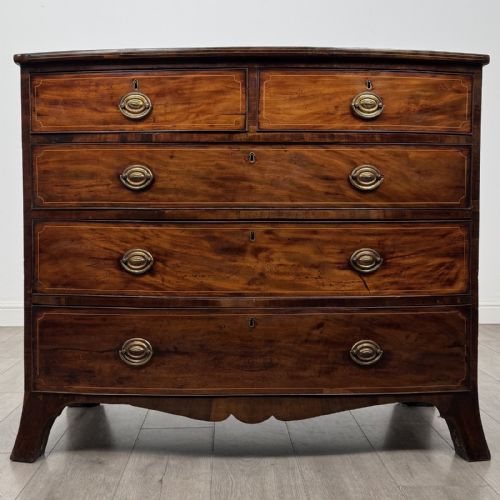
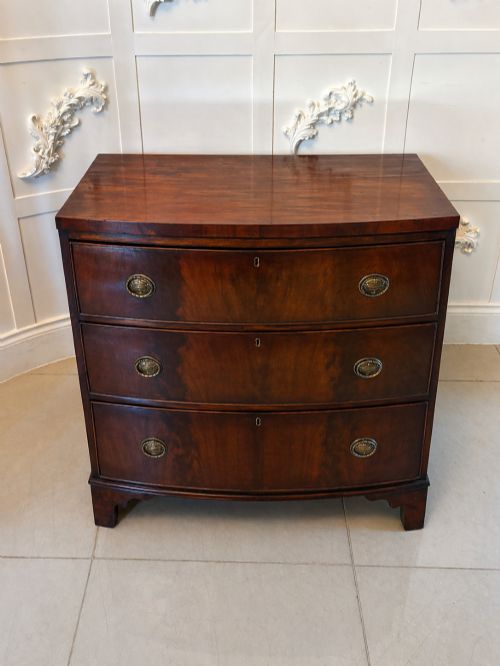
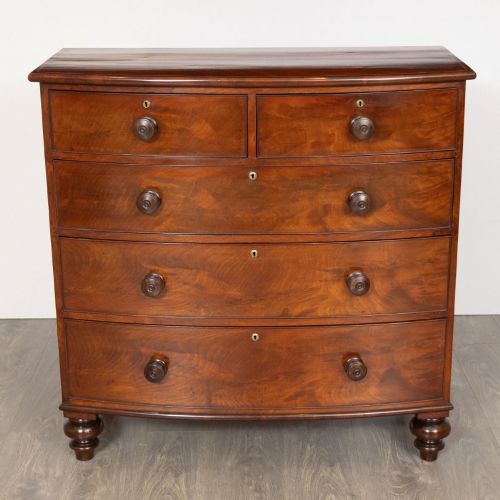

Bowfronted Dressers
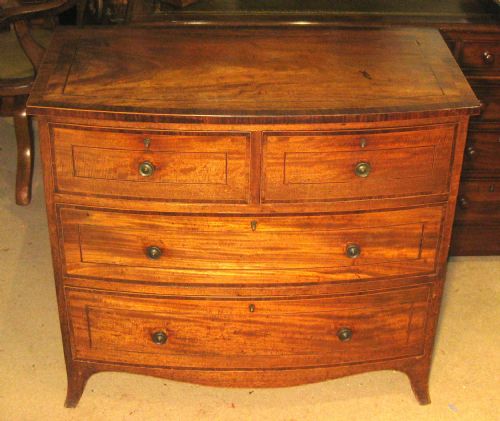
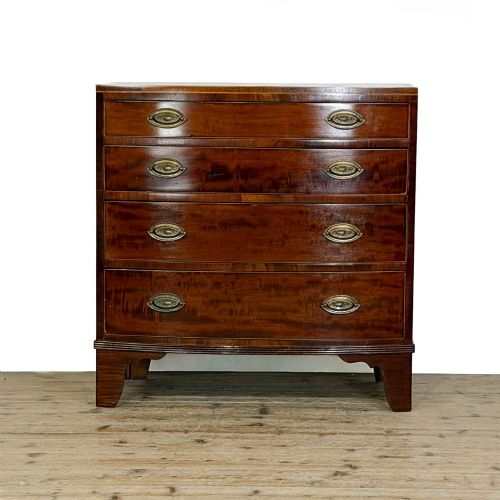
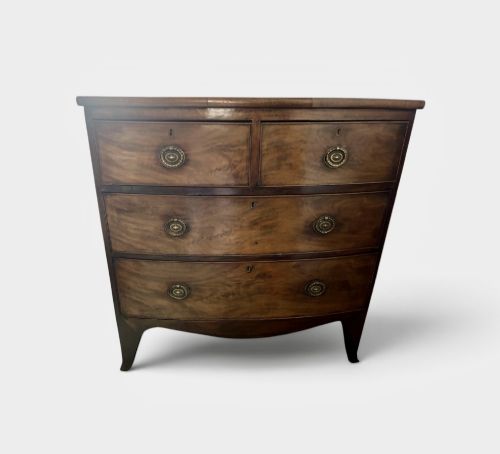
Bowfronted dressers bring curved front lines and rich mahogany grain to traditional interiors.
Bowfronted Dressers
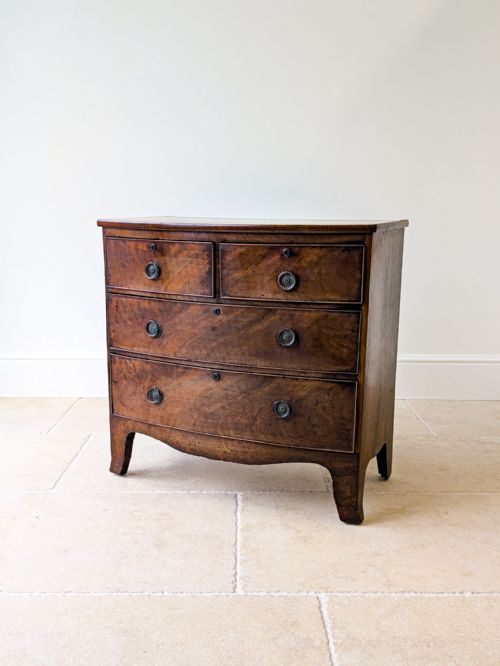
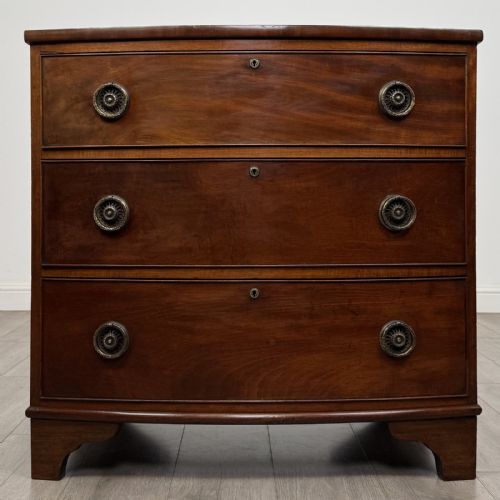
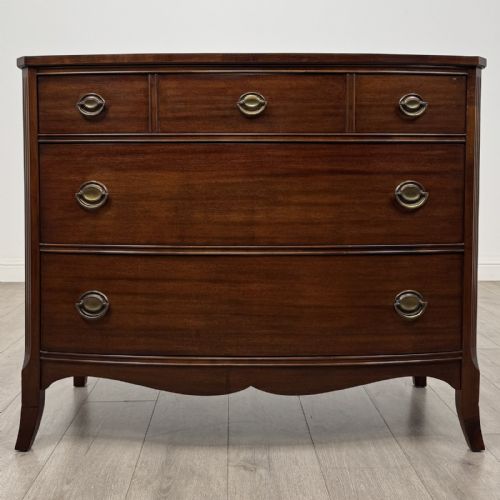
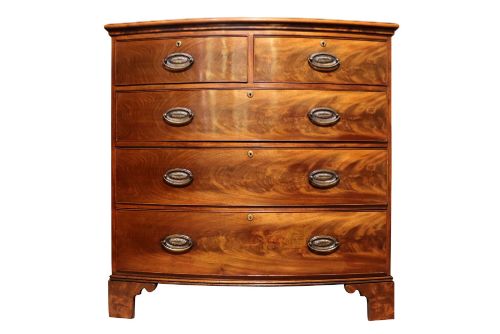
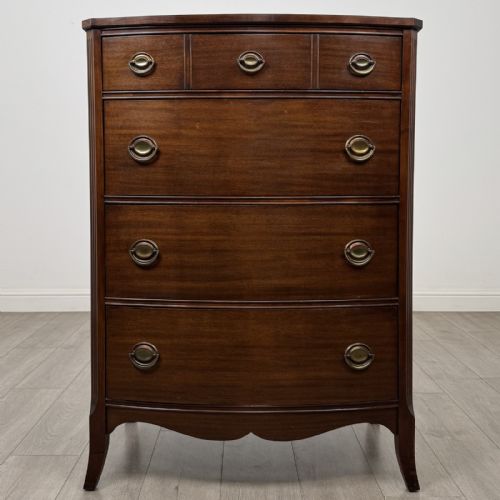
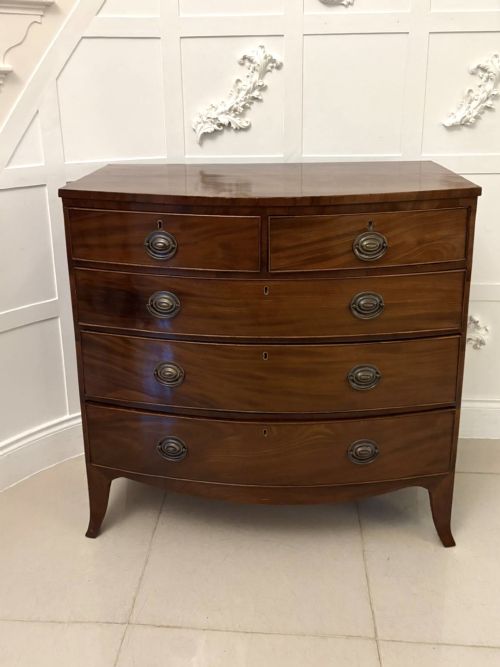
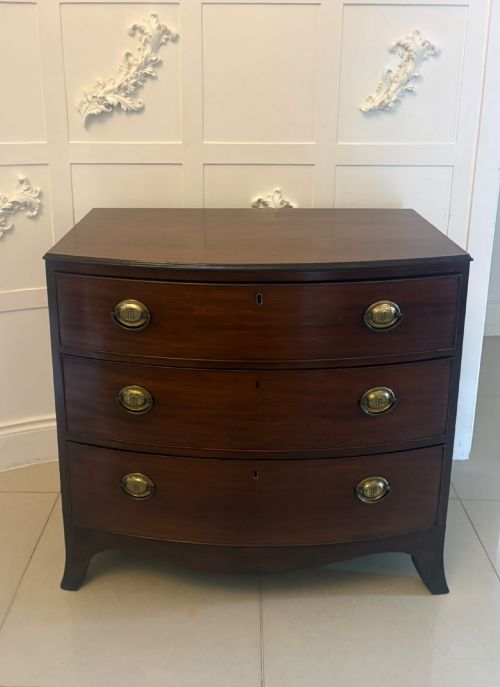
When you search for bowfronted dressers, you encounter case furniture with a gently rounded projecting front that softens domestic spaces. The pieces listed here span the Georgian, Regency, and Victorian periods, alongside later twentieth-century interpretations.
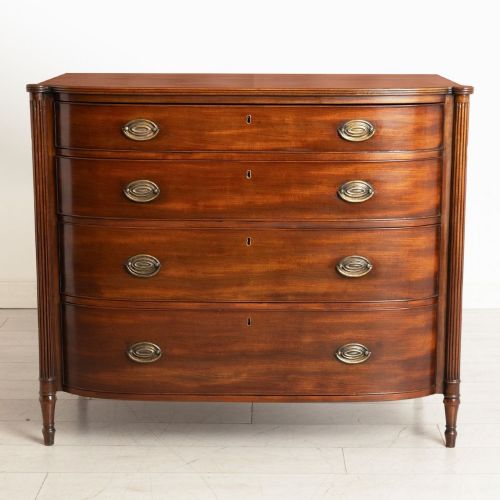
Chest of drawers forms dominate the selection, appearing alongside sideboards and occasional dressers. Mahogany serves as the primary timber, often enhanced by flame mahogany veneers or satinwood crossbanding.
Makers from the eighteenth century onward utilised these curved designs to catch light and add movement to hallway and bedroom storage. Compact small chests and larger graduated drawer configurations appear frequently across the periods.
How they were made
Cabinetmakers constructed these carcases using solid timbers like oak and pine for internal framing, while applying figured mahogany or flame mahogany veneer to the curved drawer fronts. Satinwood crossbanding provided crisp contrasting borders on finer Regency and Georgian examples.
Shaping the curved front required precise carpentry, bending or cutting solid wood and veneer to fit the sweeping radius without splitting. Brass handles and escutcheons were fitted to drawer faces, complementing the warm red-brown tones of the polished wood.
Some Welsh and regional variations conceal secret drawers tucked away beneath the top moulding.
What varies in quality
The choice of timber grain sets the finer examples apart, particularly where highly figured flame mahogany or carefully selected satinwood crossbanding covers the front. Superior pieces display harmonious grain matching across stacked drawers rather than mismatched cuts of wood.
Proportion and execution of the curved drawer fronts dictate the visual success of the piece, with better workshops achieving seamless drawer closure and refined edge details. Original brass hardware and secret compartments add further distinction to period items.
The Bowfronted Dressers Glossary
- Bow front
- A convex curved front projecting outward from the frame. This shape defines the silhouette of the furniture searched here.
- Crossbanding
- A border veneer applied perpendicularly to the surrounding grain. It frames drawer fronts in contrasting timber.
- Flame mahogany
- Mahogany timber exhibiting a distinctive flickering grain pattern. Cabinetmakers reserved this prized veneer for principal drawer facades.
- Graduated drawers
- A series of drawers decreasing in depth from bottom to top. This arrangement maintains visual balance on case pieces.
Bowfronted Dressers: Frequently Asked Questions
What periods do these pieces come from?
The selection spans the eighteenth, nineteenth, and early twentieth centuries, covering Georgian, Regency, and Victorian eras.
Examples range from eighteenth-century George III items up to later 1920s interpretations.
What woods were used?
Mahogany forms the primary material, frequently seen as solid wood or enhanced by flame mahogany and general wood veneers.
Secondary timbers include oak and pine for interiors, whilst satinwood appears for decorative crossbanding details.
How do I spot a Regency piece?
Regency items often feature bold mahogany grains, sometimes combined with satinwood crossbanding for contrast.
They date from the early nineteenth century and typically display clean architectural lines alongside the curved front.
Where were these pieces used?
These items served as practical storage furniture in bedrooms, hallways, and formal reception rooms.
Chest configurations held clothing and linens, while sideboard versions functioned in dining spaces.