

Bowfront Wooden Commode
A bowfront wooden commode brings curving front lines and generous storage to a bedroom, uniting practical capacity with striking silhouette.
Bowfront Wooden Commode
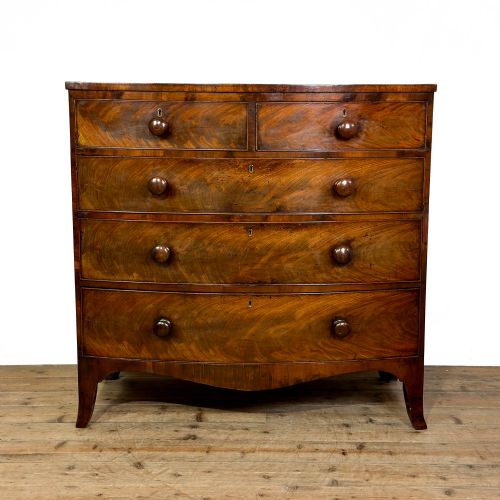
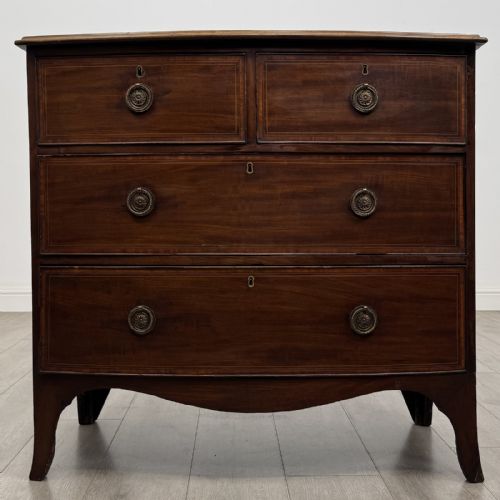
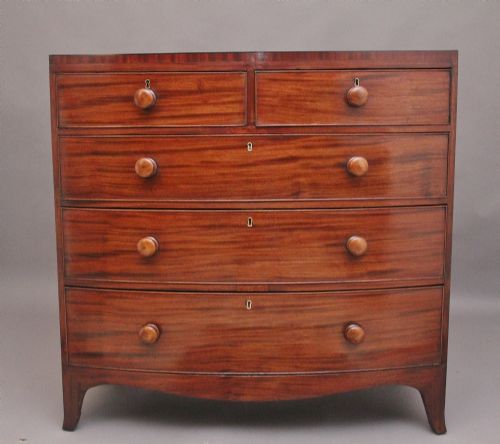
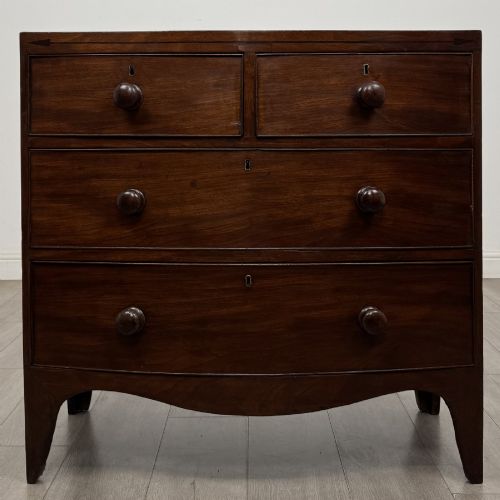
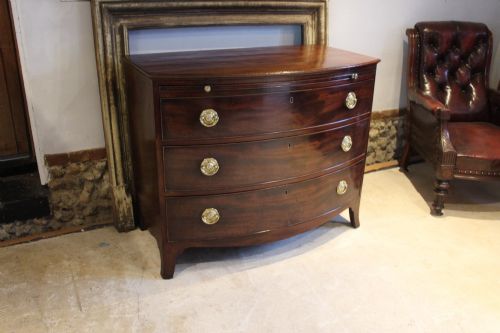
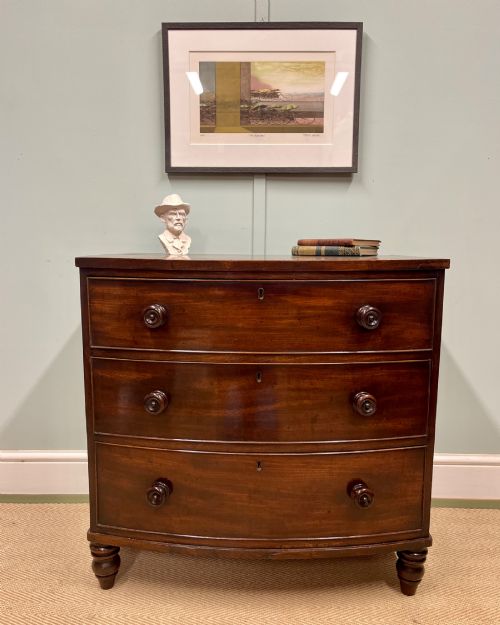
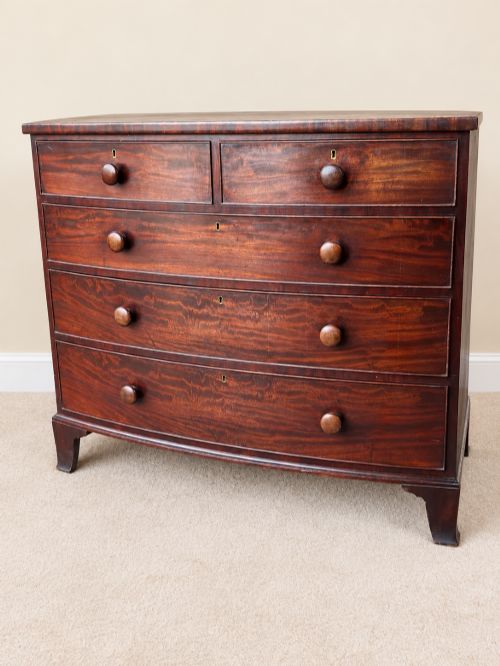
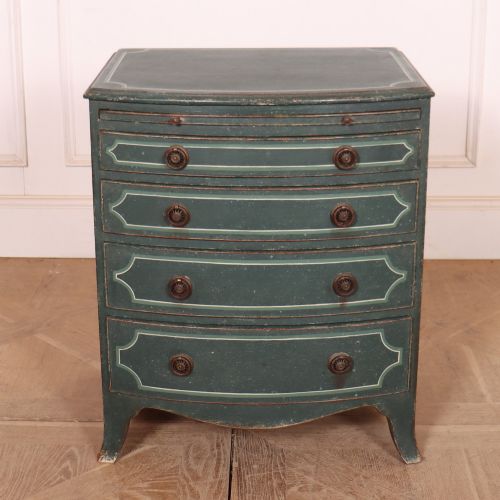
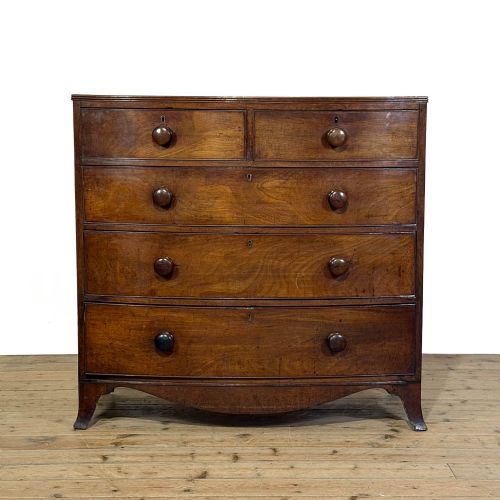
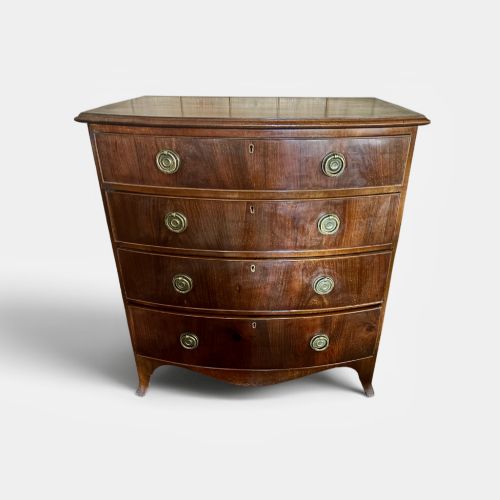
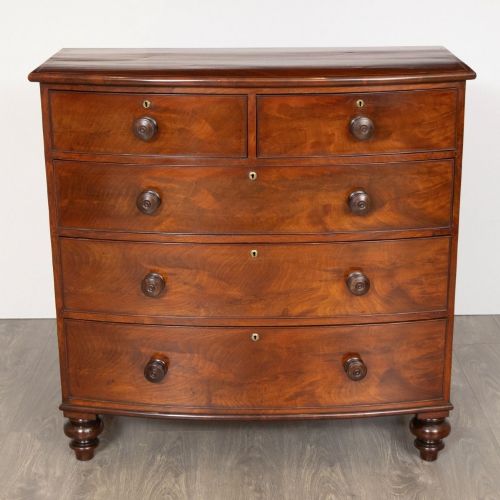
A bowfront wooden commode appears primarily as a chest of drawers or sideboard cabinet designed with a convex, curved front. These pieces emerge across several periods, stretching from the Georgian and Regency eras through the Victorian age and into Edwardian and later twentieth-century interpretations.
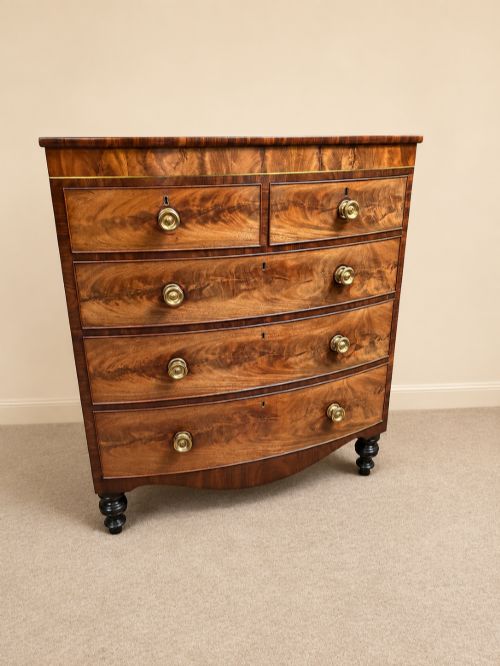
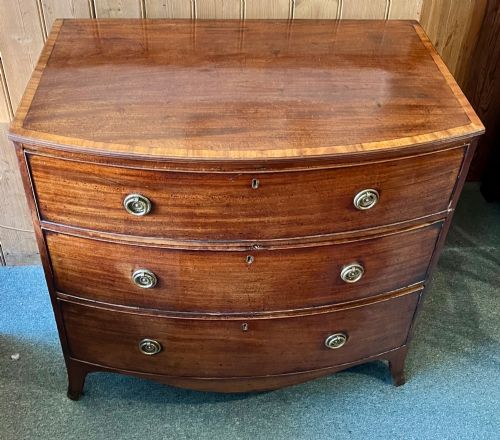
The version most commonly encountered on this page is a mahogany chest of drawers featuring the signature curved front profile. Examples range from compact miniature furniture and small domestic chests to large, grand storage pieces with graduated drawers.
Origins trace through cabinet makers working in distinct stylistic movements, including George III, George IV, and Sheraton designs. Regional variations such as Scottish Regency pieces also appear, demonstrating distinct proportions and timber selections.
Quality and Construction
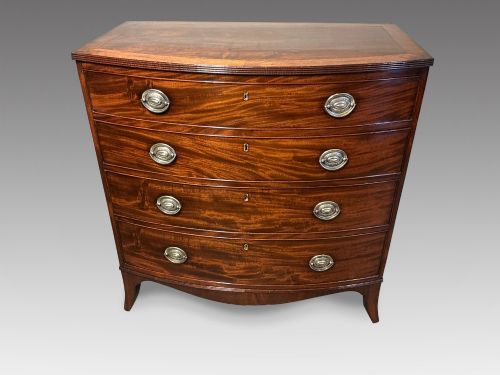
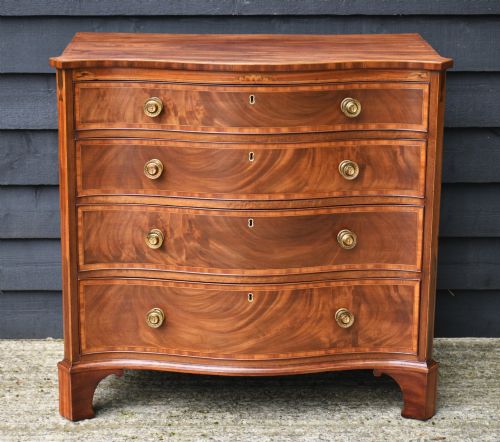
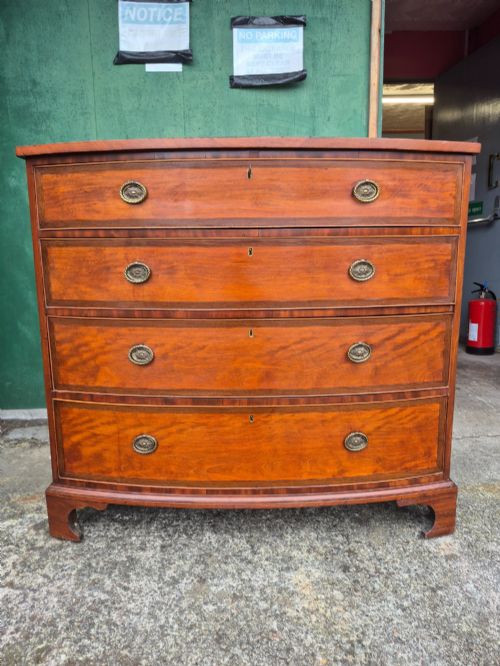
Quality rests upon the selection of timber figures and the precision of the curved drawer construction. Pieces utilising heavily figured flame mahogany or delicate satinwood crossbanding demonstrate a higher grade of craftsmanship than plain timber examples.
The handling of the carcase curves and the flush fit of the drawers reveal the maker's skill. Superior examples maintain smooth operation and tight joints along the convex facade, whereas lesser work shows uneven gaps or warped panels over time.
Bowfront Wooden Commode Retail Price Guide 2026
Typical asking prices for bowfront wooden commode among the pieces listed under this phrase on Sellingantiques today, from the lower quarter to the upper quarter. They describe what is for sale here now, not the wider market.
Cabinet makers utilised specialised flame mahogany veneers and satinwood crossbanding to ornament the convex drawer fronts.
The Bowfront Wooden Commode Glossary
- Bowfront
- A convex curved cabinet front that swells outward from the centre. This shape softens the profile of standard rectangular case furniture.
- Flame mahogany
- A highly figured wood veneer cut from branches or forks of the mahogany tree. It produces a distinctive flickering flame pattern across drawer fronts.
- Crossbanding
- A narrow strip of veneer laid perpendicularly to the main grain border. This technique frames drawer fronts and tabletops with a contrasting wood pattern.
- Escutcheon
- A protective plate surrounding a keyhole. It is traditionally made of brass to prevent wear on the surrounding wood.
- Graduated drawers
- A set of drawers arranged vertically from smallest at the top to largest at the bottom. This layout creates pleasing proportions on antique chests.
Bowfront Wooden Commode: Frequently Asked Questions
Where should I place a bowfront chest?
These curved chests suit bedrooms, hallways, or living spaces where a softened silhouette is desired against flat walls.
Their generous storage capacity makes them practical for organising clothing or linens while maintaining a compact footprint.
How do I clean mahogany surfaces?
Dust the polished wood regularly with a soft, dry cloth to prevent dirt accumulation.
Apply a quality beeswax periodically to nourish the timber and maintain the natural sheen of the veneer.
Are these chests heavy to move?
Solid wood construction and multiple drawer tiers contribute to a substantial overall weight.
Removal of the internal drawers prior to transport helps reduce the load and protects the curved carcase.
How do I identify a Regency piece?
Regency items often display bold mahogany grains, brass lion mask handles, and precise crossbanding details.
Proportions tend to be classical and restrained, reflecting early nineteenth-century design influences.