
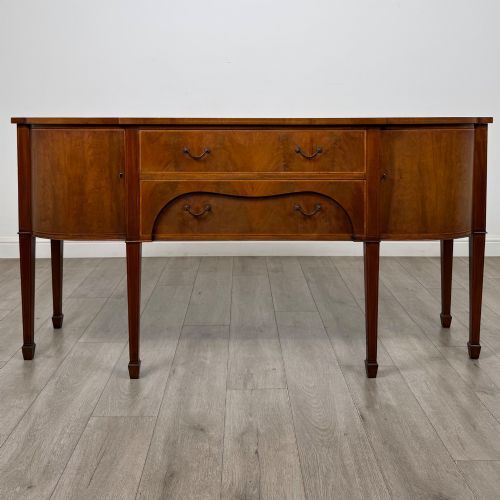
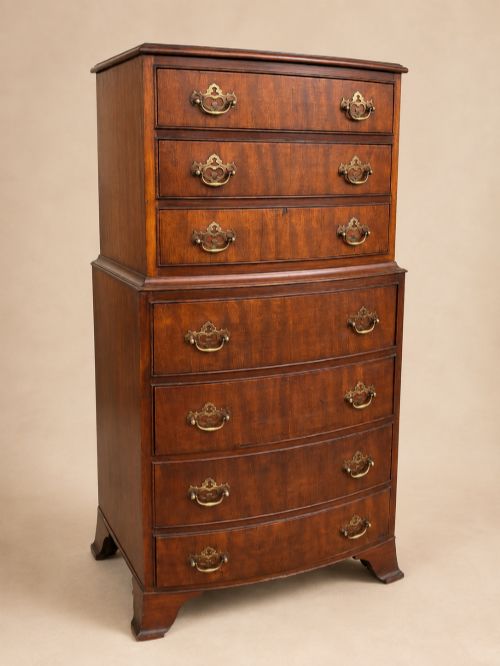
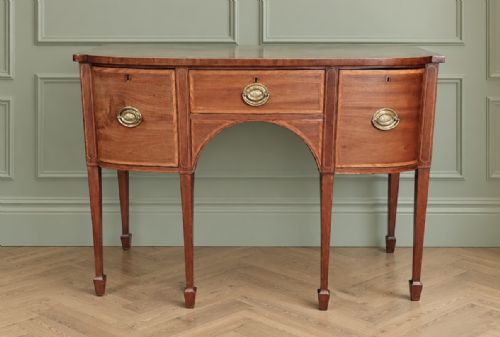
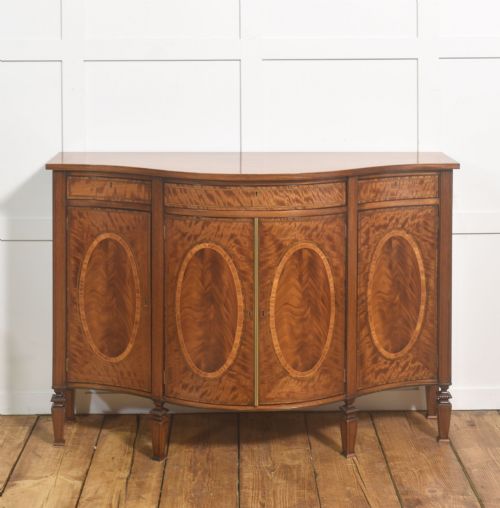
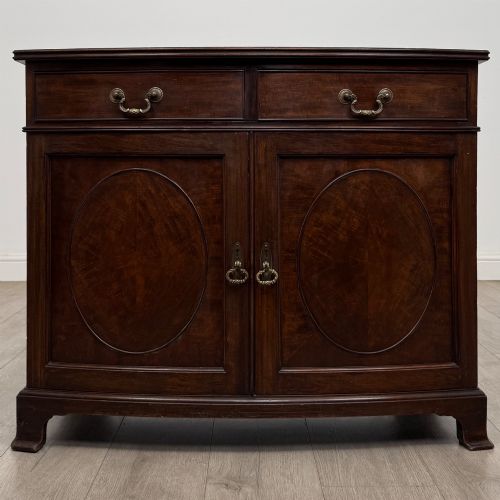
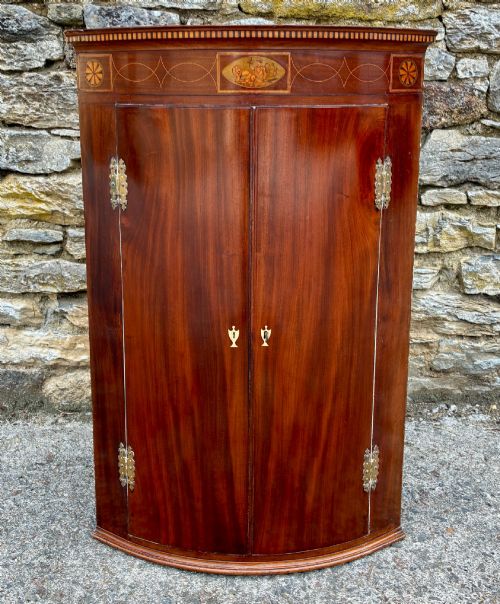
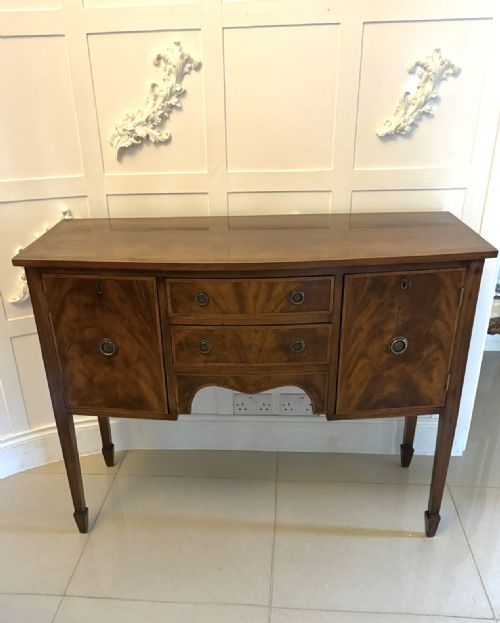
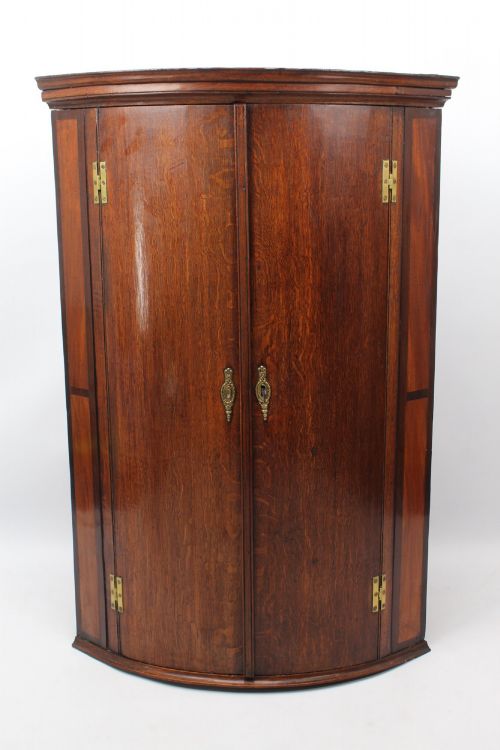
Bowfront Wooden Cabinet
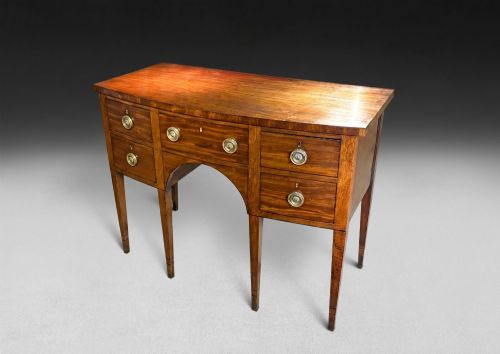
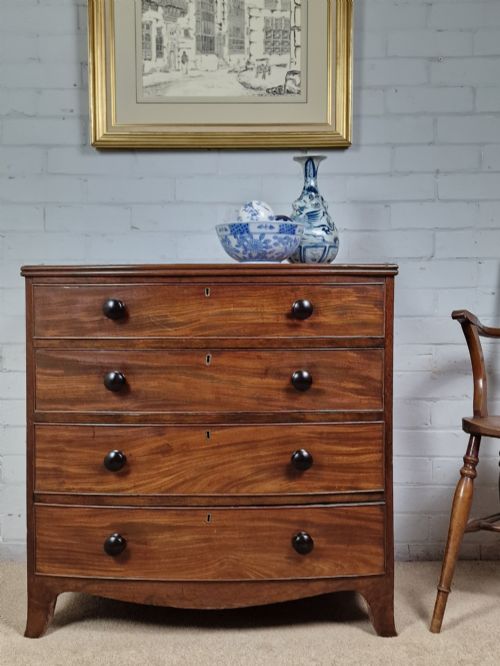
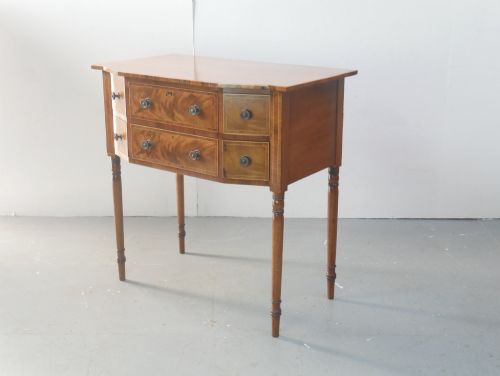
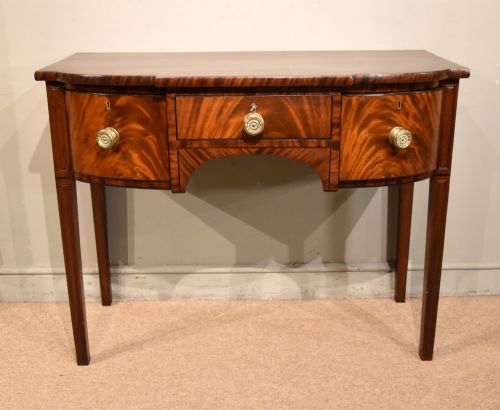
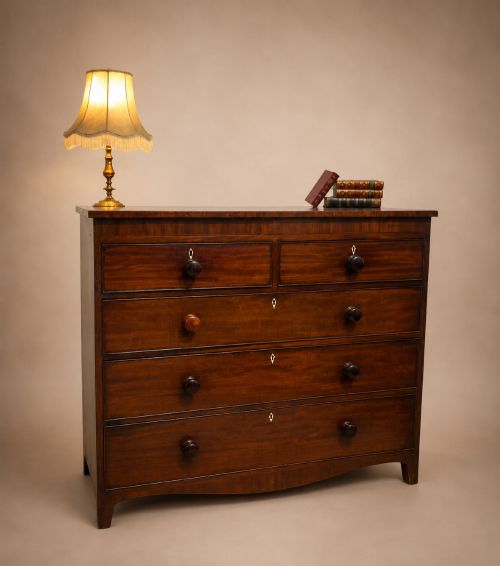
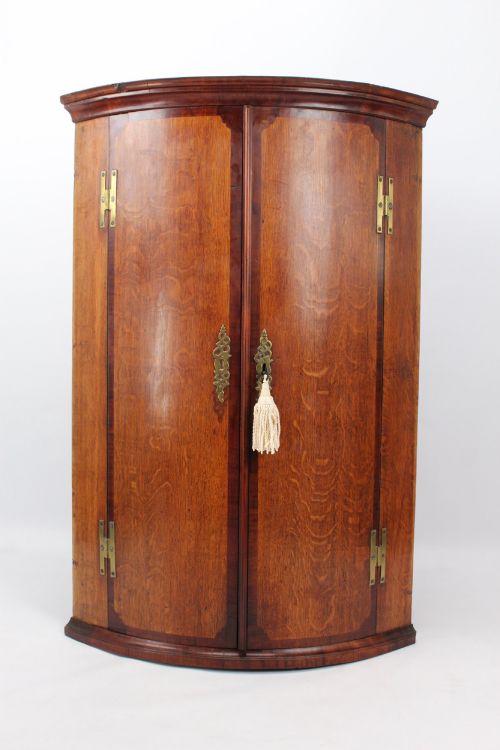
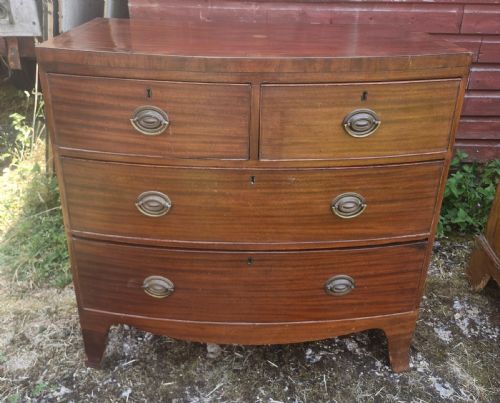
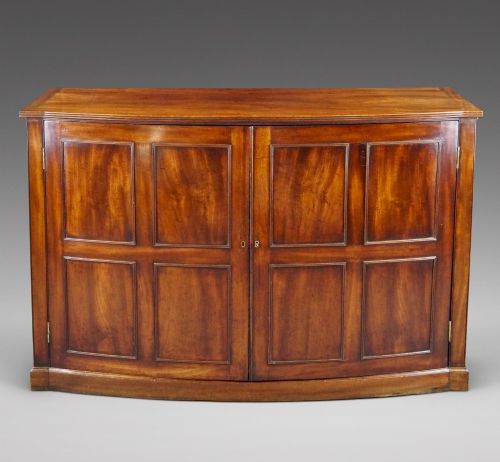
These bowfront wooden cabinets bring a curved presence to interiors, offering generous storage through refined joinery.
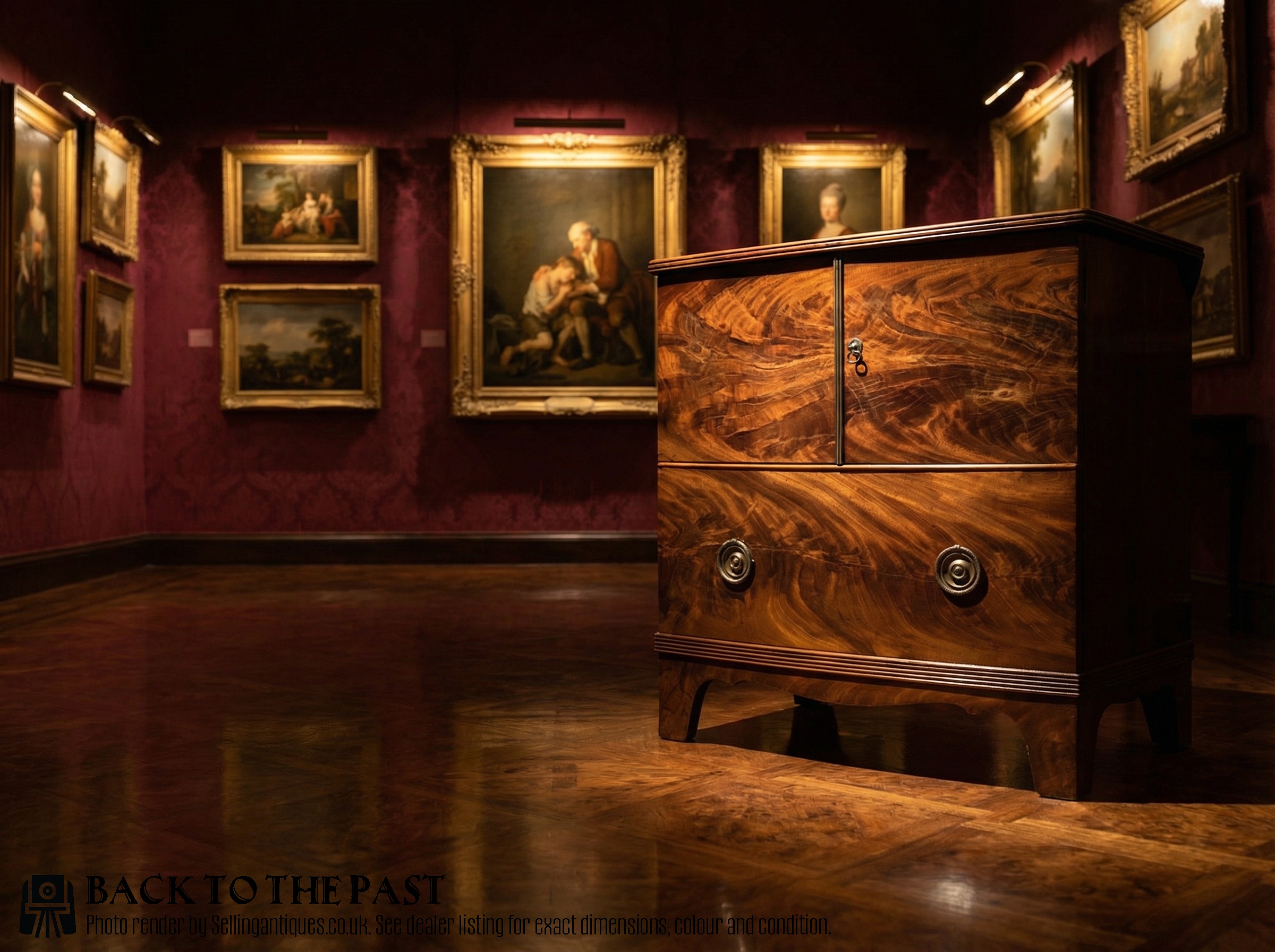
Bowfront Wooden Cabinet
A bowfront wooden cabinet encompasses a range of curved forms, from compact corner cupboards to expansive sideboards and chests of drawers. When searching for a bowfront wooden cabinet, you will encounter diverse interpretations spanning the Georgian, Regency, and Victorian eras.
Makers utilised mahogany as the primary timber, often selecting flame veneers or incorporating contrasting satinwood and boxwood details. Interiors show secondary woods like oak and pine, aligning with period construction methods.
Materials and construction
Cabinetmakers constructed the curved fronts using solid timbers or built-up cores faced with figured mahogany veneers. Flame mahogany and satinwood provided decorative surfaces, frequently enhanced by boxwood inlay and crossbanding.
Secondary woods such as oak, pine, and deal formed internal carcases, drawer linings, and structural framing. Brass hardware, including drop handles and escutcheons, completed the assembly alongside turned wooden knobs on later pieces.
Some corner cupboards hide small interior secret drawers behind false partitions, offering a discreet spot for hidden correspondence.
Factors of quality
Quality rests in the handling of the curved front and the selection of timber veneers. Superior examples display symmetrical flame mahogany figures matched across the drawers and doors, with crisp inlay work that remains flush to the surface.
Secondary construction reveals the maker's hand through hand-cut dovetails on drawer boxes and the weight of the solid timber used for carcases. Finer pieces maintain smooth drawer operation and intact original brassware without excessive timber shrinkage.
The Bowfront Wooden Cabinet Glossary
- Bowfront
- A convex, curved front profile typical of certain case furniture. This shape softens the corners of a room and requires advanced woodworking skill to execute.
- Crossbanding
- A strip of veneer applied across the grain direction of a primary surface to create a decorative border. It often frames drawer fronts and cabinet doors on late eighteenth and nineteenth-century pieces.
- Satinwood
- A light, lustrous timber imported from the tropics and utilised for banding, stringing, and marquetry details. It contrasts strongly with darker woods like mahogany.
- Linen Press
- A tall double-door cupboard containing sliding trays or shelves originally intended for storing textiles. Many examples feature a chest of drawers base beneath the upper cabinet.
- Corner Cupboard
- A cabinet specifically built with angled sides to fit directly into the corner of a room. These pieces appear in both wall-hanging and floor-standing formats.
Bowfront Wooden Cabinet: Frequently Asked Questions
What rooms suit a bowfront wooden cabinet?
These cabinets suit dining rooms, hallways, and living spaces where a curved front softens rigid architectural lines. Sideboards and chests function well against flat walls, while corner cupboards utilise neglected junctions in smaller rooms.
The shallow depth at the edges of a bowfront cabinet allows for easier movement in narrow corridors compared to square case furniture. Placing them away from direct heat sources protects the vulnerable mahogany and satinwood veneers from drying out.
How do I date a bowfront cabinet?
Dating relies on examining construction techniques, timber choices, and hardware styles across the piece. Georgian and Regency pieces often feature hand-cut dovetails and solid mahogany drawer linings, while Victorian examples introduce machine-sawn elements and turned wooden handles.
Secondary woods like oak point toward earlier eighteenth-century origins, whereas pine and deal become common in nineteenth-century and Edwardian carcases. Inlay motifs, such as simple boxwood stringing versus elaborate satinwood marquetry, also help narrow down the period of manufacture.
How do I care for mahogany veneers?
Maintain mahogany surfaces by applying a traditional beeswax polish sparingly and buffing with a soft cloth. Avoid synthetic sprays and silicone-based products that build up and attract dust over time.
Keep the timber away from direct sunlight and radiators to prevent the veneers from lifting or cracking. Consistent indoor humidity levels help preserve both the solid structural elements and the delicate decorative inlays.
What is the difference between a sideboard and a chest?
A sideboard is designed primarily for dining rooms, combining storage drawers with cupboards to hold tableware and serving items. They often feature longer proportions and can rest on multiple legs.
A chest of drawers focuses strictly on stacked drawer storage for clothing and linens, featuring a more compact footprint. While both share a curved bowfront profile, their internal configurations and primary domestic uses remain distinct.