
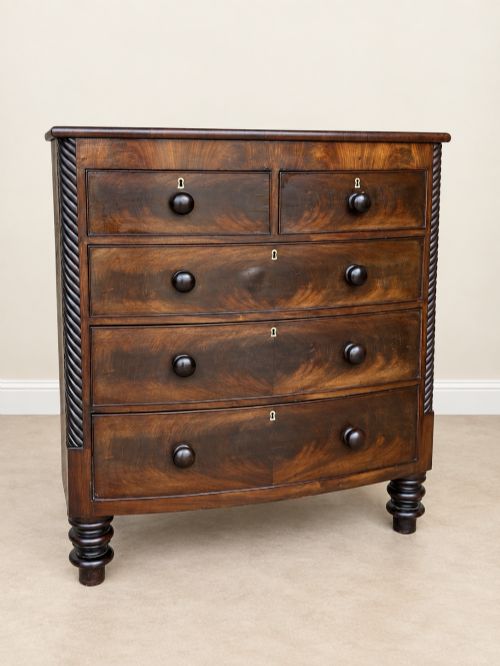
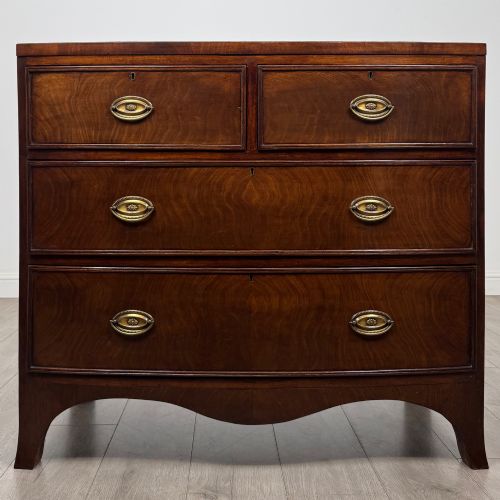

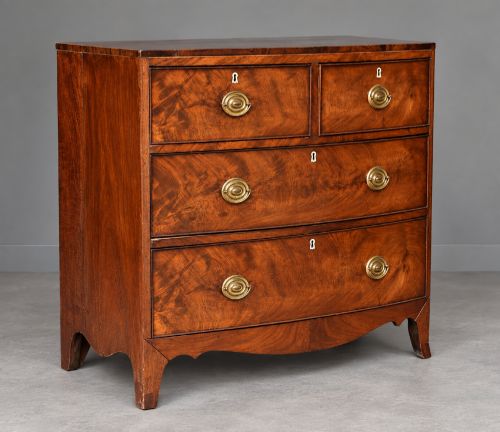
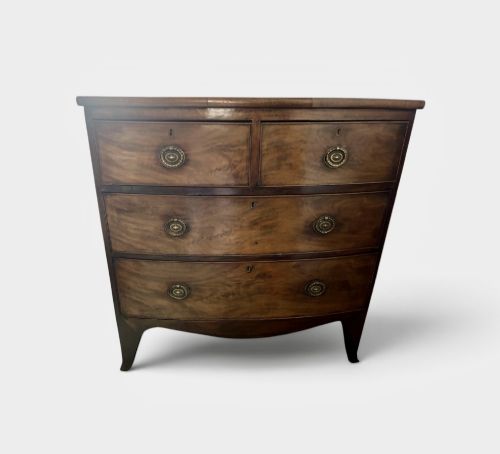
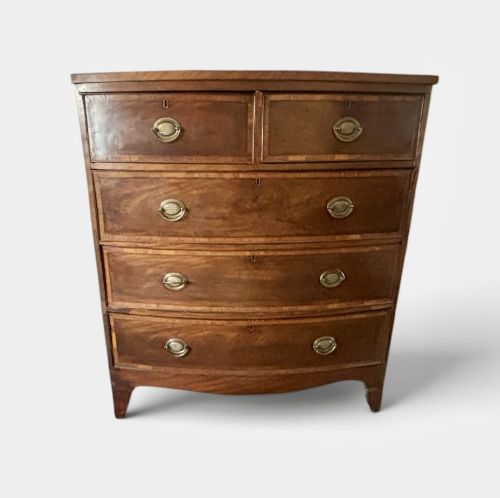
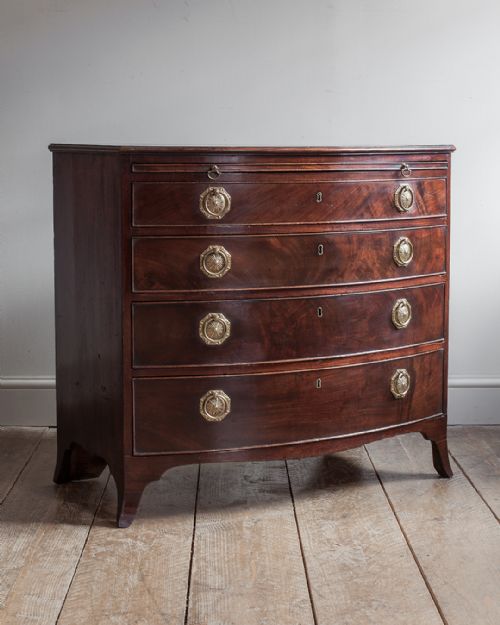
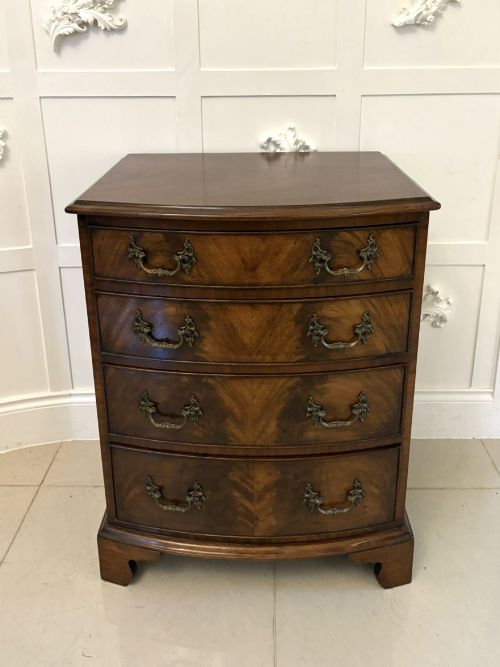
Bowfront Mahogany Storage Chest
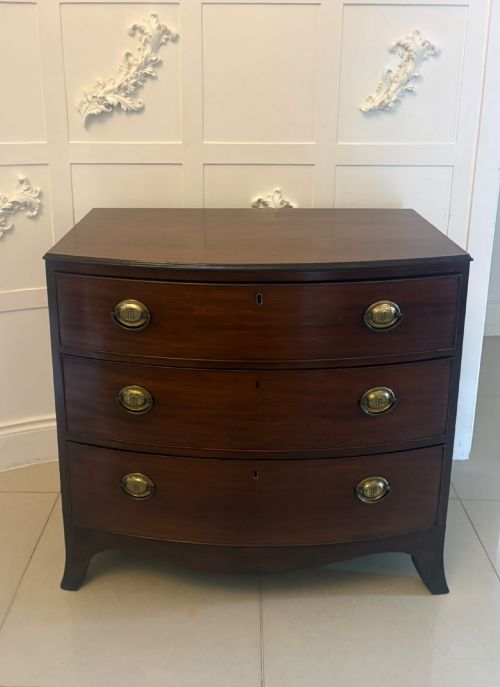
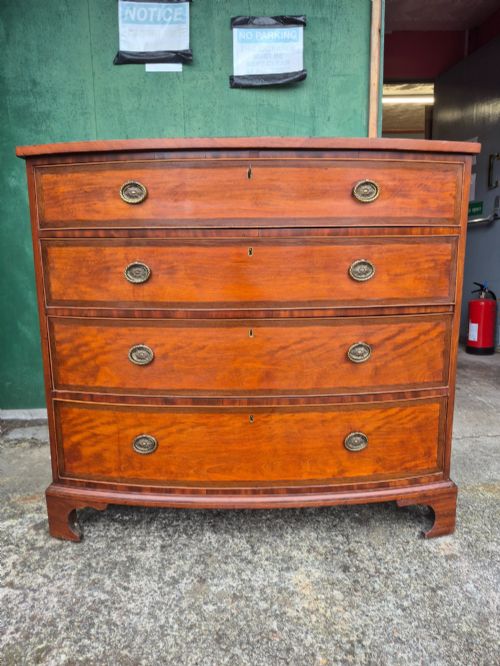
A bowfront mahogany storage chest brings a sweeping, curved facade to any room while offering deep storage drawers formed from rich timber.
Bowfront Mahogany Storage Chest
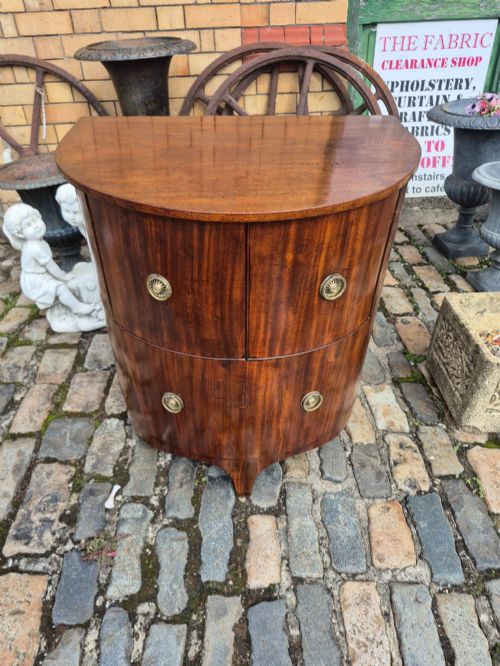
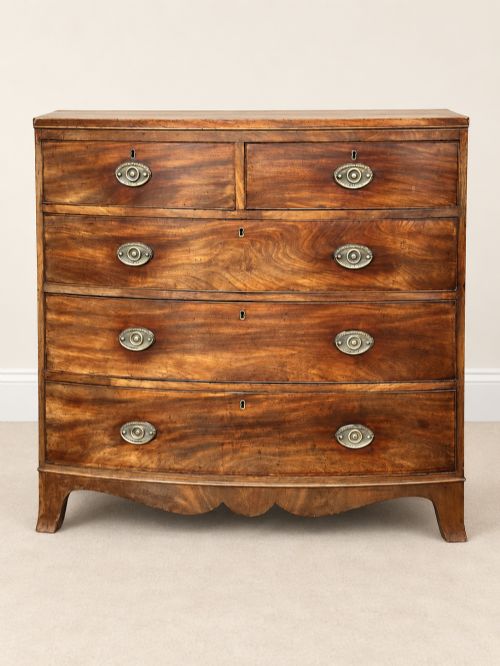
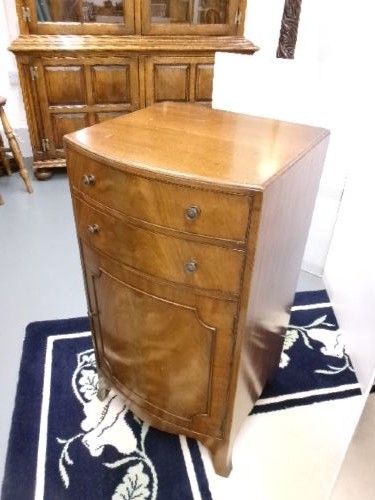
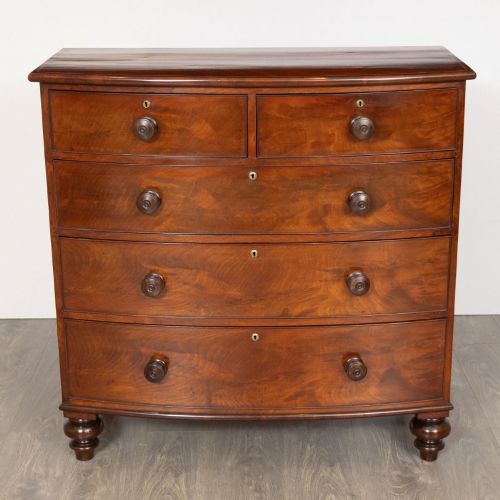
A bowfront mahogany storage chest is primarily found as a chest of drawers, though the listings also include tallboys, linen presses, and sideboards. These pieces span from the 18th century through the Georgian, Regency, and Victorian periods up to the early 20th century.
What varies in quality
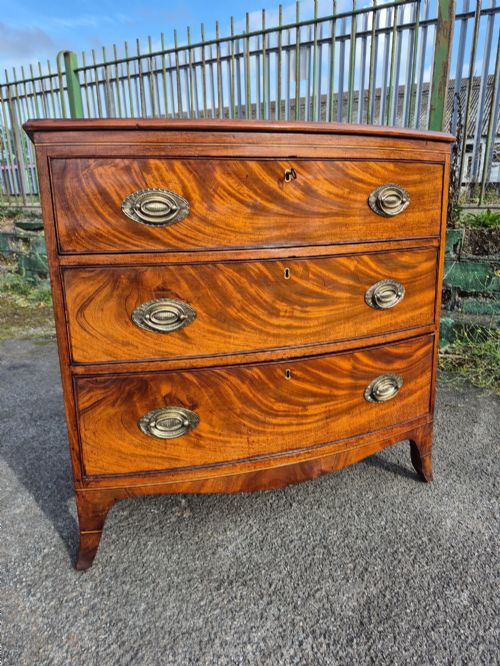
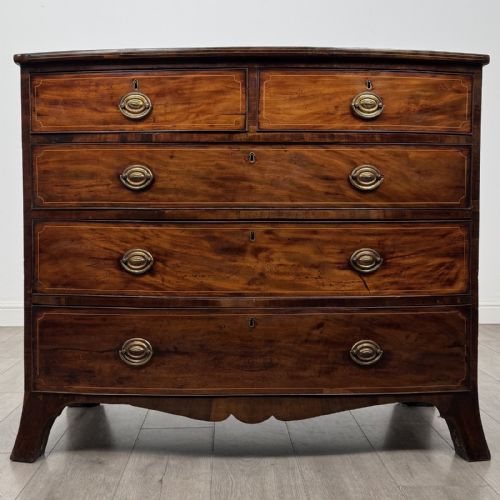
Quality separates pieces through the selection of timber figures, where highly figured flame mahogany veneer displays richer depth than plain grain boards. The precision of the satinwood stringing and the crispness of the edge banding also indicate higher workmanship.
Proportion and scale dictate the desirability of these chests, with smaller or narrower examples demonstrating greater cabinet making skill in managing the curved drawer construction. Original brass fittings and smooth drawer operation further distinguish superior examples from standard ones.
Listings span from the 18th century through the Georgian, Regency, and Victorian eras into the 1920s, utilising mahogany, flame mahogany veneer, satinwood, pine, and oak.
The Bowfront Mahogany Storage Chest Glossary
- Bowfront
- A convex, curved front facade that projects outward in a smooth arc. This shape distinguishes these chests from flat-fronted storage furniture.
- Flame mahogany
- A distinct grain pattern in mahogany timber that resembles flickering flames. It is achieved by cutting through the branch junctions of the tree.
- Crossbanding
- A strip of veneer applied perpendicularly to the grain of the main surface, often framing the drawer fronts. It creates a neat decorative border.
- Caddy top
- A tabletop style with a raised, moulded edge reminiscent of tea caddy lids. It appears on various 18th and early 19th-century chests.
- Graduated drawers
- Drawers that decrease in depth from the bottom to the top of the chest. This arrangement provides structural balance to the piece.
Bowfront Mahogany Storage Chest: Frequently Asked Questions
What is a bowfront mahogany storage chest?
A bowfront mahogany storage chest is a case furniture piece featuring a convex curved front and deep drawers made from mahogany timber. These pieces were designed to hold clothing and domestic linens while providing a decorative focal point in bedrooms and parlours.
Originating mainly from the Georgian and Regency periods, they combine practical storage capacity with curved cabinetry. The design softens the rigid angles typically found in rectangular chest furniture.
How do I date a Georgian bowfront chest?
Dating a Georgian chest involves examining the construction techniques of the drawer linings, the timber selection, and the style of the brass handles. Earlier pieces often display hand-cut dovetails and oak secondary woods, whereas Regency examples may incorporate satinwood veneers.
Foot styles also help identify the era, shifting from bracket feet in the 18th century to swept bracket feet or turned feet in later periods. Consulting the overall proportion and secondary woods clarifies the manufacturing timeframe.
Where should I place a bowfront chest?
A bowfront chest suits bedrooms, hallways, or living rooms where its curved facade can be appreciated without obstructing tight walkways. Because the front projects outward, placing it against a clear wall allows the timber grain and silhouette to stand out.
Pairing the chest with a simple mirror or placing it beneath artwork creates a balanced display surface. The deep drawers make them practical for storing folded garments, linens, or everyday items.
How do I care for mahogany furniture?
Caring for mahogany involves keeping the timber away from direct sunlight and extreme temperature fluctuations to prevent veneer cracking. Dusting regularly with a soft, dry cloth preserves the polished finish without the need for heavy chemical polishes.
Applying a traditional beeswax occasionally helps nourish the wood and maintain its natural lustre. Avoiding excess moisture protects both the mahogany surfaces and the internal secondary timbers.