




Bowfront Drawer Table
A bowfront drawer table brings a graceful curved profile and practical storage into a room.
Bowfront Drawer Table
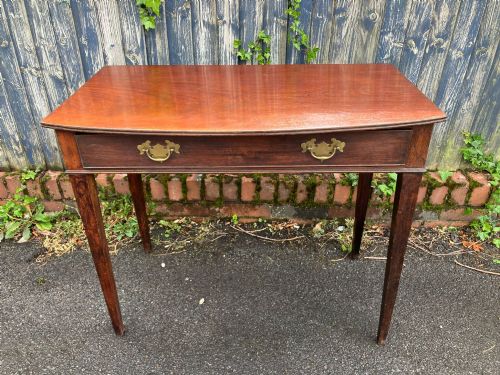
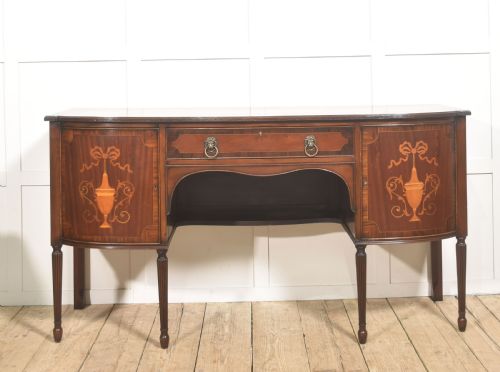
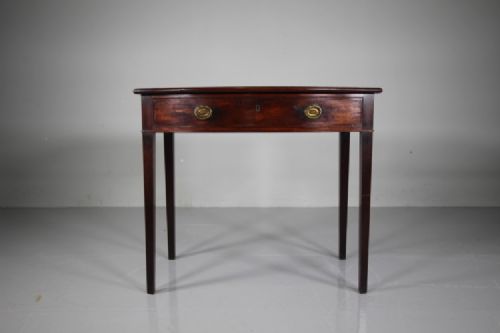
A bowfront drawer table is a versatile form, appearing primarily as side tables, serving tables, and kneehole desks with a rounded front edge. The examples found here span the Georgian and Regency periods, alongside later Victorian and 20th-century revivals.
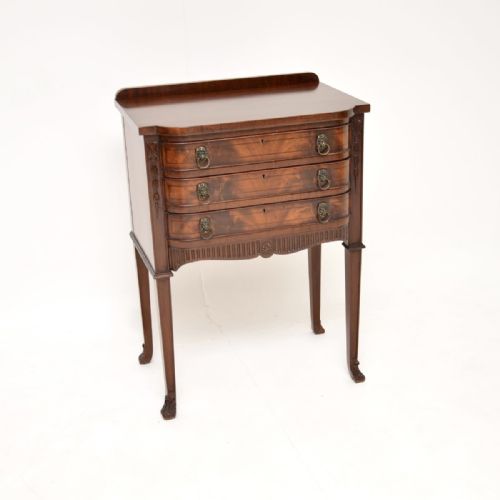
Most pieces encountered in this selection rely on single or multiple frieze drawers, combining the smooth convex curve with functional compartmental storage. They range from compact bedside cabinets and lamp tables to substantial sideboards and writing tables.
Makers utilised this curved design to soften room lines while maintaining the utility of a standard rectangular surface. Buyers frequently select these items for hallways, bedrooms, and reception rooms where space efficiency matters.
Materials and construction methods
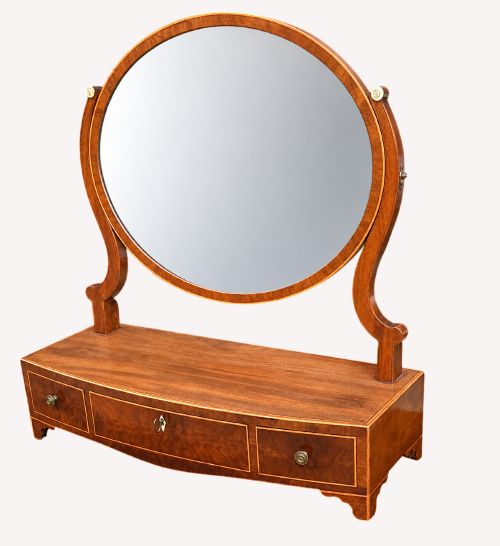
Construction centres predominantly on solid mahogany and rich mahogany veneers, occasionally accented with burr maple or burr walnut figure. Craftsmen utilised boxwood inlay and delicate crossbanding to frame the curved drawer fronts and tops.
The distinctive curved drawer fronts required skilled joinery, shaping solid timber or steaming wood to hold the convex radius. Secondary woods and traditional dovetail joints secure the drawers, while brass handles and escutcheons complete the hardware.
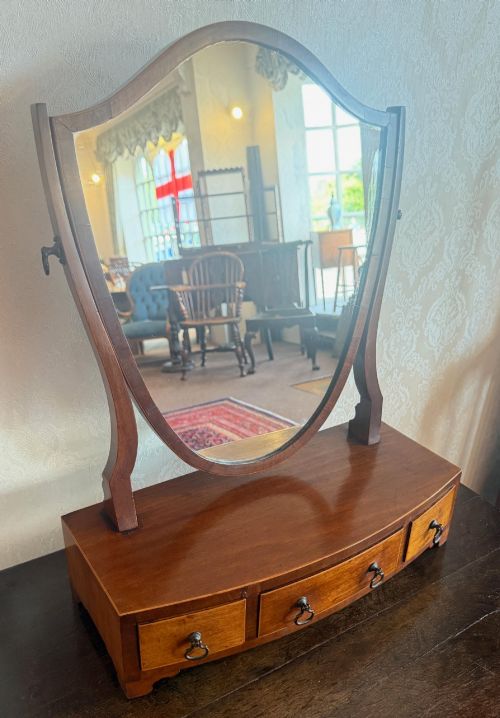
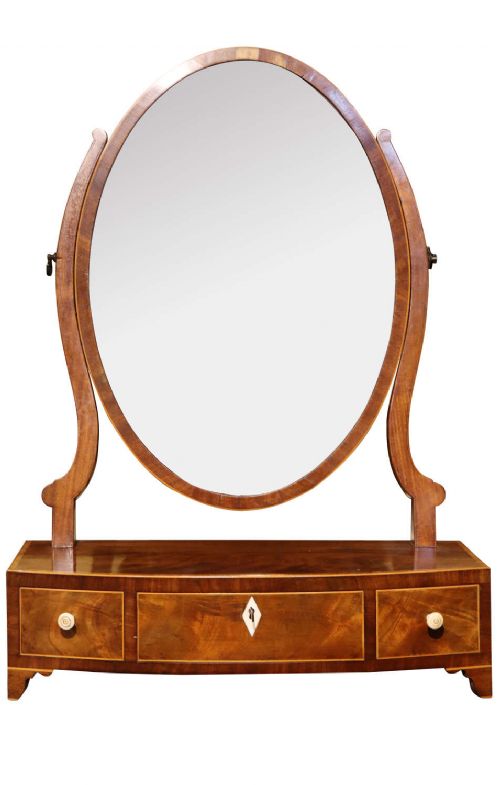
Makers designed certain miniature bowfront mirrors simply to perch atop larger chests, offering a tiny curved reflection for morning vanity.
Markers of distinction and craftsmanship
Quality rests in the precision of the curved drawer fronts and the alignment of the grain across the entire width. Superior pieces display carefully chosen timber figures, such as flame mahogany or burr walnut, matched symmetrically.
Refinement shows in the subtlety of the inlay work, the crispness of edge mouldings, and the retention of original brass hardware. Lesser examples may exhibit clumsy proportioning in the sweep of the bow or replacement drawer linings.
The Bowfront Drawer Table Glossary
- Bowfront
- A convex curved cabinet or table front that swells outward from the corners. This shape gained widespread popularity during the Georgian and Regency eras.
- Crossbanding
- A strip of veneer applied perpendicularly to the grain of the main surface, often bordering the edge of a tabletop or drawer. It creates a neat visual frame.
- Frieze drawer
- A drawer located immediately beneath the top surface of a table. These drawers often feature hand-cut dovetails and subtle brass pulls.
- Kneehole
- A recessed central space beneath a desk or table designed to accommodate the user's legs. It is typically flanked by banks of small drawers.
- Inlay
- A technique of inserting contrasting strips of wood, such as boxwood or satinwood, into recesses to form decorative patterns. It defines many Sheraton-style pieces.
Bowfront Drawer Table: Frequently Asked Questions
Where should I place a bowfront table?
These tables suit hallways, living rooms, and bedrooms because the curved front softens the corners of a room. Their compact depth allows them to sit comfortably against walls without obstructing pathways.
They function effectively as serving surfaces, writing desks, or lamp tables depending on the specific height and drawer configuration.
How do I date a mahogany table?
Dating relies on examining construction methods, timber choice, and secondary woods like oak or pine inside the drawer structures. Georgian and Regency examples often display hand-cut dovetails and specific patination built up over generations.
Later 19th-century and 20th-century revival pieces tend to show more uniform machine-sawn timber and different interior lining materials.
Are these tables practical for daily use?
The integrated drawers offer genuine storage for small household items, stationery, or bedside essentials. Solid timber construction provides the durability required for everyday placement.
Routine care involves simple polishing and keeping the wood away from direct heat sources to protect the polished surface and veneers.