


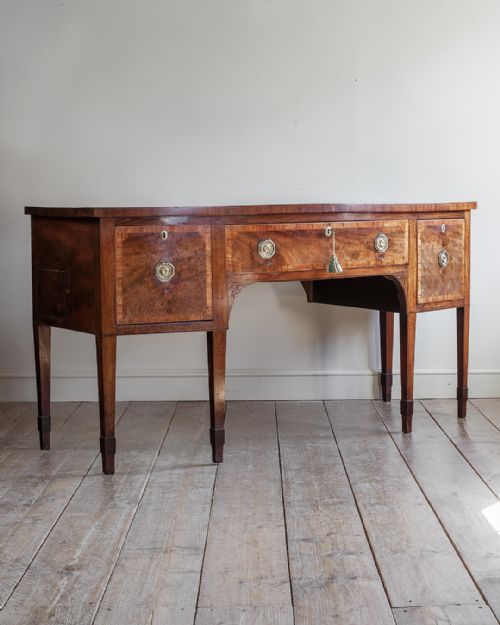
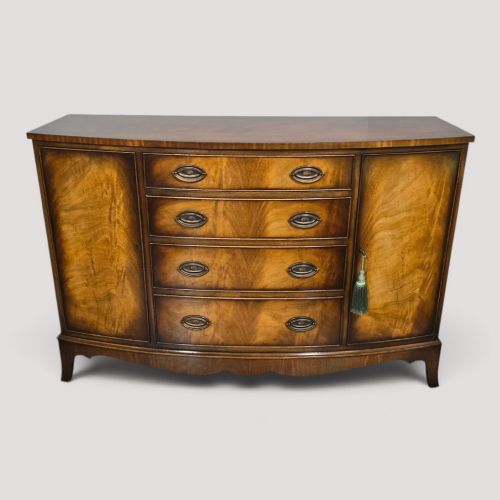
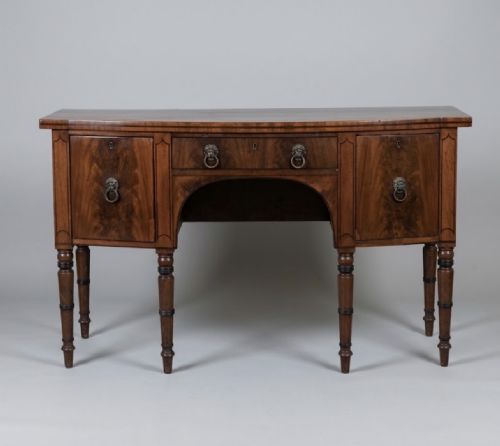
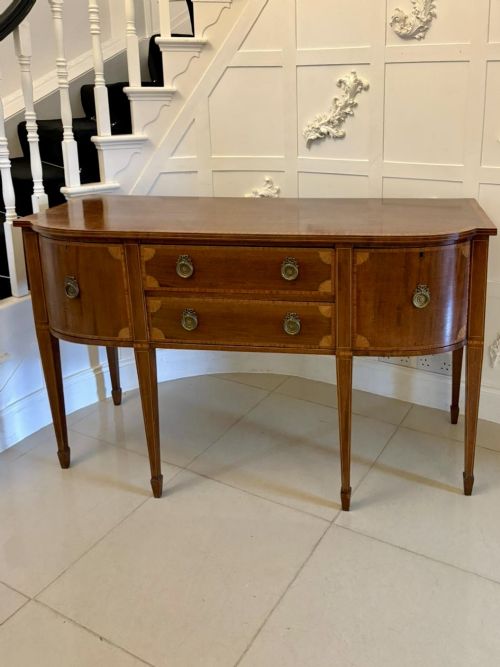
Bowfront Dining Cabinet
A bowfront dining cabinet provides generous interior capacity while softening a room's geometry through a curved central facade.
Bowfront Dining Cabinet
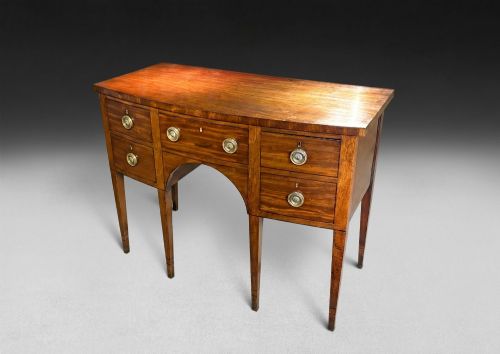
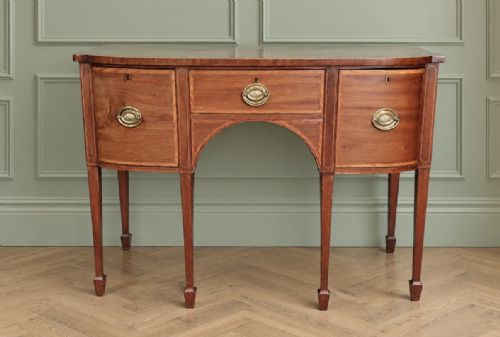
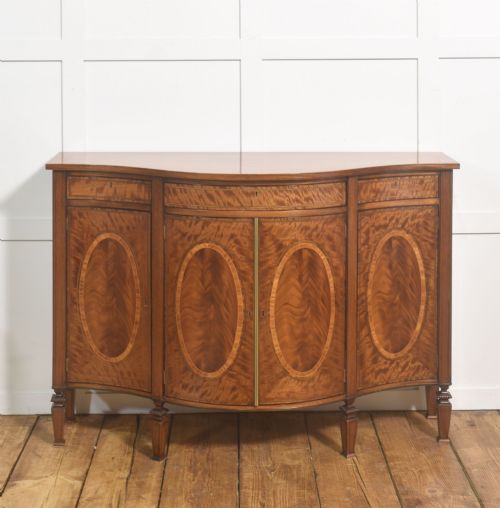
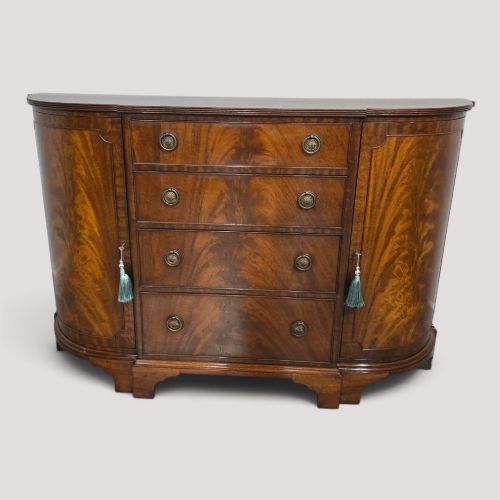
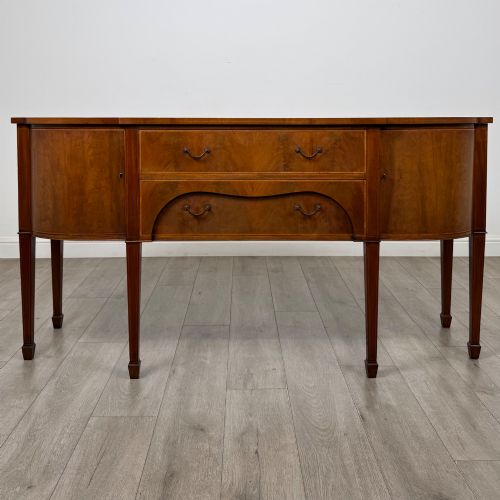
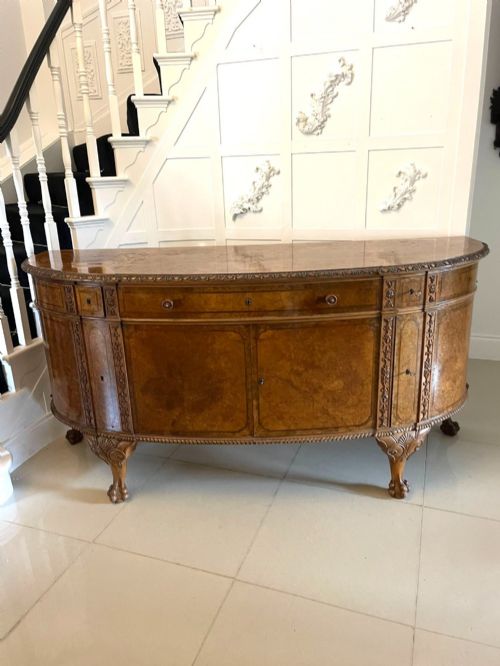
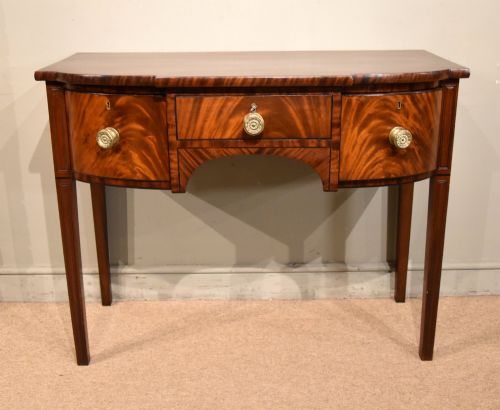
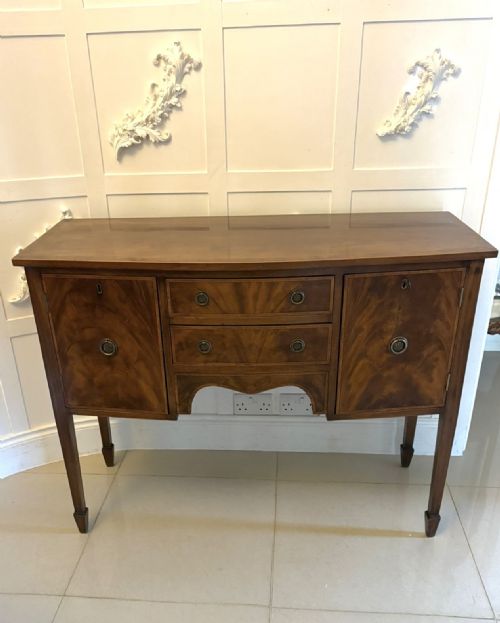
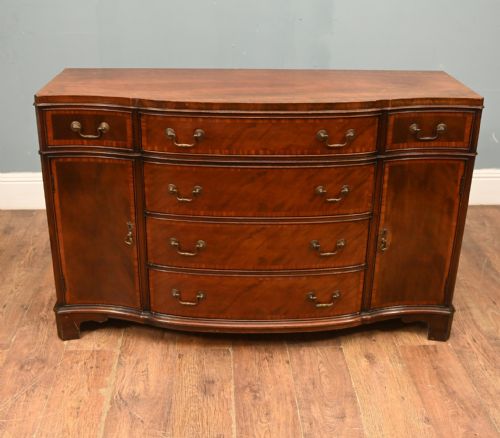
A bowfront dining cabinet typically takes the form of a sideboard, server, or buffet designed for dining room storage and service. The pieces gathered under the term bowfront dining cabinet draw from Georgian, Regency, Victorian, and Edwardian periods.
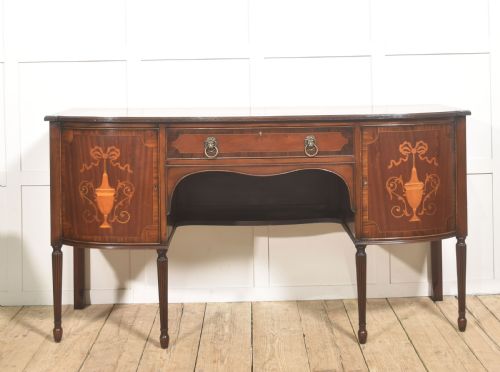
The most frequent examples on this page are mahogany sideboards featuring the characteristic convex curved front, often augmented by satinwood or boxwood inlay reflecting Sheraton and George III traditions.
Materials and construction
Cabinet makers relied primarily on solid mahogany and flame mahogany veneers, selected for rich grain patterns and durability. Surfaces frequently incorporate decorative contrasting timbers such as satinwood, boxwood, and rosewood arranged in delicate stringing or marquetry panels.
Hardware relies on cast brass handles and escutcheons, whilst structural elements utilise secondary timbers like oak. Carpenters shaped the sweeping front curves through steam-bending or segmented block construction before applying fine veneers.
Bowfront Dining Cabinet Retail Price Guide 2026
Typical asking prices for bowfront dining cabinet among the pieces listed under this phrase on Sellingantiques today, from the lower quarter to the upper quarter. They describe what is for sale here now, not the wider market.
Quality variations
The standard of a bowfront cabinet rests largely on the choice of timber and the precision of its decorative inlays. Superior examples display carefully matched flame mahogany veneers and crisp, intricate boxwood and satinwood crossbanding rather than painted substitutes.
Construction methods also distinguish finer specimens, particularly the tightness of drawer dovetails and the integration of carved details such as Green Man motifs or fine cockbeading around the drawer edges.
The Bowfront Dining Cabinet Glossary
- Bowfront
- A furniture facade that curves outward in a convex arc. This shape gained widespread popularity during the late Georgian and Regency periods to soften rigid room layouts.
- Crossbanding
- A narrow strip of veneer applied perpendicularly to the grain of the main surface. It creates a neat border around drawer fronts and table tops.
- Marquetry
- The art of forming decorative patterns using fitted pieces of various coloured wood veneers. It often depicts floral or classical motifs on cabinet doors.
- Stringing
- Thin, linear inlay work contrasting in colour with the primary background timber. Makers use this technique to outline drawers and panels.
- Flame mahogany
- Timber cut from the fork of the mahogany tree where branches meet the trunk, yielding a distinctive flickering flame pattern. Cabinet makers prize this figure for principal display surfaces.
Bowfront Dining Cabinet: Frequently Asked Questions
What is a bowfront cabinet used for?
These pieces served historically in dining rooms for storing silver, linen, and china, whilst the top surface functioned as a sideboard for serving food during meals.
Today, they perform similar storage roles in dining rooms or hallways, offering deep interior capacity within a curved footprint that projects less aggressively into a walkway than a rectangular piece.
How do I identify a Georgian bowfront cabinet?
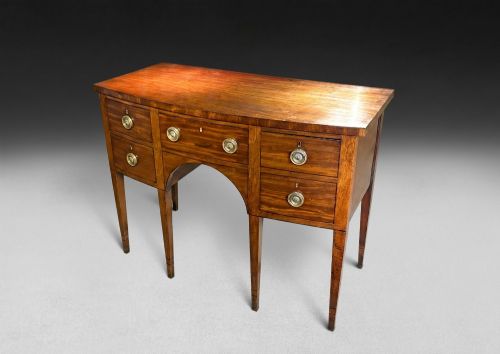
Georgian and George III pieces typically feature dense, heavy mahogany timbers, hand-cut dovetails, and understated boxwood stringing rather than elaborate marquetry. The proportions tend to be rigorous and classical, often resting on straight tapered legs.
Later Edwardian and Sheraton Revival interpretations often introduce lighter satinwood crossbanding, more vibrant flame mahogany veneers, and occasional marquetry panels influenced by earlier aesthetics.
Where should I place a bowfront sideboard?
A dining room is the traditional setting, positioned against a primary wall where it can anchor the room and hold serving dishes or glassware during gatherings.
They also sit well in spacious hallways or living rooms, where the curved mahogany or satinwood facade adds warmth and breaks up the straight lines of modern interiors.
What materials were used to make these cabinets?
The primary structural and visible timber is almost universally mahogany, frequently selected as flame mahogany for the drawer fronts and doors. Cabinet makers incorporated satinwood, boxwood, and rosewood for contrasting inlay and stringing.
Secondary woods like oak appear in drawer linings and internal framing, whilst brass provides the material for handles, knobs, and escutcheons.