


Bowfront Bedroom Furniture
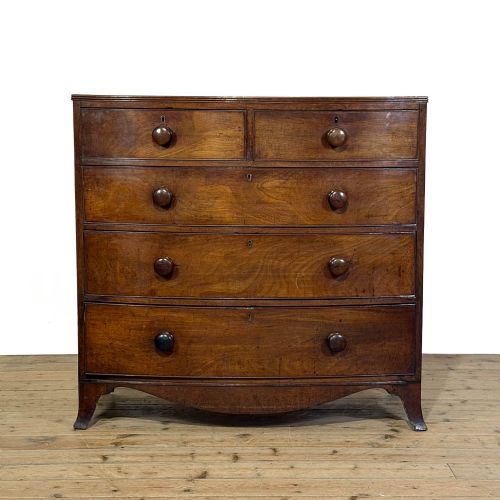
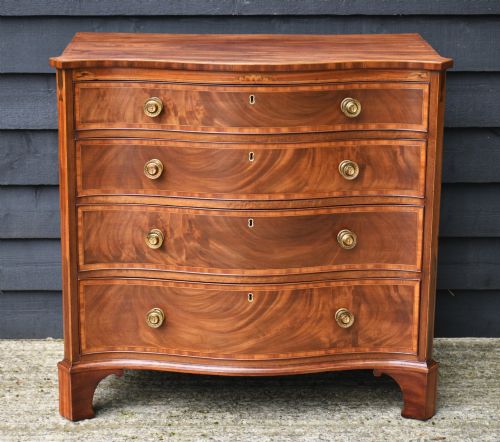
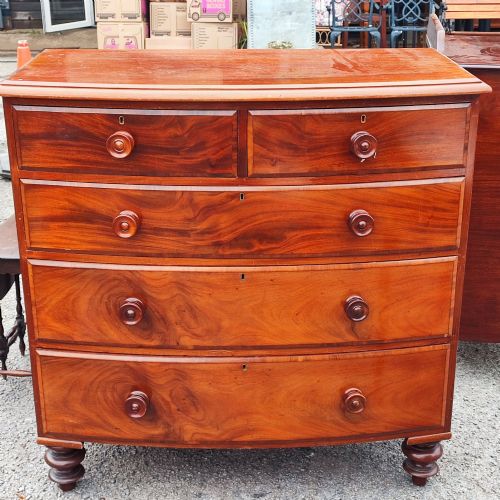
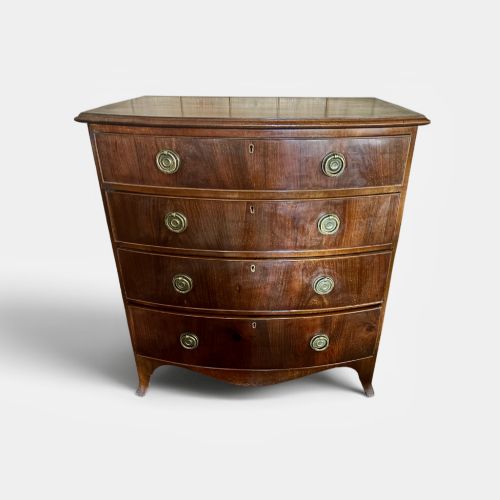
Bowfront bedroom furniture brings together curving mahogany fronts and practical storage from Georgian, Regency and Victorian workshops.
Bowfront Bedroom Furniture
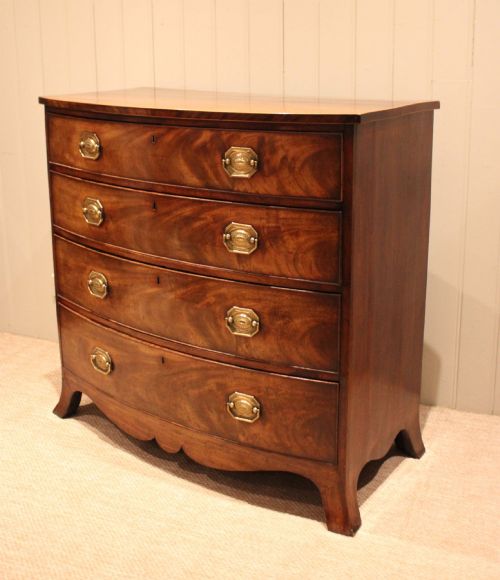
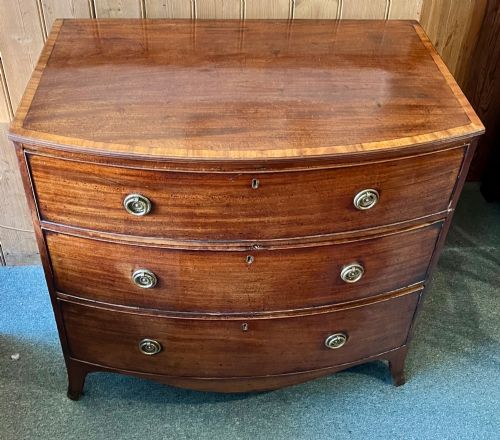
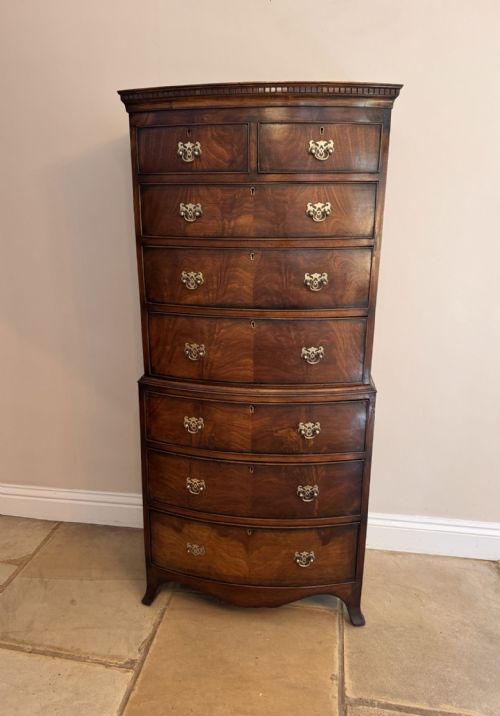
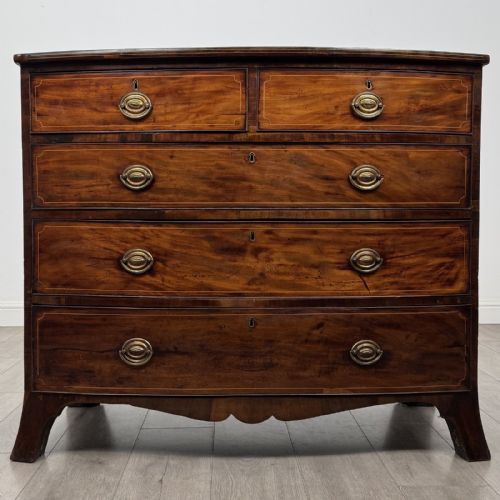
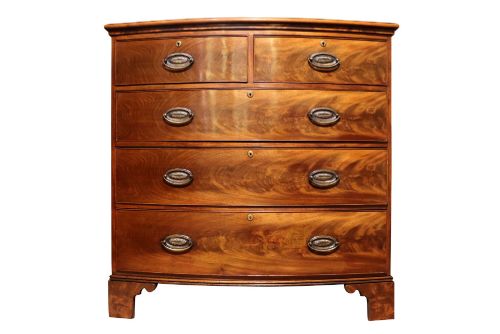
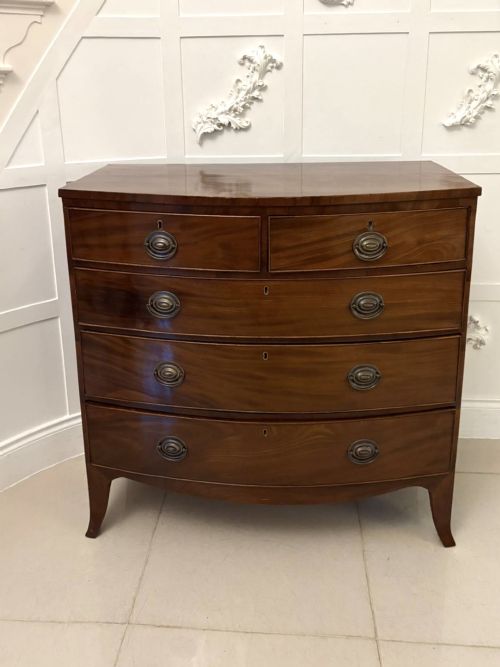
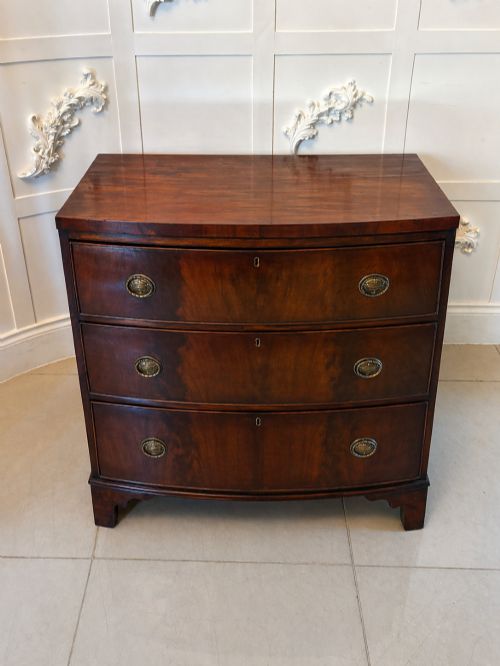
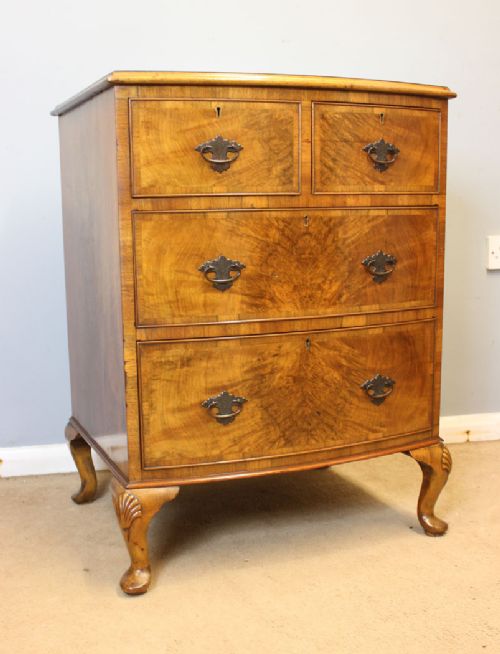
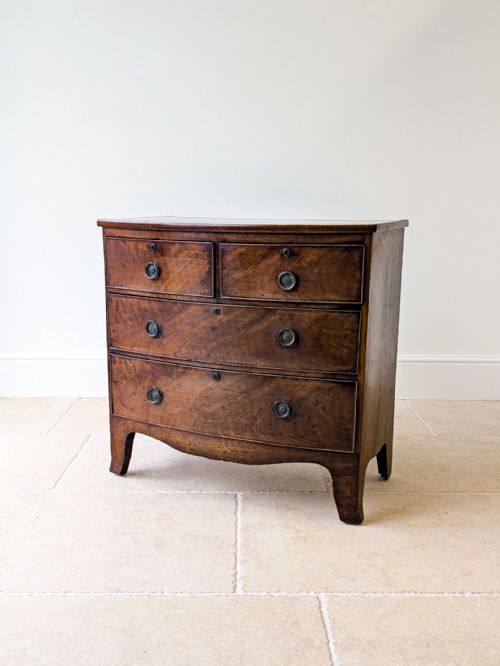
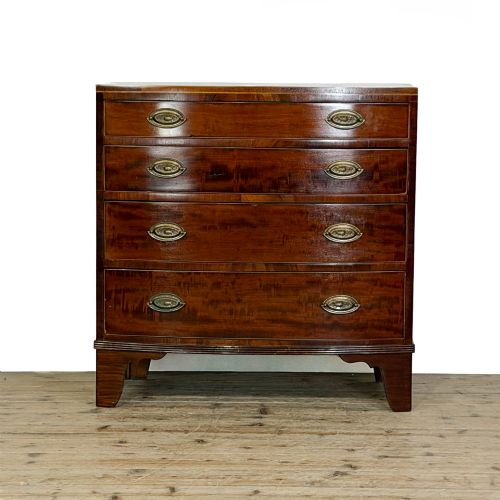
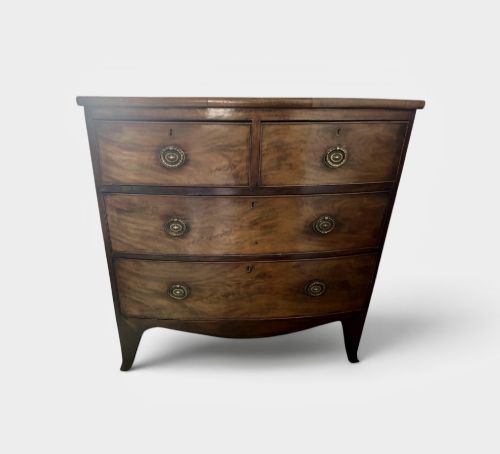
Bowfront bedroom furniture centres primarily on chests of drawers, alongside larger linen presses, tallboys and smaller bedside tables. These pieces span from the 18th century through the Georgian, Regency and Victorian periods up to the 1930s. The curved drawer fronts soften the room while offering generous storage capacity.
Mahogany dominates the selection, frequently enhanced by crossbanding, flame veneers or contrasting satinwood details. Pieces appear in various proportions, from neat Scottish and Welsh examples to large chest on chest formats. Walnut, burr walnut and oak also feature among the surviving items.
How they were made
Cabinet makers built these curved fronts using solid timbers and carefully selected veneers applied to pine or oak carcasses. Mahogany serves as the principal wood, shaped to create the characteristic convex sweep across the drawer banks. Brass handles and bracket feet complete the construction.
Makers utilised decorative techniques like crossbanding and figured mahogany veneers to highlight the curved grain. Drawers were typically hand-dovetailed, reflecting the traditional joinery methods of Georgian and Regency workshops.
Bowfront Bedroom Furniture Retail Price Guide 2026
Typical asking prices for bowfront bedroom furniture among the pieces listed under this phrase on Sellingantiques today, from the lower quarter to the upper quarter. They describe what is for sale here now, not the wider market.
Materials recorded across the pieces include mahogany, burr walnut, satinwood, oak, pine and brass hardware.
What varies in quality
Quality rests on the selection of timber figures, such as flame mahogany or burr walnut, and the precision of the curved drawer construction. Superior pieces maintain crisp lines along the bow front and feature well-matched grain patterns across the drawer tiers.
Original hardware, balanced proportions and neat bracket feet or apron details elevate a piece. Lesser examples display plain timber choices or heavy alterations to the original structure and handles.
The Bowfront Bedroom Furniture Glossary
- Bow front
- A convex curved cabinet front that projects outward in the centre. This shape softens the silhouette of traditional chests of drawers.
- Crossbanding
- A narrow strip of veneer laid perpendicular to the grain of the surrounding wood. It frames drawer fronts and tabletops.
- Chest on chest
- A tall storage unit formed by stacking one chest of drawers directly on top of another. Also known as a tallboy.
- Linen press
- A tall piece of furniture featuring upper doors enclosing sliding trays for textiles, positioned above a base of lower drawers.
- Bracket foot
- A simple structural foot supporting the corners of case furniture, shaped in an L-bracket profile.
Bowfront Bedroom Furniture: Frequently Asked Questions
What rooms suit bowfront bedroom furniture?
These curving chests fit comfortably in bedrooms and dressing rooms where sharp corners need softening. Their projecting fronts add presence without demanding excessive floor space.
They pair easily with traditional and modern interiors alike, serving as focal storage points. The varied heights accommodate lamps, mirrors and everyday items on top.
How do I identify a Regency bow front?
Regency pieces often display rich flame mahogany veneers and crisp geometric proportions. They frequently rest on bracket feet or short turned legs.
Look for fine brass handles and neat cockbeading around the drawer edges. The overall aesthetic feels lighter and more refined than earlier Georgian work.
Are all bowfront chests made from mahogany?
Mahogany is the predominant timber found in these listings, valued for its stability and rich grain. Cabinet makers utilised it extensively throughout the Georgian and Victorian eras.
Alternative timbers do appear, including burr walnut, oak and satinwood. Each material brings a distinct colour and texture to the curved facade.
What is a chest on chest?
A chest on chest consists of two distinct drawer sections stacked vertically to maximise storage capacity. The upper chest is typically narrower than the base section.
This form gained popularity during the 18th century and continued through later periods. It provides substantial vertical storage while maintaining a manageable footprint.