

Bowfront Bedroom Dresser
A bowfront bedroom dresser offers curved storage with classic proportion, combining practical bedside utility with the rich figure of period timber.
Bowfront Bedroom Dresser
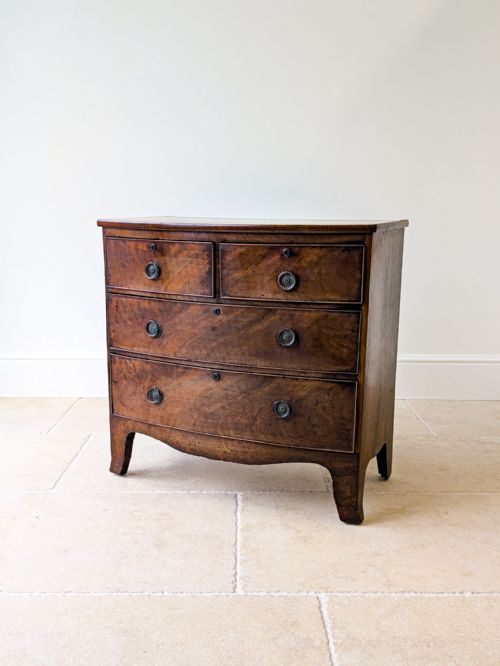
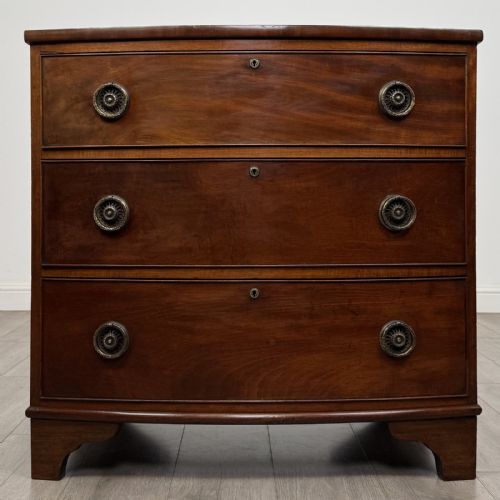
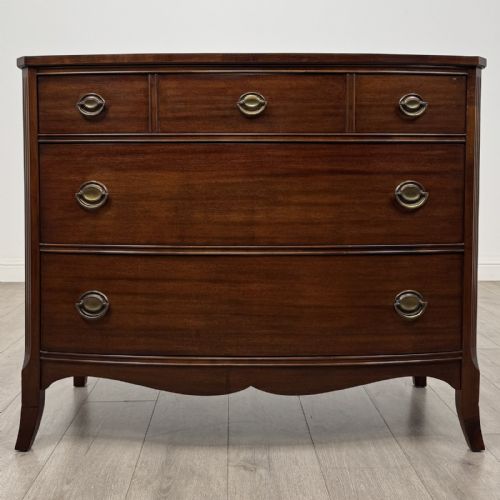
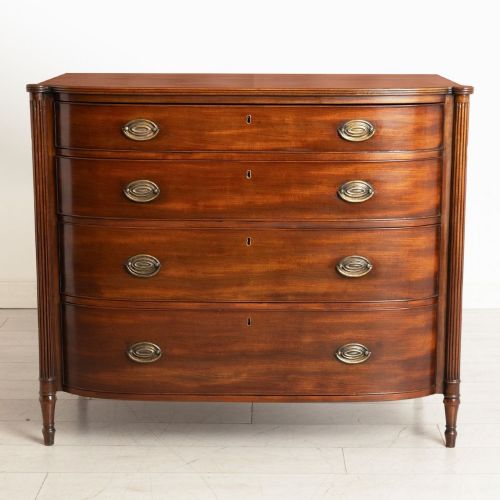
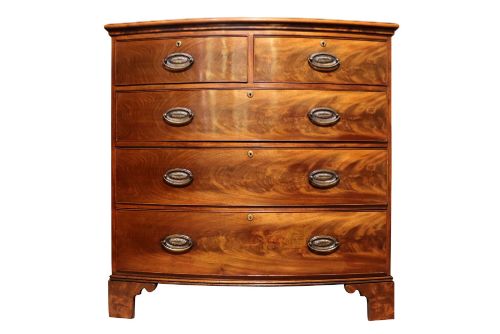
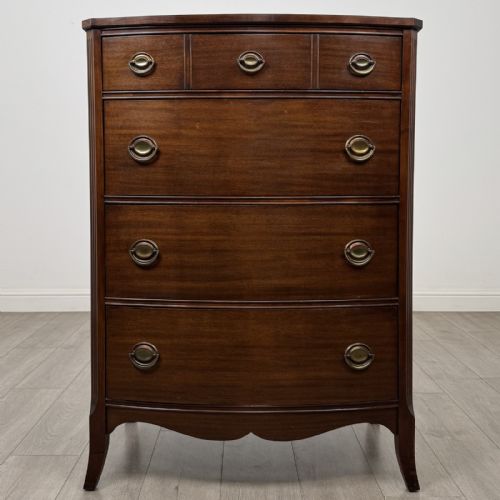
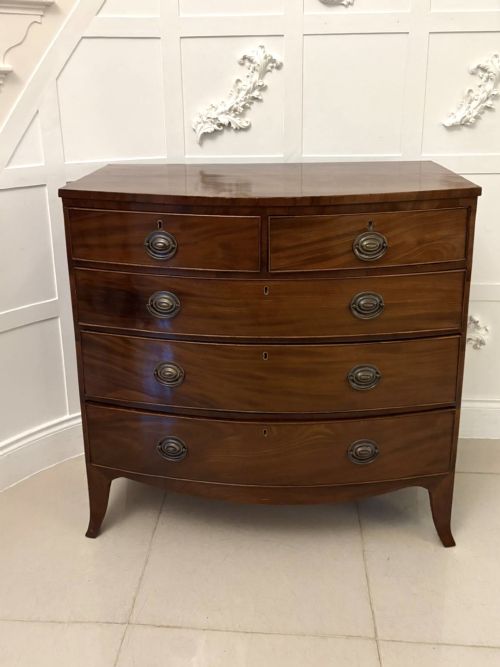
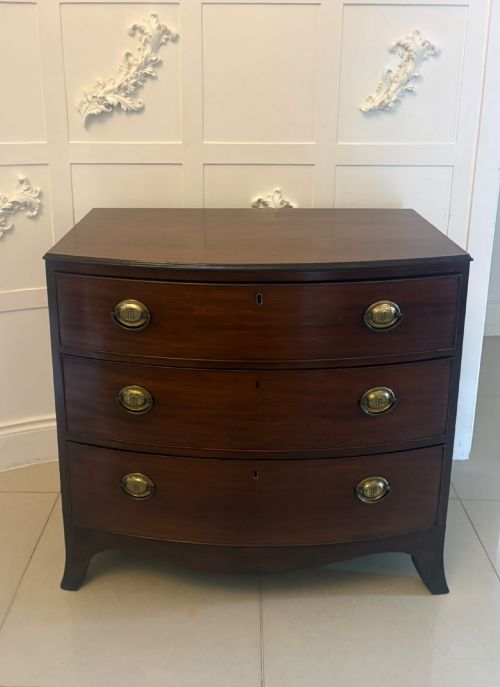
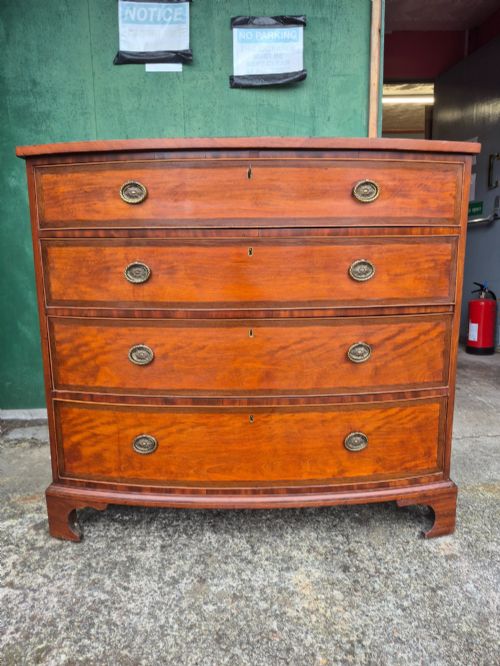
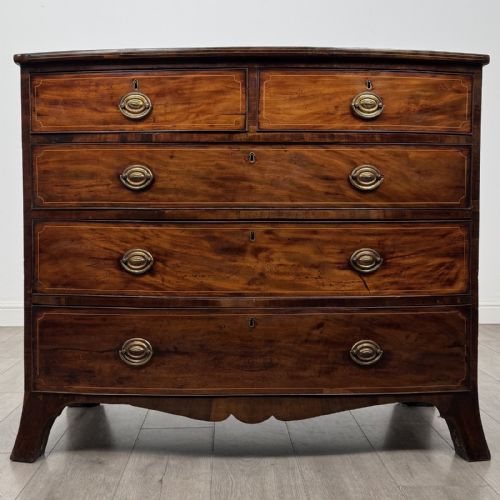
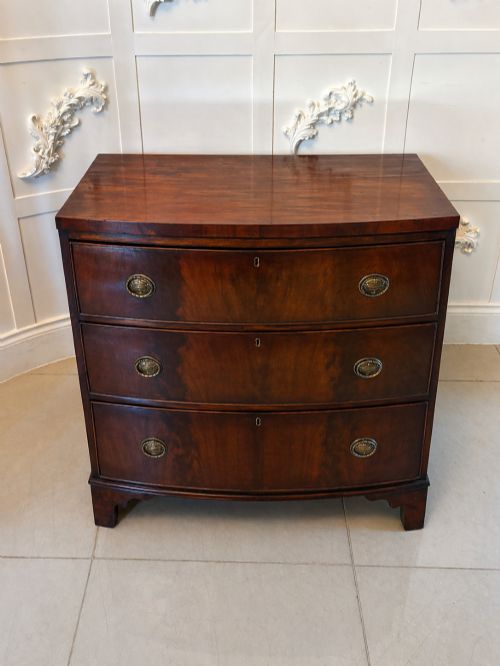
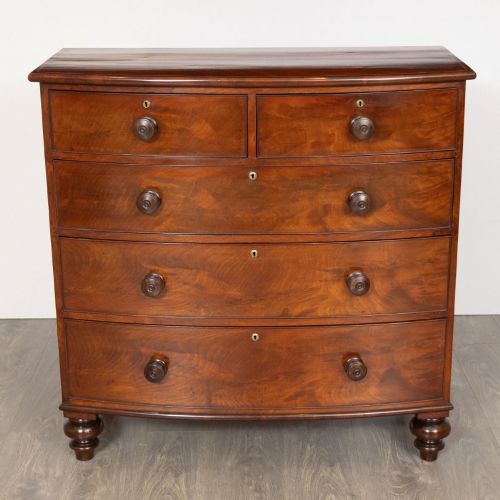
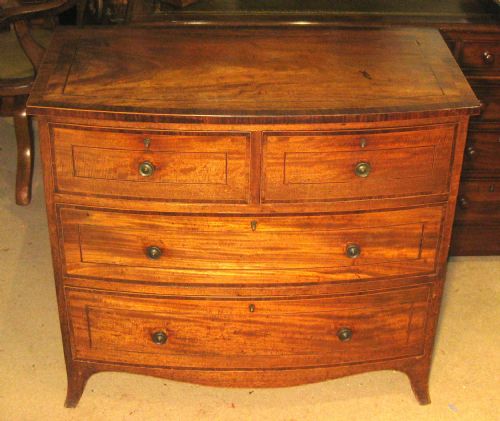
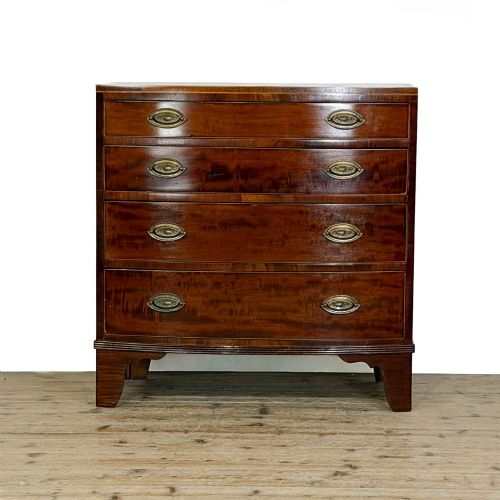
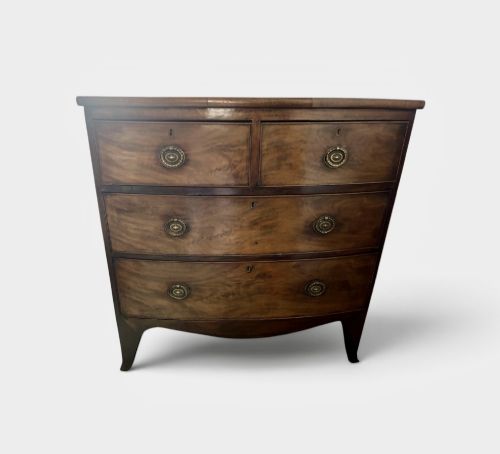
A bowfront bedroom dresser takes the form of a chest of drawers featuring a rounded or convex front profile that softens the corners of a room. When hunting for a bowfront bedroom dresser, the examples met most frequently on this page date from the Georgian, Regency, and Victorian periods, constructed primarily as tall or low chests with graduated drawers.
The evidence spans the eighteenth, nineteenth, and early twentieth centuries, capturing shifts in design from strict George III proportions through to Scottish Regency and later Edwardian interpretations. These pieces function as principal bedroom storage furniture, providing deep lower drawers and smaller upper drawers suited to daily domestic use.
Regional variations appear across the listings, including Welsh and Scottish forms alongside standard English pieces. Buyers encounter both compact, narrow proportions designed for smaller spaces and large format chests equipped with secret drawers or fitted top sections.
How They Were Made
Makers constructed these carcases using solid timber frames lined with pine or oak for secondary framing, applying finely figured mahogany, flame mahogany veneer, and satinwood across the curved drawer fronts and top surfaces. Crossbanding in contrasting timbers frames the primary panels, while specialised joinery accommodated the convex curve of the bow front without stressing the grain.
Hardware consists principally of brass handles secured through the drawer faces, accompanied by bone escutcheons around keyholes where fitted. Drawer interiors utilise secondary softwoods joined with hand-cut dovetails, built to withstand the daily motion of opening and closing.
Listings incorporate pieces spanning from the 18th century through to the 1920s, utilising primary materials such as mahogany, satinwood, oak, pine, and bone.
What Varies in Quality
The degree of figuring in the mahogany veneer dictates the visual impact across the range, with select pieces displaying strong flame patterns and symmetrical grain matching on the drawer fronts. Subtle details such as crossbanded borders in satinwood and the retention of original brass hardware elevate certain examples above standard utility pieces.
Proportion and execution of the curved front define the structural tier of each chest. Neat, compact scaling combined with well-maintained secondary timbers and smooth drawer movement separates finer cabinet work from more utilitarian workshop production.
The Bowfront Bedroom Dresser Glossary
- Bow front
- A convex, outwardly curved front profile characteristic of these chests of drawers. This curved design softens the rigid angles typical of standard rectangular furniture.
- Crossbanding
- A decorative border technique where thin strips of veneer are laid perpendicular to the grain of the main panel. It frames drawer fronts with a contrasting timber stripe.
- Flame mahogany
- A highly figured cut of mahogany wood exhibiting a distinctive feather-like pattern. This prized grain creates a flickering visual effect across large drawer surfaces.
- Graduated drawers
- A sequence of drawers that decrease in depth from the bottom to the top of the chest. This arrangement creates a balanced visual weight and accommodates larger items below.
- Secret drawer
- A concealed compartment hidden within the upper structure of the chest, often accessed by removing a concealing panel or locking mechanism.
Bowfront Bedroom Dresser: Frequently Asked Questions
What is a bowfront bedroom dresser?
A bowfront bedroom dresser is a chest of drawers featuring a convex, curved front profile designed to provide bedroom storage.
These pieces combine decorative wood veneers with practical drawer configurations suited to domestic use.
How do I date a bowfront chest?
Dating relies on observing period characteristics such as timber choice, handle design, and construction methods like dovetailing.
Georgian and Regency examples show different proportions and veneer work compared to later Victorian or Edwardian pieces.
Where were these chests made?
These items originate from English, Scottish, and Welsh workshops active during the eighteenth, nineteenth, and early twentieth centuries.
Regional cabinetmakers adapted standard forms to include local timber preferences and specialised secret compartments.
How should I care for the veneer?
Protect the wood surfaces by maintaining stable room humidity and avoiding direct placement near heat sources.
Dust regularly with a dry cloth and apply occasional appropriate wax to preserve the finish of the mahogany and satinwood.