

Bowed Front Chest
A bowed front chest offers a curved profile that softens the corner of a room while providing deep drawer storage.
Bowed Front Chest
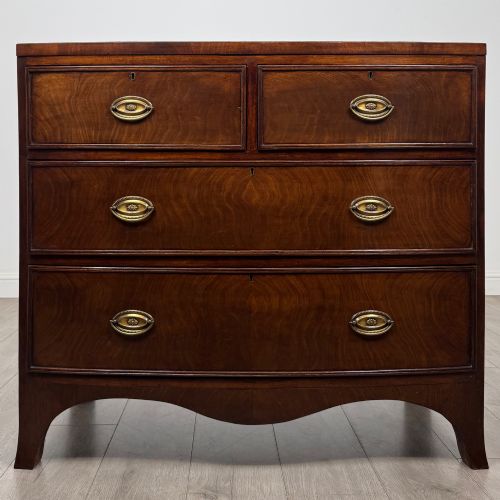
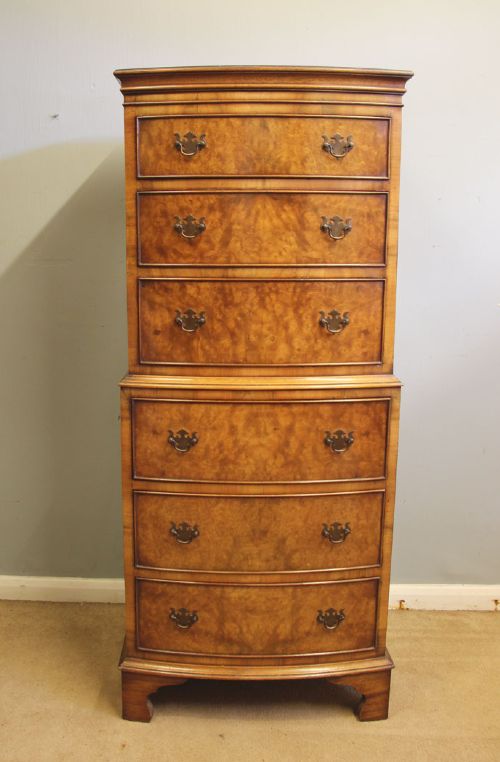
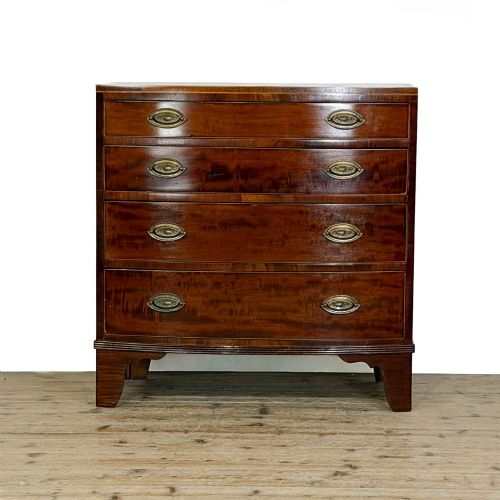
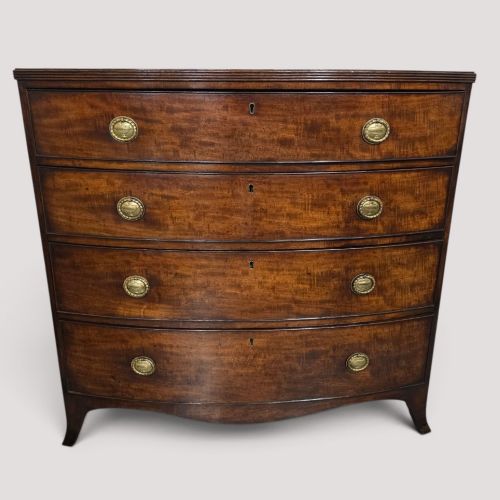
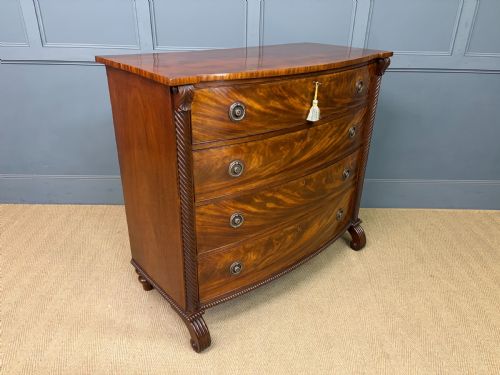
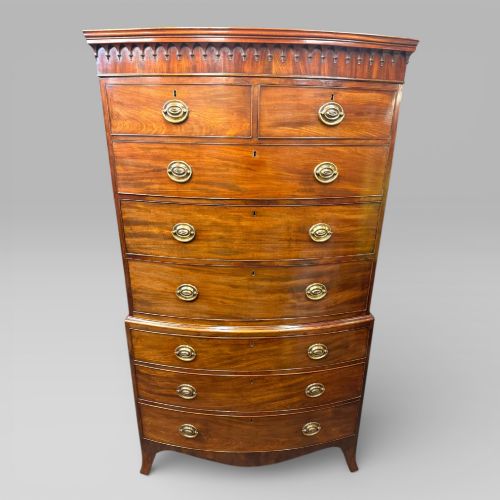
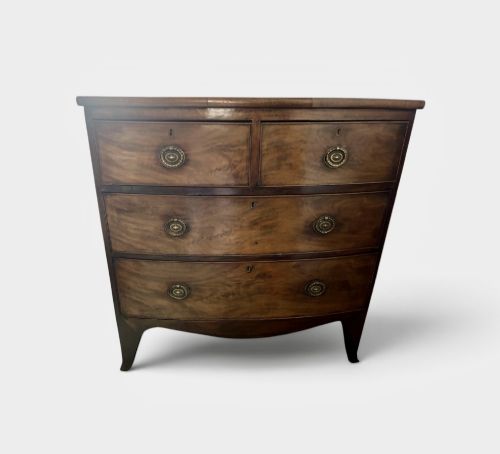
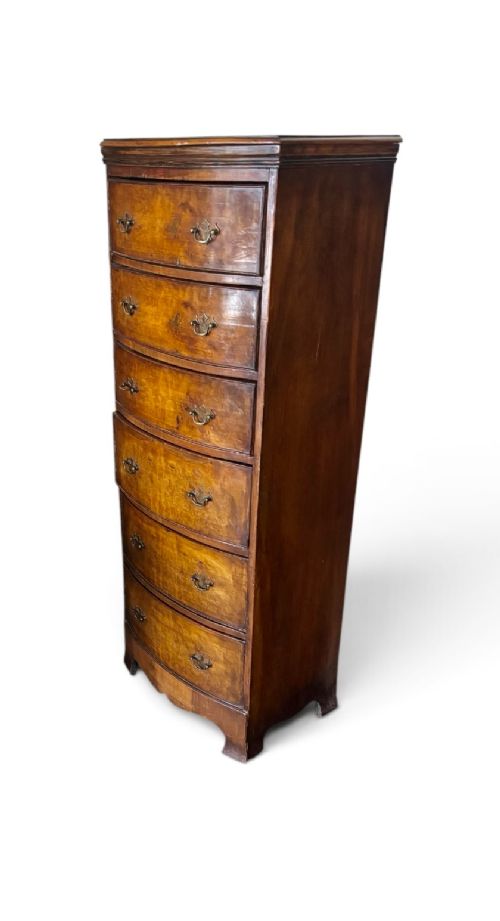
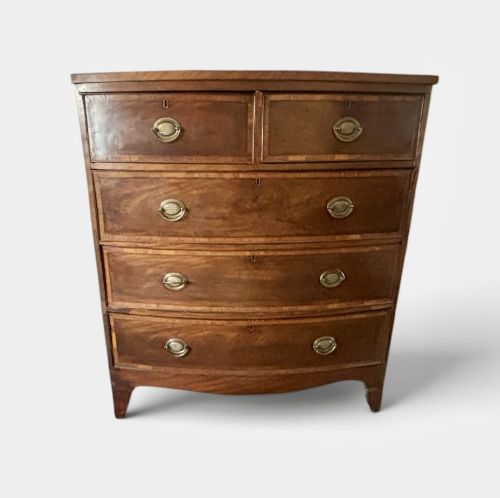
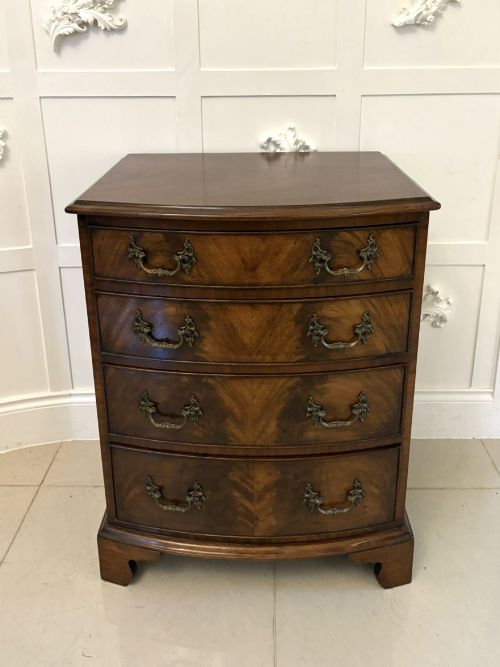
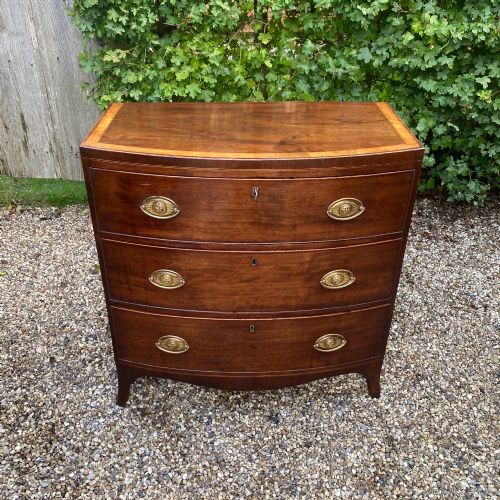
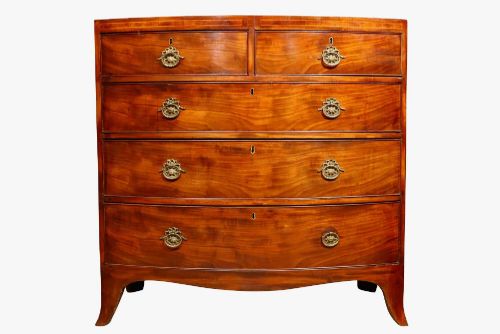
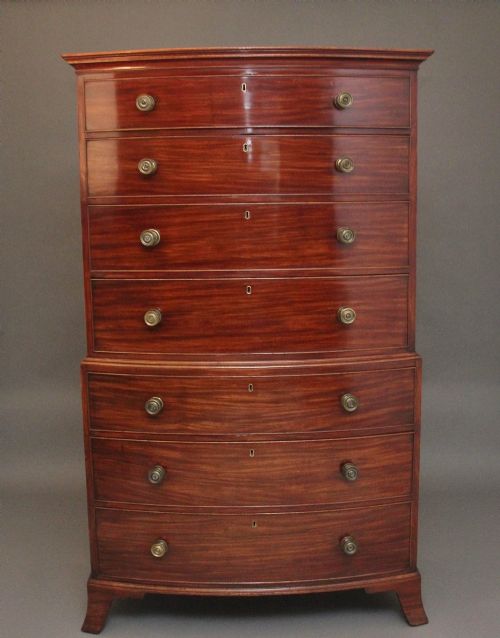
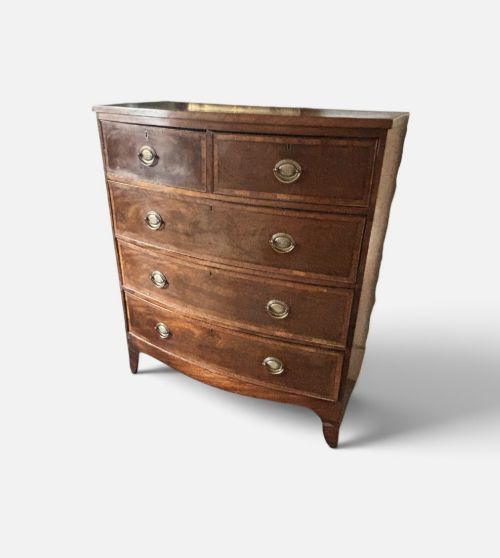
A bowed front chest presents a convex curved facade that projects outward from the front corners. These pieces appear primarily as chests of drawers, alongside occasional tallboys and dressing chests originating across the Georgian, Regency, Victorian, and later twentieth-century periods.
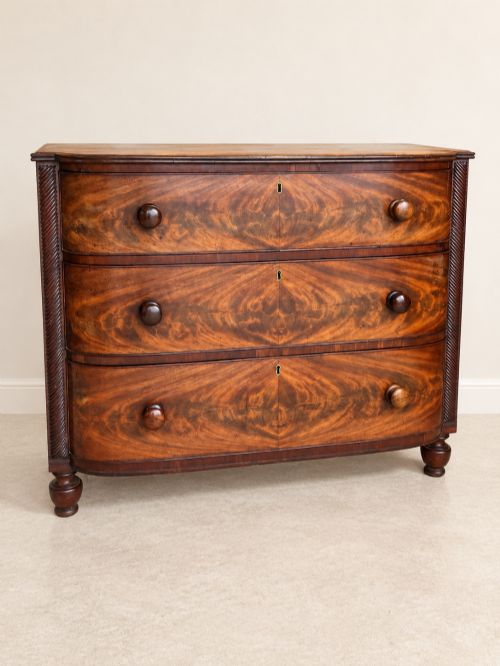
The versions most common on this page are mahogany examples from the Georgian and Regency eras, often featuring figured grain or satinwood banding. Cabinets and smaller bedside pieces also surface, reflecting the versatility of the curved silhouette in domestic settings.
How they were made
Cabinet makers constructed these carcases using solid timbers like mahogany, walnut, oak, and pine for internal framing and drawer linings. Skilled joiners shaped the convex fronts either by bending solid wood or by layering wood veneer and flame mahogany veneer over a stable core.
Surface decoration frequently includes contrasting satinwood banding, crossbanding, and marquetry details. Brass hardware such as ring handles and escutcheons completes the construction, fixed to graduated drawers often set above bracket feet or short legs.
Several examples include secret drawers, tucked away by cabinet makers who clearly enjoyed hiding things from curious houseguests.
What varies in quality
The standard of timber selection sets the finest examples apart, particularly the movement and depth in figured mahogany or burr walnut veneers. Neat proportions and well-figured grain across the curved drawer fronts indicate careful planning by the maker.
Construction details such as hand-cut dovetailing on drawer sides and the survival of original brass mounts influence the integrity of each piece. Secondary woods and the precision of the curved joints further distinguish workshop standards.
The Bowed Front Chest Glossary
- Bowed front
- A convex curved furniture facade that sweeps outward from the frame. This shape softens rigid room lines while expanding internal drawer volume.
- Flame mahogany
- Timber veneer cut from branches where the grain creates flickering, flame-like patterns. Cabinet makers prized this figure for principal drawer fronts.
- Crossbanding
- A narrow strip of veneer laid around the border of a drawer front so the grain runs perpendicular to the surrounding wood. This technique creates a distinct visual frame.
- Tallboy
- A tall chest of drawers made in two stacked sections, often combining a chest base with an upper cabinet. These pieces maximise vertical storage space.
- Secret drawer
- A concealed compartment hidden within the upper structure of a chest, accessed by removing a concealing panel or release mechanism.
Bowed Front Chest: Frequently Asked Questions
Where should I place a bowed front chest?
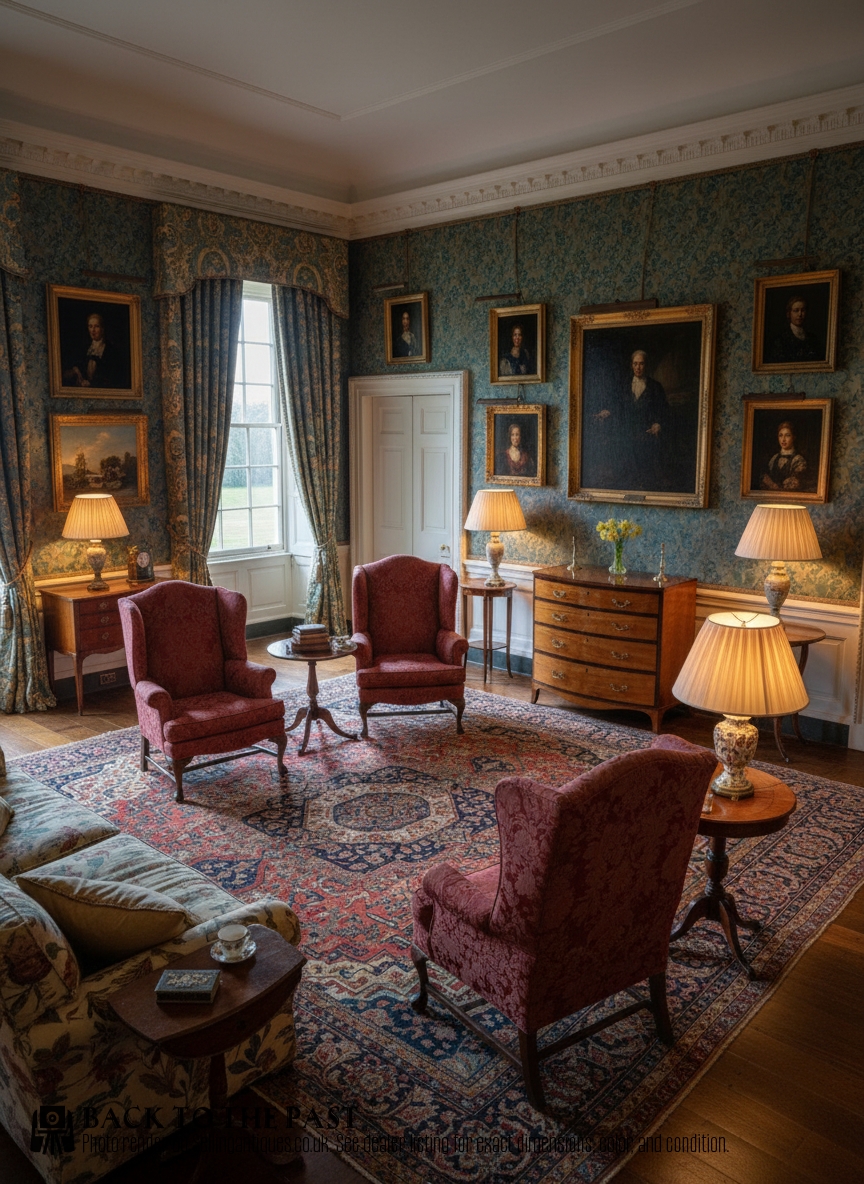
These chests suit hallways, bedrooms, and reception rooms where the curved front prevents sharp corners from jutting into walking paths. Their decorative timber facades allow them to function as focal points against flat walls.
Ensure the clearance around the convex projection accommodates nearby doors or furniture. Measuring the floor space carefully helps integrate the curved shape smoothly into the room.
How do I date a mahogany chest?
Examine the construction methods visible inside the drawers and along the backboards, paying attention to dovetail fineness and secondary timbers like oak or pine. Georgian and Regency pieces typically show hand-planed surfaces and timber shrinkage consistent with age.
Compare the hardware style and veneer patterns with known period characteristics. Subtle changes in foot design and edging details help narrow down the decade of manufacture.
Are these chests suitable for daily use?
Solid construction and deep drawers make these pieces practical for storing clothing, linens, or everyday items. The sturdy timber carcases handle regular opening and closing without structural strain.
Maintain stable humidity levels in the room to protect wood veneers and prevent the curved drawer fronts from sticking. Occasional polishing preserves the lustre of the mahogany or walnut surfaces.
What is the difference between a tallboy and a standard chest?
A tallboy stacks two distinct carcases, usually providing a greater height and more drawer tiers than a single lower chest of drawers. This double-tiered construction was designed to maximise storage capacity while maintaining a manageable footprint.
Standard chests offer a lower profile with a flat top surface suitable for displaying objects or mirrors. Tallboys require more vertical clearance and often feature proportioned upper and lower sections.