



Bow Fronted Writing Table
A bow fronted writing table brings architectural curve and practical surface to a room, offering compact desks and dressing furniture in rich mahogany.
Bow Fronted Writing Table
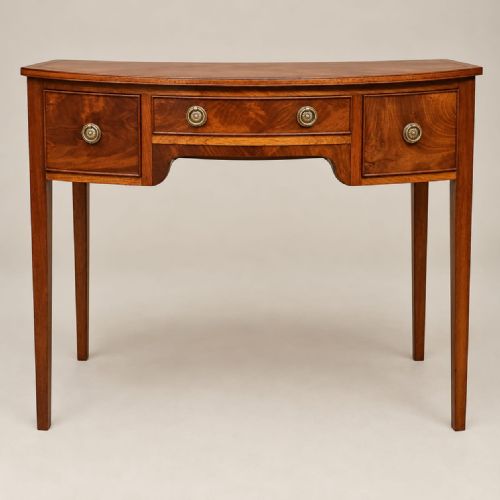
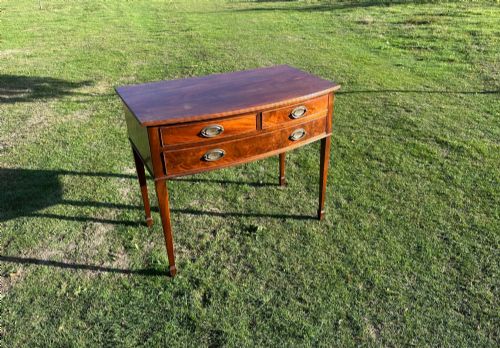
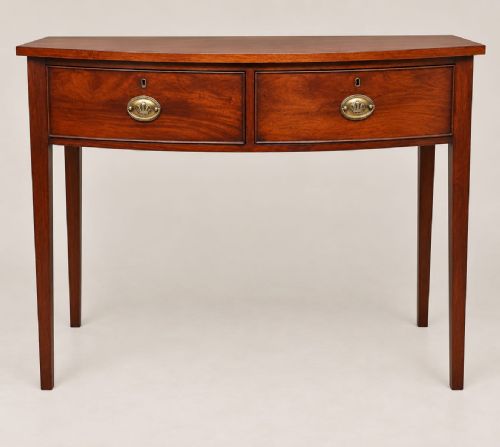
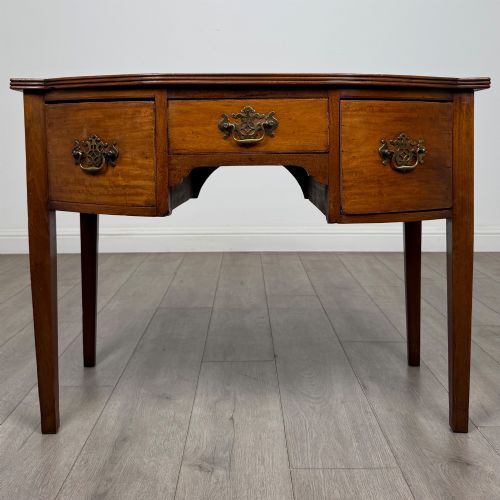
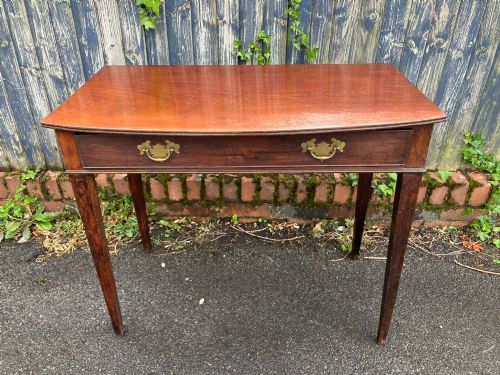
A bow fronted writing table provides a curved projecting front facade that softens the linear feel of a traditional room. These pieces appear across Georgian, Regency, Victorian, and Edwardian periods, executed primarily in mahogany.
The selection on this page centres heavily on side tables, desks, and dressing tables that utilise this curved profile. Buyers encounter both authentic period pieces and later revival works from the early twentieth century.
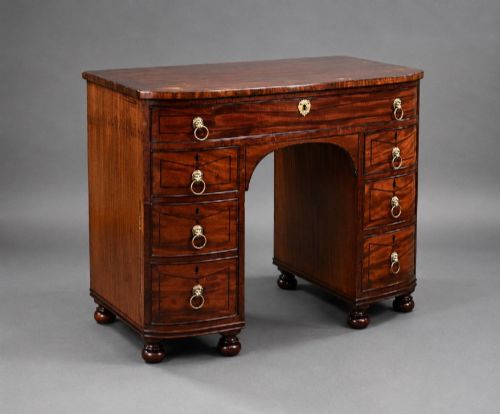
Forms range from simple single-drawer side tables to elaborate inlaid writing desks and dressing chests. The curved front remains the defining characteristic uniting these diverse functional types.
How they were made
Cabinetmakers constructed these tables using solid mahogany and flame mahogany veneer applied over secondary timbers. Selected pieces incorporate delicate wood inlay, boxwood stringing, and ebony details.
Working a curved bow front required precise joinery to shape the rails and drawer fronts to match the radius. Brass handles, knobs, and occasionally leather writing surfaces completed the construction.
Bow Fronted Writing Table Retail Price Guide 2026
Typical asking prices for bow fronted writing table among the pieces listed under this phrase on Sellingantiques today, from the lower quarter to the upper quarter. They describe what is for sale here now, not the wider market.
Recorded forms include side tables, dressing chests, console tables, and twin pedestal desks sharing the characteristic curved front.
What varies in quality
Quality rests in the selection of timber figures, particularly the grain matching across the curved drawers. Flame mahogany veneer shows greater depth and movement on superior examples than plain stock timber.
The crispness of the wood inlay and the weight of the brass hardware indicate the original tier of manufacture. Finer pieces maintain tight drawer tolerances and clean internal secondary woods.
JAS Shoolbred·Maples
The Bow Fronted Writing Table Glossary
- Bow front
- A convex curved front facade that projects outward in an arc. This shape gained widespread popularity during the Georgian and Regency periods.
- Flame mahogany
- A veneer cut from timber fork where the branch meets the trunk, creating a characteristic rippled flame pattern. It appears on higher grade cabinet work.
- Inlay
- Contrasting woods or materials set into the surface of a piece to form decorative patterns. Boxwood and ebony feature commonly in these designs.
- Side table
- A small table designed to stand against a wall rather than occupy the centre of a room. Many examples function interchangeably as writing surfaces.
- Pedestal desk
- A heavy desk supported by two banks of drawers rather than legs. Victorian versions occasionally incorporate the curved bow front profile.
Bow Fronted Writing Table: Frequently Asked Questions
How do I date a bow fronted writing table?
Dating relies on observing structural characteristics, timber types, and decorative motifs associated with specific design periods. Georgian and Regency pieces show distinct leg forms and construction methods compared to Edwardian revivals.
Secondary woods inside the drawers and the style of the brass hardware offer further clues to the decade of manufacture.
Can I use a dressing table as a desk?
Many antique dressing tables share identical dimensions and drawer layouts with writing tables. Period cabinetmakers frequently designed pieces to serve multiple domestic functions.
Kneehole clearance and surface depth determine whether a dressing table accommodates comfortable daily writing work.
What is the difference between a side table and a writing table?
Side tables typically feature shallower drawers and lighter frames intended for display or occasional use against a wall. Writing tables prioritise internal depth and stable drawer structures for stationery storage.
Many listings combine these categories because nineteenth-century households used the same table for both purposes.
How do I care for mahogany veneer?
Mahogany veneer requires stable indoor humidity levels to prevent timber movement and lifting along the curved edges. Direct sunlight fades the rich red-brown tones over time.
Routine dusting with a dry cloth and occasional application of appropriate furniture wax preserves the finish without sealing the wood.