




Bow Fronted Bureau
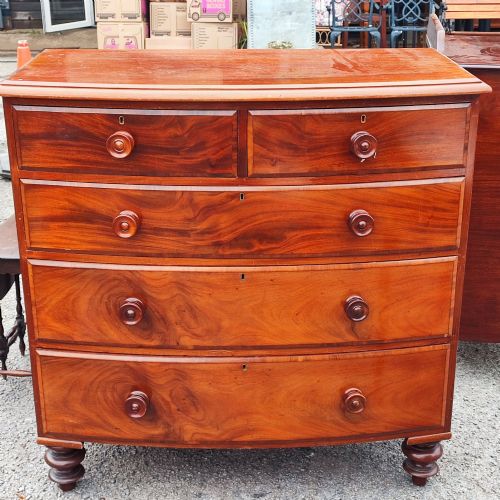
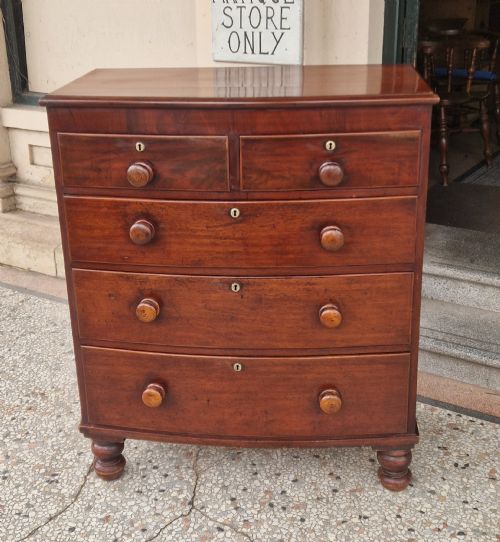
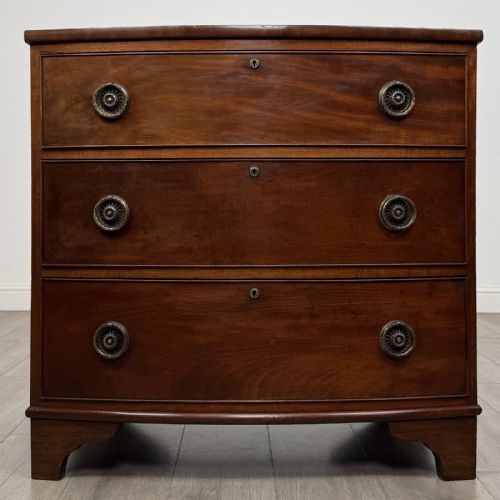
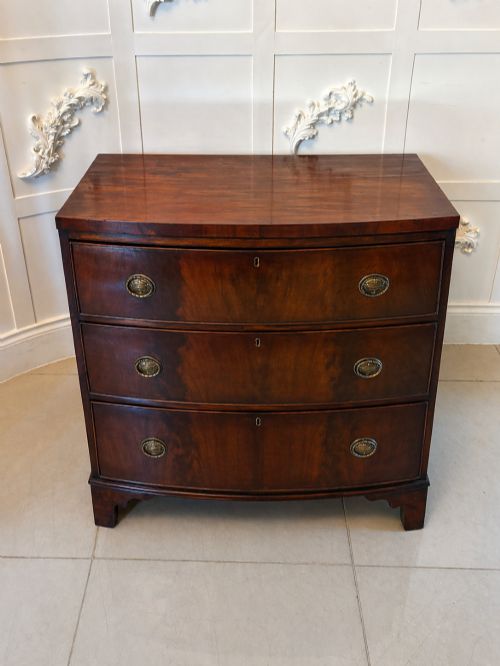
These bow fronted bureau examples bring together curved timber fronts and fitted writing spaces from the Georgian, Regency, and Victorian periods.
Bow Fronted Bureau
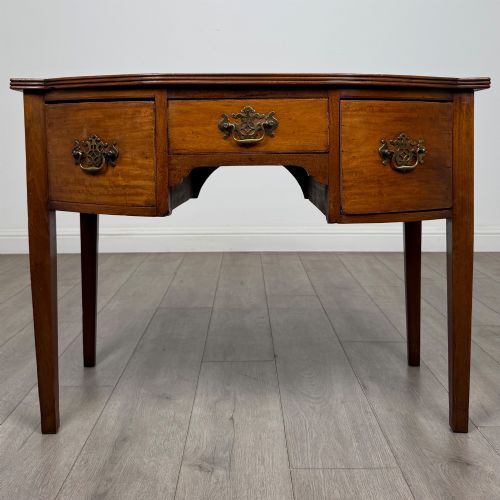
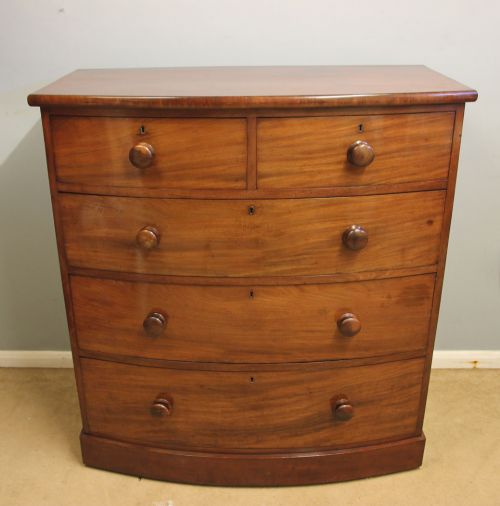
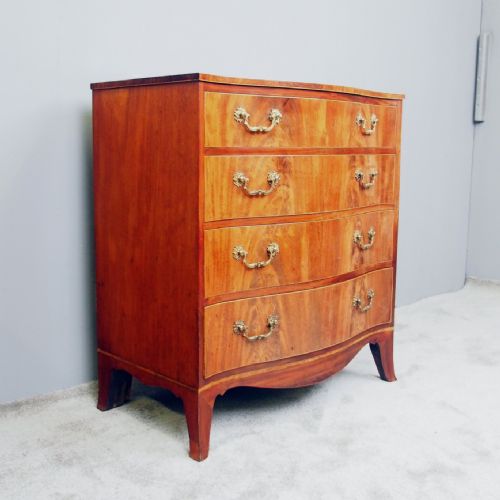
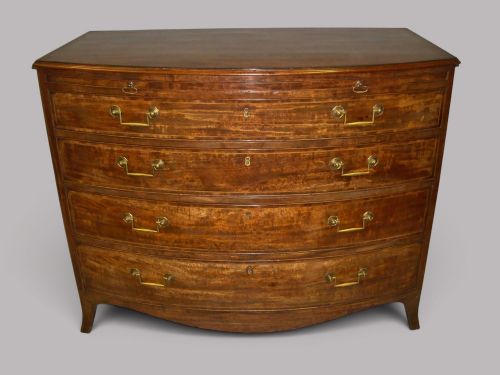
A bow fronted bureau combines a curved-front chest form with functional writing compartments, appearing frequently in Georgian and Regency periods. The pieces on this page span the eighteenth, nineteenth, and early twentieth centuries, reflecting diverse regional interpretations from English workshops to American iterations.
Most examples present as mahogany chests of drawers with writing surfaces, alongside writing tables and secretaire bookcases that share the characteristic convex curve. These forms served domestic administration and correspondence, bridging the function of a desk and a tall storage chest.
How they were made
Cabinetmakers constructed these frames using solid mahogany and flame mahogany veneers, often incorporating satinwood and wood inlay for contrast. Brass handles and leather writing inserts completed the functional elements of the carcass.
The curved front required precise timber bending and veneer application over sturdy pine or oak secondary woods. Inlayers added contrasting borders and decorative motifs around drawer edges and writing flaps.
Bow Fronted Bureau Retail Price Guide 2026
Typical asking prices for bow fronted bureau among the pieces listed under this phrase on Sellingantiques today, from the lower quarter to the upper quarter. They describe what is for sale here now, not the wider market.
Secret compartments hidden behind dummy pigeonholes reward the curious owner who investigates beneath the writing flap.
What varies in quality
The refinement of the timber selection determines the visual impact, particularly the choice of flame mahogany veneer and the intricacy of satinwood inlay. Finer pieces demonstrate tighter grain matching across the curved drawers and more delicate brass hardware.
Structural integrity rests on the precision of the dovetailed drawer joints and the smoothness of the curved drawer operation. Maker signature details, such as those found on pieces from firms like Edwards and Roberts, elevate the standing of a desk.
Edwards and Roberts
The Bow Fronted Bureau Glossary
- Bow front
- A convex, outwardly curved front elevation typical of many Georgian and Regency chests of drawers. This curved profile softens the hard angles of traditional case furniture.
- Satinwood inlay
- Light-coloured decorative wood inserted into contrasting darker timber surfaces. It appears in geometric bands and neoclassical motifs on late eighteenth and nineteenth-century pieces.
- Secretaire bookcase
- A tall cabinet incorporating a pull-out writing drawer or drop-front desk compartment beneath bookcase shelving. These dual-purpose items served as libraries and writing desks combined.
- Dovetailed joints
- Interlocking wedge-shaped joints used to construct sturdy drawer boxes. Fine eighteenth-century work shows small, evenly spaced pins.
Bow Fronted Bureau: Frequently Asked Questions
How do I date a bow fronted bureau?
Dating relies on examining the secondary woods, handle styles, drawer construction, and overall stylistic period. Pieces from the Georgian and Regency eras display hand-cut dovetails and specific bracket or French foot designs.
Later Victorian and Edwardian interpretations often incorporate machine-cut elements or revival styles like Sheraton and Hepplewhite. Comparing the veneer grain and inlay patterns against known period standards helps narrow the timeline.
Are these desks comfortable for daily writing?
Most antique bureaus feature drop-front flaps or pull-out drawers that serve as writing surfaces at standard historical heights. They accommodate modern laptop use less comfortably than dedicated writing tables due to stationary pigeonholes.
Internal compartments remain well-suited for letter writing, paperwork, and storing small stationery items. The fitted interior provides numerous small drawers and document slots.
How do I care for mahogany veneer?
Protect mahogany and flame veneer surfaces by keeping them away from direct sunlight and maintaining stable room humidity. Avoid harsh chemical cleaners and polish the wood gently with traditional beeswax.
Leather writing inserts benefit from occasional neutral conditioning to prevent drying and cracking. Care should be taken not to overload the delicate internal drawers of the bureau.