
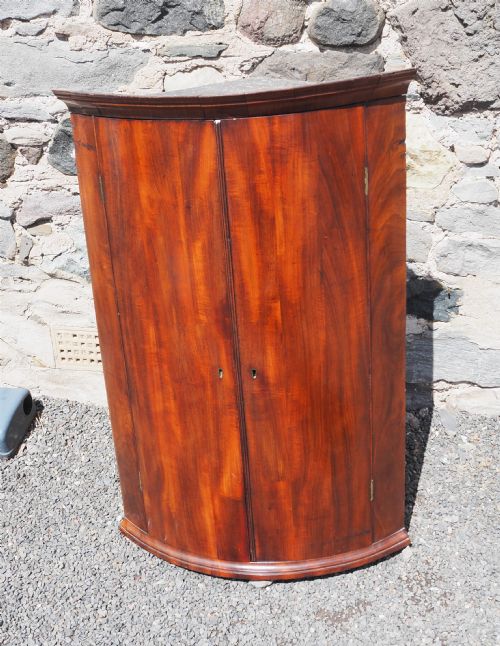


Bow Front Hanging Cupboard
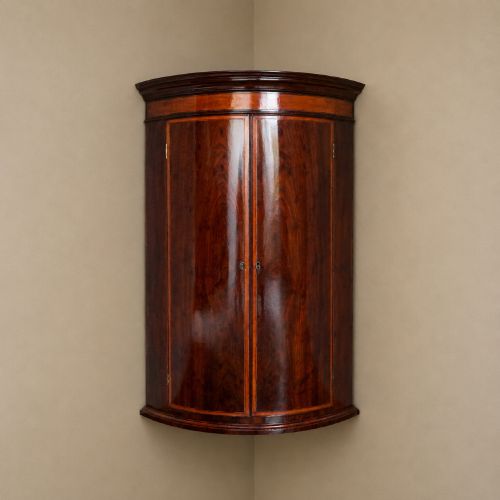
A bow front hanging cupboard turns an awkward room junction into a display of figured timber.
Bow Front Hanging Cupboard
A bow front hanging cupboard is a wall-mounted storage piece designed specifically to fit into the corner of a room, saving floor space while introducing a curved facade. Most examples seen here date from the Georgian and Victorian eras, built primarily to hang securely at height.
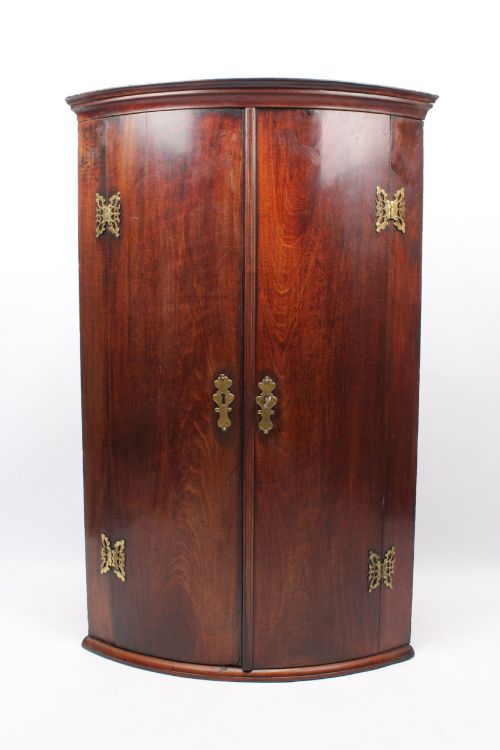
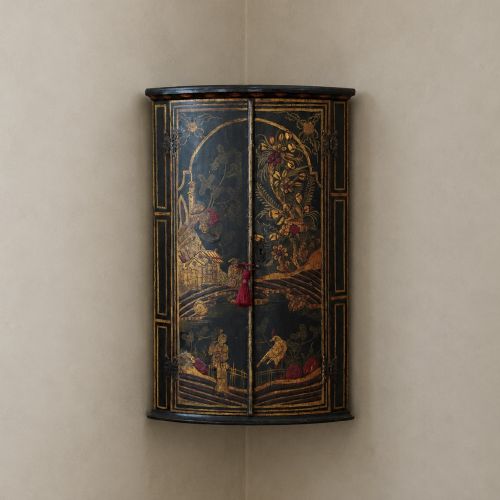
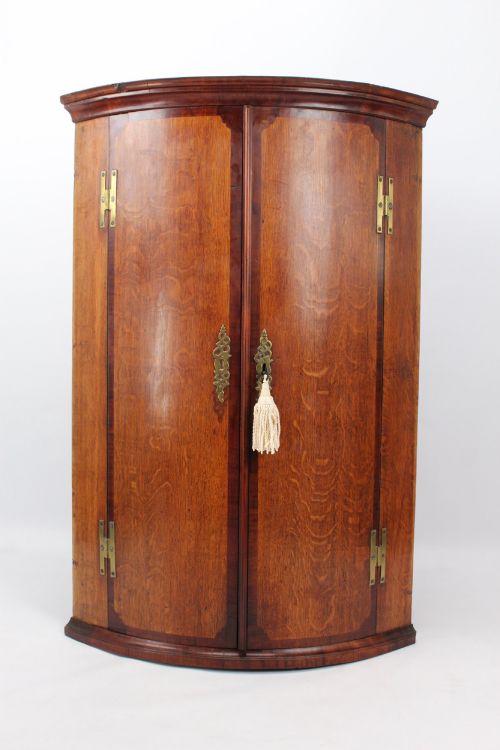
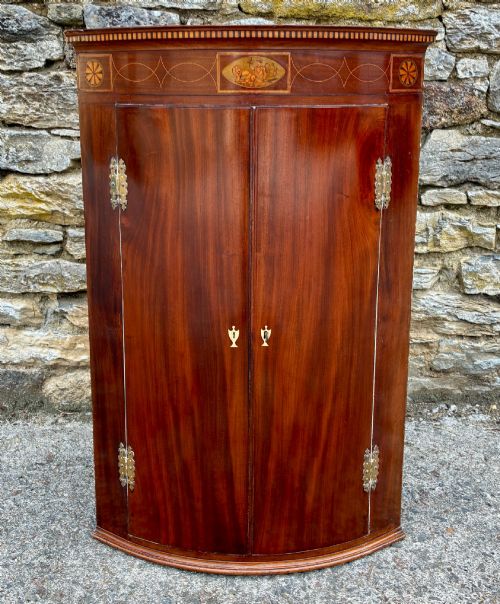
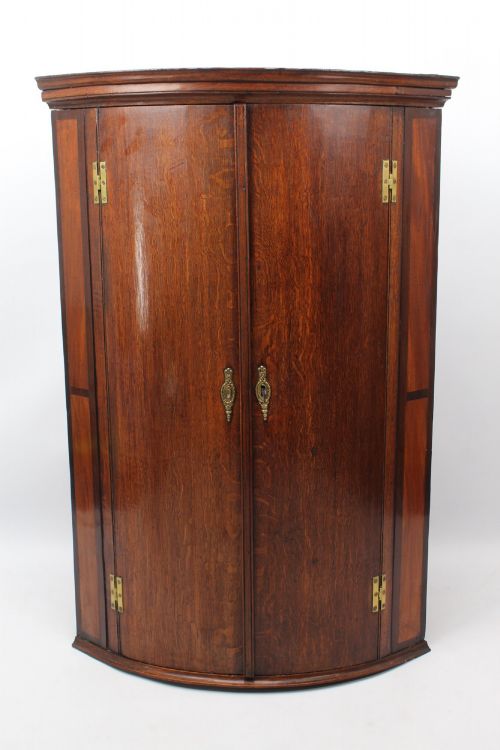
The form typically presents two hinged doors opening to internal shelving, though variations include single doors or glazed display fronts. Walnut, oak, and mahogany dominate the selection, often enriched with fine wood inlay or decorative japanning.
These pieces served practical storage needs in domestic interiors, holding anything from porcelain to dry goods. Today, they function equally well as focal points in dining rooms, hallways, or studies.
Materials and construction
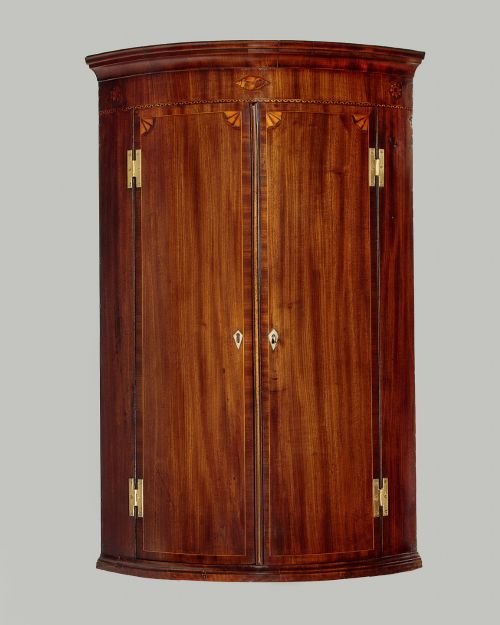
Makers constructed these cabinets using native and exotic timbers, frequently employing dense mahogany, figured walnut, or sturdy oak as a primary base. Fine veneers such as plum pudding mahogany and flame mahogany were applied to the curved doors to create striking visual movement.
Bending wood to form the characteristic convex curve required specialist joinery techniques, often utilising multi-ply construction or solid timber shaped with hand planes. Brass hardware, including H-hinges and key escutcheons, fastened the doors and reinforced the structural corners.
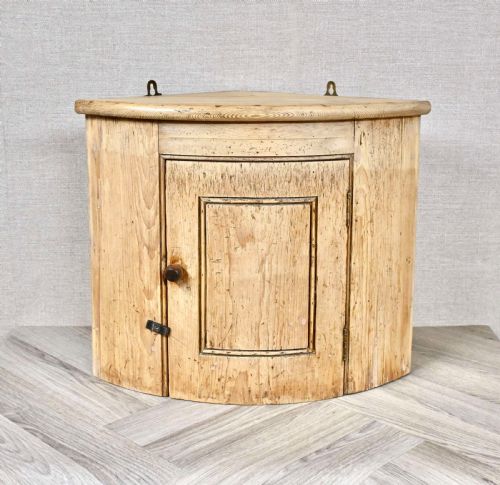
Listings feature hanging corner cabinets spanning the Georgian, Regency, and Victorian periods, constructed in mahogany, oak, walnut, and pine.
Qualities of distinction
The hierarchy of these pieces rests on the choice of timber figure and the crispness of any inlay work. Cabinets featuring highly figured plum pudding mahogany, satinwood stringing, or intricate Chinoiserie lacquer stand apart from plain oak or pine versions.
Proportion and structural integrity define the better examples, where the curved door fits flush against the frame without warping. Original brasses, working locks with keys, and untouched patination elevate an individual piece within the historical range.
The Bow Front Hanging Cupboard Glossary
- Bow front
- A convex, outwardly curved front facade that projects forward from the frame. This curved profile softens the sharp angles typical of corner furniture.
- Japanning
- A European imitation of East Asian lacquering techniques utilising dark varnishes and raised gilt decoration. It appears on select refined eighteenth and nineteenth-century surfaces.
- Escutcheon
- A protective plate surrounding a keyhole, frequently cast from brass. These fixtures range from simple geometric shapes to ornate engraved designs.
- Stringing
- Thin lines of contrasting timber inlaid into the primary wood surface to create decorative borders. Boxwood and ebony served as common contrasting materials for this technique.
Bow Front Hanging Cupboard: Frequently Asked Questions
Where should I hang a corner cupboard?
These cabinets suit empty room junctions where standard rectangular furniture fails to fit properly. Mounting them at eye level in dining rooms or hallways utilises neglected vertical wall space.
Ensure the wall structure can support the weight of solid hardwood cabinetry, particularly when loaded with heavy ceramics or books.
How do I identify a Georgian piece?
Georgian examples typically display hand-cut dovetail joints inside the carcass and secondary woods such as oak or pine behind mahogany facades. Look for subtle signs of age like hand-beveled glass and forged iron or brass fixings.
Construction methods changed significantly by the later Victorian period, introducing machine-sawn timbers and different internal framing styles.
Can these cabinets hold heavy items?
Internal shelving was originally designed for domestic storage such as tableware, glassware, or household provisions. The fixed or adjustable wooden shelves support everyday display items securely.
Avoid overloading the upper tiers with excessively heavy objects unless the internal wall brackets and hanging lugs have been professionally reinforced.
What is the difference between oak and mahogany versions?
Oak cabinets generally belong to earlier vernacular traditions, offering a robust and rustic appearance with visible grain texture. Mahogany versions often point towards refined urban workshops utilising imported tropical hardwoods.
Both timbers provide excellent structural durability, allowing these wall-mounted pieces to survive centuries of domestic use.