
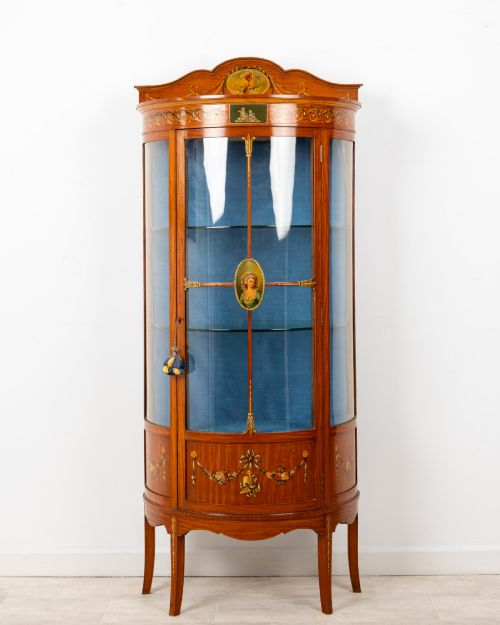
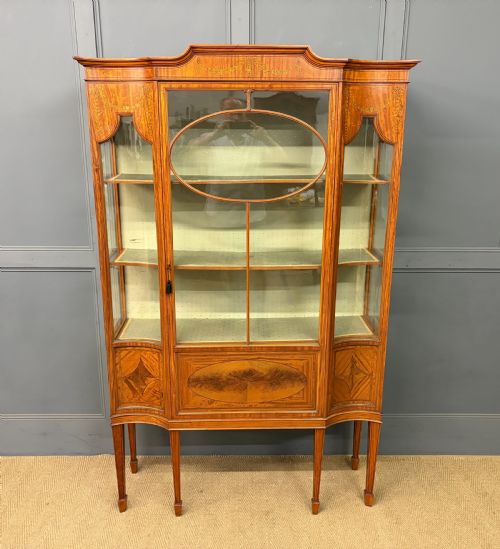
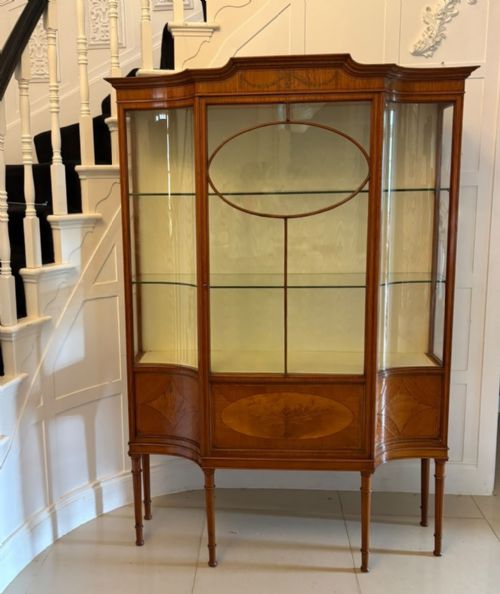
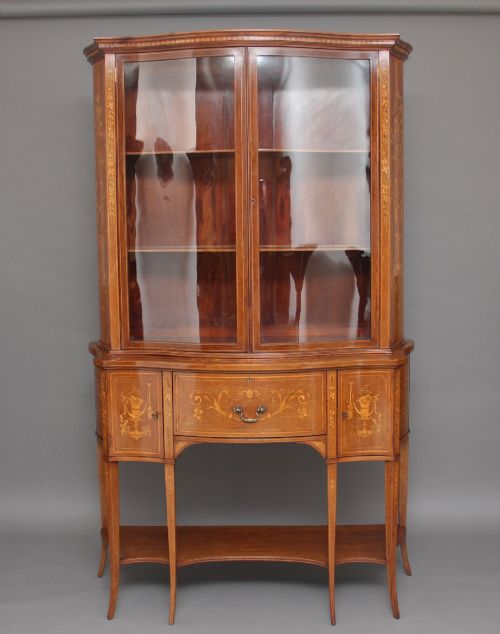
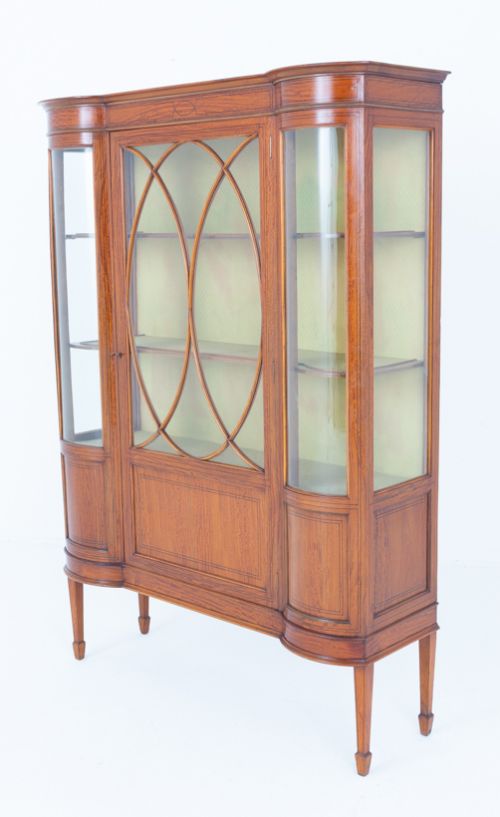


Bow Front Glazed Cabinet
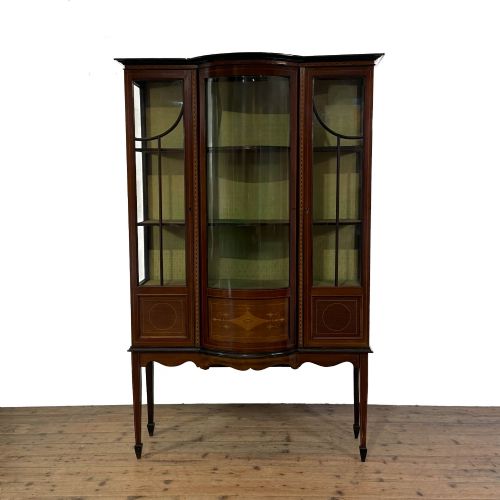
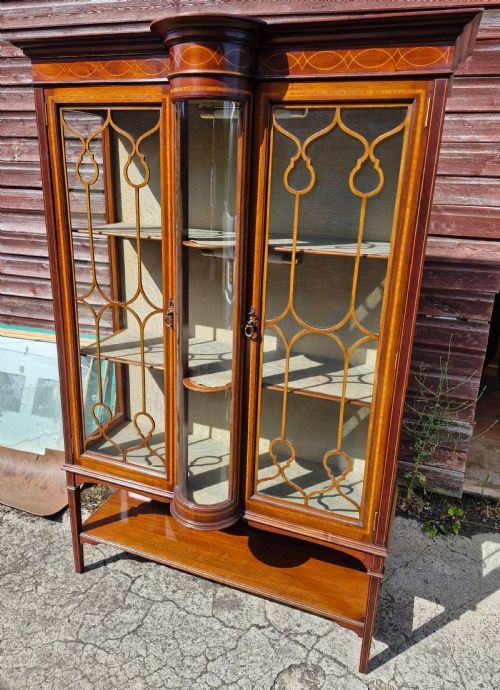
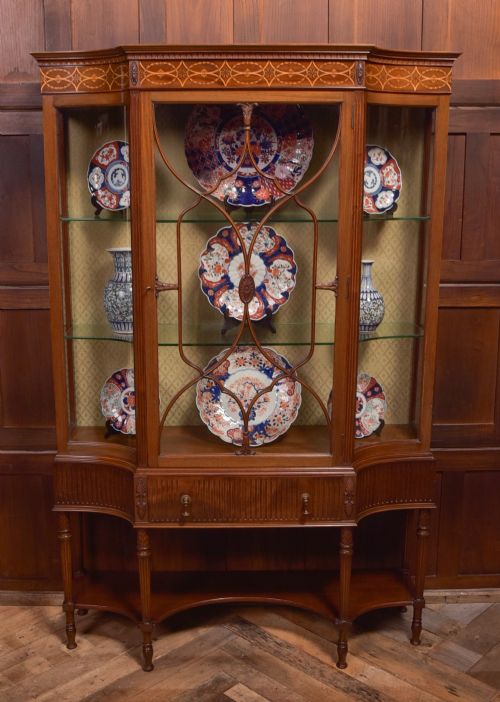
A bow front glazed cabinet brings together curved glass and fine timber, offering a refined way to display books, porcelain and small objects.
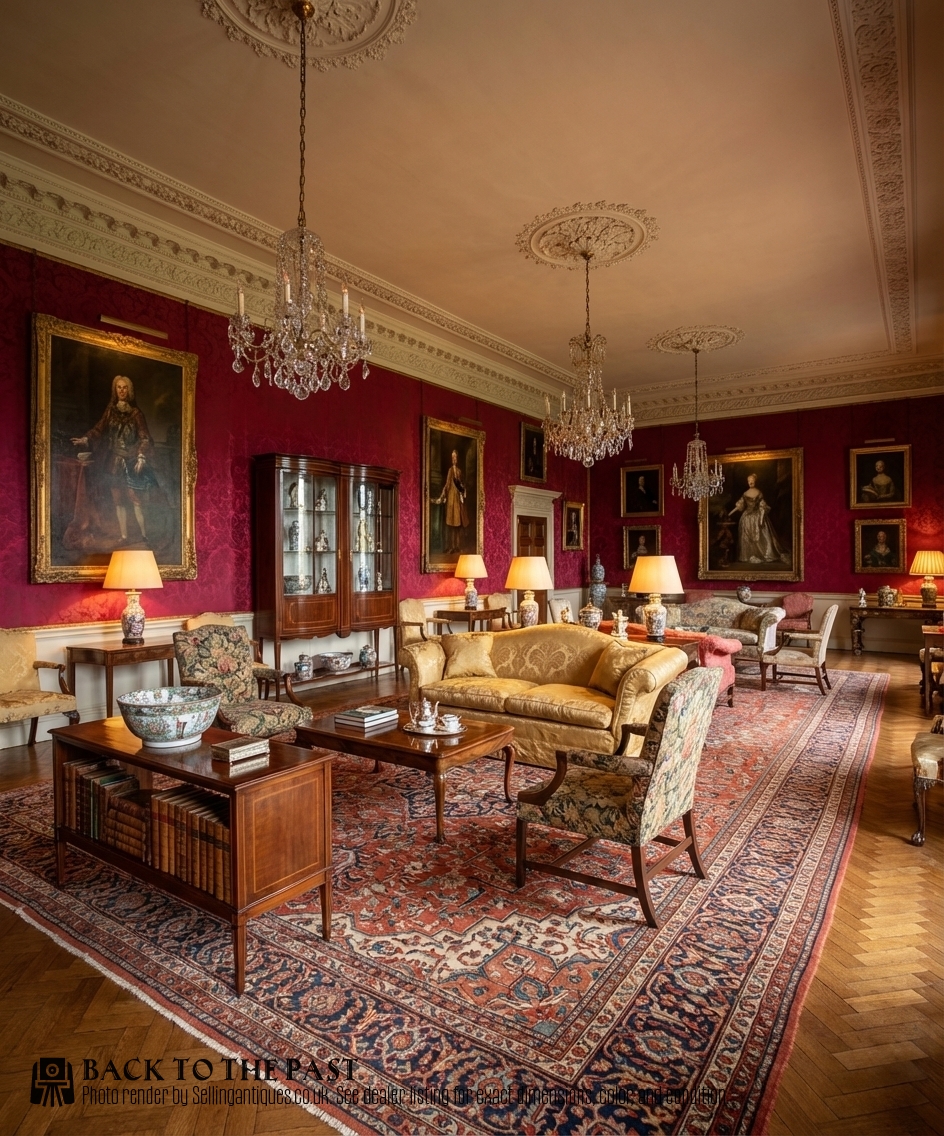
Bow Front Glazed Cabinet
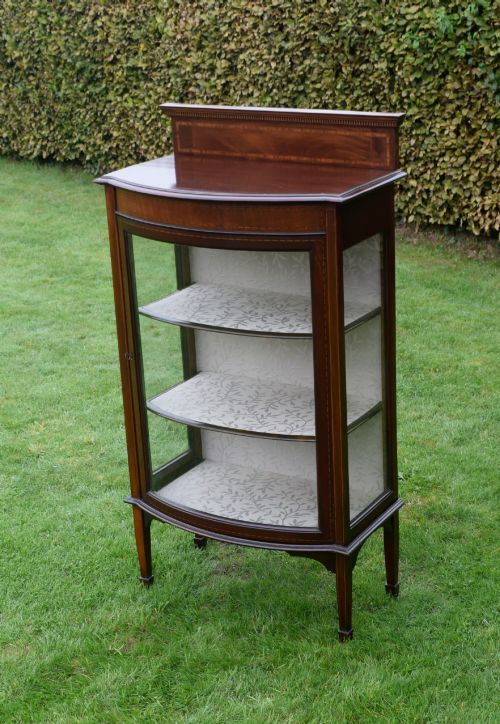
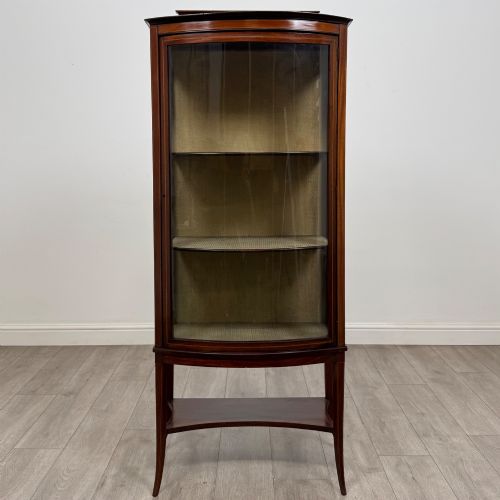
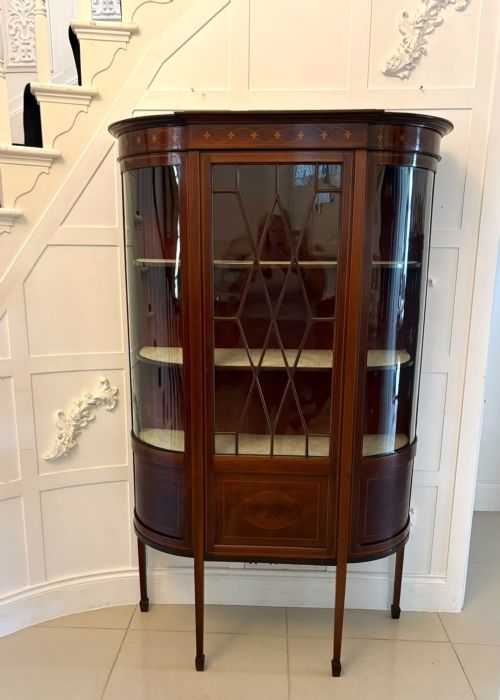
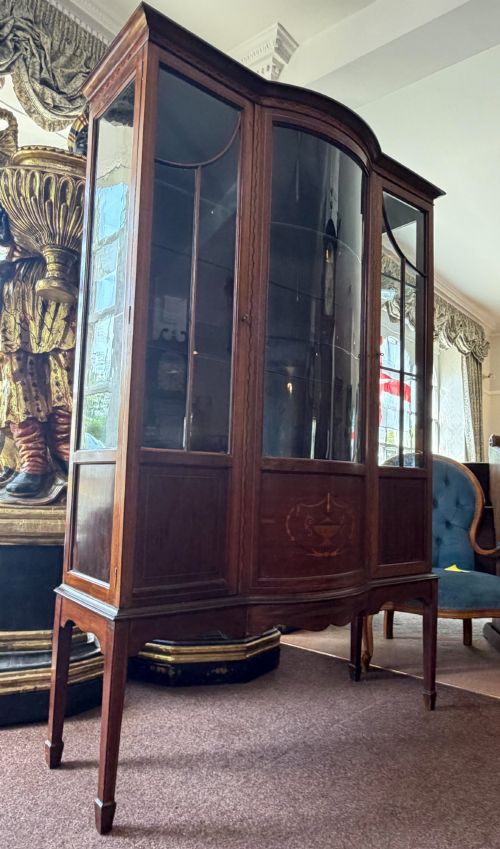
A bow front glazed cabinet is a display piece defined by its curved forward section and glass panels, designed to show objects from multiple angles while protecting them from dust.
The versions met most frequently on this page date from the Edwardian period and the late nineteenth century, executed in mahogany, satinwood or burr walnut.
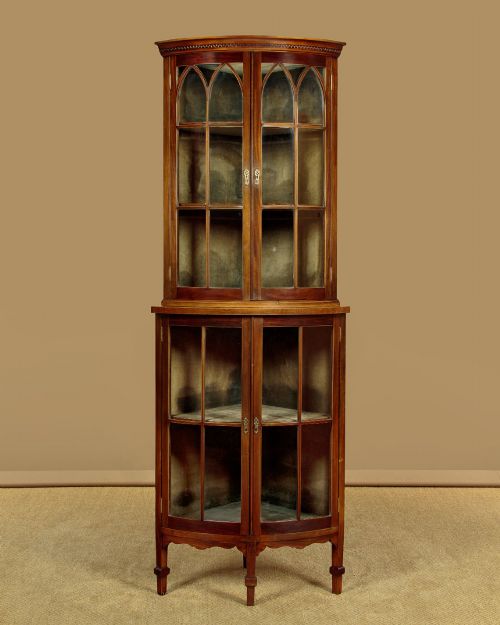
These items take various forms, including freestanding display cabinets, corner cupboards, bookcases and credenzas, each utilising the curved glazed door to soften room lines.
Materials and construction methods
Cabinet makers built these pieces using solid timbers and veneers such as mahogany, satinwood and burr walnut, often applying delicate contrasting wood inlays.
Glass panes are shaped to fit the curved frame, sometimes held by lead glazing or wood astragals, while brass fittings and ormolu mounts secure the doors and structural joints.
Assessing quality and craftsmanship
Quality rests on the precision of the curved joinery and the fluidity of the bow front door action, alongside the depth and figure of the timber veneer.
Finely made examples display crisp inlay work, well-fitted glass without distortion, and substantial brass or ormolu mounts that integrate cleanly into the design.
Maple & Co
The Bow Front Glazed Cabinet Glossary
- Bow front
- A cabinet front that curves outward in a convex arc. This shape softens rigid room corners and widens the internal display space.
- Vitrine
- A glass-sided cabinet or display case designed specifically for showing porcelain, curiosities and fine objects. The term derives from the French word for glass.
- Credenza
- A low cabinet or sideboard, frequently fitted with glass doors and curved ends in Victorian iterations. It serves both storage and display functions.
- Astragal
- A small moulding profile used to divide panes of glass within a door or window frame. These bars provide structural support while creating geometric patterns.
Bow Front Glazed Cabinet: Frequently Asked Questions
Where should I place a corner cabinet?
A corner cabinet fits directly into room intersections, utilising dead space while keeping items visible.
They work well in dining rooms or drawing rooms to display collections without blocking pathways.
How do I clean the glass safely?
Use a soft cloth and a gentle glass cleaner applied to the cloth rather than directly onto the wood.
Spray moisture can damage antique timber veneers and antique finishes over time.
What periods are most common?
Edwardian and late Victorian pieces dominate the selection, spanning from the late nineteenth century into the early twentieth century.
Sheraton Revival styles from this era draw heavily on eighteenth-century lightness and inlay motifs.
Can shelves be adjusted?
Many display cabinets feature fixed wooden or glass shelves, though some later examples include adjustable supports.
Check the internal setup before planning the height of items you wish to exhibit.