


Botanical Watercolour Still Life
A botanical watercolour still life brings crisp study and quiet interior colour together on the wall through delicate pigment on paper.
Botanical Watercolour Still Life
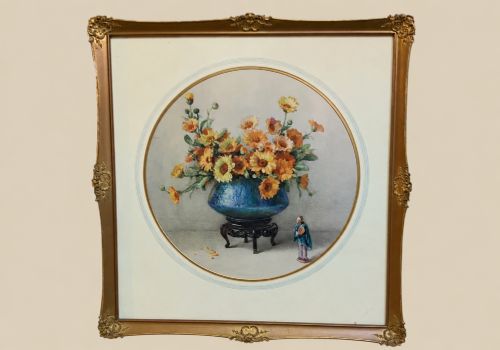
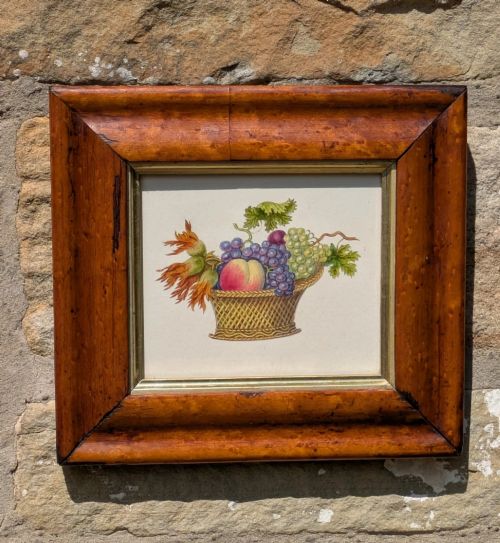
A botanical watercolour still life is a painted study of flowers, fruit or foliage executed on paper using water-soluble pigments and gouache. These works capture specific botanical subjects, from garden roses and wallflowers to baskets of fruit and Chinese objects, rendered with careful observation.
The pieces available span from the nineteenth century through the mid-twentieth century, encompassing Regency, Victorian, Edwardian, and mid-century modern periods. Most examples meet the eye as framed paintings behind glass, often housed in gilt wood frames that complement the delicate nature of the paper beneath.
What Varies in Quality
The distinction between standard decorative pieces and superior examples rests upon the precision of the draughtsmanship and the artist's command of the medium. Finer works display meticulous botanical accuracy in the rendering of petals, foliage, and textures such as mossy banks or woven baskets.
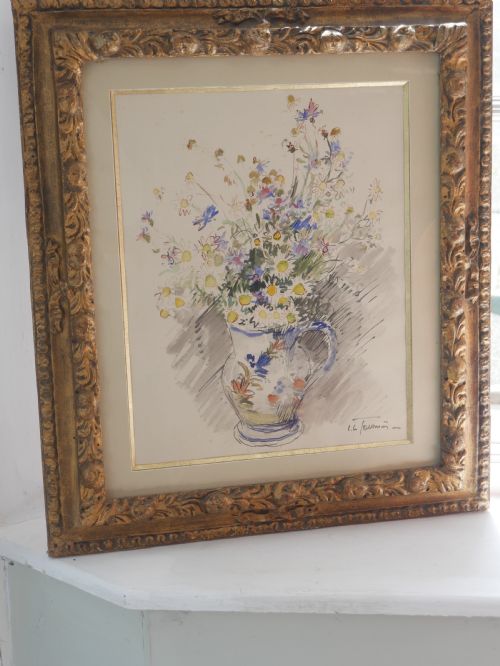
Condition and presentation further separate the range, as works retaining their original vibrant pigment tones and appropriate period frames command greater regard. The harmony of the composition, balancing the floral subject against vessels like pottery jugs or glass bowls, distinguishes the more accomplished hand.
The selection includes depictions of roses, wallflowers, anemones, and gladioli arranged in pottery jugs and decorative ceramic vases.
John Sherrin·James Tower·Henrietta Creswell·William Edward Fox·Lester Sutcliffe·William Hough·Eloise Harriet Stannard·Edith Barrow·Rowland Henry Hill·Grace Hastie·Margaret Laing·Phyllis I Hibbert·Marian Chase·Jabez Bligh·Alice Macallan Swan·Marion Broom·Annie Mary Youngman·Edith Alice Andrews·Amy Reeve-Fowkes·Helen Cordelia Angell·Wiliam Stephen Coleman·Owen Bowen
The Botanical Watercolour Still Life Glossary
- Watercolour
- A painting method in which the paints are made of pigments suspended in a water-based solution. It provides translucent washes of colour upon paper surfaces.
- Gouache
- An opaque watercolour paint made from pigment mixed with water and a binding agent such as gum, often used to add highlights. It provides solid areas of flat colour unlike transparent washes.
- Gilt Wood Frame
- A wooden picture frame coated with gold leaf or metallic gilt finish. It offers a traditional decorative border that enhances the artwork displayed within.
- Botanical Study
- A detailed visual record of a plant or flower, combining artistic rendering with scientific observation. These studies focus closely on the specific anatomical structures of flora.
Botanical Watercolour Still Life: Frequently Asked Questions
How should I hang botanical watercolours?
These works require protection from direct sunlight to prevent the watercolour pigments from fading over time. Hang them away from strong heat sources and bright windows in rooms with stable humidity.
Pairing them with neutral wall colours allows the delicate tones of the flowers and fruit to stand out without competing with the background.
What periods do these paintings cover?
The selections span from the Regency and Victorian eras through the Edwardian period and into the mid-twentieth century. Each era brings subtle shifts in framing styles and botanical arrangement.
Victorian and Edwardian examples often feature meticulous, dense floral groupings, while twentieth-century pieces lean towards looser modernist compositions.
Are these paintings supplied framed?
Most pieces arrive within protective framing, frequently featuring traditional wood or gilt wood surrounds paired with glass. This historic framing safeguards the fragile paper support from environmental wear.
Collectors can display the artwork immediately upon receipt while preserving the integrity of the original presentation.
What subjects appear besides flowers?
Artists frequently incorporated bowls of fruit, ceramic jugs, glass vessels, and woven baskets into their botanical compositions. Some nineteenth-century examples add elements like birds' nests on mossy banks.
These varied domestic objects provide compositional structure and contrast against the organic forms of the blooms.