




Boot Wiper Cleaner
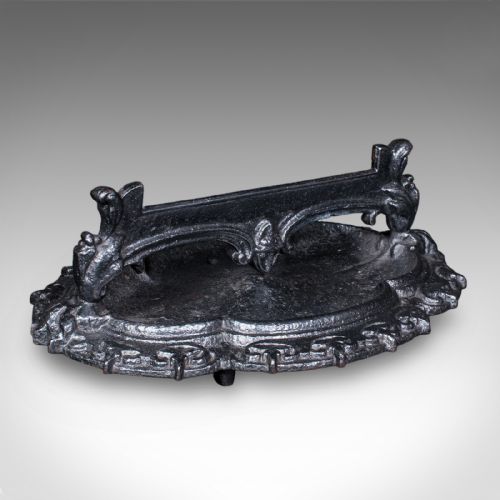
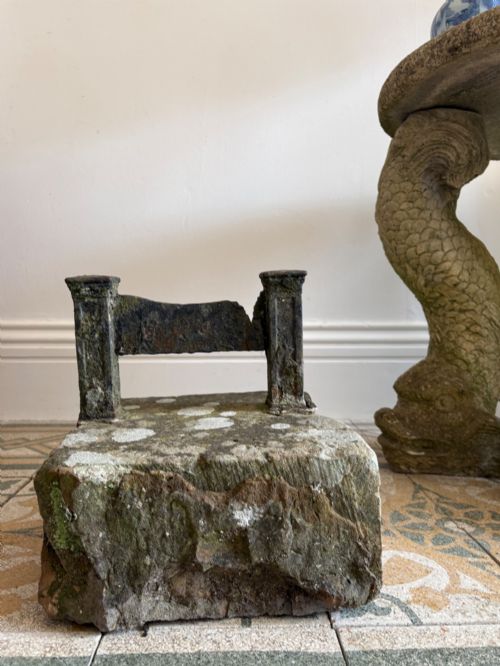
These heavy iron and stone boot wiper cleaner pieces kept muddy footwear outside or by the doorway, offering solid practicality for country houses and townhouses.
Boot Wiper Cleaner
A boot wiper cleaner takes the form of sturdy iron blades paired with heavy stone bases or simple freestanding metal frames designed to scrape mud from shoes. When you search for this phrase, you find practical entrance accessories originating from the Georgian, Regency, and Victorian periods.
The versions most commonly met on this page are cast iron blades mounted into Yorkstone or hewn stone blocks, alongside freestanding cast iron scrapers intended for doorways and boot pulls.
Country house examples often incorporate heavy Yorkstone blocks to anchor the metal scraper firmly outside, whilst townhouse variations focus on compact entrance designs featuring integrated shoe pulls.
Materials and construction
These items rely on durable cast iron and wrought iron for the scraping blades and frames, shaped to withstand heavy outdoor use and frequent scraping without bending.
The metal components are frequently combined with natural stone bases such as Yorkstone and hewn stone blocks, providing the necessary weight to keep the cleaner stable during use.
Some desk accessories utilise sterling silver and natural bristle in novelty pen wipe formats, reflecting domestic adaptations of the boot cleaning theme.
Boot Wiper Cleaner Retail Price Guide 2026
Typical asking prices for boot wiper cleaner among the pieces listed under this phrase on Sellingantiques today, from the lower quarter to the upper quarter. They describe what is for sale here now, not the wider market.
Judging quality in boot wipers
Quality rests in the substance of the materials, separating dense, heavy cast iron and well-hewn stone blocks from lighter, less substantial metalwork. The integration between the iron blade and its stone mount dictates the overall integrity of the piece.
Design detail also separates standard utilitarian examples from more ambitious items, such as those featuring figural elements like lions or paired Regency forms. The presence of integrated shoe pulls adds functional complexity to the design.
The Boot Wiper Cleaner Glossary
- Boot scraper
- A metal blade or bar positioned near an entrance to scrape mud from the soles of footwear. These practical devices sit outside doorways or are embedded in stone blocks.
- Yorkstone
- A durable type of sandstone quarried in Yorkshire, frequently used as a heavy base block for outdoor boot scrapers. This dense stone prevents the scraper from shifting during use.
- Shoe pull
- A metal hook or handle attached to a boot scraper to help individuals steady themselves while removing muddy footwear. This feature appears on various entrance designs.
- Cast iron
- An iron-carbon alloy poured into moulds to create rigid structural objects. This material forms the primary blades and frames for the majority of these cleaners.
- Novelty pen wipe
- A small desk accessory fashioned in the likeness of another object, using materials like silver and bristle. These items translate outdoor cleaning forms into miniature tabletop items.
Boot Wiper Cleaner: Frequently Asked Questions
What is a boot wiper cleaner?
A boot wiper cleaner is a heavy metal and stone fixture placed at the entrance of a building to remove mud from shoes before entering.
These pieces use rigid iron blades and weighted bases to scrape footwear clean.
Where were boot scrapers placed?
Boot scrapers were positioned directly outside doorways, porches, and carriage entrances of Georgian and Victorian properties.
They stood ready for visitors and residents to clear heavy soil from their boots.
How do I date a cast iron boot scraper?
Dating relies on the style of the metal casting, the form of the stone base, and construction methods characteristic of periods like the Regency and Victorian eras.
Simpler utilitarian forms often date to the nineteenth century, while stone-inset examples reflect country house traditions.
Did all boot scrapers use stone bases?
Not all boot scrapers required separate stone blocks, as many cast iron versions stood freely on their own heavy metal feet.
Others were specifically manufactured to be embedded directly into hewn stone steps or Yorkstone blocks.