

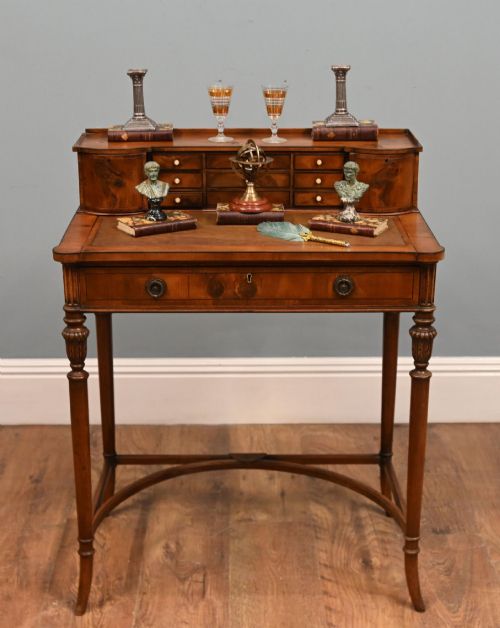
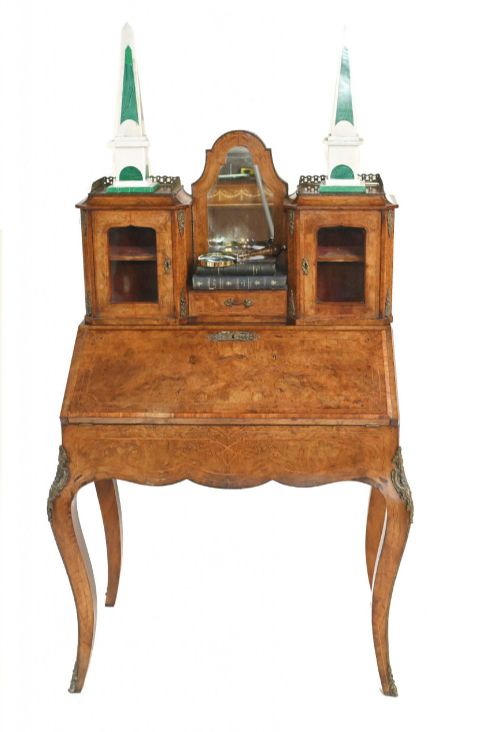
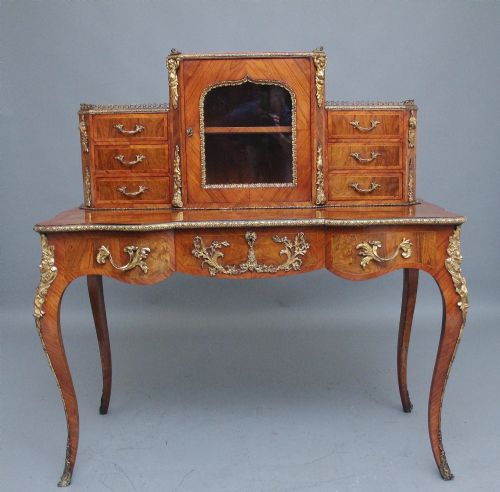
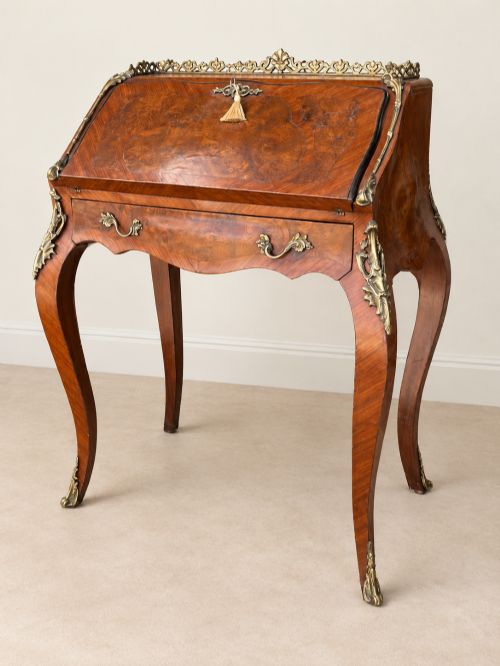
Bonheur Du Jour Writing Desk
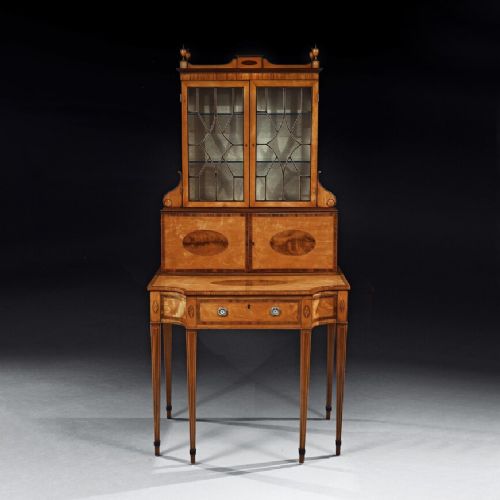
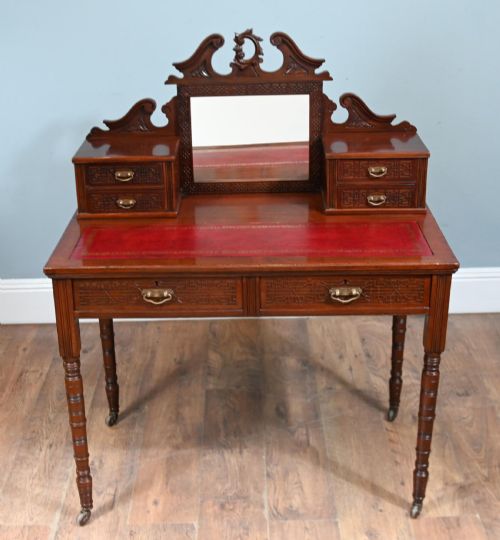
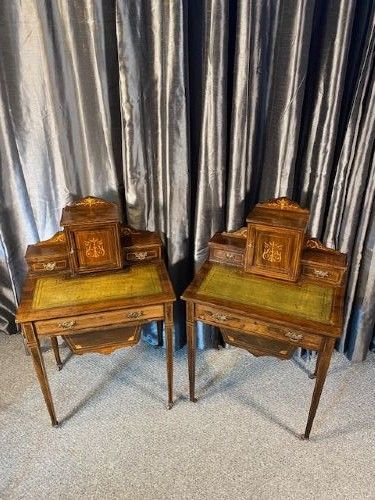
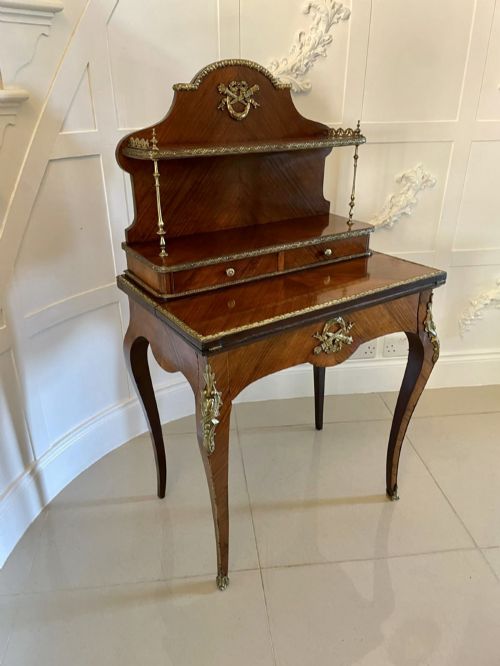
A bonheur du jour writing desk brings lightness and refinement to a room, offering a small, elegant workspace with a raised superstructure.
Bonheur Du Jour Writing Desk
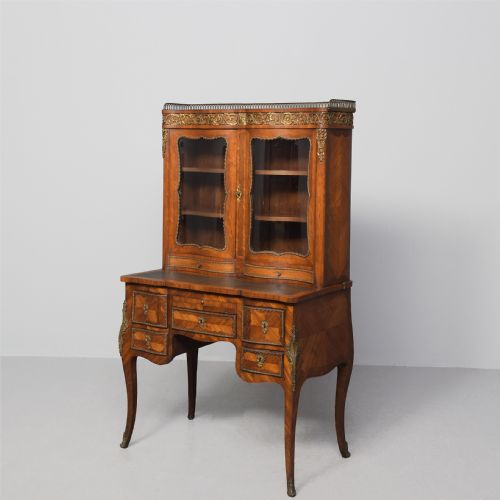
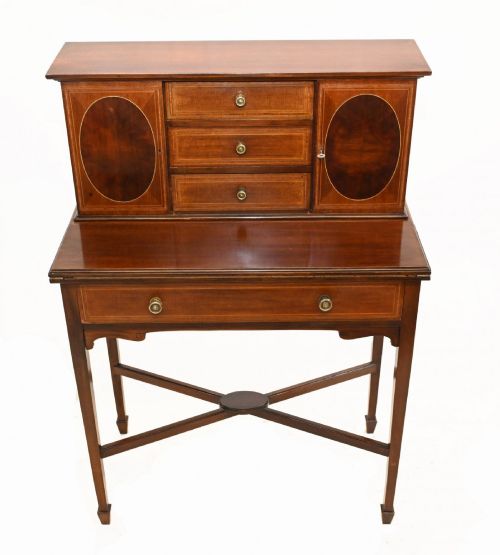
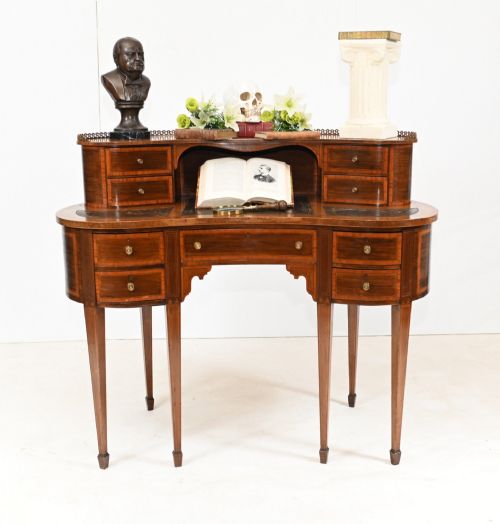
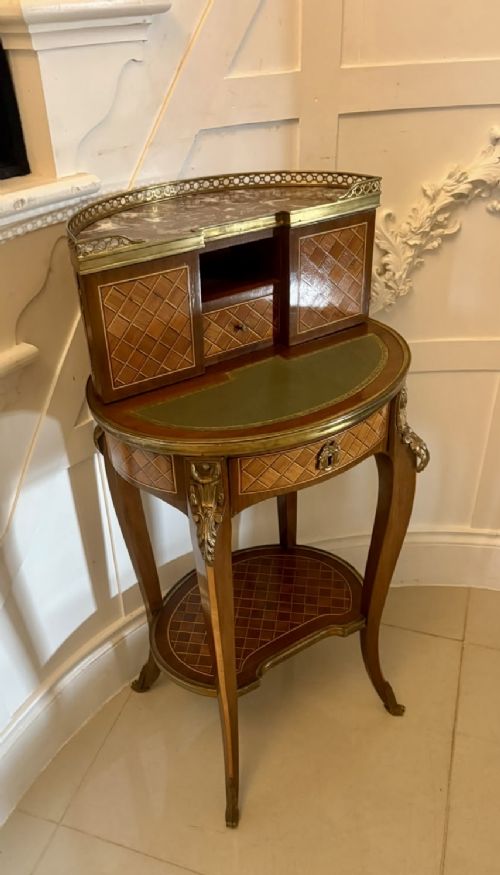
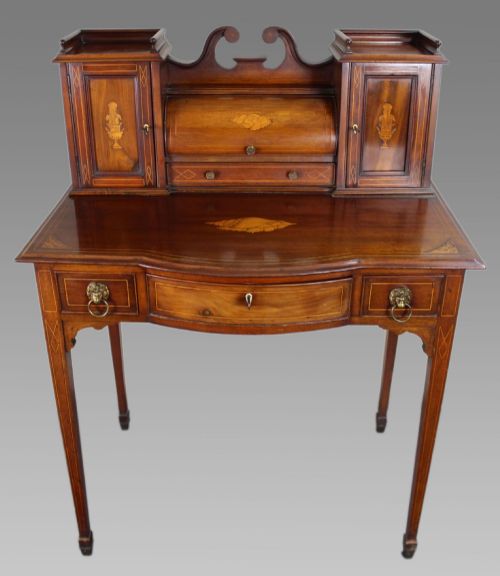
A bonheur du jour writing desk is a compact ladies writing table developed in France during the eighteenth century and revived with enthusiasm during the Victorian and Edwardian eras. These small pieces typically combine a writing surface with a raised superstructure of small drawers, cupboards, or pigeonholes designed for stationery and correspondence.
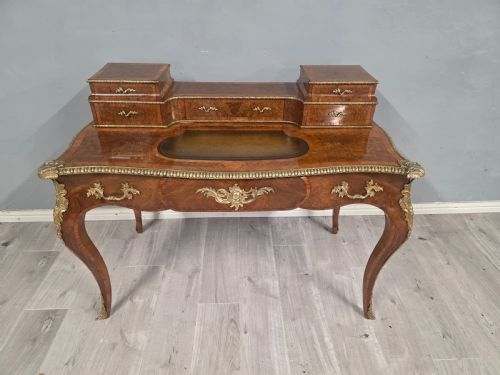
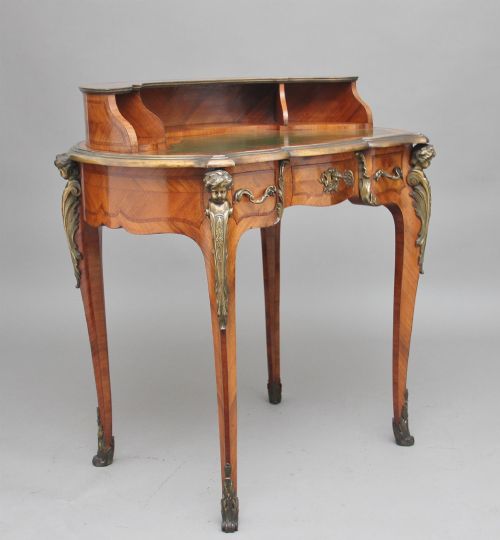
The versions most commonly met on this page span the nineteenth century, from mid-century French examples mounted in ormolu to later English satinwood and mahogany creations. They appear frequently in revival styles such as Louis XV, Louis XVI, and Sheraton, reflecting a lasting taste for delicate eighteenth-century forms.
Freestanding models designed to be viewed from all angles sit alongside pieces intended for placement against a wall. The presence of a superstructure distinguishes them from standard writing tables, giving them a distinct vertical interest and decorative presence.
Materials and construction
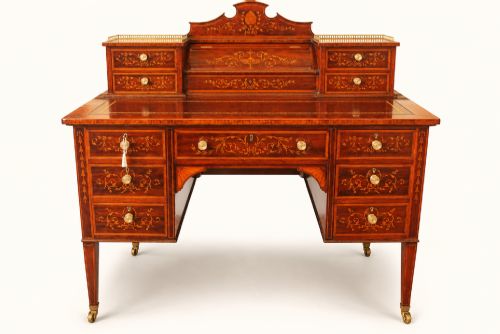
Cabinetmakers constructed these desks using fine timbers such as mahogany, satinwood, kingwood, rosewood, and walnut, often applying elaborate marquetry, parquetry, or contrasting stringing. Carcasses of native woods received choice veneers arranged to display rich grain patterns.
Gilt bronze and ormolu mounts, brass galleries, and inset leather writing surfaces complete many of the finer French and English examples. Specialised workshops also incorporated painted porcelain plaques or Vernis Martin panels into the superstructures of select pieces.
Bonheur Du Jour Writing Desk Retail Price Guide 2026
Typical asking prices for bonheur du jour writing desk among the pieces listed under this phrase on Sellingantiques today, from the lower quarter to the upper quarter. They describe what is for sale here now, not the wider market.
Superstructures range from simple letter racks to complex arrangements of miniature drawers, cupboards, and porcelain plaques.
Distinctions in quality
Quality reveals itself in the crispness of the bronze ormolu chasing, the precision of the wood inlay, and the careful selection of matching veneer grains across curved surfaces. Superior pieces display seamless joinery in the small drawers and internal partitions of the superstructure.
The reputation of the maker, whether a celebrated London firm like Edwards and Roberts or Gillows, or a Parisian cabinetmaker such as Paul Sormani, elevates the standing of a desk. Finer examples maintain original mounts, balanced proportions, and high-grade secondary timbers throughout the interior construction.
Edwards & Roberts·Gillows·Paul Sormani·Maple & Co.
The Bonheur Du Jour Writing Desk Glossary
- Bonheur du jour
- A small lady's writing desk with a raised superstructure, popular in the eighteenth century and revived later. The term translates from French as the fortune or blessing of the day.
- Ormolu
- Gilded bronze mounts and decorative details applied to furniture. High-quality ormolu is hand-chased after casting to sharpen the details.
- Superstructure
- The set of small drawers, shelves, or compartments built onto the back of the writing surface. It provides tidy storage for writing materials and letters.
- Parquetry
- Geometric patterns of wood veneer assembled to form decorative surfaces such as cubes or squares. It differs from marquetry, which forms pictorial or floral designs.
- Escritoire
- A writing cabinet featuring a sloping or falling front that opens to reveal a fitted interior. These pieces offer more enclosed storage than an open writing table.
Bonheur Du Jour Writing Desk: Frequently Asked Questions
What is a bonheur du jour?
A bonheur du jour is a small, light writing desk featuring a raised superstructure of drawers and pigeonholes above the writing surface. Originating in France, these pieces were designed for correspondence and light reading rather than heavy administrative work.
Over time, English and French cabinetmakers produced them in various revival styles, making them popular ornamental items for drawing rooms and boudoirs.
How were these desks used?
These desks served as private writing stations for letters, diary entries, and managing household accounts. The upper compartments held stationery, inkwells, and sealing wax.
Because many examples are finished on all sides, they were often placed away from walls in the centre of a room rather than tucked into a corner.
How do I date a desk?
Dating relies on combining the timber species, construction methods, hardware, and prevailing stylistic revivals. Eighteenth-century originals use different framing techniques compared to nineteenth-century revival pieces.
Cabinetmaker stamps, paper labels, and lock signatures can also narrow down the manufacturing period to specific decades.
How do I care for the wood?
Protect antique wood surfaces by keeping desks away from direct sunlight, heating vents, and rapid humidity changes. Dust regularly with a soft, dry cloth and avoid silicone-based polishes.
Occasional application of high-grade microcrystalline wax helps nourish the timber and protect delicate veneers without buildup.