




Bonheur Du Jour Top
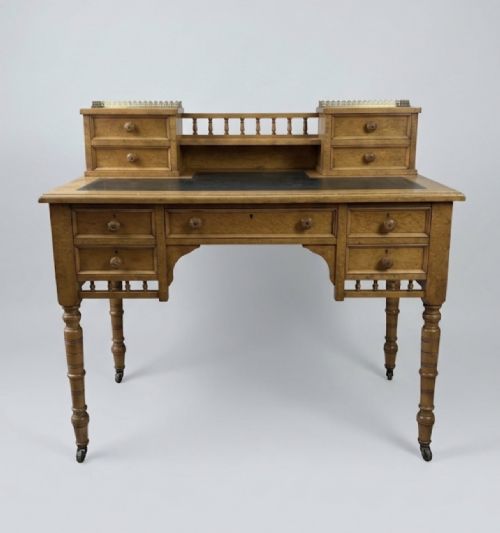
A bonheur du jour top forms the delicate writing superstructure placed upon a Davenport or table, offering small drawers and ledges for correspondence.
Bonheur Du Jour Top
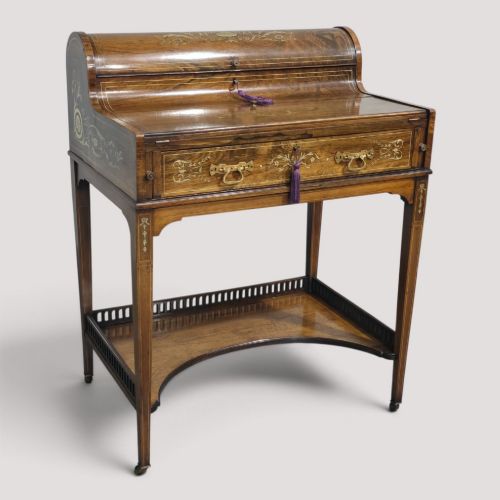
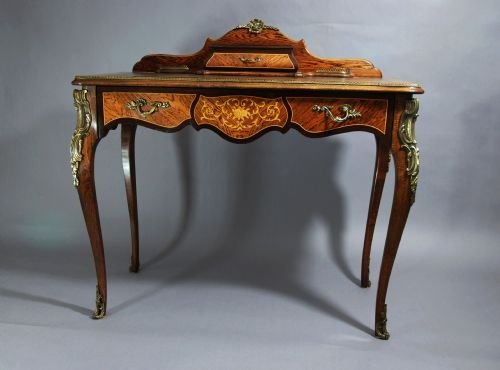
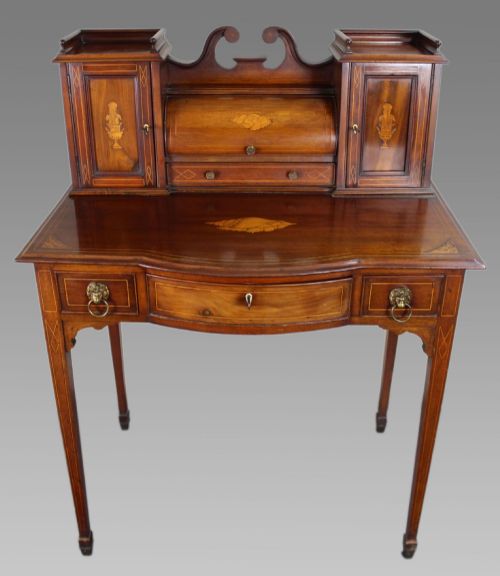
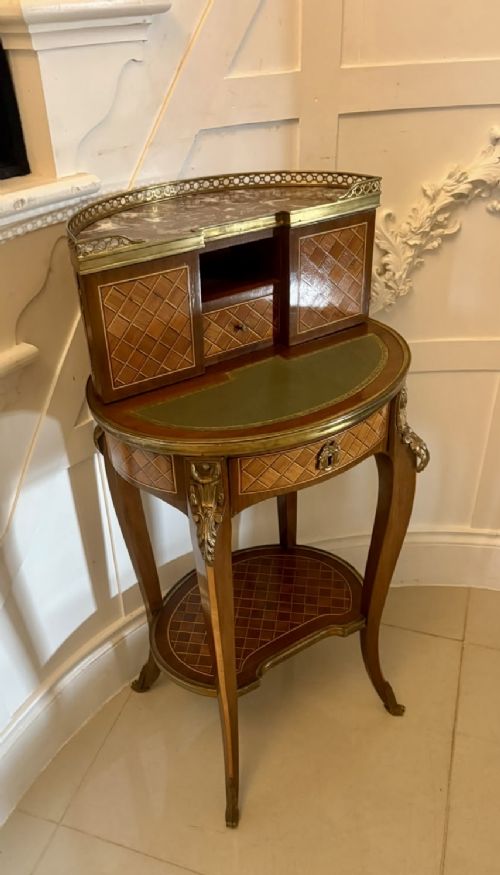
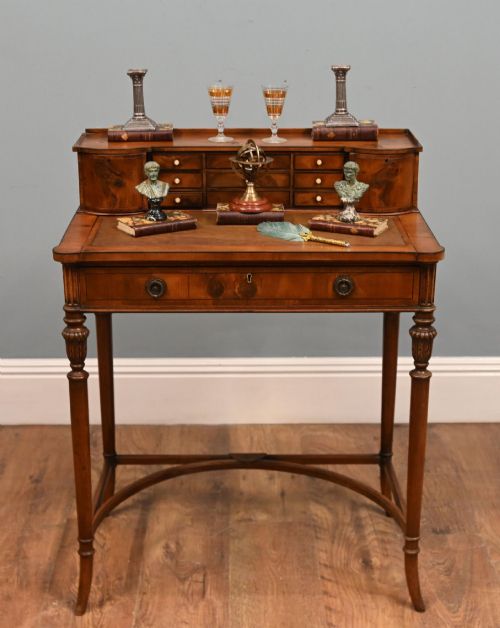
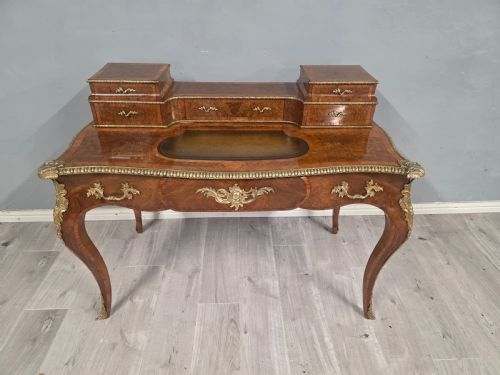
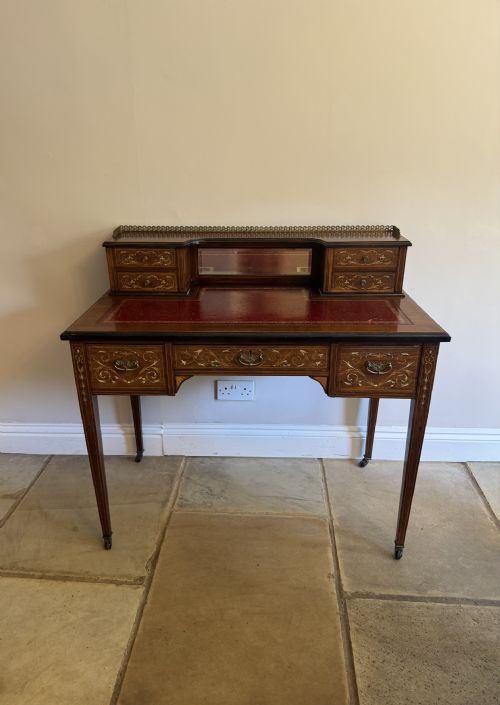
A bonheur du jour top represents the upper writing cabinet or superstructure designed for ladies' correspondence desks, featuring small drawers, pigeonholes, and occasionally a cabinet section. When searching for a bonheur du jour top, a buyer encounters pieces originating primarily from the Victorian and Edwardian eras, alongside French nineteenth-century examples.
The form bridges the gap between a portable writing box and a full pedestal desk, providing compartments for stationery without demanding heavy floor space. Surviving examples demonstrate how makers integrated these superstructures onto existing writing tables or preserved them as standalone architectural units.
Distinctions in construction and ornament
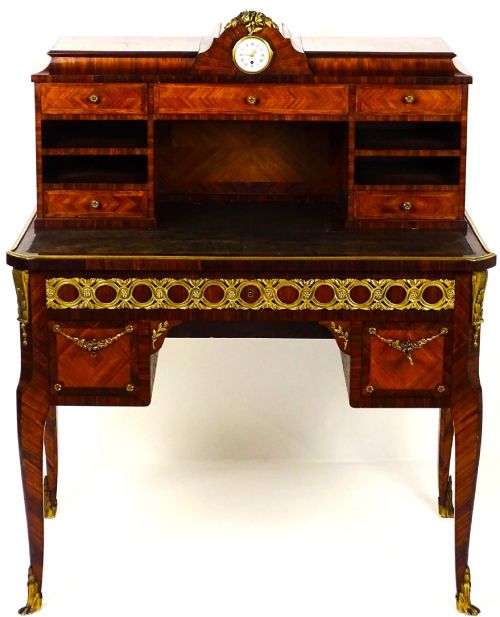
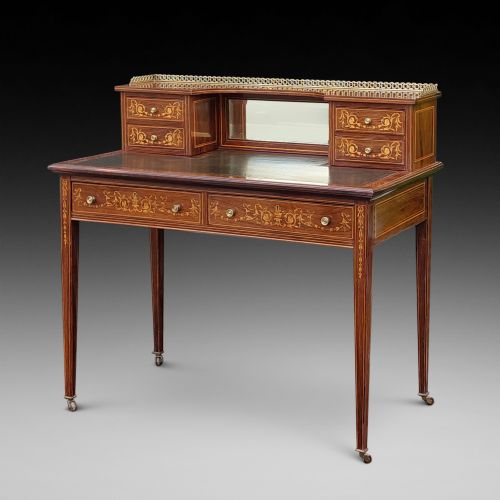
Quality rests upon the precision of the timber matching and the intricacy of the marquetry or parquetry patterns adorning the panels. Finer pieces employ dense burrs and select exotic woods that wrap continuously across drawer fronts and curved surfaces.
The execution of the gilt-bronze ormolu mounts and the smoothness of the small interior drawer runners separate standard production pieces from workshop examples bearing maker signatures. Sound structural joinery in the superstructure framing ensures the small pigeonholes and delicate galleries remain rigid over time.
Bonheur Du Jour Top Retail Price Guide 2026
Typical asking prices for bonheur du jour top among the pieces listed under this phrase on Sellingantiques today, from the lower quarter to the upper quarter. They describe what is for sale here now, not the wider market.
Listings feature eighteenth, nineteenth, and early twentieth-century examples in mahogany, satinwood, rosewood, and burr walnut.
Maple and Co·Paul Sormani·Edwards and Roberts·Jas Shoolbred
The Bonheur Du Jour Top Glossary
- Superstructure
- The tiered arrangement of small drawers, shelves, and pigeonholes built to sit upon the flat surface of a writing table.
- Ormolu
- Gilded bronze used for decorative mounts, handles, and gallery rails on nineteenth-century French and English furniture.
- Marquetry
- Decorative veneer work forming pictorial or geometric patterns using various coloured woods arranged on a contrasting ground.
- Parquetry
- Geometric mosaic woodwork arranged in repeating patterns such as cubes or chequers across a desk surface.
- Escritoire
- A small writing cabinet featuring a fall-front or sloping lid concealing interior compartments.
Bonheur Du Jour Top: Frequently Asked Questions
What is a bonheur du jour top?
A bonheur du jour top is the upper cabinet section of a ladies' writing desk, equipped with small drawers and compartments for letters and writing materials.
These superstructures were either made as part of an integrated desk or designed to rest upon a matching writing table.
How were these pieces used?
They provided a compact, dedicated space for morning correspondence, diary keeping, and the storage of stamps and stationery.
The upper ledges and galleries also held small decorative items, inkwells, and letter racks.
How do I identify the period?
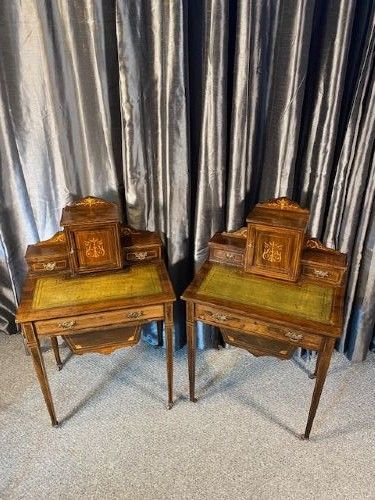
Period identification relies on timber choices, such as rich burr walnut in Victorian pieces or bright satinwood in Edwardian revivals.
Inlaid motifs like husks, urns, and neoclassical swags point directly to Sheraton revival influences from the late nineteenth and early twentieth centuries.
Are French and English pieces different?
French examples from the nineteenth century frequently showcase elaborate kingwood parquetry and heavy ormolu mounts in the Louis XV and XVI styles.
English pieces tend to favour inlaid mahogany and satinwood with cleaner lines influenced by eighteenth-century neoclassical designs.