

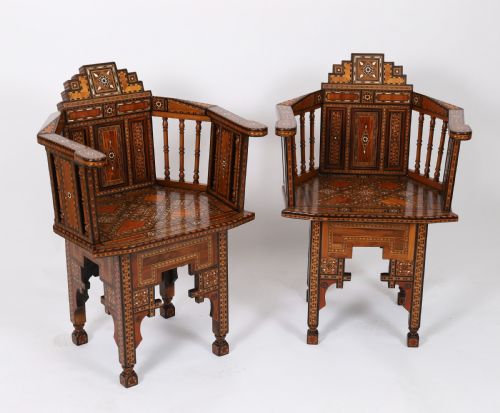


Bone Inlay Wood Chair
A bone inlay wood chair brings intricate geometric detail and historic craft to a room, offering striking pattern across hardwood and fruitwood frames.
Bone Inlay Wood Chair
When you search for a bone inlay wood chair, you encounter ornate seating rooted in distinct regional traditions. These pieces combine wooden structures with carefully fitted decorative elements.
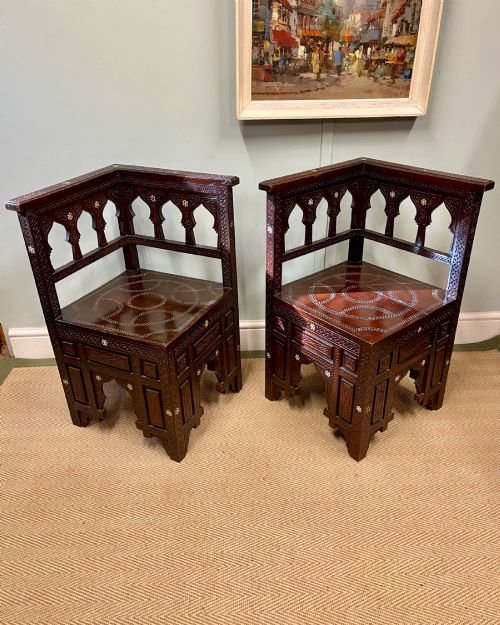
The selections span the nineteenth century into the twentieth century. Forms range from armchairs and corner chairs to folding chairs and larger seating suites.
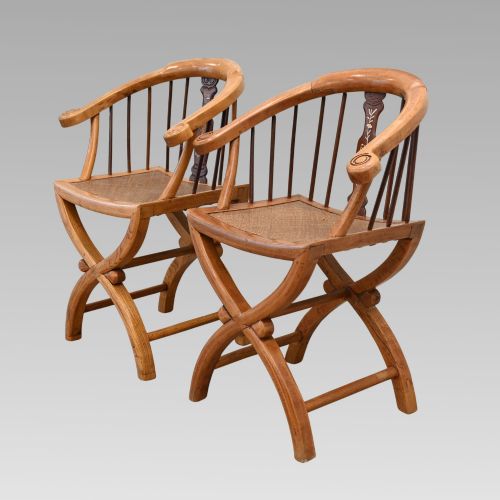
Origin styles include Moorish Revival, Syrian Ottoman, Traditional Chinese, and Egyptian Revival. Hardwood, fruitwood, and cane frequently support the intricate decorative work.
Materials and construction methods
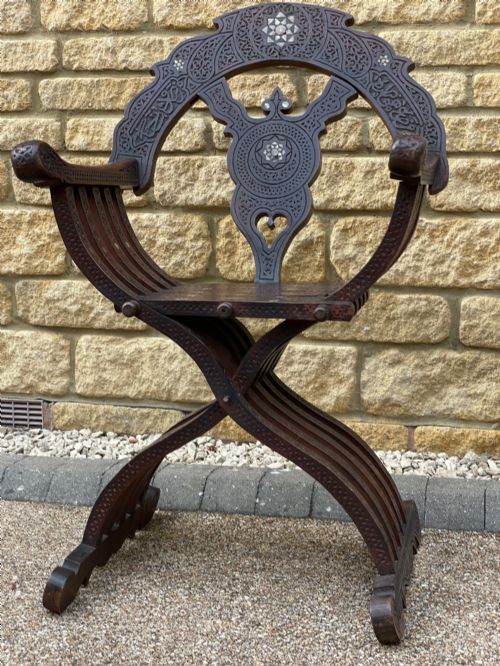
Craftsmen construct these chairs using hardwoods and fruitwoods as the primary structural base. Delicate pieces of bone and mother-of-pearl are then meticulously shaped and set into the wooden surface.
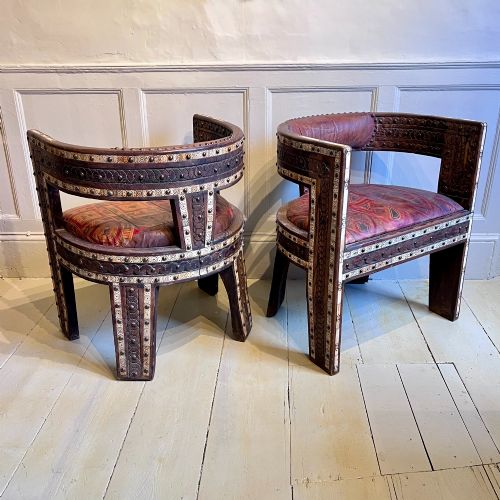
Additional elements such as cane panels, leather upholstery, and parquetry geometric patterns complete the construction. Mashrabiya panels and carved details further demonstrate the specialised joinery involved.
Bone Inlay Wood Chair Retail Price Guide 2026
Typical asking prices for bone inlay wood chair among the pieces listed under this phrase on Sellingantiques today, from the lower quarter to the upper quarter. They describe what is for sale here now, not the wider market.
Listings feature items dated from the nineteenth century through the 1930s, incorporating bone, mother-of-pearl, cane, and leather.
Assessing quality in inlaid seating
Quality rests upon the precision of the inlay work and the complexity of the geometric patterns. Pieces featuring dense bone and mother-of-pearl placement require exceptional skill from the maker.
The structural integrity of the underlying hardwood or fruitwood frame determines longevity. Intricate carving and well-preserved cane or leather elements elevate the overall standard of the object.
Liberty and Co
The Bone Inlay Wood Chair Glossary
- Bone inlay
- A decorative technique where small pieces of bone are embedded into a wooden recess to form intricate patterns. This method creates striking contrast against dark hardwoods.
- Mother-of-pearl
- The iridescent inner layer of certain mollusk shells used alongside bone for added shimmer. It catches the light within detailed geometric compositions.
- Mashrabiya
- An architectural wooden lattice screen feature incorporated into furniture. It provides delicate pierced patterns across panels and backs.
- Parquetry
- A mosaic of geometric wooden pieces fitted together to create patterned surfaces. It often frames the inlaid sections on these chairs.
- Savonarola chair
- A type of folding chair formed from multiple intersecting curved wooden slats. This historic form allows the seat to collapse.
Bone Inlay Wood Chair: Frequently Asked Questions
What styles define a bone inlay wood chair?
These chairs reflect Moorish Revival, Syrian Ottoman, Traditional Chinese, and Egyptian Revival aesthetics. Each regional style brings distinct geometric motifs and carving techniques to the woodwork.
Craft traditions from North Africa, the Levant, and East Asia influence the overall design and decorative vocabulary of the pieces.
How do I date a bone inlay wood chair?
Dating relies on examining the specific wood species, the style of the joinery, and the regional decorative motifs. Pieces commonly date from the nineteenth century into the early twentieth century.
Specific stylistic indicators like Mashrabiya panels or parquetry help narrow the period of origin alongside any attributed maker details.
Where were these inlaid chairs originally used?
They served as decorative accent seating in formal drawing rooms, parlours, and specialised reception spaces. Their ornate surfaces were intended to showcase craftsmanship and global trade influence.
Today, they function well as statement pieces in modern interiors, providing historical texture and contrasting pattern.
What materials accompany bone on these chairs?
Hardwoods and fruitwoods form the primary structural frames, while mother-of-pearl adds iridescent contrast to the inlay. Cane seating and leather upholstery frequently complete the composition.
Parquetry borders and intricate carved woodwork often surround the bone panels to enhance the visual depth of the design.