





Bombe Shaped Chest of Drawers
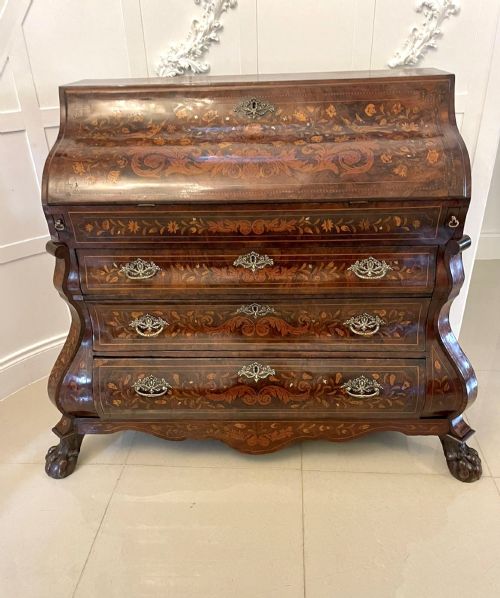
A bombe shaped chest of drawers brings the swelling curves and dramatic silhouette of eighteenth-century continental cabinetmaking straight into a room.
Bombe Shaped Chest of Drawers
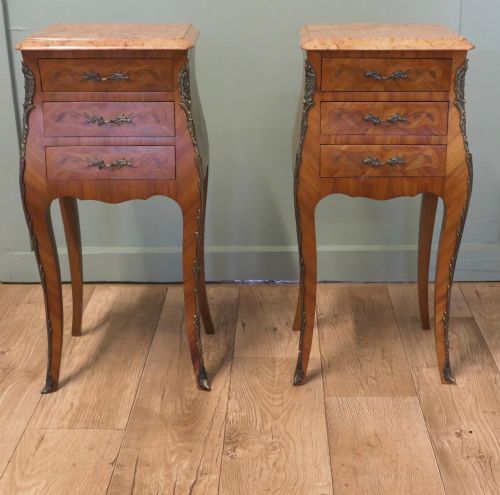
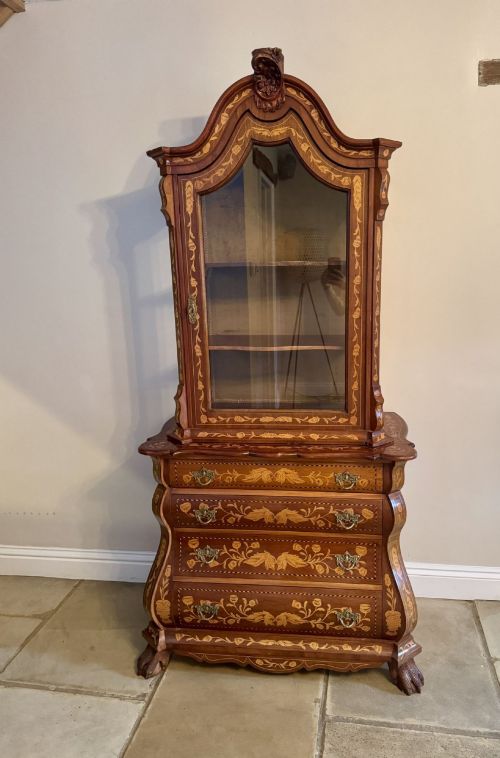
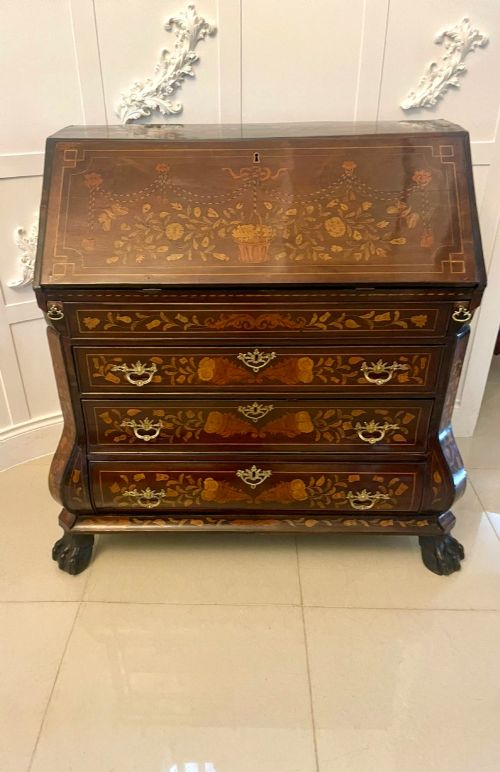
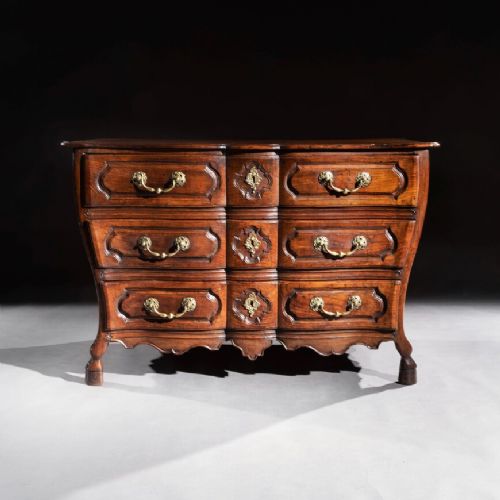
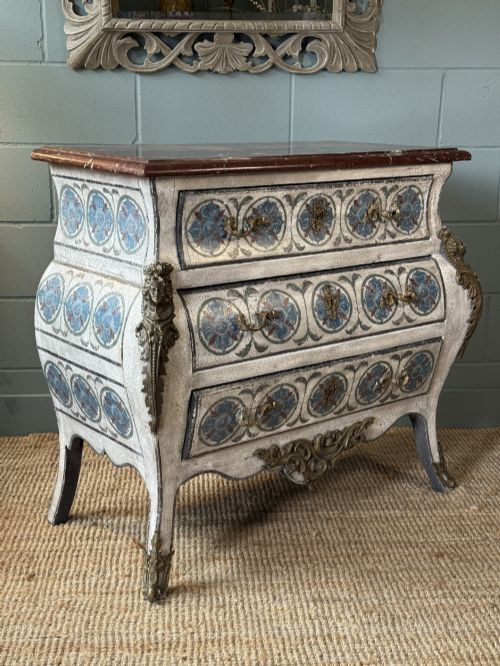
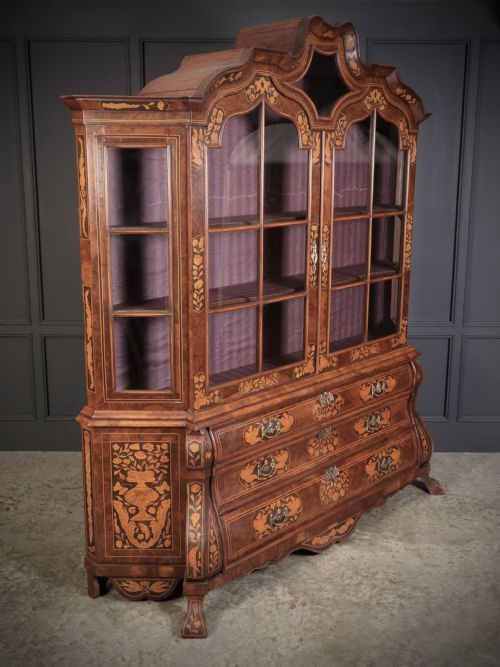
A bombe shaped chest of drawers encompasses sweeping commodes, bureaus, and cabinets with convex fronts and sides that curve outwards. These distinctive forms emerge primarily in eighteenth-century continental workshops across France, Italy, and the Netherlands, alongside later nineteenth-century interpretations.
The version most commonly met on this page is the French or Dutch commode, often featuring rich marquetry or parquetry surfaces. Bureau desks with sloping lids and cabinet variants also appear, showcasing the same pronounced outward sweep.
Makers working in walnut, burr walnut, oak, and chestnut construct these pieces to command attention through their sculptural profiles. Regional variations span from Dutch Baroque and Rococo expressions to French provincial designs and Louis XV styles.
How they were made
Cabinetmakers build the complex, swelling carcasses of a bombe shaped chest of drawers using solid woods like oak, chestnut, or fruitwood as a stable frame. They then apply decorative veneers of walnut, burr walnut, or rosewood, cutting the timber to follow the challenging contours.
Marquetry and parquetry techniques introduce intricate floral patterns and geometric arrangements across the curved drawer fronts and sides. Ormolu mounts in cast brass and polished marble tops frequently complete the construction on continental examples.
Bombe Shaped Chest of Drawers Retail Price Guide 2026
Typical asking prices for bombe shaped chest of drawers among the pieces listed under this phrase on Sellingantiques today, from the lower quarter to the upper quarter. They describe what is for sale here now, not the wider market.
Secret drawers often hide behind the sloping desk fronts of eighteenth-century bureaus, waiting for a lost letter.
What varies in quality
The sophistication of the timber selection and the precision of the marquetry define the upper tier of these pieces. Burr walnut and detailed floral marquetry demand exceptional skill from the cabinetmaker to align grain and pattern across bulging surfaces.
The integrity of the structural curves and the crispness of the cast brass or ormolu mounts dictate distinction in execution. Later surface alterations or painted finishes introduce variation in how original the presentation remains.
The Bombe Shaped Chest of Drawers Glossary
- Bombe
- A French term meaning swollen or puffed out, describing furniture with convex fronts and sides that curve outward.
- Marquetry
- The art of applying decorative pieces of veneer to a structure to form intricate patterns and floral designs.
- Ormolu
- Gilded bronze mounts and decorative hardware used extensively on eighteenth-century furniture.
- Commode
- A low chest of drawers, particularly French styles developed during the eighteenth century.
- Parquetry
- Geometric wood inlay work used to create tiled patterns across the surface of a panel.
Bombe Shaped Chest of Drawers: Frequently Asked Questions
Where did bombe shaped furniture originate?
The style developed primarily in continental Europe during the eighteenth century, with distinct regional interpretations emerging in France, Italy, and the Netherlands.
Master cabinetmakers in these regions pushed the boundaries of timber manipulation to create the characteristic swelling outlines.
How do I care for a marble top commode?
Marble surfaces require gentle cleaning with mild, pH-neutral soap and warm water to avoid damaging the stone polish.
Keeping moisture away from the surrounding wood veneer during cleaning preserves the structural integrity of the piece.
What is the difference between a commode and a bureau?
A commode is a dedicated chest of drawers designed for storage, whilst a bureau incorporates a sloping writing flap that opens to reveal fitted compartments.
Both forms utilise the same dramatic curved profile when constructed in the bombe manner.
Are these chests suitable for modern interiors?
The strong architectural silhouettes and rich wood tones allow these pieces to function as focal points in contemporary rooms.
Their substantial presence pairs effectively with minimalist surroundings to create a striking contrast of eras.