

Bombe Furniture
Bombe furniture brings swelling, convex lines and confident proportions to domestic interiors through eighteenth-century chests and cabinets.
Bombe Furniture
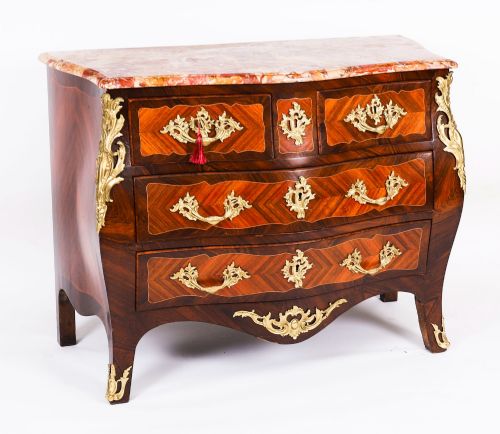
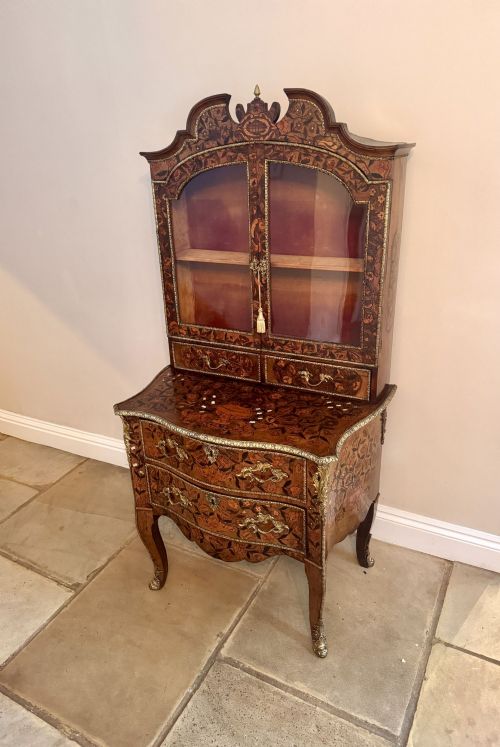
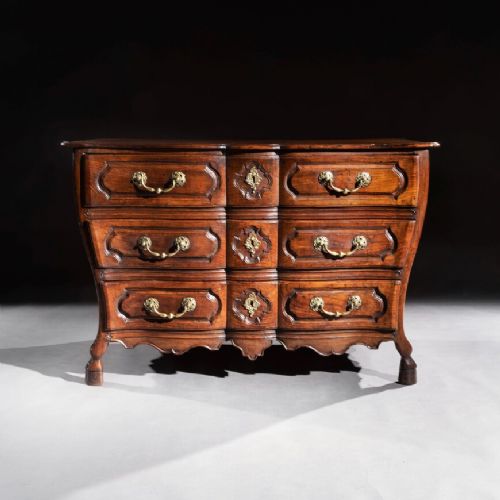
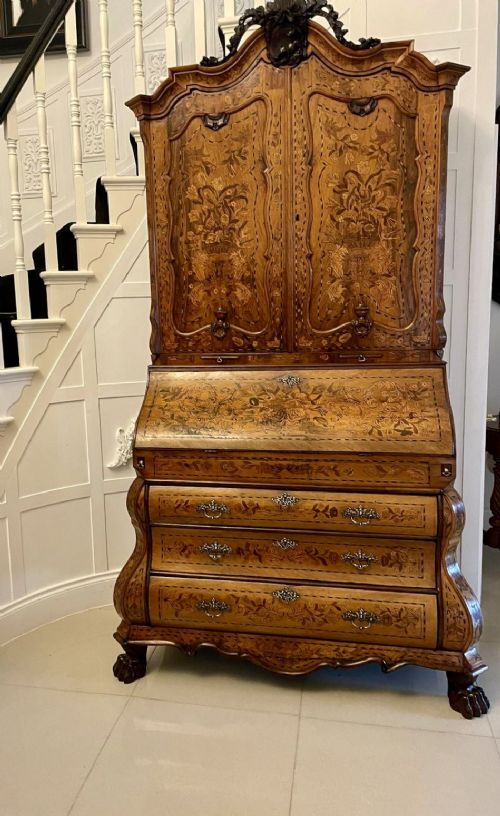
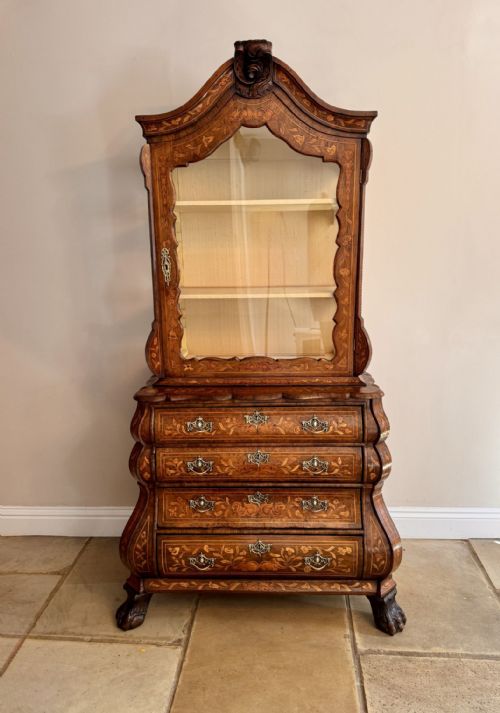
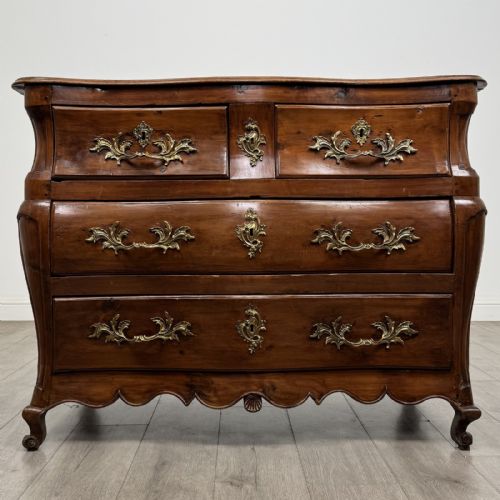
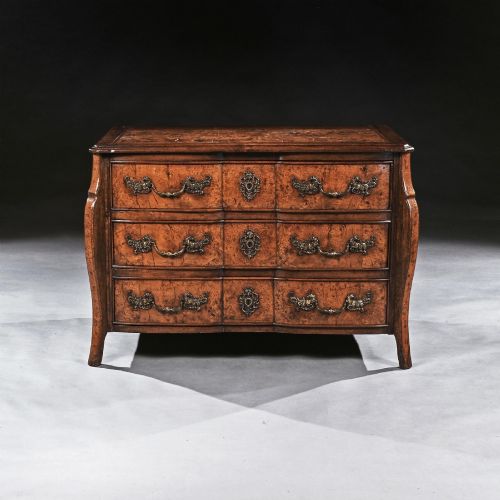
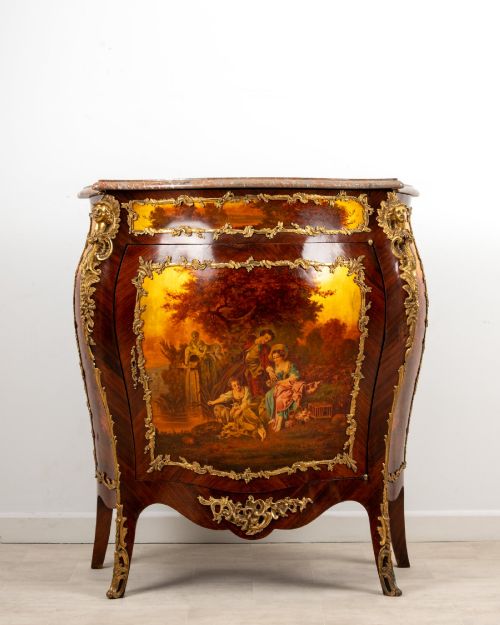
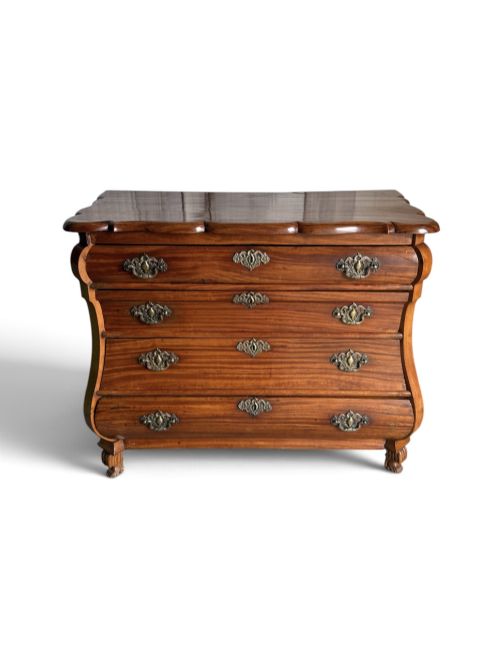
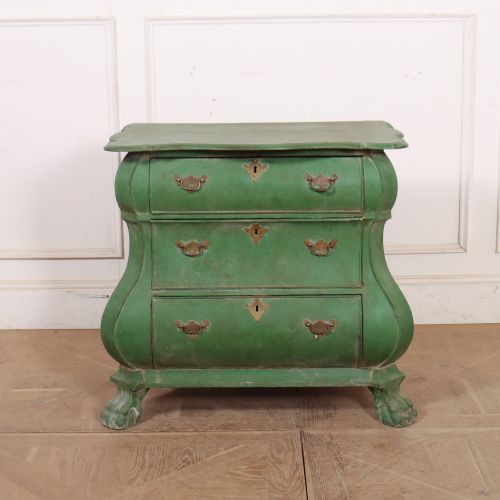
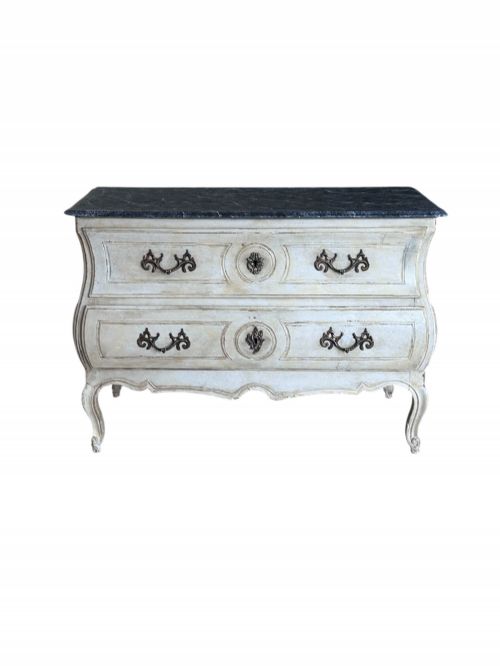
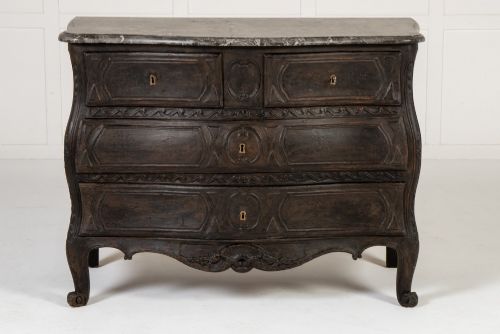
When searching for bombe furniture, buyers encounter pieces defined by rounded, outward-bulging fronts and sides that challenge traditional flat surfaces. The listings on this page include eighteenth-century Dutch walnut marquetry commodes, French Louis XV cabinets, and provincial walnut chests.
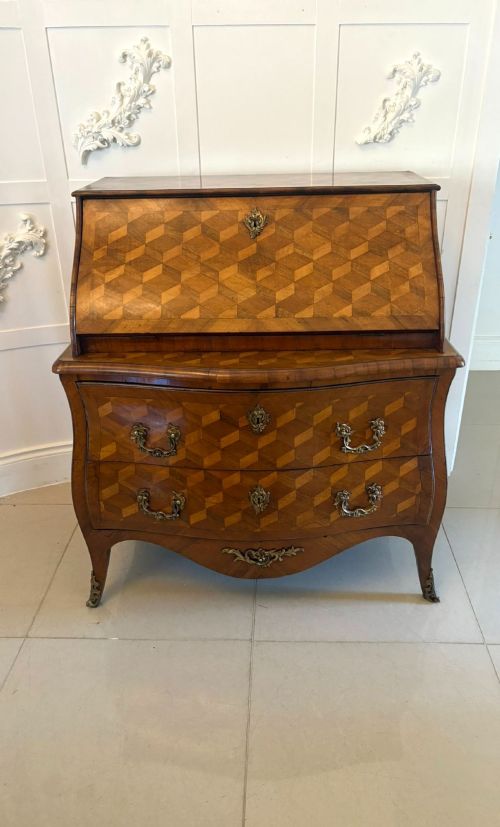
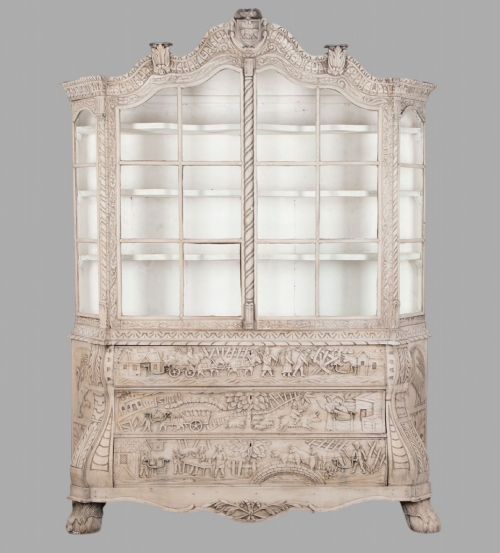
The form developed across continental Europe, producing distinctive regional styles such as Dutch Baroque and French Rococo. Cabinets on chests, bureau bookcases, and display vitrines demonstrate the same swelling profile adapted for writing and storage.
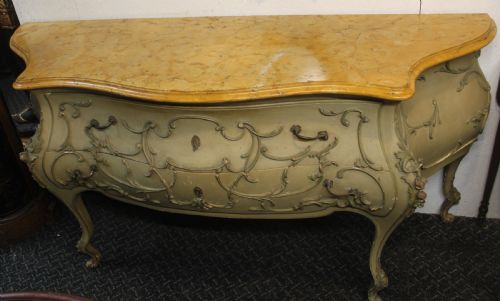
Nineteenth-century revivals and later interpretations also appear, utilising traditional forms with modified construction methods. Walnut, mahogany, and exotic veneers dominate the selection, often accompanied by marquetry floral motifs or painted finishes.
Materials and construction
Craftsmen built these curved carcasses using solid timbers such as oak, chestnut, and elm for the primary structural frame. Shaping the pronounced swell required thick stock or layered blocking glued to the internal posts before smoothing.
Veneers of burr walnut, kingwood, and mahogany were then applied over the curved surfaces, requiring skilled hand-sawing and hot-glue techniques. Marquetry designs incorporated intricate floral or geometric inlays using lighter and darker woods.
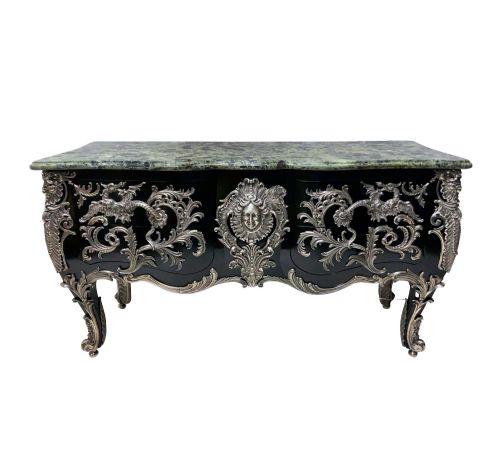
Mounts in cast brass and ormolu were fitted to corners and handles, while marble tops were shaped to follow the undulating contours of French commodes.
Bombe Furniture Retail Price Guide 2026
Typical asking prices for bombe furniture among the pieces listed under this phrase on Sellingantiques today, from the lower quarter to the upper quarter. They describe what is for sale here now, not the wider market.
Listings feature eighteenth and nineteenth-century pieces in walnut, oak, kingwood, and mahogany, alongside painted finishes.
Assessing quality and execution
The distinction between tiers rests upon the ambition of the timber selection and the precision of the marquetry. Superior examples display dense burr walnut or meticulously matched kingwood veneers that flow continuously across drawer fronts despite the compound curves.
Carving depth and the integration of bronze mounts dictate the standing of formal pieces. Finely chased ormolu and hand-carved floral motifs demonstrate workshop competence, whereas mechanical casting or flat surface treatment indicates standard commercial production.
E. Kahn
The Bombe Furniture Glossary
- Bombe
- A convex, bulging shape characteristic of certain continental European case furniture. The term describes cabinets and chests whose sides and fronts swell outward.
- Marquetry
- Decorative inlay work where thin veneers of various woods are assembled to form pictorial or floral patterns. Master craftsmen used tinted woods and engraved details to create depth within the design.
- Ormolu
- Gilt-bronze mounts applied to furniture edges, corners, and feet. This decorative metalwork was cast and chased before receiving a gold amalgam finish.
- Commode
- A low chest of drawers developed in France during the seventeenth century. These pieces served both decorative and functional roles in formal rooms.
- Vernis Martin
- A European lacquer technique mimicking Asian lacquerwork. It was utilised on eighteenth-century French cabinets to provide durable, glossy painted surfaces.
Bombe Furniture: Frequently Asked Questions
What is bombe furniture?
Bombe furniture refers to storage pieces featuring convex, outward-curving sides and fronts. The silhouette provides a pronounced swelling shape.
Originating in continental workshops during the eighteenth century, these forms appeared primarily as commodes, bureaus, and display cabinets.
How do I date a bombe chest?
Dating relies on examining construction methods, timber choices, and secondary woods inside the drawers. Eighteenth-century pieces typically show hand-cut dovetails and regional timber usage.
Later nineteenth-century revivals incorporate machine-sawn components and different finishing techniques while copying earlier Dutch and French styles.
Where were these pieces made?
Production centred mainly in the Netherlands, France, and Sweden during the eighteenth and nineteenth centuries. Each region developed distinct aesthetic preferences.
Dutch makers favoured floral marquetry on burr walnut, while French workshops concentrated on kingwood veneers and gilt-bronze mounts.
How should I clean marquetry surfaces?
Dusting with a dry, soft cloth prevents particle buildup on delicate veneer and marquetry surfaces. Avoid abrasive cleaners or excess moisture.
Applying occasional microcrystalline wax helps protect the polished wood without sealing the historic finish underneath.