

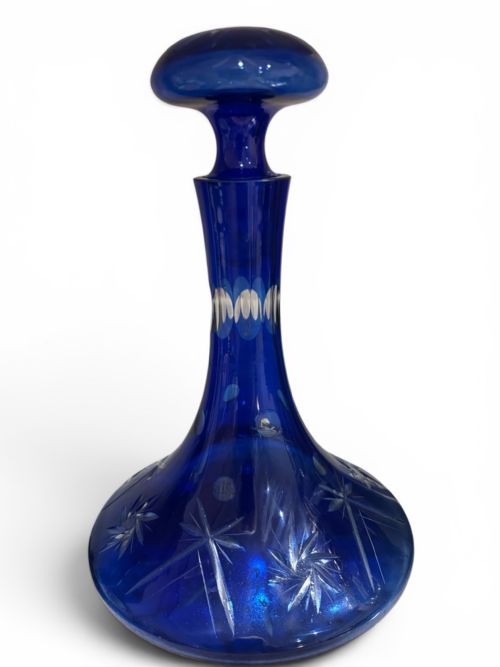


Bohemian Wine Glasses
These bohemian wine glasses bring vibrant colour, heavy crystal, and rich enamel decoration straight to the table from Central European workshops.
Bohemian Wine Glasses
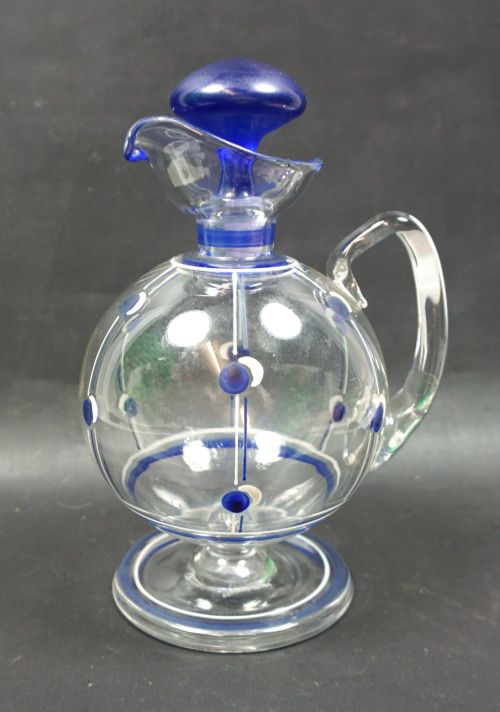
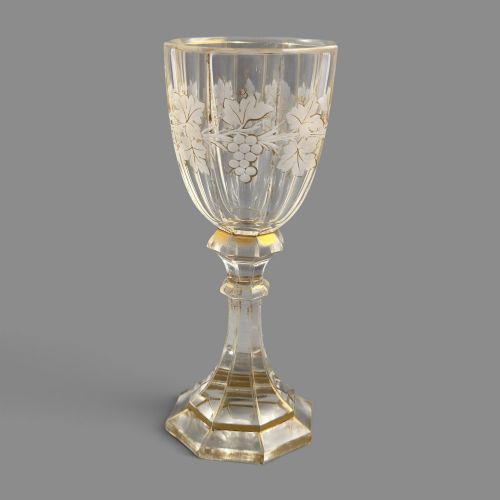
When you search for bohemian wine glasses, you meet everything from tall green roemers to cut crystal goblets and decanters. The pieces on this page span several centuries, reaching back to seventeenth-century forms and forward through Victorian revivalism into Art Deco styling.
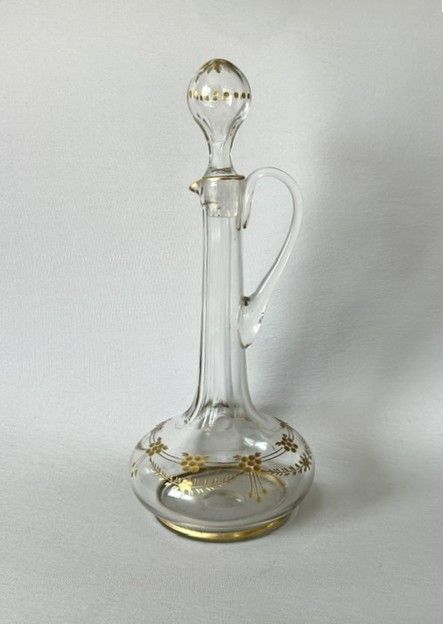
You will most frequently encounter nineteenth-century production, particularly green and amber cut glass, alongside clear glass vessels carrying enamel or gilding. Sets of wine glasses appear alongside individual goblets, decanters, and claret jugs.
Form follows function across distinct eras, moving from heavily engraved armorial goblets to slender hock glasses designed for regional wines. Biedermeier examples sit alongside Jugendstil and later Czechoslovakian decanters, showing how local makers adapted traditional shapes.
How they were made
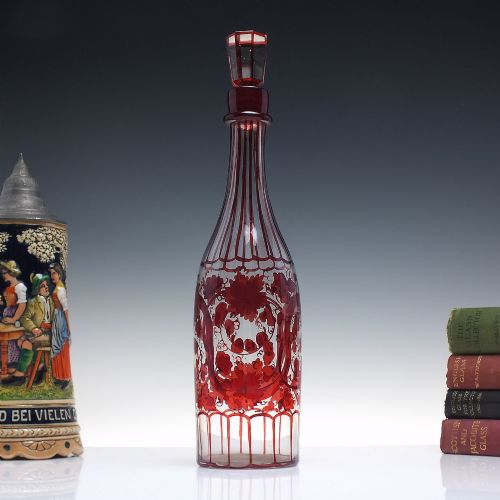
Makers shaped these items using blown glass and heavy crystal, applying colour through overlaid layers of glass or deep mass coloration. This technique allowed craftsmen to cut through the outer skin to reveal contrasting tones beneath.
Decoration relied heavily on intricate wheel engraving, polychrome enamel painting, and applied gilding. Artisans painted figures, floral motifs, and armorial crests directly onto the surface before firing.
Cut crystal elements required precise wheel work to create faceted stems and bowls that catch the light. Overlay glass depended on the careful fusion of distinct coloured glass layers prior to cutting.
Bohemian Wine Glasses Retail Price Guide 2026
Typical asking prices for bohemian wine glasses among the pieces listed under this phrase on Sellingantiques today, from the lower quarter to the upper quarter. They describe what is for sale here now, not the wider market.
Listings feature items spanning the seventeenth century through the Art Deco era, with a strong focus on Victorian green and amber glass.
What varies in quality
The distinction between ordinary and exceptional work lies in the crispness of the wheel engraving and the depth of the glass cutting. Superior pieces display sharp, clean facets and deeply carved motifs rather than shallow surface scratches.
Hand-painted enamel decoration separates fine studio production from standard factory output, with master painters achieving delicate shading and clean linework. Gilding quality also marks the difference, where thick, burnished gold leaf outlasts thin, rubbed paint applications.
The weight and clarity of the crystal base material dictate the overall substance of the vessel. Heavy, resonant crystal with unblemished colour overlay commands greater regard than thin, cloudy glass.
Moser·Lobmeyer·Frits Hechert
The Bohemian Wine Glasses Glossary
- Roemer
- A traditional large wine glass with a wide, patterned stem and a rounded bowl, typically made in green glass. These forms developed in Germanic and Bohemian regions for regional white wines.
- Overlay glass
- A technique where a layer of coloured glass is fused over a clear or contrasting body, then partly cut away to create patterns. This method produces strong contrast between the exterior colour and the core.
- Hock decanter
- A tall, slender bottle specifically designed for holding hock or German white wine. They frequently utilise coloured overlay glass and long necks.
- Armorial
- A term describing glass decorated with family coats of arms or heraldic crests. These bespoke commissions often appear on nineteenth-century goblets.
- Gilding
- The application of gold leaf or gold paint to the glass surface, often fired for permanence. Rich gilding adds considerable presence to engraved bowls and rims.
Bohemian Wine Glasses: Frequently Asked Questions
What is a roemer glass?
A roemer is a traditional Germanic and Bohemian wine glass featuring a globular bowl and a wide, raspberry-prunt stem designed for a firm grip.
These pieces typically appear in shades of green or amber and serve white wines.
How do I date bohemian glass?
Dating relies on combining the stylistic clues of the cutting, the shade of the glass, and the motifs used in the enamel or engraving.
Victorian and nineteenth-century pieces often show heavy overlay and historicist details, while later periods shift towards simpler Art Deco forms.
Can I use antique wine glasses?
Antique glass can be used for dining, provided you handle the heavier crystal and delicate stems with appropriate care.
Hand washing remains essential to preserve the delicate gilding and enamel work found on many pieces.
What is overlay glass?
Overlay glass consists of a clear or contrasting glass body covered by a thin skin of coloured glass.
Craftsmen cut through this outer layer to create intricate patterns that expose the underlying material.