


Bohemian Crystal Scent Bottle
A bohemian crystal scent bottle brings geometric cut glass and coloured glass from the early twentieth century straight to a dressing table.
Bohemian Crystal Scent Bottle
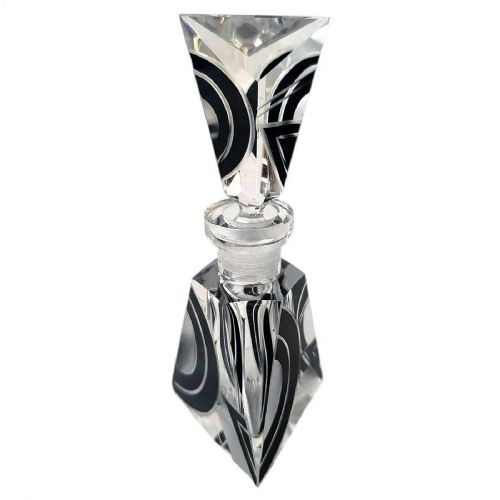
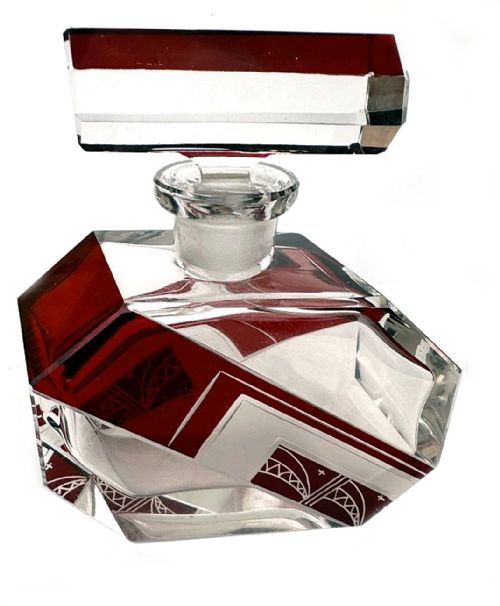
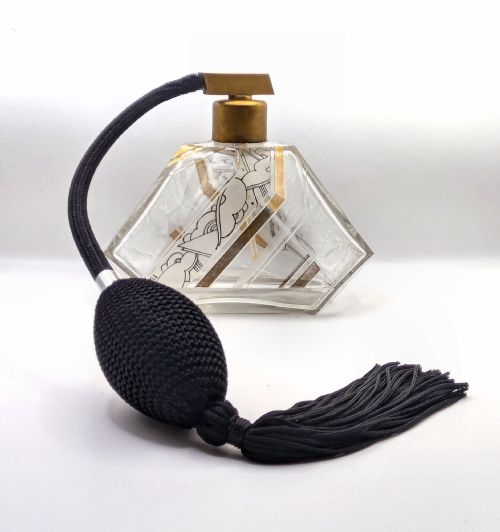
A bohemian crystal scent bottle represents distinct examples of decorative glass and perfume containers originating primarily from the Czech Republic during the 1930s. Buyers searching for a bohemian crystal scent bottle encounter striking Art Deco forms, including geometric cut glass, atomiser bottles, and matching globe perfume sets.
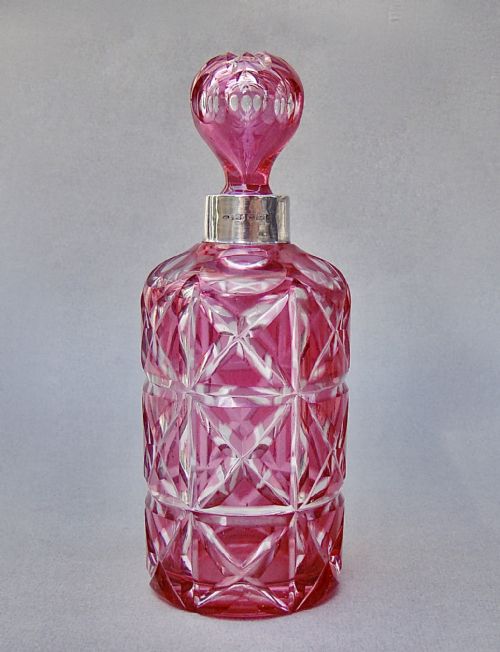
The pieces on offer span the Edwardian era up to the 1930s, showing a clear concentration of Art Deco design alongside earlier Edwardian silver mounted cranberry glass vessels. These items combine functional perfume storage with high ornamental value, featuring vibrant green glass, black enamel, and clear crystal.
Objects on this page range from standard perfume bottles to atomisers and silver-mounted examples, reflecting the distinct output of Central European glass workshops during the interwar years.
Materials and methods
Makers utilised high-grade glass and crystal, shaping the material through geometric cutting, moulding, and polishing techniques. Artisans integrated coloured glass in shades like cranberry and green, frequently pairing the transparent medium with contrasting black enamel or fabric elements.
Metalwork played a structural and decorative role, with workshops incorporating silver mounts, gold leaf, and chrome components onto the glass bodies. Enamel work added surface decoration, while atomiser hardware provided functional spray mechanisms for ladies' dressing table accessories.
Listings feature glass, crystal, enamel, cut glass, fabric, gold leaf, chrome, and black enamel across the Edwardian and 1930s periods.
Distinguishing quality
The standard of a bohemian crystal scent bottle depends on the precision of the geometric cutting and the clarity of the glass itself. Pieces attributed to documented designers display superior surface treatment and more intricate cutting patterns compared to standard commercial output.
The integration of precious materials elevates certain examples, particularly where substantial silver mounts, enamel detailing, or gold leaf are applied to the glass body. The presence of matching sets or fully functioning atomiser hardware also distinguishes finer dressing table pieces.
Harold Bushell & Co·Karl Palda
The Bohemian Crystal Scent Bottle Glossary
- Atomiser
- A perfume bottle fitted with a spray mechanism that uses a bulb and tube to diffuse scent. This type allows for a fine mist application.
- Cranberry glass
- A rich pinkish-red glass produced by adding gold chloride to the molten batch. It appears frequently in Edwardian pieces.
- Enamel
- Opaque glass paste fused to a surface through heat for decoration. It provides bold colour contrast on glass and silver mounts.
- Geometric cut glass
- Glass decorated with precise, straight-lined facets and patterns. This technique defines the Art Deco aesthetic seen on these pieces.
Bohemian Crystal Scent Bottle: Frequently Asked Questions
What periods do these scent bottles come from?
The pieces span the Edwardian period and the 1930s. Most examples date specifically to the Art Deco era of the 1930s from the Czech Republic.
Earlier items from the 1910s feature Edwardian silver mounts combined with coloured glass. This timeline shows a clear shift from Edwardian ornamentation to geometric Art Deco design.
How were these bottles used?
These vessels served as functional dressing table accessories for holding and applying liquid perfume. Atomiser versions allowed users to spray scent directly through a mechanical pump.
Many survived as decorative vanity items rather than everyday utilities. Matching sets indicate they formed part of larger dressing table collections.
How do I identify an Art Deco bottle?
Art Deco bottles feature sharp geometric cuts, clean lines, and contrasting colours like green glass or black enamel. Makers utilised symmetrical patterns that reflect the architectural styles of the 1930s.
These pieces often lack the floral curves of earlier periods. The focus remains on stark angles and faceted crystal surfaces.
What materials besides glass are used?
Makers incorporated sterling silver mounts, gold leaf, and chrome to accent the glass bodies. Enamel work provided opaque colour highlights directly onto the metal or glass.
Some pieces also include fabric elements within their overall design. Silver components frequently carry Birmingham hallmarks from the Edwardian period.