




Boat Shaped Cluster Ring
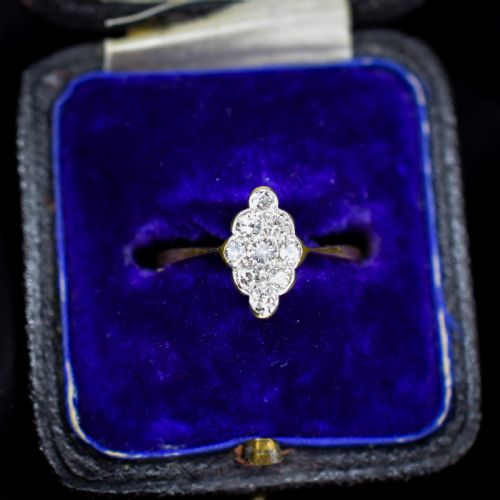
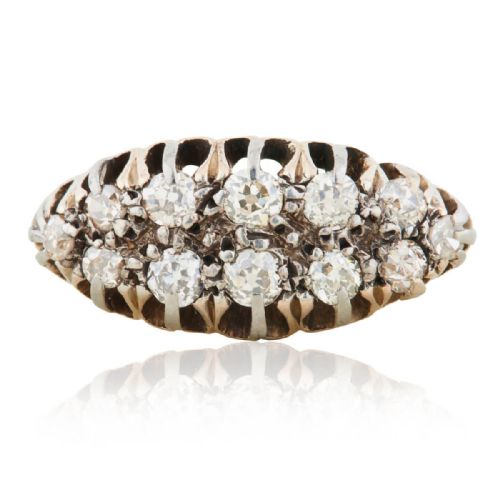
A boat shaped cluster ring sits low on the finger, bringing together multiple stones in an elongated silhouette.
Boat Shaped Cluster Ring
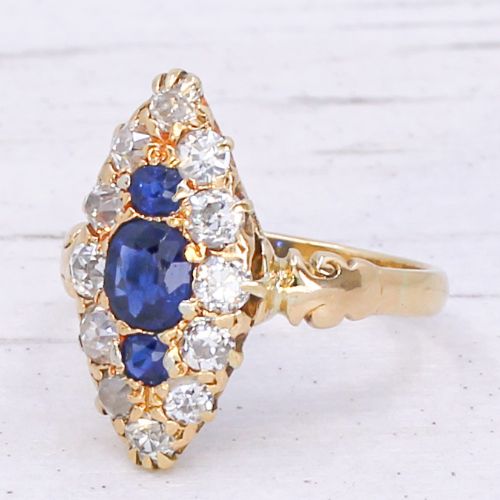
A boat shaped cluster ring presents an elongated outline across the hand, known historically as a navette or marquise form. You will most frequently meet Victorian and Edwardian examples on this page, alongside pieces from the Art Deco period.
The materials span traditional mountings of 18ct yellow gold paired with platinum settings, often framing old cut diamonds alongside sapphires or rubies. These configurations create the distinctive curved profile that defines the category.
Construction and materials
Goldsmiths constructed these mounts using 18ct yellow gold for the shank and body, frequently topping the face with platinum to brighten the appearance of the metal around the stones. This combination provides both structural warmth and a neutral backdrop for the gems.
The stones themselves rely on hand cutting techniques, notably old cut diamonds that distribute light softly across the elongated face. Rubies and sapphires appear as central focal points or accents within the cluster arrangement.
Judgement of quality
Distinction across these rings rests on the harmony of the cluster proportions and the matching of the stones. Finer examples maintain an even contour where the platinum and gold work integrate seamlessly with the facet patterns of the diamonds.
The integrity of the original navette silhouette and the crispness of the setting detail separate standard workshop output from exceptional survivals. Weight of metal and the presence of documented gemstones further shape the character of each piece.
The Boat Shaped Cluster Ring Glossary
- Navette
- A boat shaped or eye shaped silhouette that tapers to points at either end. This French term translates literally to little ship.
- Old cut
- A diamond cutting style prevalent in the Victorian and Edwardian eras featuring a smaller table and higher crown. These stones display broader facets suited to candlelight.
- Cluster
- An arrangement of multiple gemstones set close together to create the visual impact of a larger single stone. In these pieces, the cluster follows the curved navette outline.
- Platinum
- A dense, durable white metal utilised in jewellery manufacture from the Edwardian period onward. Its strength allowed jewellers to create delicate settings that held diamonds securely.
Boat Shaped Cluster Ring: Frequently Asked Questions
How do I wear a boat shaped cluster ring?
These rings follow the length of the finger rather than sitting across the hand horizontally. Their low profile makes them practical for daily wear.
Pair them alone to let the elongated silhouette become the focal point of the hand.
What is the difference between navette and marquise?
Both terms describe an elongated, boat shaped outline that tapers to two opposing points. In historical jewellery, they are often used interchangeably to denote this specific geometry.
Jewellers apply both names to rings featuring multi-stone clusters or single prominent gems shaped this way.
Are these rings made of platinum and gold?
Many examples utilise a combination of 18ct yellow gold for the shank and platinum for the top face. Platinum gained favour in the Edwardian era because its strength permitted fine claw work.
Victorian pieces occasionally show silver topped gold before platinum became the dominant white metal.
How do I date a boat shaped cluster ring?
Dating relies on stylistic markers such as the cut of the diamonds, the choice of metals, and construction details of the gallery. Victorian pieces often feature heavier yellow gold mounts, while Edwardian and Art Deco examples favour lighter platinum work.
Archival records and hallmarks help narrow down the period of manufacture further.