

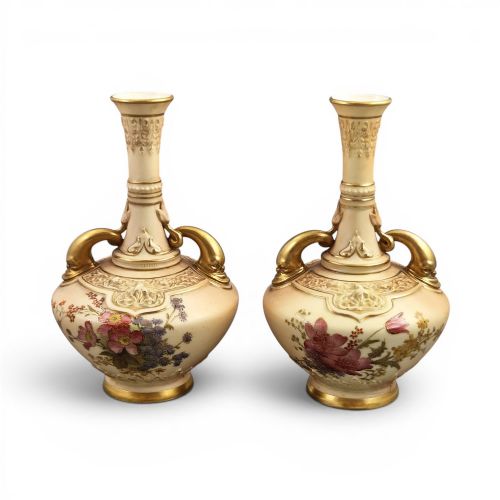


Blush Porcelain Vase
A blush porcelain vase brings soft pastel warmth and delicate hand-painted flora to a room, offering a distinctively English charm rooted in late nineteenth and early twentieth century porcelain production.
Blush Porcelain Vase
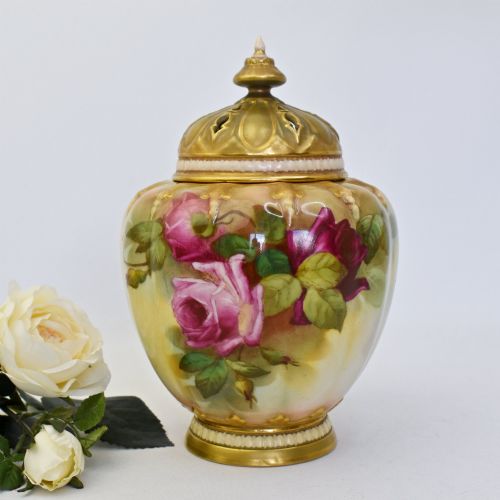
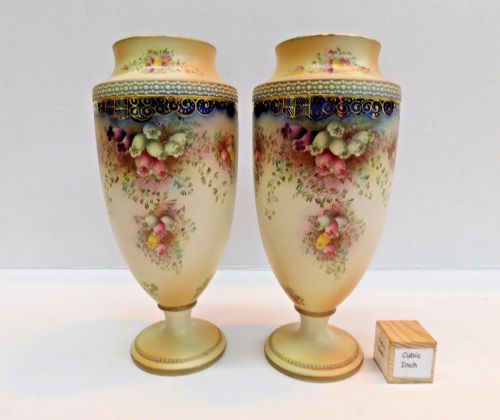
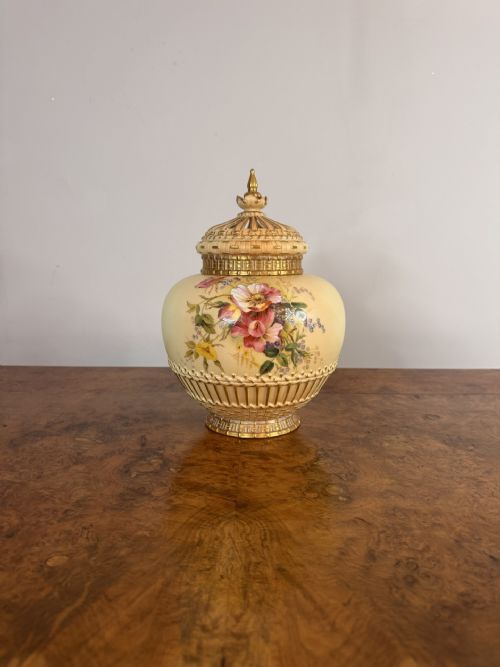
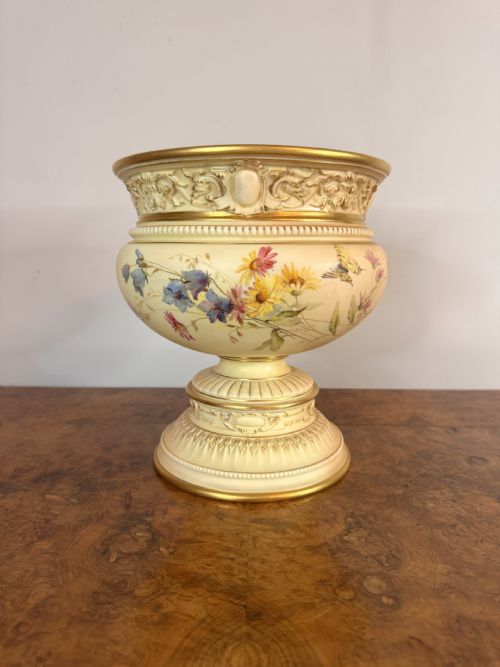
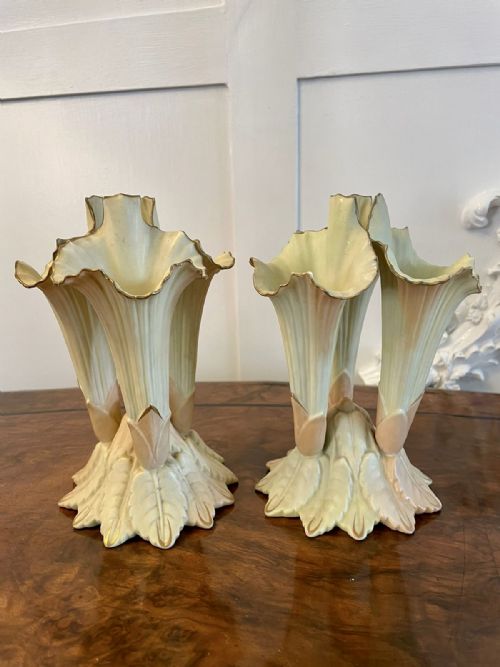
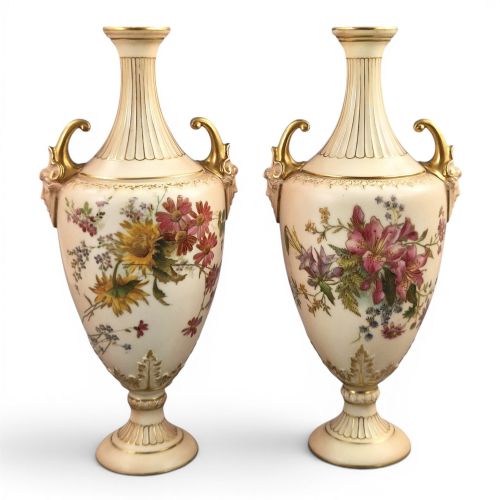
A blush porcelain vase typically takes the form of a delicate ceramic vessel finished with soft ivory glazes and painted floral motifs, often accented with gilding. These pieces emerge predominantly from late Victorian and Edwardian periods, capturing a specific aesthetic of domestic ornamentation.
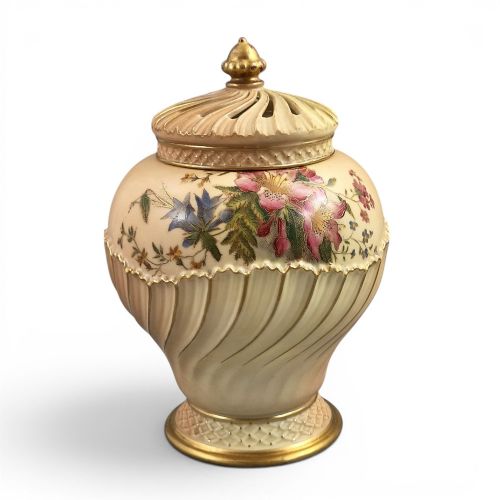
The version most commonly met on this page is the Royal Worcester blush ivory vessel, spanning forms from slender spill vases and ovoid pot-pourri jars to elaborate handled ewers. Makers such as Locke and Co. and Grainger's Worcester also produced similar forms during the same decades.
How they were made
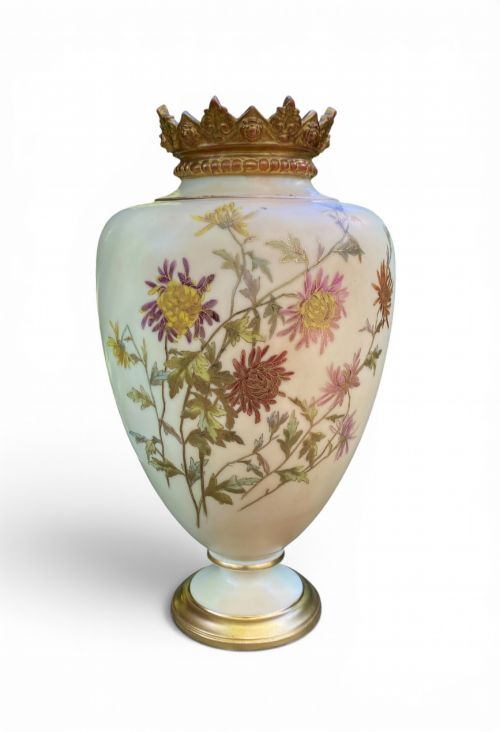
Makers utilised fine porcelain bodies coated in pale ivory glazes, creating a soft ground for subsequent decoration. Artists applied ceramic enamel colours by hand, frequently depicting chrysanthemums, roses and naturalistic foliage directly onto the unfired or biscuit surface.
Gilding and gold leaf highlights were meticulously applied to handles, rims and pierced collars, then fired to fuse the metallic lustre with the glaze. Skilled painters such as James Stinton, E. Raby and Kate Locke signed specific works, linking individual artistry to the ceramic body.
Blush Porcelain Vase Retail Price Guide 2026
Typical asking prices for blush porcelain vase among the pieces listed under this phrase on Sellingantiques today, from the lower quarter to the upper quarter. They describe what is for sale here now, not the wider market.
Several pieces feature hand-painted birds by James Stinton, bringing feathered charm directly onto the delicate blush ivory ceramic surface.
What varies in quality
The standard of painting separates the ordinary production piece from the exceptional artist-signed work, where botanical detail and brushwork reveal superior dexterity. The delicacy of pierced gilt handles and the precision of the crown cover shaping also mark the upper tier of execution.
Subtlety in the shading of the blush ivory ground distinguishes finer examples from heavier, less nuanced applications of colour. The inclusion of registered shape numbers and specific artist signatures elevates the desirability of the piece.
Royal Worcester·Locke And Co
The Blush Porcelain Vase Glossary
- Blush ivory
- A soft, creamy porcelain glaze developed by Worcester potteries to emulate ivory, serving as a backdrop for floral painting.
- Pot-pourri jar
- A covered ceramic vessel pierced to allow scented dried petals to diffuse fragrance through a room.
- Ewer
- A large jug-shaped pitcher featuring an ornate handle and spout, often produced purely for decorative display.
- Pâte-sur-pâte
- A ceramic technique where wet white slip is built up in successive layers on a coloured body to create a low relief cameo effect.
- Spill vase
- A tall, narrow receptacle designed to hold taper spills used for lighting candles and fires.
Blush Porcelain Vase: Frequently Asked Questions
What is a blush porcelain vase?
A blush porcelain vase is a decorative ceramic vessel characterised by a soft ivory glaze and delicate hand-painted floral decoration, originating mainly from late nineteenth and early twentieth century English potteries.
These pieces rely on subtle pastel shading and gold leaf gilding to achieve their distinctive aesthetic, distinguishing them from brightly coloured Victorian ceramics.
How were pot pourri jars used?
Pot pourri jars were designed to hold dried scented plant material, releasing fragrance through pierced covers or lids into Victorian and Edwardian drawing rooms.
Their dual function as decorative urns and scent diffusers made them central ornaments on mantelpieces and side tables.
How do I identify Edwardian pieces?
Edwardian blush porcelain objects often feature crisp date ciphers, registration numbers and factory marks stamped into the ceramic base, alongside stylistic clues such as pierced gilt handles and naturalistic floral painting.
Comparing the shape number to factory records helps determine the exact production year between eighteen ninety and nineteen twenty.
How do I clean antique porcelain?
Antique porcelain requires gentle dusting with a soft, dry brush to remove particulate matter without disturbing fragile enamels or gold leaf gilding.
Moisture and chemical cleaners should be avoided entirely, as they can compromise the delicate glaze and hand-painted details.