



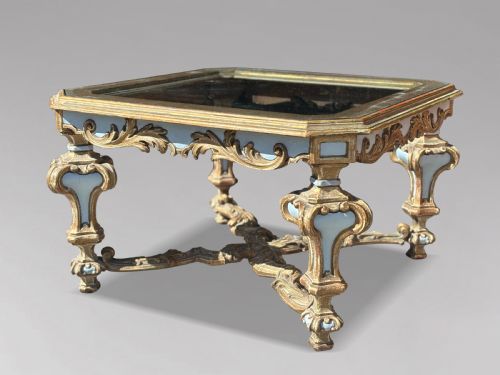

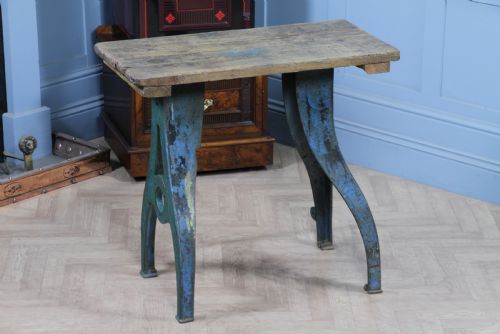
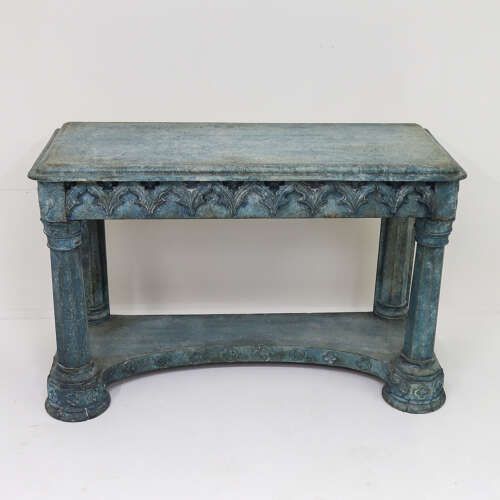


Blue Wood Table
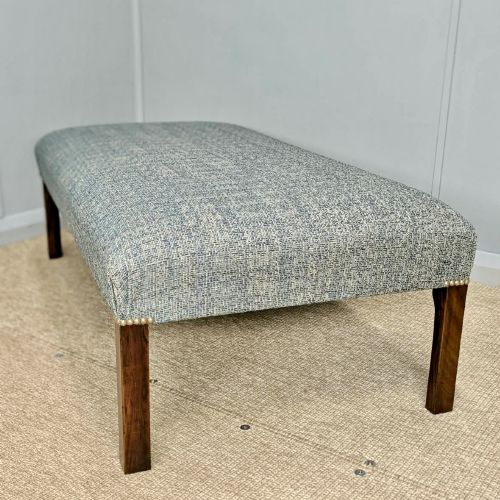
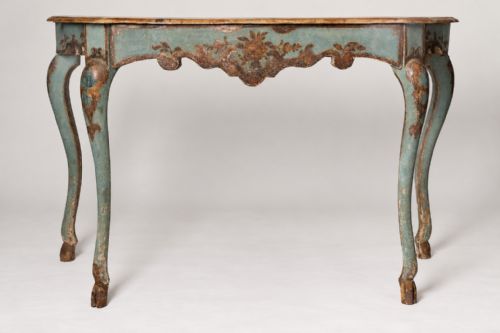
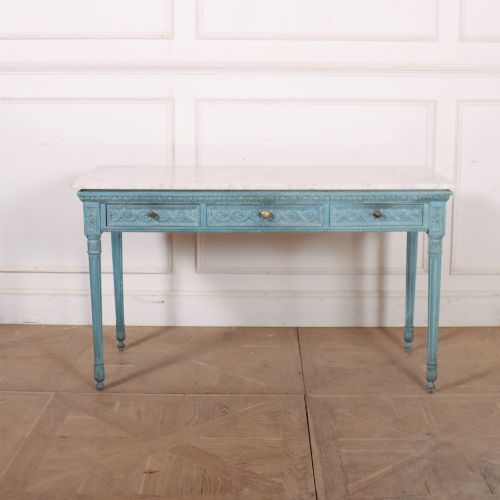
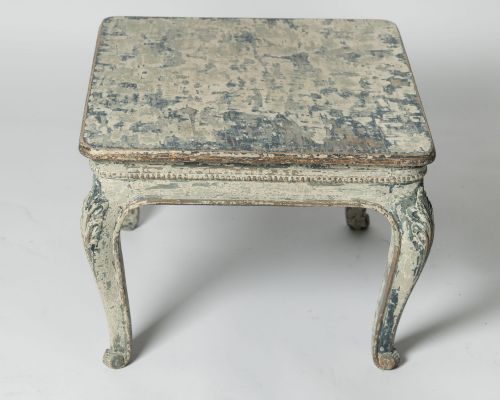
A blue wood table brings surface colour and practical timber structure into a room, spanning rustic country house pieces and formal painted consoles.
Blue Wood Table
A blue wood table combines timber construction with painted or decorated surfaces, appearing across console tables, side tables, and centre tables. These items originate from periods such as the 18th century, 19th century, and the 1920s, reflecting regional styles from English country houses to French provincial interiors.
The versions most common on this page rely on painted wood and timber foundations, often taking the form of console tables or side tables designed for halls and reception rooms. Makers applied paint over pine, timber, and carved wood to achieve decorative finishes that suited domestic interiors.
Buyers select these surfaces to introduce colour into traditional spaces, utilising the contrast between natural wood grain and applied pigment. The selection includes Gustavian influenced chests, Italian console tables, and Spanish painted examples dating across multiple centuries.
Materials and construction
Craftsmen built these tables using solid timber and pine, frequently applying paint finishes over the wood to create decorative surfaces. Marble tops also appear on specific French and Italian forms, resting upon wooden frames.
Joinery techniques varied from folk made assembly to formal cabinet making, utilising turned legs, carved details, and applied mouldings. Paint layers were built up over wood substrates, sometimes combined with brass fixtures or fabric elements depending on the period.
Blue Wood Table Retail Price Guide 2026
Typical asking prices for blue wood table among the pieces listed under this phrase on Sellingantiques today, from the lower quarter to the upper quarter. They describe what is for sale here now, not the wider market.
Historical makers occasionally painted over knotty pine simply to keep domestic spirits bright through long northern winters.
Assessing quality and finish
Quality rests upon the integrity of the timber frame and the execution of the painted finish. Finer pieces demonstrate careful hand application of pigment over seasoned wood, whereas simpler examples rely on folk made construction and straightforward utility.
The articulation of carved details, such as those found on Italian consoles or French painted tables, distinguishes standard production from more ambitious workshop output. The relationship between the painted surface and the underlying wood determines the visual depth of the piece.
The Blue Wood Table Glossary
- Console table
- A table designed to stand against a wall, frequently supported by wall brackets or front legs. These items often feature decorative painted surfaces or marble tops.
- Gueridon
- A small French table supported by one or more columns or figures. They frequently serve as lamp tables or side pieces in period interiors.
- Gustavian
- The Swedish interpretation of French neoclassical style, characterised by pale painted finishes and restrained classical carving. This aesthetic appears on chests of drawers and console tables.
- Demi lune
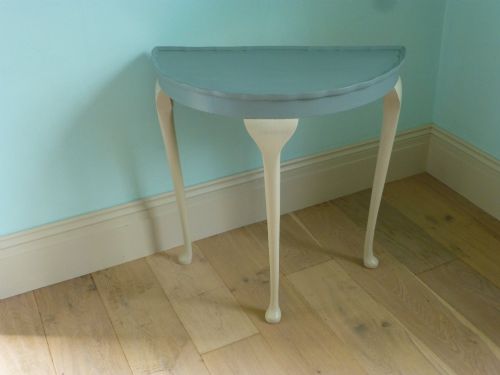
- A half moon shape utilised for console and hall tables designed to sit flush against a wall. This form saves floor space while providing a display surface.
Blue Wood Table: Frequently Asked Questions
Where should I place a blue wood table?
These tables suit hallways, living rooms, and reception spaces where surface area and colour impact the room. Console variations fit flat against walls, while centre tables occupy open floor areas.
Positioning depends on the scale of the piece and its specific form, whether a slender side table or an imposing painted console.
How do I identify the period of a painted wooden table?
Dating relies on structural joinery, the type of timber used in the frame, and the character of the painted finish. Pieces from the 18th century and 19th century often display hand cut joinery and layered pigment that differs from 1920s production.
Stylistic cues such as Gustavian influence or Italian neoclassical motifs also point toward specific manufacturing eras.
Are painted wooden tables durable for daily use?
Solid wood construction provides structural stability for everyday placement of lamps, books, and decorative objects. Painted surfaces require sensible care to preserve the pigment and finish against moisture and heavy impact.
Most historic examples tolerate normal domestic environments when treated with standard furniture maintenance practices.
What is the difference between a console table and a side table?
Console tables traditionally anchor against a wall and sometimes require structural attachment for balance. Side tables are freestanding items designed to sit beside seating or within room corners.
Both forms appear with painted wooden surfaces across various 19th-century and early 20th-century traditions.