


Blue Wingback Chair
A blue wingback chair brings height, warmth, and traditional draught-excluding comfort to a room, drawing on centuries of upholstery heritage.
Blue Wingback Chair
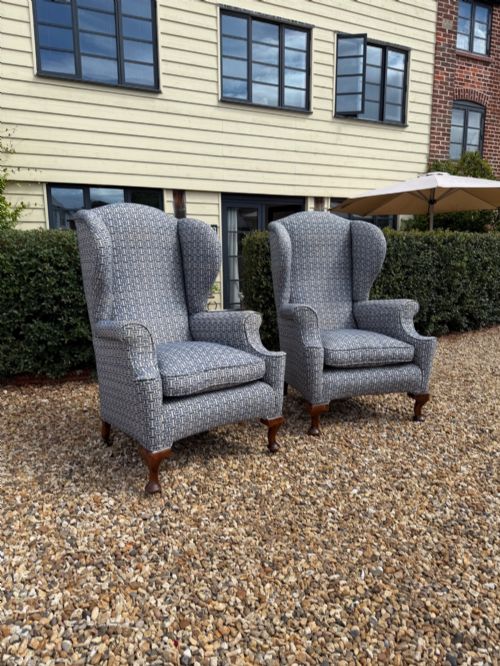
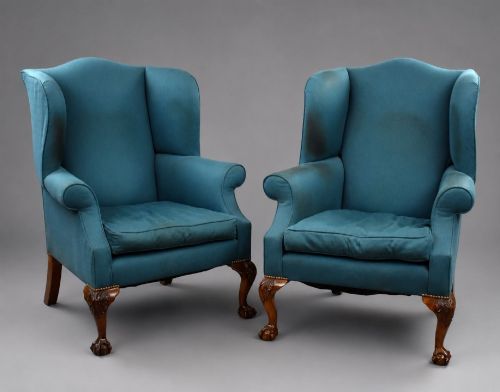
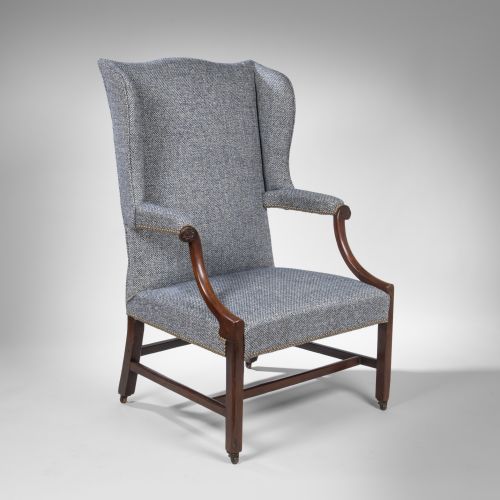
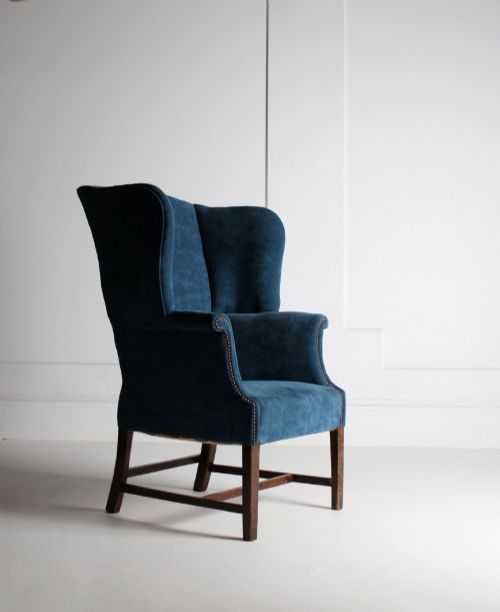
When searching for a blue wingback chair, you encounter a substantial seating form designed with protective side panels flanking the headrest. These armchairs span several eras, appearing in Georgian interpretations, Victorian iterations, and Edwardian variations upholstered in blue fabric, velvet, damask, or powder blue velour.
The pieces listed on this page range from nineteenth-century mahogany examples to early twentieth-century country house seating and bergère styles. You will find items showing Queen Anne revival influences alongside continental and French giltwood versions, each offering the characteristic high back and scrolled arms.
How they were made
Makers constructed the frames of these armchairs using sturdy hardwoods such as mahogany and walnut, often shaping the exposed woodwork by hand. Joinery techniques relied on traditional framing methods to support the substantial weight of the upholstered structure.
Textiles played a vital role in the final execution, utilising damask, velvet, silk, and woven fabrics fastened securely to the frame. Brass elements occasionally appeared in castors or decorative tacks, while carved details decorated the legs and claw and ball feet.
Historical wingbacks were cleverly designed with stuffed ears to trap heat around the head, proving that Victorian and Georgian ancestors took their winter draughts very seriously indeed.
What varies in quality
The standard of a blue wingback chair rests primarily upon the integrity of its wooden frame and the precision of its carved details. Superior examples display crisp hand-carving on the mahogany or walnut legs, whereas lesser items show softer lines and simpler turnings.
Upholstery choices also distinguish the calibre of the piece, with dense textiles like silk damask and quality velvet indicating higher original commissioning costs. The proportion of the wings and the rake of the back determine the visual balance that separates standard production from exceptional design.
Whytock and Reid·Howard and Sons·William Morris·Thomas Chippendale
The Blue Wingback Chair Glossary
- Wingback
- An armchair featuring protective side panels attached to the arms and framing the head. This traditional design originally protected sitters from draughts near open hearths.
- Bergère
- An enclosed upholstered armchair with wooden framing around the sides and back. These refined seats often incorporate cane work or fully padded textile panels.
- Damask
- A reversible figured fabric traditionally woven on a jacquard loom with patterns formed by contrasting warps and wefts. This material frequently appears in period upholstery schemes.
- Claw and ball
- A furniture foot carved to resemble an animal's claw grasping a spherical orb. This decorative motif frequently terminates the legs of eighteenth-century and revival seating.
Blue Wingback Chair: Frequently Asked Questions
How do I date a blue wingback chair?
Dating relies on examining the timber species, leg styling, and internal framing techniques visible beneath the upholstery. Earlier examples from the Georgian era display heavier proportions and hand-carved mahogany, while Edwardian versions often feature lighter frames.
Changes in revival styles during the nineteenth and early twentieth centuries also offer clues to the period of manufacture. Comparing the upholstery methods and textile choices helps narrow down the decade of production.
Where should I place a wingback chair?
These armchairs suit living rooms, studies, or bedrooms where their high backs create a distinct seating focal point. Positioning them near a fireplace or in a reading corner highlights their original purpose as draught-excluding seats.
Consider the scale of the room, as the projecting wings require sufficient surrounding space to look balanced. Pairing the blue upholstery with complementary neutral tones enhances the visual impact of the textile.
What is the difference between Edwardian and Georgian wingbacks?
Georgian wing armchairs generally possess heavier solid mahogany frames with precise hand-carving on the legs and stretchers. They reflect the architectural proportions popular during the eighteenth century.
Edwardian interpretations often draw inspiration from earlier periods while incorporating lighter construction methods and varied textile choices. These later pieces balance traditional silhouettes with the softer comfort favoured at the turn of the twentieth century.
How do I care for antique velvet upholstery?
Velvet surfaces require gentle brushing with a soft-bristled brush to maintain the nap and prevent the pile from crushing. Regular light vacuuming with an appropriate attachment removes dust settled between the fibres.
Avoid placing these chairs in direct sunlight to prevent the blue dye from fading over time. Professional textile cleaning is recommended for addressing deeper marks without damaging the fabric.