
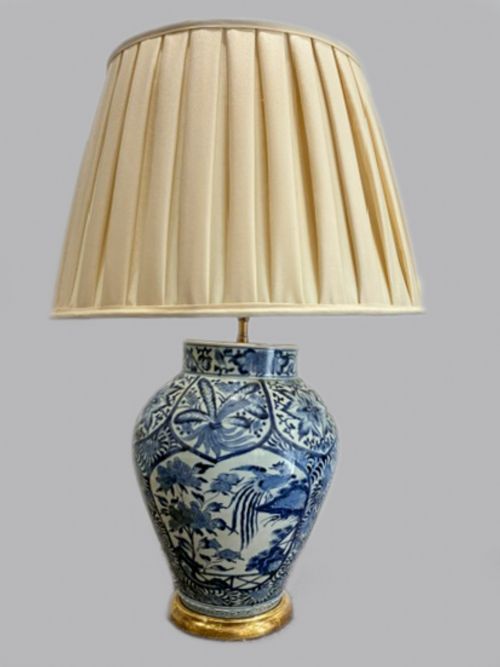
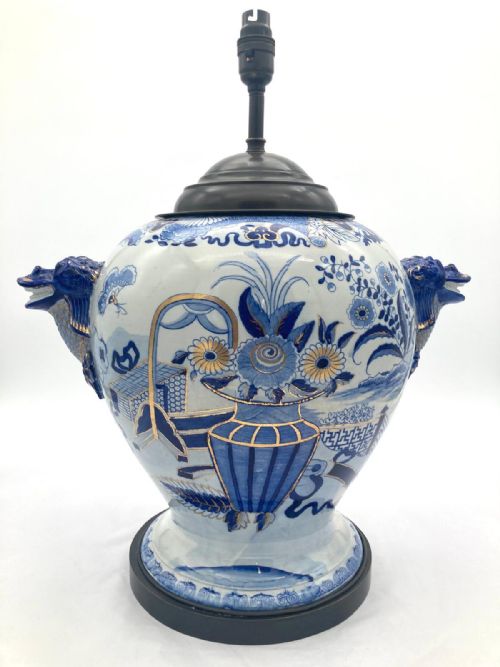
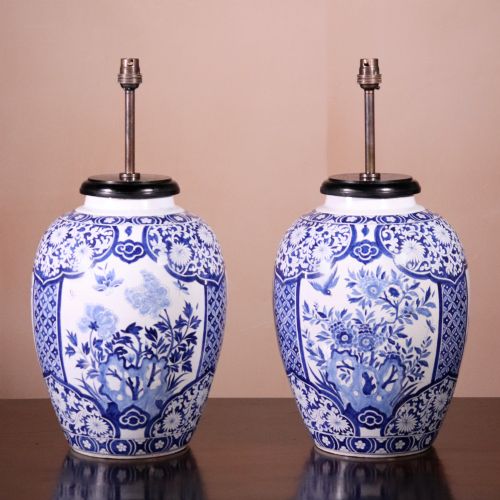


Blue White Vase Lamp
A blue white vase lamp brings cobalt hand-painted pattern and warm domestic light into a room, uniting antique ceramic craft with functional table lighting.
What these lamps are
A blue white vase lamp adapts antique ceramic vessels into functional table illumination, combining historic pottery with modern electrical wiring. These pieces originate primarily from the eighteenth and nineteenth centuries, taking the form of baluster, bottle, double gourd, and prunus blossom vessels.
The ceramic bodies stem from various ceramic traditions, including Chinese export porcelain, Japanese wares, and Dutch Delftware. Many examples arrived as vases before later conversion into lamps through the addition of brass, bronze, or wooden mounts.
Buyers encounter single examples alongside matched pairs, frequently fitted with fabric or silk shades. These table lamps sit comfortably upon sideboards and desks, casting downward task light while displaying traditional cobalt decoration.
How they were made
Potters shaped the ceramic bodies from porcelain, tin-glazed earthenware, and crackle ware, applying cobalt blue pigments beneath or above the glaze before firing in kilns. Artisans then turned wood bases and cast brass or bronze hardware to secure electrical fittings and shade carriers.
Subsequent conversion work involved drilling ceramic or metal components to run internal wiring safely through the historic vessel. Workshops often paired these adapted bodies with hand-sewn fabric and silk shades to complete the assembly.
Retail Price Guide 2026
Typical UK retail prices for blue white vase lamp, calculated from the Sellingantiques database of over a million retail prices indexed since 2003. This retail price guide relies exclusively on Sellingantiques data; no external sources or auction records are used, so the figures do not describe the wider market.
Several cherubs have found gainful employment holding up nineteenth-century porcelain.
What varies in quality
The quality of a blue white vase lamp rests upon the crispness of the cobalt painting and the balance of the ceramic form. Finer vessels display confident brushwork and well-defined floral or figurative motifs without blurring.
The standard of mounting hardware also distinguishes the pieces, with solid cast brass and carefully turned hardwood bases offering greater stability and visual harmony than lighter tin components. The integrity of the conversion work, including professional wiring, completes the assessment of the object.
The Blue White Vase Lamp Glossary
- Baluster
- A vase form with a rounded body that tapers toward the neck, resembling an architectural baluster. This shape provides a stable and pleasing silhouette for table lighting.
- Chinoiserie
- European artistic interpretations of Chinese and East Asian decorative styles, popular across furniture and ceramics. These designs often feature imaginary landscapes and pavilions.
- Crackware
- A ceramic finish featuring a network of fine decorative fissures within the glaze layer. The technique creates subtle surface texture across the porcelain body.
- Delftware
- Tin-glazed earthenware produced in Dutch workshops, renowned for emulating Chinese blue and white porcelain. This tin glaze creates an opaque white background for cobalt painting.
- Prunus
- A decorative motif depicting the blossoms of the plum tree, frequently hand-painted on nineteenth-century Chinese porcelain. The design symbolises endurance and spring.
Frequently Asked Questions
Are these lamps safe to use?
Most antique lamps undergo rewiring to meet contemporary electrical standards, often incorporating modern brass fittings and PAT testing. Buyers should check the flex and plug before daily use in the home.
Professional conversion preserves the historic ceramic body while ensuring the internal wiring meets modern domestic requirements safely.
How do I date a ceramic lamp?
Dating relies upon examining the ceramic body, glaze characteristics, and the style of the cobalt painting. Eighteenth-century pieces differ noticeably in potting weight and pigment tone from nineteenth-century Japanese or Chinese equivalents.
Mounting hardware and wiring methods also offer clues, though brass components and lamp fittings are frequently later additions to older vases.
Where should I place a vase lamp?
These table lamps suit sideboards, console tables, and living room reading corners where their height and decorative presence can be appreciated. They provide useful ambient or task lighting while introducing traditional blue and white pattern into a scheme.
Paired lamps work effectively placed symmetrically on either side of a larger piece of furniture or a fireplace.
What is the difference between porcelain and Delftware?
Chinese and Japanese porcelain uses high-fired petuntse and kaolin clay, resulting in a dense, vitrified body that rings when struck. Tin-glazed earthenware, such as Dutch Delftware, uses a softer clay body coated in an opaque tin glaze.
Both traditions achieve the characteristic blue and white aesthetic, but their weight, edge chips, and underlying clay structures reveal their distinct origins.