


Blue Watercolour Portrait Painting
A blue watercolour portrait painting captures faces in dilute pigment, bringing intimacy and historic pigment tones straight to your wall.
Blue Watercolour Portrait Painting
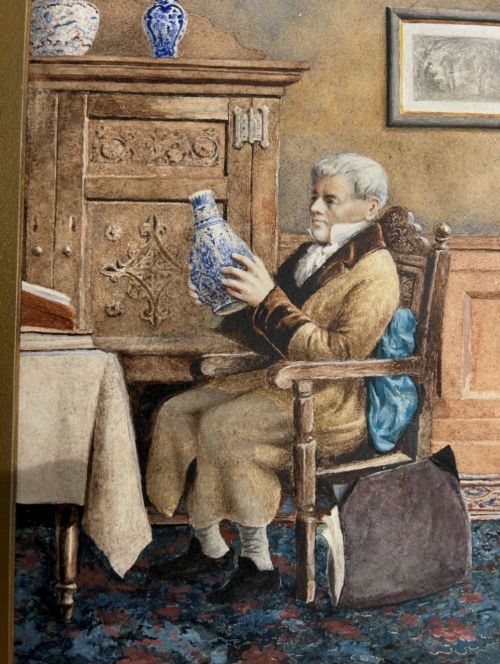
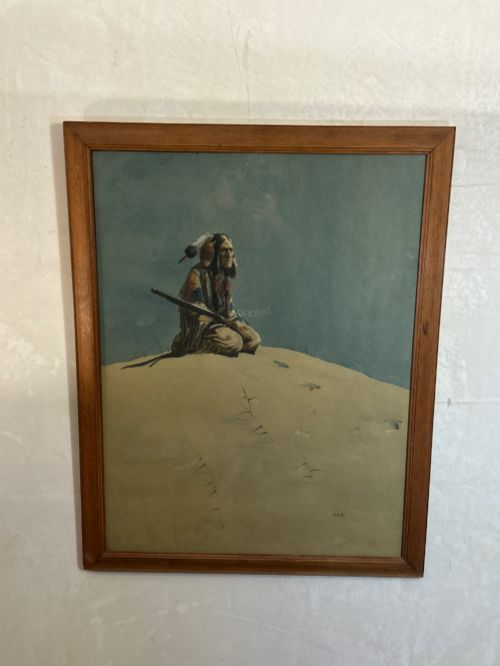
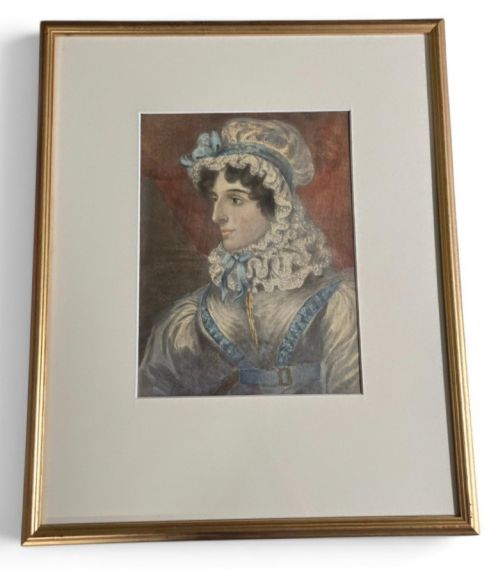
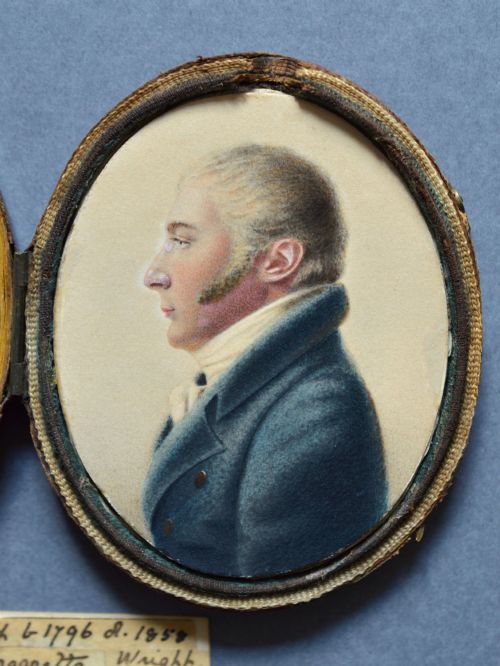
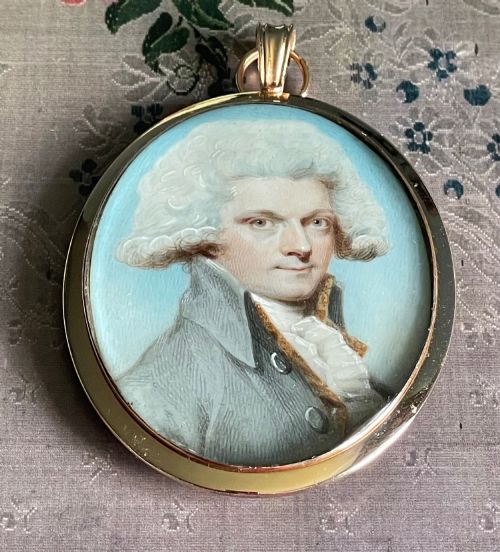
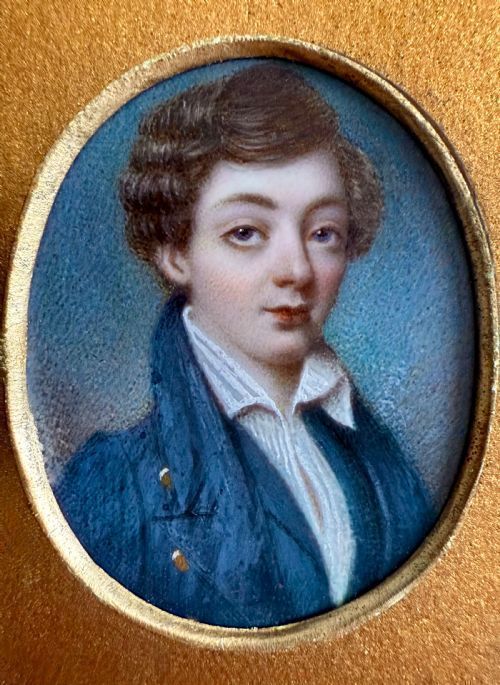
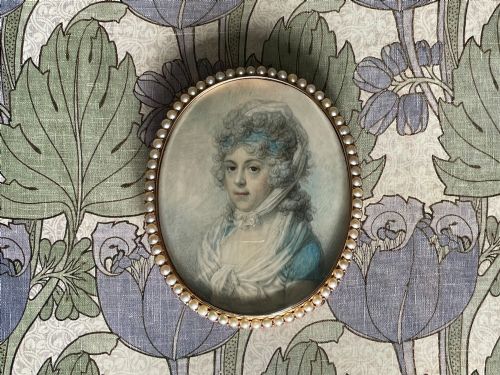
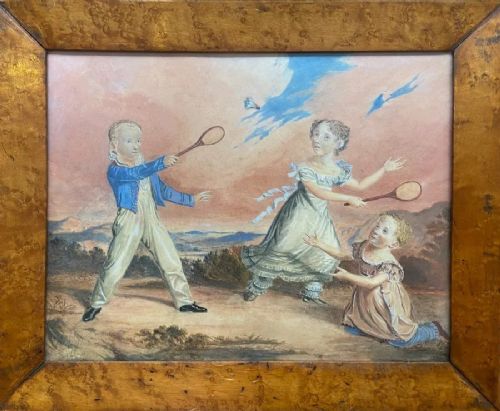
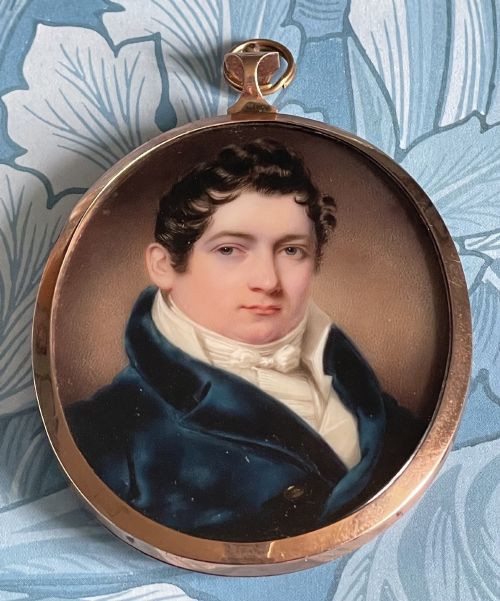
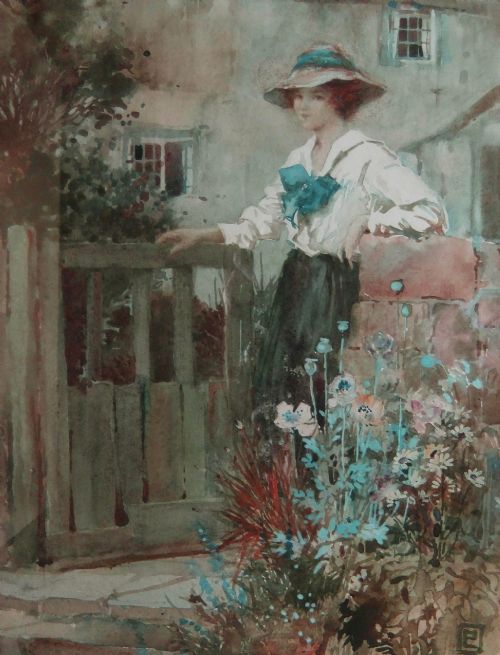
A blue watercolour portrait painting centres on likenesses rendered in water-based media where blue tones dominate garments, backgrounds, or uniform details. These works span the eighteenth, nineteenth, and early twentieth centuries, appearing both as framed sheets and delicate miniature paintings.
The pieces on this page emerge from Georgian, Regency, and Victorian periods, often taking the form of framed paintings or portrait miniatures. Subjects range from naval officers and children to ladies wearing blue gowns or sashes.
Makers and circle painters working across Britain, Ireland, and continental Europe produced these portraits on paper, ivory, pith, and card. Collectors encounter works framed in wood, gilt metal, gold, and ebonised maple.
Materials and Techniques
Artists applied watercolours mixed with gum arabic onto surfaces such as prepared paper, card, and fine slivers of ivory or pith. The medium allows translucent washes to build depth, letting the pale support reflect light back through the pigment.
Portraits often found enclosure behind protective glass within frames constructed from wood, giltwood, or cast gilt metal. Miniature formats frequently utilised gold or ebonised surrounds to complement the delicate scale of the painted surface.
Listings span the eighteenth century through to the nineteen-twenties, encompassing Georgian, Regency, Victorian, and Art Deco periods.
Assessing Quality and Execution
The integrity of the original mount and frame contributes significantly to the standing of a piece. Works retaining period glass, secure backing, and undamaged gilding or woodwork hold greater historical cohesion.
Richard Cosway·John C D Engleheart·George Engleheart·Susie Lassam
The Blue Watercolour Portrait Painting Glossary
- Portrait Miniature
- A small-scale painting, usually executed on ivory, vellum, or card during the eighteenth and nineteenth centuries. These intimate works were often housed in protective cases or worn as personal mementos.
- Watercolour
- A painting method in which colourants are suspended in a water-soluble binder. The technique relies on the white of the paper showing through transparent washes to create luminosity.
- Pith Paper
- A delicate material formed from the cellular pith of the rice paper plant, used extensively for nineteenth-century export paintings. It accepts watercolour with vivid, velvety absorption.
- Gilt Metal
- A base metal treated with a thin layer of gold applied by fire gilding or electroplating. It provided affordable yet lustrous framing for miniature portraits.
Blue Watercolour Portrait Painting: Frequently Asked Questions
What surfaces were used for these portraits?
Artists painted these portraits on paper, card, and thin sheets of ivory. Export pieces from the nineteenth century also utilised pith or rice paper.
The choice of support often dictated the scale, with ivory reserved for intimate miniatures and paper used for larger framed compositions.
How do I date a watercolour portrait?
Dating relies on costume details, hair styling, and framing materials. Regency pieces often show high-waisted dresses and soft curls, while Victorian examples feature structured attire.
Inscribed mounts and artist signatures, when present, provide direct confirmation of the period of creation.
Where should I hang a watercolour portrait?
Watercolour pigments are sensitive to ultraviolet light and damp environments. Display these pieces away from direct sunlight and moisture to preserve the integrity of the paper and pigments.
Choosing interior walls with stable ambient temperatures ensures the paper and framing materials remain secure over decades.
Why is blue prominent in these portraits?
Blue pigments appeared frequently in clothing, naval uniforms, and background drapery across Georgian and Victorian portraiture. Prussian blue and indigo provided striking contrast against flesh tones.
In some instances, artists used blue monochrome washes to emphasise contour and shadow before applying full colour.