


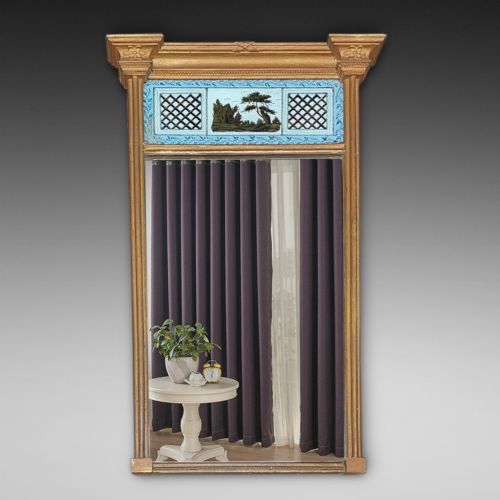

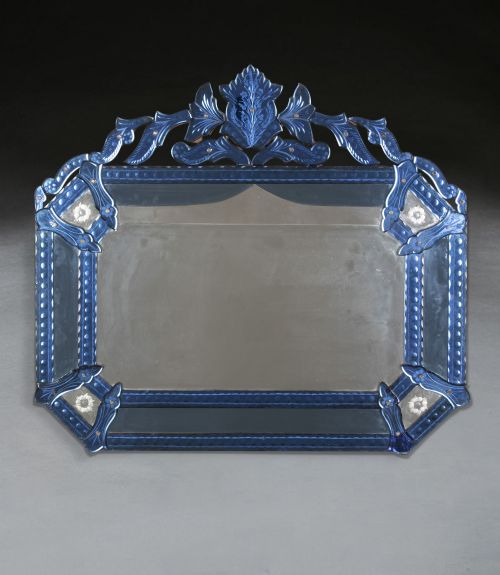


Blue Wall Mirror
A blue wall mirror brings depth and colour to a room, drawing the eye with painted timber, tinted glass or gilded frames.
Blue Wall Mirror
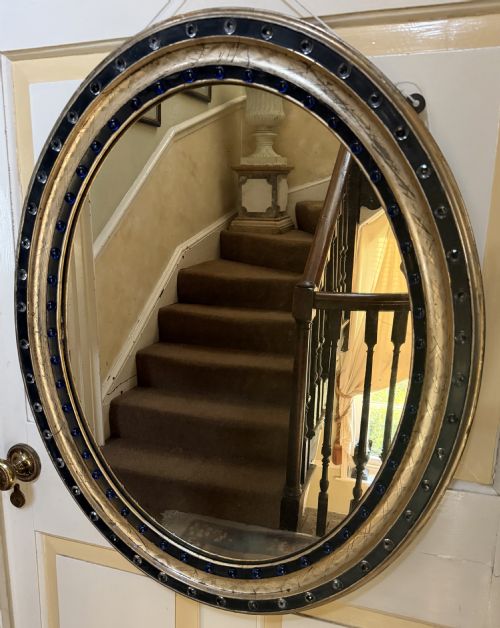
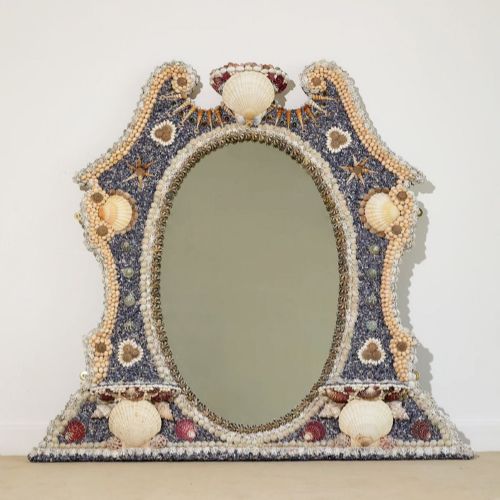
A blue wall mirror spans centuries of design, appearing in Venetian glass, French carved overmantels, and English Art Deco panels. When buyers search for a blue wall mirror, they encounter everything from Georgian shellwork pieces to 1930s jazz designs.
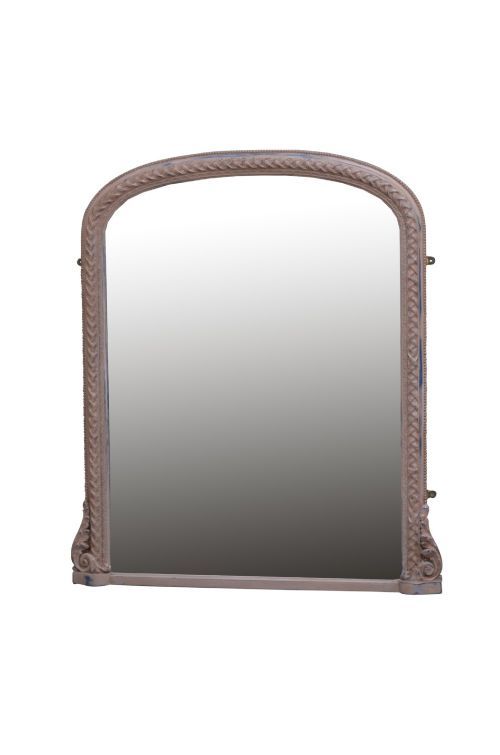
The materials range from painted wood and gesso to cobalt glass margin edges and natural sea shells. Forms vary from grand overmantels to smaller oval barbola mirrors and pier mirrors.
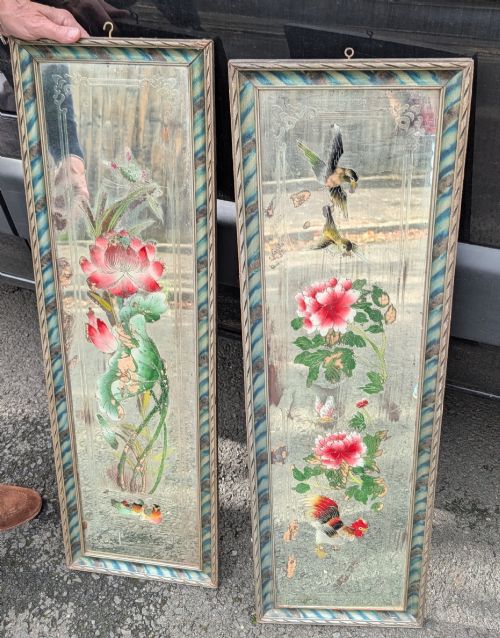
Originating across Europe, these pieces showcase styles such as Chinoiserie, Regency, and French Provincial. The selection reflects diverse craftsmanship across the nineteenth and twentieth centuries.
Methods and materials in construction
Makers utilised wood, gesso, and glass, often applying layered paint palettes in shades like ink blue and lilac. Giltwood detailing and verre eglomise panels appear frequently across Regency and Venetian examples.
Frames were carved from timber before receiving polychrome finishes, painted decoration, or applied gesso floral motifs. Glass was cut and bevelled, sometimes set with margin edges or paired with natural sea shells.
Blue Wall Mirror Retail Price Guide 2026
Typical asking prices for blue wall mirror among the pieces listed under this phrase on Sellingantiques today, from the lower quarter to the upper quarter. They describe what is for sale here now, not the wider market.
Listings feature periods from the eighteenth century to the 1930s, utilising materials such as giltwood, painted wood, gesso, and glass.
Distinguishing quality in design and finish
Quality rests in the crispness of the carved detail and the depth of the painted or gilded surface. Finer examples display harmonious proportions and sophisticated colour layering rather than flat, uniform tones.
The integration of specialised techniques like verre eglomise or hand-blown tinted glass elevates a piece. Original surfaces and period-appropriate framing separate standard decorative items from superior works of craftsmanship.
The Blue Wall Mirror Glossary
- Verre eglomise
- A cold decoration technique where design and gilding are applied to the reverse of glass. This creates a reflective, metallic finish popular in Regency mirrors.
- Gesso
- A plaster mixture applied to wood frames to create a smooth surface for painting or gilding. It allows for intricate moulded floral and scroll decoration.
- Overmantel mirror
- A large horizontal looking glass designed to hang above a fireplace mantel. These often anchor the decorative scheme of a principal room.
- Barbola
- A type of ornamental work using a gesso paste to build up high-relief floral designs directly onto the frame. It gained popularity during the early twentieth century.
- Pier mirror
- A tall, narrow looking glass designed specifically to hang on the wall space between two windows. They reflect additional light into darker parts of traditional rooms.
Blue Wall Mirror: Frequently Asked Questions
How do I style a blue wall mirror?
Pair the mirror with neutral walls to let the colour anchor the room, or hang it opposite a window to maximise reflected light and depth.
Consider the surrounding furniture wood tones to ensure the frame finish complements rather than competes with the existing interior palette.
What periods do these mirrors come from?
The pieces span from the eighteenth century through the Georgian and Regency eras, extending into nineteenth-century French designs and 1930s Art Deco.
Each era brings distinct characteristics, from rococo curves to clean geometric jazz lines and layered coloured glass panels.
How are Venetian mirrors different?
Venetian mirrors often feature blue or tinted glass elements combined with elaborate etched or engraved floral motifs across the border plates.
They rely less on heavy wooden frames and more on glass craftsmanship, structural symmetry, and decorative crestings.
Where should an overmantel mirror go?
An overmantel mirror belongs directly above a fireplace mantelpiece, where its scale balances the hearth below and fills vertical wall space.
Ensure the width does not exceed the mantel shelf itself to maintain correct architectural proportions within the room.