


Blue Turquoise Pendant
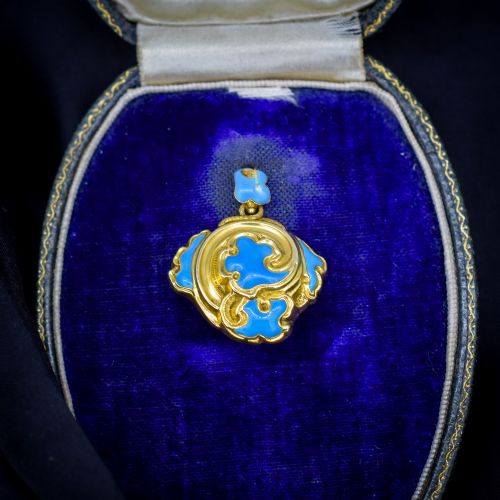
These blue turquoise pendant pieces range from Victorian gold designs to Art Deco enamel works, offering striking colour and historic charm for daily wear.
Blue Turquoise Pendant
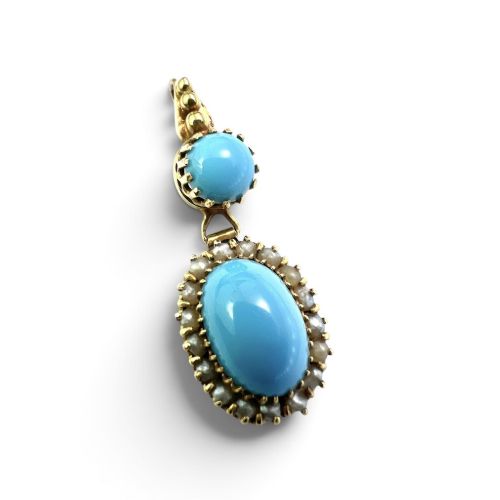
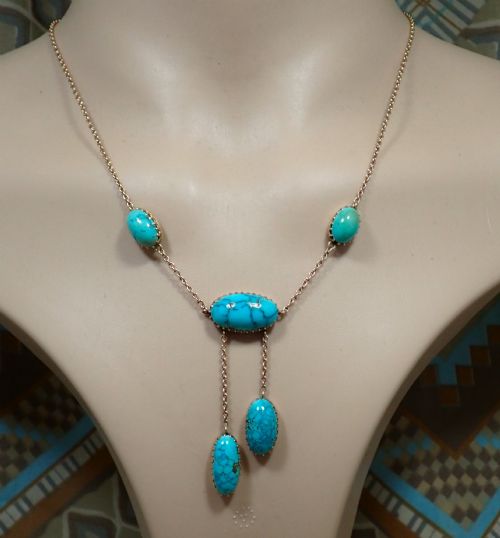
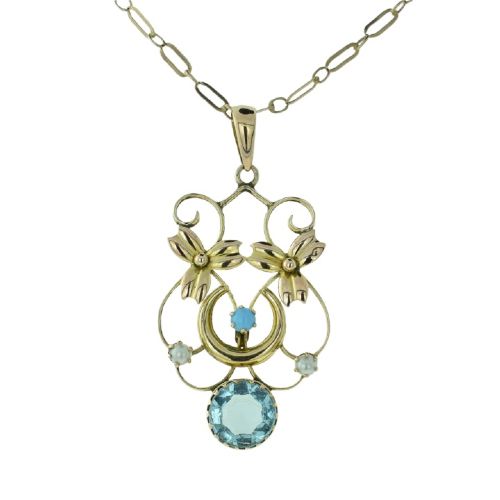
A blue turquoise pendant brings together vibrant natural stones and period metalwork, spanning eras from the Victorian period through the Edwardian years and into Art Deco and the 1930s. Buyers searching for a blue turquoise pendant find various forms on this page, including negligee necklaces, lockets, and gem-set drops alongside silver and gold settings.
The selection ranges from early nineteenth-century mourning lockets and halo designs to Arts and Crafts silver pieces and filigree work. Most examples combine turquoise with pearls, diamonds, or blue enamel to enhance the central blue tone.
How they were made
Maker workshops utilised gold, including 18ct and 9ct rose gold, alongside silver, rolled gold, and tolewear. Metals were shaped into filigree, swirls, and leafed foliage to hold the stones securely.
Natural turquoise and matrix turquoise appear as cabochons or set stones, frequently complemented by enamel work like guilloché or blue enamel details. Pearls and diamonds are added in halo arrangements and drop configurations.
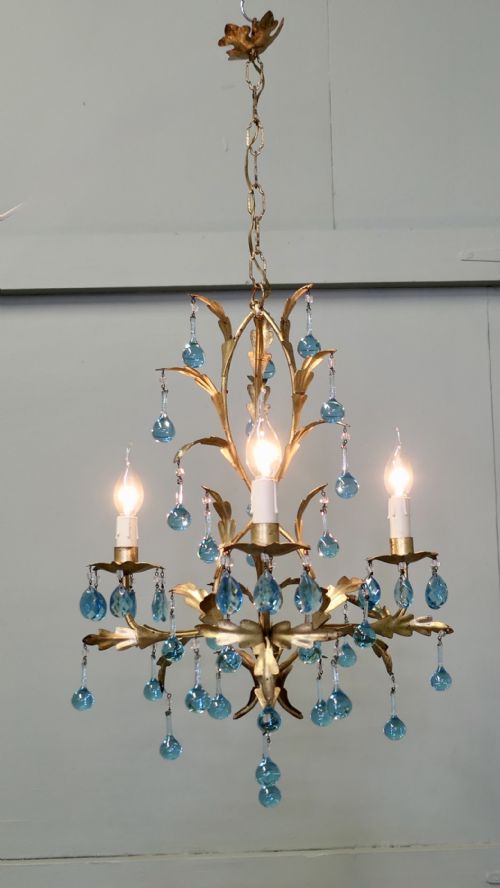
Among the gemstone pendants and necklaces, a French tolewear chandelier and a blue enamel compact also made their way into the selection.
What varies in quality
Quality depends upon the depth of the stone's natural colour and the precision of the metalwork, such as fine filigree or detailed silver wire. Higher standard pieces show careful integration of secondary gems like pearls and diamonds within the gold or silver structure.
The complexity of the design, from simple drops to intricate Arts and Crafts negligee necklaces and enamelled compacts, dictates the overall fineness of the piece.
Henry Matthews·Dorrie Nossiter
The Blue Turquoise Pendant Glossary
- Cabochon
- A gemstone shaped and polished with a smooth, rounded surface rather than faceted. This style highlights the natural pattern and colour of turquoise.
- Negligee necklace
- A pendant style featuring asymmetrical drops suspended from a central chain or bar, popular during the Edwardian and Arts and Crafts periods.
- Guilloché enamel
- A decorative technique where intricate geometric patterns are mechanically engraved beneath a translucent layer of enamel colour.
- Matrix turquoise
- Turquoise stones that retain portions of the host rock in webbing patterns across the blue surface.
- Filigree
- Delicate ornamental work made from fine wire soldered together in open patterns, often seen in silver and gold jewellery.
Blue Turquoise Pendant: Frequently Asked Questions
What periods do these pendants come from?
The pieces span the Victorian era, Edwardian period, Arts and Crafts movement, Art Deco, and into the 1930s. You will find items produced across the nineteenth and early twentieth centuries.
Each period brings distinct metal choices and artistic styles, moving from heavy Victorian gold and mourning lockets to lighter Edwardian filigree and modernist Art Deco enamel.
What metals are typically used?
Makers utilised 18ct gold, 9ct rose gold, silver, and rolled gold for these settings. Many designs combine these metals with enamel or gemstones.
Gold is common in Victorian halo and mourning pieces, while silver frequently appears in Arts and Crafts, Art Nouveau, and later twentieth-century items.
What stones accompany the turquoise?
Pearls and diamonds frequently surround the turquoise in halo settings and drop configurations. Blue enamel also appears to add contrasting colour depth.
These complementary materials enhance the blue hues of the main turquoise stones through subtle sparkle and texture.
Are all the turquoise stones natural?
The listings include both standard natural turquoise and matrix turquoise, which displays the natural host rock webbing. Each stone offers a distinct visual texture.
Makers selected these cabochons for their individual blue shades, ranging from pale tones to deep blue hues.