





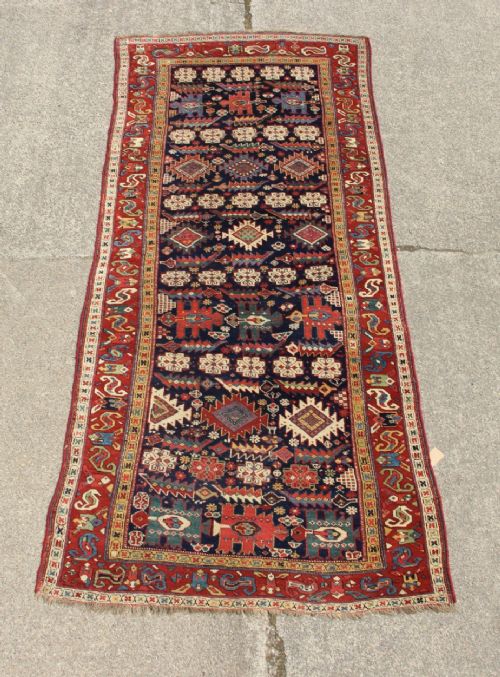
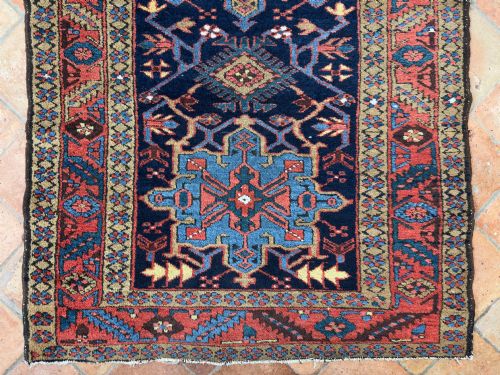
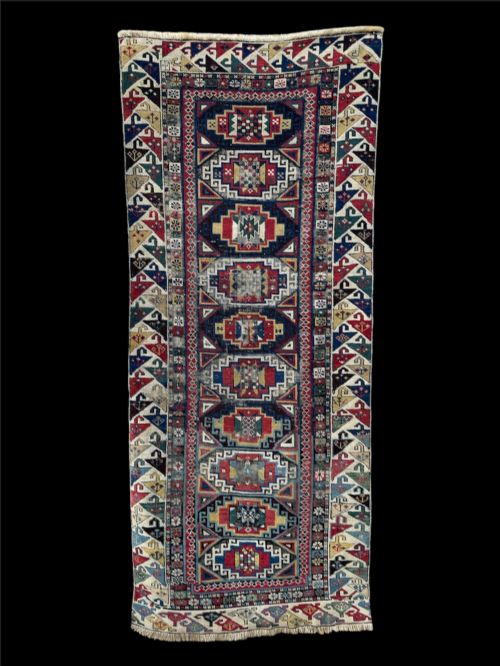
Blue Tribal Hallway Runner
A blue tribal hallway runner brings geometric patterns and deep indigo dye into a narrow space, offering endurance alongside regional village character.
Blue Tribal Hallway Runner
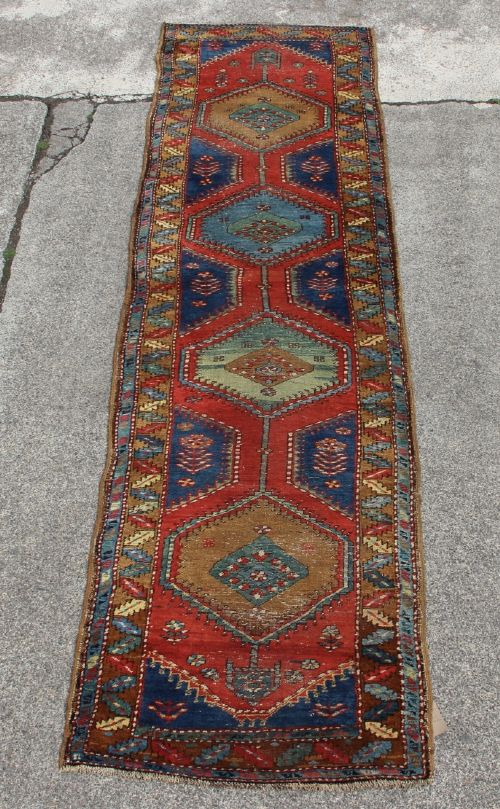
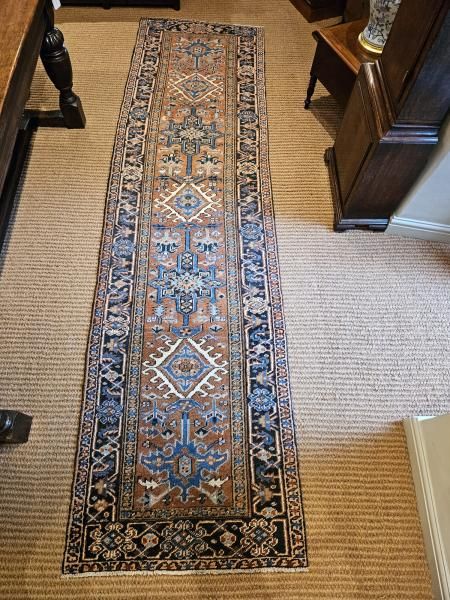
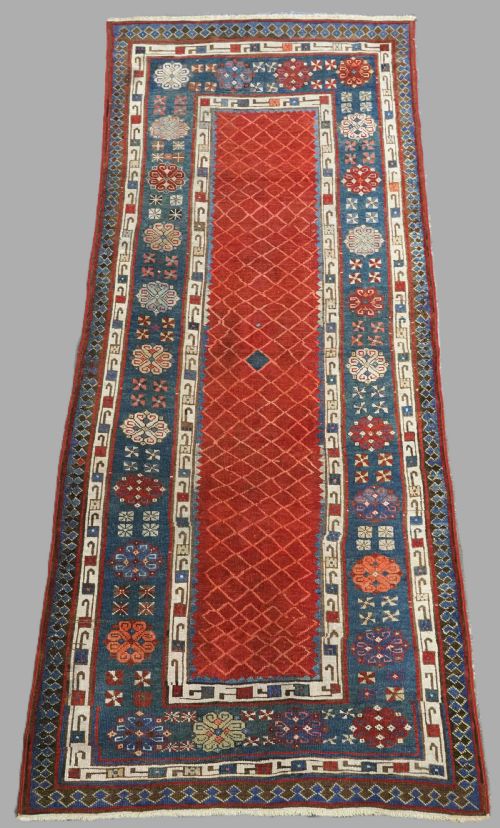
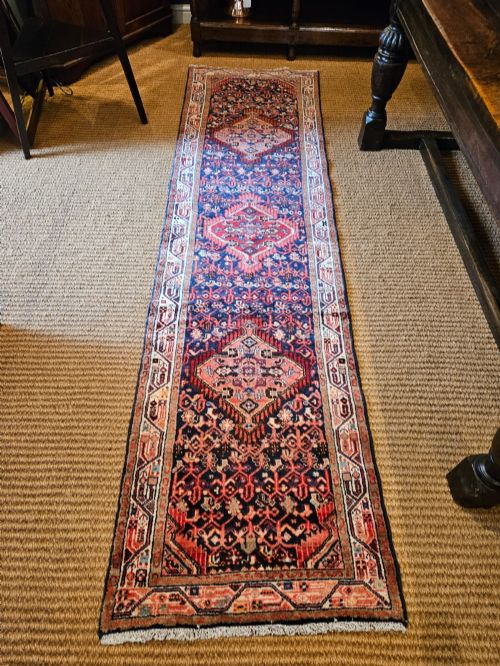
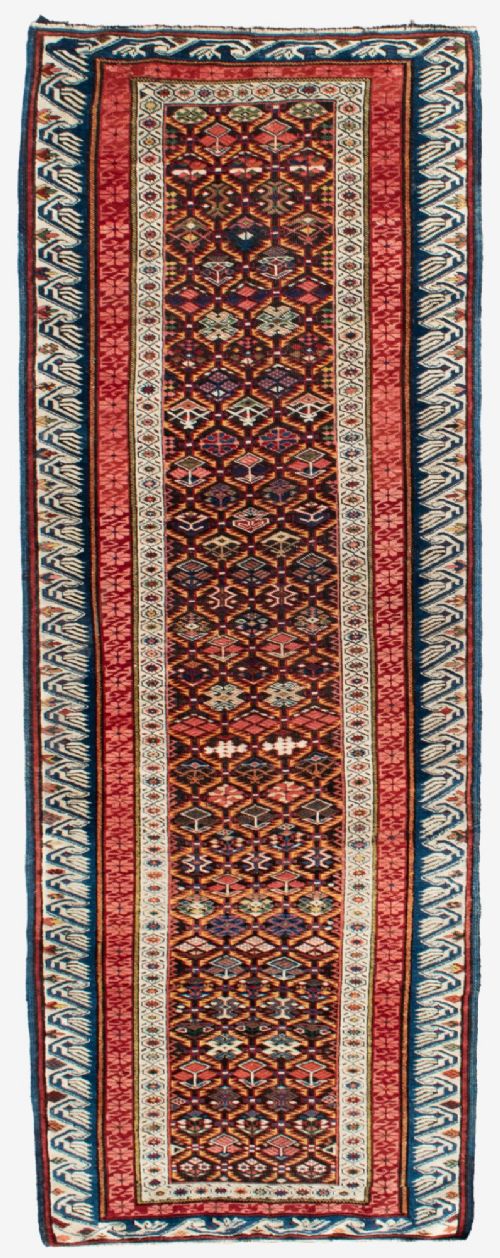
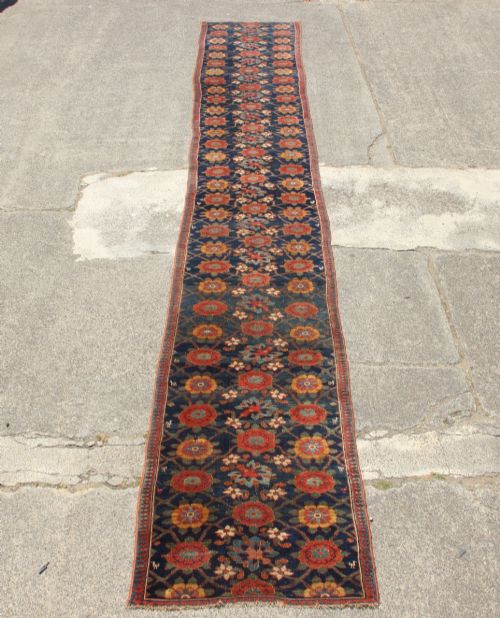
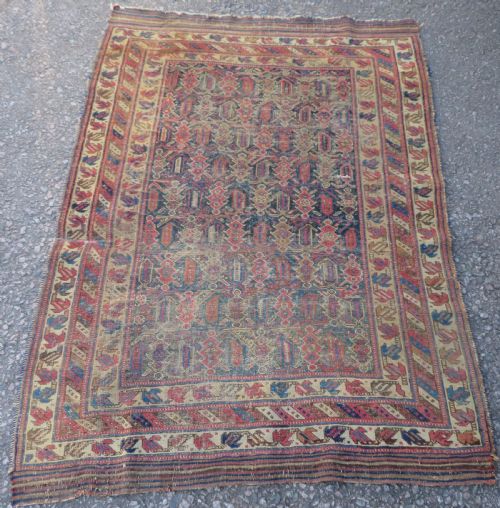
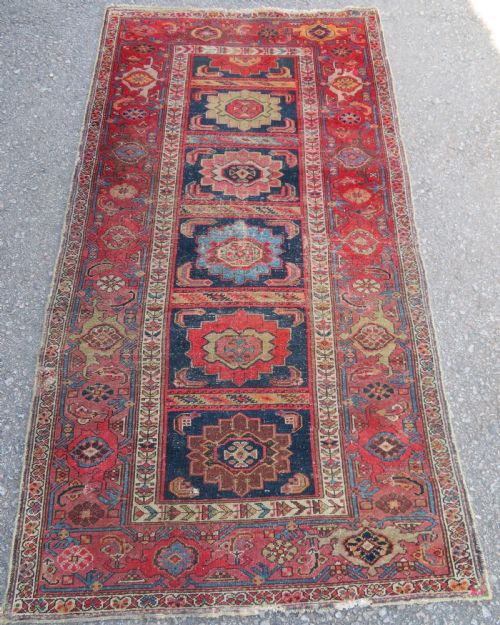
A blue tribal hallway runner serves as a narrow floor covering designed for corridors, drawing on styles such as Persian Tribal, Caucasian, and Traditional Anatolian. These textiles originate from village and nomadic workshops rather than city centres, displaying geometric medallions, lattice patterns, and repeated tribal motifs.
The pieces available date primarily from the nineteenth and early twentieth centuries, spanning the eighteen-seventies through the nineteen-thirties. Buyers encounter specific regional variations including Kurdish, Bakshaish, Heriz, Hamadan, and Shirvan long rugs configured specifically for long, linear spaces.
Choosing this type of runner introduces historical textile craft into transit spaces like corridors and passages. The format balances functional floor protection with distinct cultural geometry rooted in nineteenth-century weaving traditions.
Materials and construction methods
Construction relies primarily on wool, cotton, and hand-spun wool, utilising traditional hand-knotting techniques over sturdy foundation warps. Weavers employed natural dyestuffs to achieve deep navy and indigo blue tones, which form the dominant colour palette across these village pieces.
The integration of hand-spun wool provides resilience and texture, allowing these long rugs to withstand centuries of foot traffic in hallways. Warp and weft threads of cotton or wool secure the pile, ensuring structural integrity in narrow formats.
Materials across these listings are strictly limited to wool, cotton, and hand-spun wool, spanning production dates from eighteen-sixty to nineteen-thirty.
Distinctions in craftsmanship and materials
Quality separates along the precision of the weave, the saturation of the indigo dye, and the integrity of the wool foundation. Finer examples exhibit tight knot counts and clear, deliberate geometric execution in motifs like the Mina Khani lattice or tribal medallions.
The grade of hand-spun wool and the consistency of the pile dictate the longevity of a runner. Pieces with intact original borders and balanced proportions demonstrate superior regional weaving skill compared to heavily worn or fragmented examples.
The Blue Tribal Hallway Runner Glossary
- Runner
- A long, narrow carpet format specifically proportioned for corridors, hallways, and stairs.
- Wool
- The primary animal fibre utilised for the pile of traditional tribal rugs, prized for its durability and elasticity.
- Hand-spun wool
- Yarn spun by hand rather than by industrial machinery, resulting in irregular thickness and varied dye absorption.
- Lattice design
- A repeating geometric grid pattern spread across the field of the textile, often enclosing floral or tribal motifs.
- Caucasian
- Pertaining to rugs woven in the Caucasus region, known for bold geometric structures and saturated primary colours.
Blue Tribal Hallway Runner: Frequently Asked Questions
What is a blue tribal hallway runner?
A blue tribal hallway runner is a narrow antique carpet woven by village or nomadic communities, featuring indigo dyes and geometric motifs suited for corridors.
These textiles combine practical length with distinct regional designs originating from Persia, the Caucasus, and Anatolia during the nineteenth and early twentieth centuries.
How do I measure for a hallway runner?
Measure the clear length and width of your corridor, leaving an equal margin of bare floor visible around the perimeter of the rug.
Account for door clearances and placement furniture so the textile lies flat without obstruction along the hallway.
How do I care for an antique wool runner?
Maintain the textile through regular gentle vacuuming without a rotating brush bar to remove dust from the wool pile.
Protect the piece with an appropriate underlay to prevent slipping and minimise friction against the floorboards.
How do I identify the regional style?
Examine the specific geometry, border arrangements, and knotting characteristics to trace the piece to regions such as Heriz, Kurdish, or Shirvan.
Motifs like lattice grids or medallion structures offer clear visual clues regarding the tribal workshop origin.