



Blue Transferware Porcelain
Blue transferware porcelain brings the crisp cobalt scenes of the eighteenth and nineteenth centuries straight to your table.
Blue Transferware Porcelain
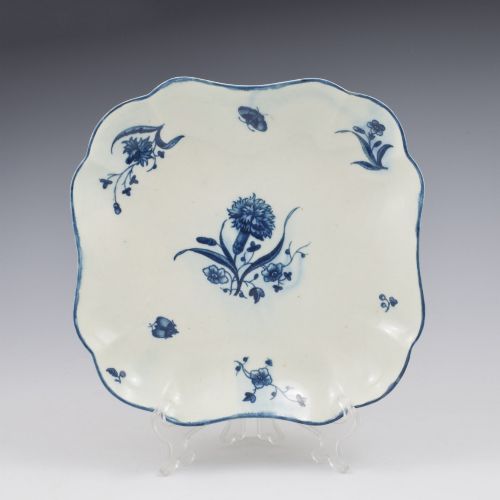
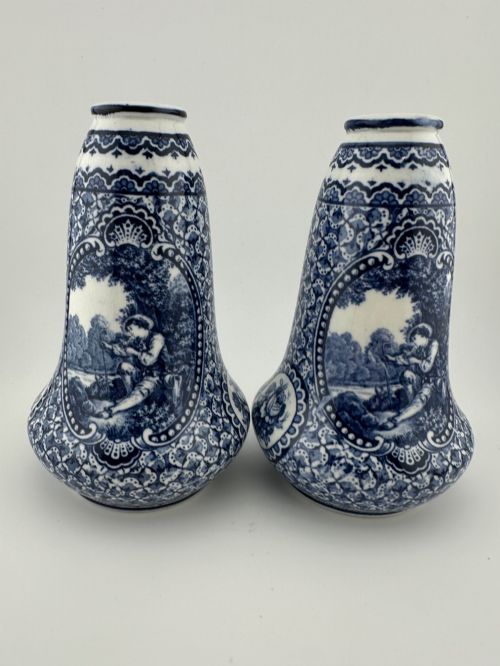
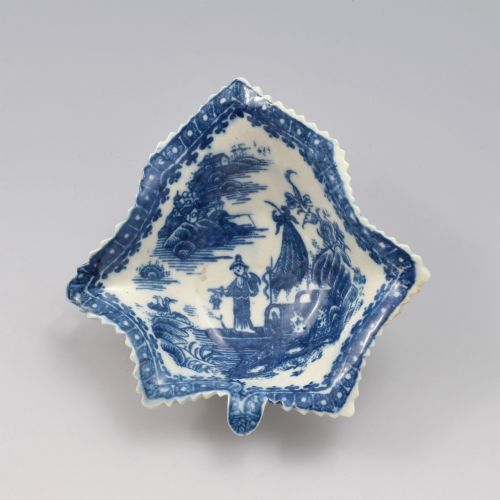
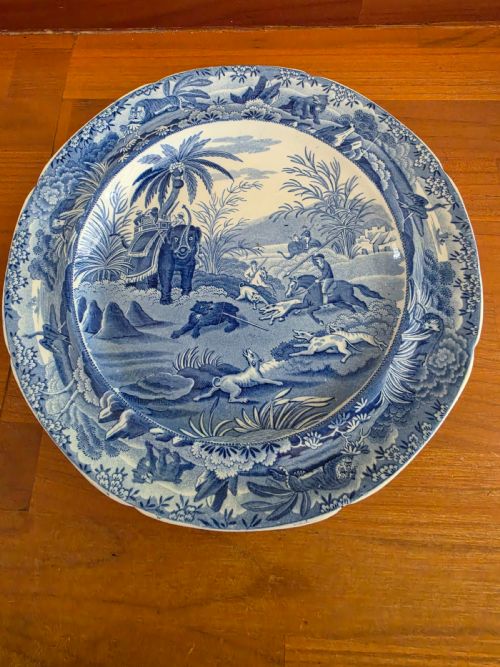
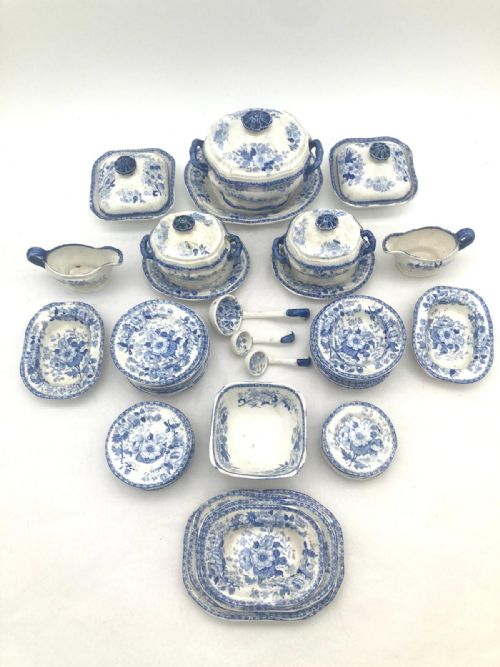
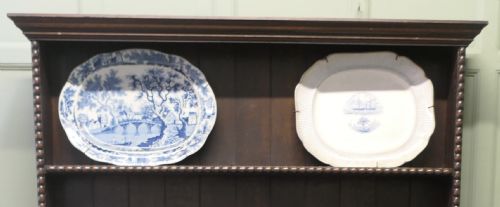
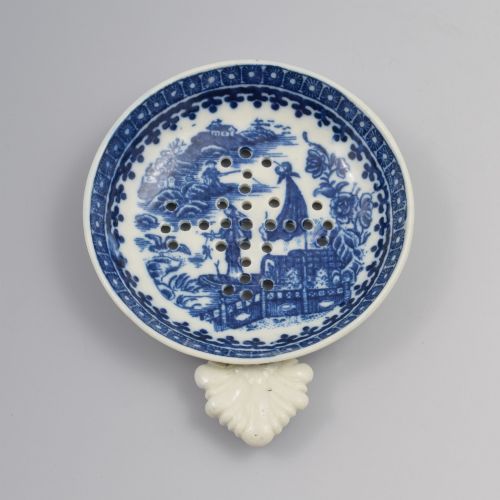
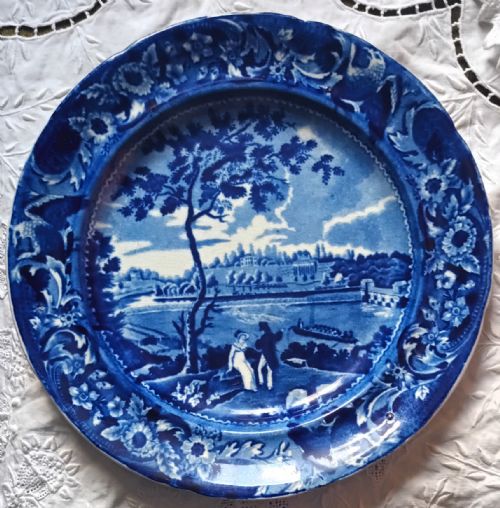
Blue transferware porcelain encompasses tableware, decorative vessels, and sanitary ware produced mainly across the eighteenth and nineteenth centuries. Buyers encounter diverse forms here, ranging from Caughley pickle dishes and Spode chargers to Victorian bathroom sets and large dinner services.
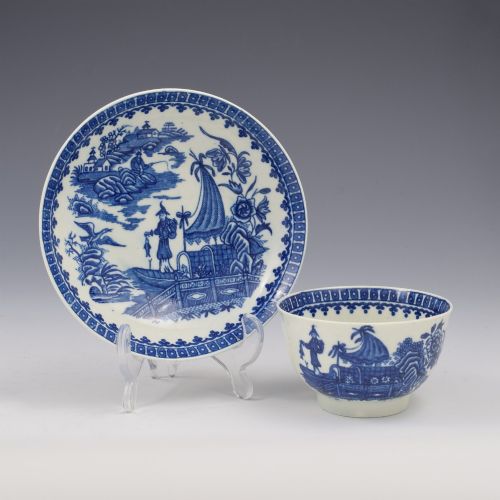
The objects span Georgian, Regency, Victorian, and Edwardian periods, reflecting shifting domestic tastes and manufacturing capacities. Many items display pastoral, topographical, or Chinoiserie motifs transferred onto ceramic bodies from engraved copper plates.
How they were made
Potters applied blue transferware porcelain decoration by pressing tissue paper onto a copper plate inked with cobalt oxide, then transferring the inked design onto the biscuit ceramic body. This technique allowed intricate patterns such as Willow or Long Bridge to be reproduced with consistent precision.
Makers utilised various ceramic compositions including soft-paste porcelain, pearlware, earthenware, and ironstone, glazing them before a high-temperature firing that set the rich blue pigment. Certain pieces received supplementary touches of enamel or gilt highlights after the primary glaze firing.
Blue Transferware Porcelain Retail Price Guide 2026
Typical asking prices for blue transferware porcelain among the pieces listed under this phrase on Sellingantiques today, from the lower quarter to the upper quarter. They describe what is for sale here now, not the wider market.
Makers hid charming little cormorants among the fishermen on eighteenth-century plates, rewarding close inspection with unexpected wildlife.
What varies in quality
The clarity and depth of the cobalt transfer dictate much of the visual merit, separating sharp, deeply inked impressions from blurred or smudged prints. Early eighteenth-century examples often exhibit finer detailing and more delicate potting than mass-produced late Victorian pieces.
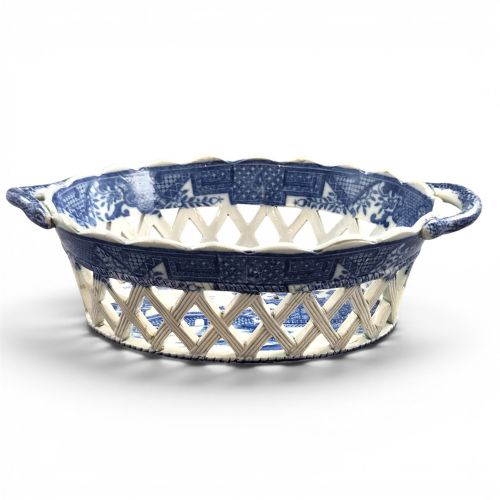
Form and decoration complexity also drive distinctions, with reticulated baskets, mask-head jugs, and hand-painted gilt accents representing higher artisan investment than standard utilitarian plates.
Royal Bonn Franz Anton Mehlem·Caughley·Spode·Minton·Wedgwood·Doulton Burslem·Mason·Adams
The Blue Transferware Porcelain Glossary
- Transfer printing
- A method of applying engraved designs to ceramics using a paper transfer from a copper plate. This innovation transformed pottery production in the eighteenth century by speeding up decoration.
- Pearlware
- An earthenware body developed by Josiah Wedgwood with a bluish glaze that masked the underlying yellowish tint. It served as a popular canvas for early blue and white transfer patterns.
- Flow blue
- A style where cobalt blue bled intentionally into the surrounding white glaze during firing, creating a misty, ethereal appearance. It gained immense popularity during the Victorian era.
- Soft-paste porcelain
- An artificial porcelain compound fired at lower temperatures than hard-paste porcelain, common in eighteenth-century English factories like Caughley and Worcester. It yields a warm, slightly creamy body.
- Chinoiserie
- European decorative motifs imitating Chinese artistic styles, frequently featuring pagodas, bridges, and figures. It dominated eighteenth and nineteenth-century blue transferware aesthetics.
Blue Transferware Porcelain: Frequently Asked Questions
How do I date blue transferware?
Dating relies on maker marks, ceramic bodies such as pearlware versus ironstone, and stylistic cues like Regency shapes or Victorian borders. Examining the registration marks stamped on the underside often reveals the exact year of manufacture.
Changes in glaze chemistry and cobalt shades also help narrow down the production era. Eighteenth-century pieces typically feel lighter and show different potting characteristics than heavy Victorian ironstone.
Can I use these plates daily?
Most antique blue transferware plates and dishes remain structurally sound for gentle daily use or special dining occasions. Hand washing preserves the historic glaze and prevents modern detergents from dulling the surface.
Avoid thermal shock by keeping them away from microwaves and dishwashers. Treating them with care ensures these centuries-old ceramics survive for future generations.
What is the Willow pattern?
The Willow pattern is a classic landscape design featuring a Chinese-style bridge, figures, birds, and a weeping willow tree. It became the most prolific transferware motif across English potteries during the nineteenth century.
Legend often accompanies the imagery, telling a tragic tale of star-crossed lovers transformed into birds. Its universal appeal made it a staple of everyday British dining.
Why does the blue colour vary?
Colour variation stems from differences in cobalt oxide purity, grinding techniques, and kiln temperatures during firing. Early pieces might display a soft, greyish blue, whereas Victorian wares often achieve a brilliant, dark cobalt.
Flow blue deliberately pushes this variation further by allowing the pigment to blur into the glaze. These technical shifts help collectors identify specific periods and factories.