


Blue Transfer Printed
Blue transfer printed wares bring rich pictorial scenes to everyday ceramic forms through deep cobalt pigments.
Blue Transfer Printed
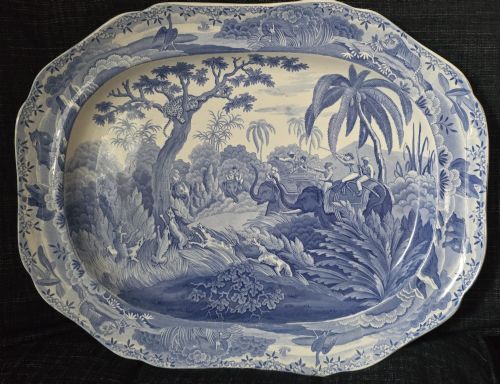
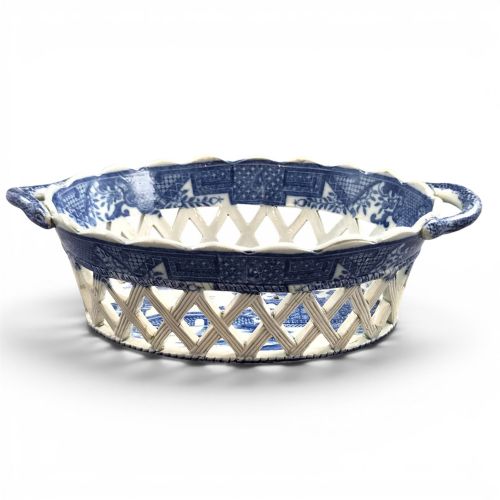
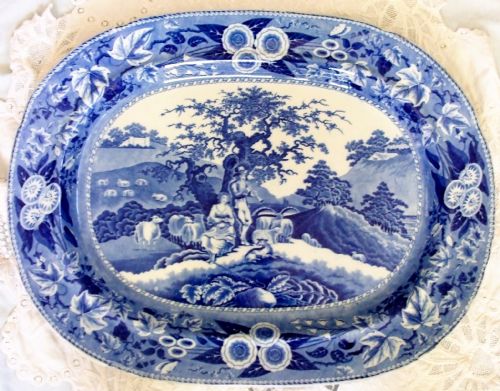
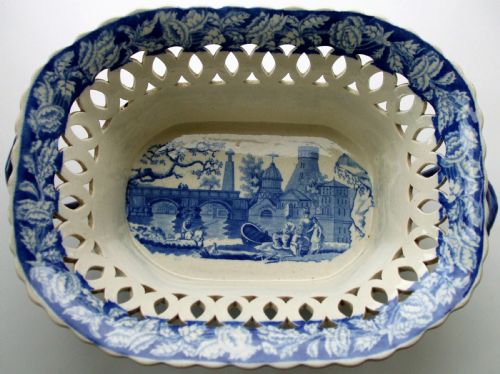
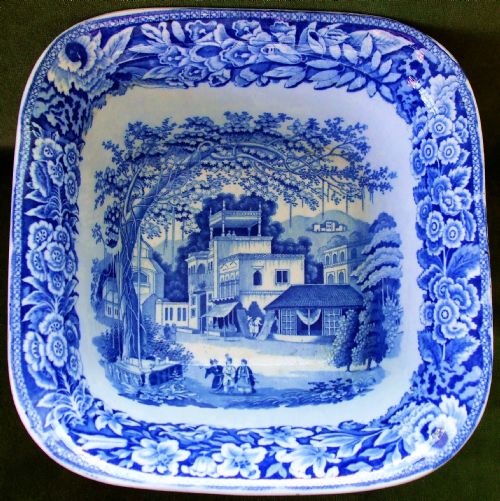
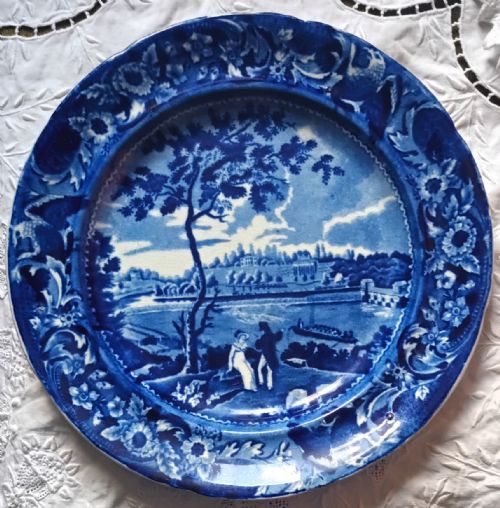
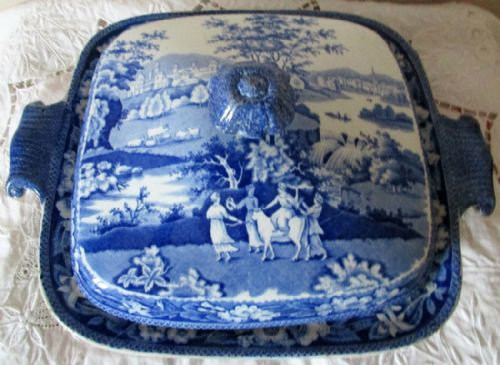
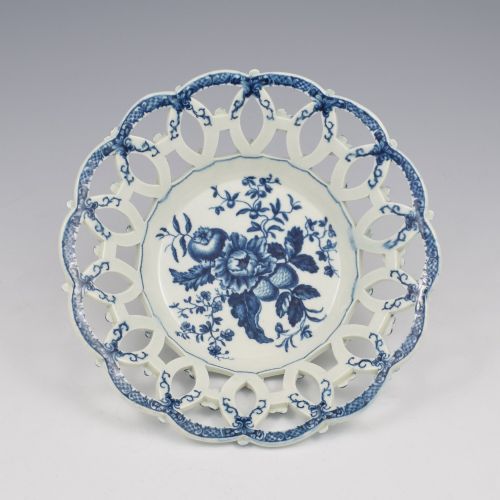
When searching for blue transfer printed items, buyers encounter utilitarian and decorative pottery spanning the eighteenth, nineteenth, and early twentieth centuries. These wares take the form of heavy meat platters, vegetable tureens, footbaths, jugs, and serving dishes adorned with pastoral landscapes, classical ruins, and Chinoiserie motifs. The selection leans heavily towards nineteenth-century Staffordshire earthenware alongside earlier porcelain dishes.
Domestic table settings dominate the offerings, showing how deeply these patterned ceramics integrated into Georgian and Victorian homes. Pieces range from large serving vessels meant for joint meats to smaller plates and chestnut baskets designed for fruit or desserts. The imagery reflects contemporary tastes for exotic travel, rural idylls, and architectural scenes rendered entirely in shades of blue.
What varies in quality
Quality rests primarily on the sharpness of the transfer and the depth of the cobalt hue. A well-printed piece maintains crisp definition in the finest architectural lines or foliage without smudging, blurring, or pooling where the tissue paper overlapped.
The sophistication of the pictorial design and the prestige of the pottery influence the standing of an object. Complex multi-figure scenes like historical views or literary narratives demand greater engraving skill than repetitive floral borders, marking out pieces produced by leading kilns.
Look closely for tiny hidden frogs and newts printed inside the base of nineteenth-century drinking mugs, waiting patiently beneath the liquid.
Spode·J. & R. Clews·J. & R. Riley·Stubbs·Brameld and Co·Ridgways
The Blue Transfer Printed Glossary
- Pearlware
- A refined earthenware developed in the late eighteenth century featuring a subtle blue-tinted glaze that pooled slightly in crevices to mimic Chinese porcelain.
- Cobalt Pigment
- The metallic oxide mineral used to achieve the deep blue coloration that withstands high kiln temperatures without burning away.
- Transfer Printing
- A mechanised decoration technique transferring engraved copperplate designs onto pottery via tissue paper, replacing hand-painting for complex scenes.
- Tureen
- A large, deep serving bowl with a lid designed for holding soups, sauces, or vegetables at the dining table.
- Chinoiserie
- European stylistic interpretations of Chinese artistic motifs, featuring imaginary landscapes, pagodas, and exotic figures.
- Caughley
- An eighteenth-century English porcelain manufactory known for delicate blue and white domestic wares and printed oriental patterns.
Blue Transfer Printed: Frequently Asked Questions
What is blue transfer printing?
Blue transfer printing is a ceramic decoration method where an engraved copper plate transfers a cobalt design onto pottery using tissue paper.
This technique allowed factories to produce intricate pictorial scenes rapidly while maintaining consistent detail across large sets of tableware.
How do I care for antique transferware?
Antique transferware requires gentle hand washing with mild soap and warm water rather than abrasive dishwashers.
Sudden temperature changes should be avoided to protect the historic ceramic body and prevent crazing in the glaze.
How do I date these ceramics?
Dating relies on identifying the ceramic body type, such as early pearlware versus later ironstone, alongside backstamps and registry marks.
Stylistic clues within the transfer scenes, such as specific architectural landmarks or historical events, also narrow down the period of production.
Were these pieces used daily?
Many large platters, tureens, and jugs saw heavy service during grand Georgian and Victorian banquets and family dinners.
Their robust earthenware and durable cobalt glazes made them practical for everyday household dining rather than mere cabinet display.