



Blue Tabriz Rug
A blue tabriz rug offers classical Persian artistry in rich indigo tones, bringing enduring depth and character to an interior.
Blue Tabriz Rug
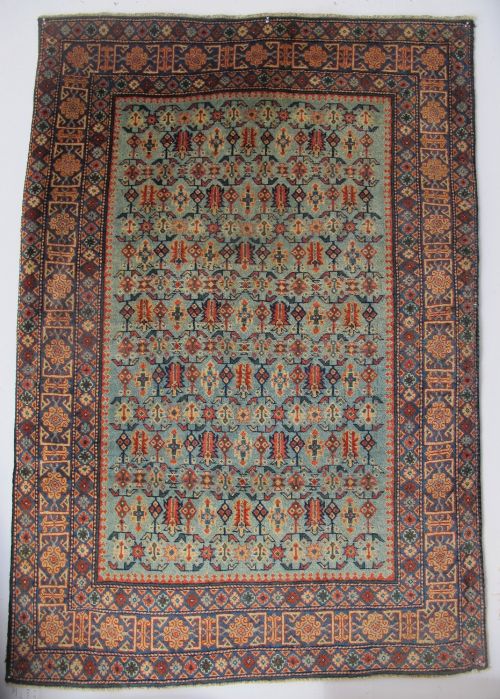
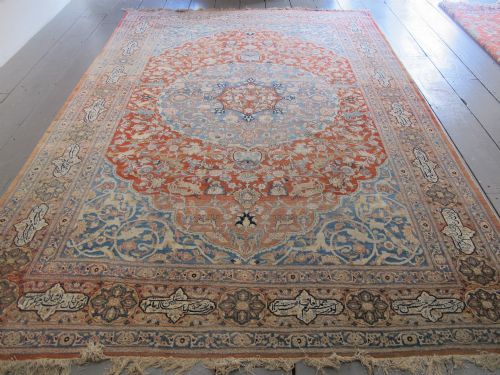
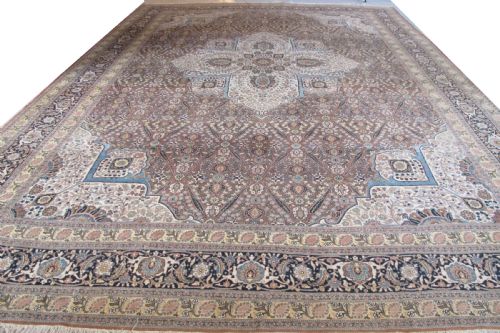
When searching for a blue tabriz rug, you encounter hand-knotted Persian carpets originating from the historic weaving centre of Tabriz in north-west Persia. The pieces listed span from the eighteenth century through the nineteenth and twentieth centuries, including traditional Persian styles and regional village designs.
You are most likely to meet twentieth-century examples on this page, alongside significant pieces dated to around nineteen hundred and the nineteenth century. These range from intimate area rugs to substantial room-size carpets measuring over five metres in length.
The aesthetic vocabulary encompasses classic floral designs, traditional medallion layouts, and unusual overall patterns. Such floor coverings bridge functional utility and historic textile art, suiting both period properties and modern spaces.
How they were made
The construction relies on a foundation of cotton for the warp and weft, providing structural stability and crisp definition to the overall design. Artisans then knot fine wool onto this sturdy grid, creating a dense and resilient pile.
Master weavers in Tabriz utilised precise knotting techniques to execute intricate floral medallions and complex curvilinear motifs. The quality of the wool and the tension of the weave dictate how cleanly the design translates across the surface.
Blue Tabriz Rug Retail Price Guide 2026
Typical asking prices for blue tabriz rug among the pieces listed under this phrase on Sellingantiques today, from the lower quarter to the upper quarter. They describe what is for sale here now, not the wider market.
Even a grand room-size carpet began with a single knot tied by hand in a bustling Persian workshop.
What varies in quality
The refinement of the knot count and the intricacy of the design dictate the distinction between standard production and masterwork pieces. Finer execution allows for crisper botanical details in traditional floral layouts and greater nuance within the blue palette.
The historical significance of specific attributions, such as works associated with Hajji Jalili or Benlian, separates exceptional carpets from standard examples. Additionally, the overall scale and proportion influence desirability, with large room-size carpets requiring monumental skill to execute symmetrically.
Haji Jalili·Benlian
The Blue Tabriz Rug Glossary
- Tabriz
- A major historic weaving city in north-west Persia known for producing finely knotted carpets with diverse classical and regional designs. These textiles often reflect sophisticated urban workshops rather than nomadic production.
- Medallion
- A central ornamental design motif placed in the middle of the carpet field. It serves as the primary focal point around which floral and geometric elements are arranged.
- Warp
- The vertical threads stretched tightly on the loom that form the structural foundation of the rug. The exposed ends often appear as fringe at either end of the carpet.
- Weft
- The horizontal threads passed alternately over and under the warp threads between rows of knots. This secures the pile in place and adds rigidity to the fabric.
- Pile
- The upright surface of the rug formed by the clipped ends of the knotted wool yarn. Its density and height determine the tactile feel and visual richness of the textile.
Blue Tabriz Rug: Frequently Asked Questions
How do I date a blue tabriz rug?
Dating relies on stylistic markers, structural materials, and structural characteristics recorded in the weaving traditions of north-west Persia. Nineteenth-century examples often display distinct natural dye palettes and finer urban knotting compared to later twentieth-century productions.
Examining the wear patterns, wool quality, and border designs helps establish whether a piece originates from the Safavid Zand era, the nineteenth century, or the early twentieth century.
Where were these carpets made?
These textiles originate from Tabriz, a prominent city in north-west Persia with a centuries-old tradition of master carpet weaving. Urban workshops in this region combined traditional Persian motifs with exceptional technical precision.
Some pieces reflect regional village aesthetics from the surrounding area, introducing alternative overall patterns while maintaining the foundational techniques of the Tabriz tradition.
How should I live with a wool carpet?
Wool and cotton construction provides natural durability that suits high-traffic areas in a home. Regular gentle vacuuming without a rotating brush roll helps maintain the pile and prevents dust from settling into the foundation.
Positioning the rug away from direct, harsh sunlight preserves the depth of the indigo and blue tones over time. Rotating the piece periodically ensures even wear across the surface.
What is a Hajji Jalili rug?
Hajji Jalili refers to the renowned master weaver and workshop active in Tabriz during the late nineteenth and early twentieth centuries. These carpets are distinguished by exceptional finesse, unique soft colour palettes, and delicate floral compositions.
Collectors prize these specific pieces for their artistic refinement and the high density of their wool knotting.