





Blue Tabriz Carpet
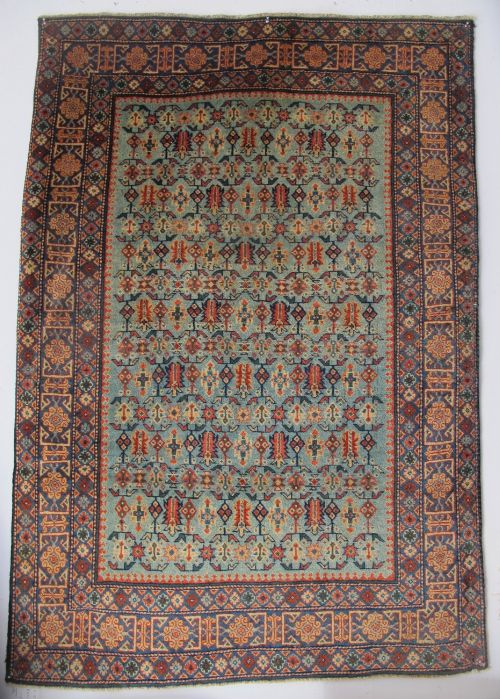
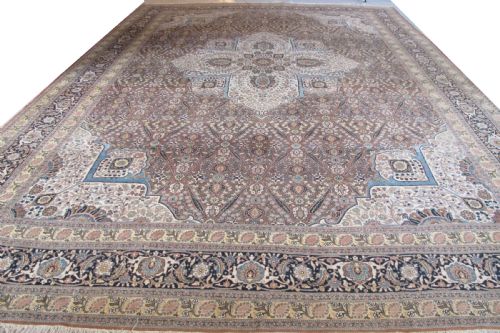
A blue tabriz carpet brings structured Persian elegance to a room, woven with enduring wool on cotton foundations across the nineteenth and twentieth centuries.
Blue Tabriz Carpet
A blue tabriz carpet originates from north-west Persia, taking its name from the historic weaving centre where master artisans produced both roomsize floor coverings and smaller rugs. When you search for a blue tabriz carpet, you encounter formats ranging from intimate village rugs measuring under two metres to expansive carpets exceeding five metres in length.
The aesthetic vocabulary encompasses traditional floral medallion layouts, classic overall floral designs, and occasional village patterns that reflect regional interpretations. Dating spans from eighteenth-century Safavid and Zand eras through nineteenth-century examples up to pieces produced in the 1920s and 1930s.
Most examples available on this page date from around 1900 to the 1920s, offering roomsize proportions suited to traditional interiors. These floor coverings bridge formal workshop output and decorative village weaving traditions.
Materials and construction
These carpets rely on a foundation of sturdy cotton for warps and wefts, providing structural stability and crisp definition to the overall design. The pile consists of wool, utilised for its resilience and capacity to hold rich dye saturation over decades of use.
Weavers knotted the wool pile by hand onto the cotton base, allowing for intricate curvilinear motifs and precise geometric border arrangements. This traditional technique ensured that large roomsize formats maintained their planar integrity under heavy foot traffic.
Blue Tabriz Carpet Retail Price Guide 2026
Typical asking prices for blue tabriz carpet among the pieces listed under this phrase on Sellingantiques today, from the lower quarter to the upper quarter. They describe what is for sale here now, not the wider market.
Some carpets carry signature woven inscriptions hidden inside the border, left behind by the master weavers of Tabriz.
Distinguishing quality tiers
Quality in these Persian floor coverings rests upon knot density, precision of the drawn floral motifs, and the nuance of the dye palette. Finer workshop pieces display exacting symmetry in their central medallions and crisp delineation along the border systems.
The distinction between standard village production and master workshops involves the fineness of the wool and the complexity of the secondary ornament. Earlier pieces from the eighteenth century demonstrate different structural characteristics compared to the workshop revivals of the early twentieth century.
Haji Jalili·Benlian
The Blue Tabriz Carpet Glossary
- Tabriz
- A major carpet-weaving centre in north-west Persia known for producing workshop and village rugs with sophisticated floral and medallion designs.
- Medallion
- A central ornamental motif placed in the middle of the carpet field, typically mirrored across both vertical and horizontal axes.
- Warp
- The vertical foundation threads stretched lengthwise on the loom, upon which the knots are tied and through which the wefts pass.
- Weft
- The horizontal threads passed across the warp threads between rows of knots to bind the structure firmly together.
- Pile
- The upright cut ends of the knotted wool yarn that form the usable surface texture of the carpet.
Blue Tabriz Carpet: Frequently Asked Questions
How do I date an old carpet?
Dating relies on stylistic shifts, structural evidence in the cotton foundations, and historical attribution markers recorded in the weave.
Comparison with documented workshop styles from the nineteenth and early twentieth centuries helps narrow the decade of production.
Where were these carpets woven?
Production centres were situated in north-west Persia, specifically around the city of Tabriz and its surrounding villages.
Master workshops in this region combined urban design traditions with regional weaving techniques.
How do I care for wool floor coverings?
Regular gentle vacuuming without a rotating brush bar prevents dirt accumulation within the wool pile.
Professional cleaning by specialists familiar with antique Persian textiles ensures the cotton foundation remains stable.
Are these pieces suitable for heavy traffic?
The combination of dense wool pile and sturdy cotton foundations provides natural resilience for daily use.
Placing an appropriate underlay beneath roomsize formats reduces friction and extends the longevity of the textile.