
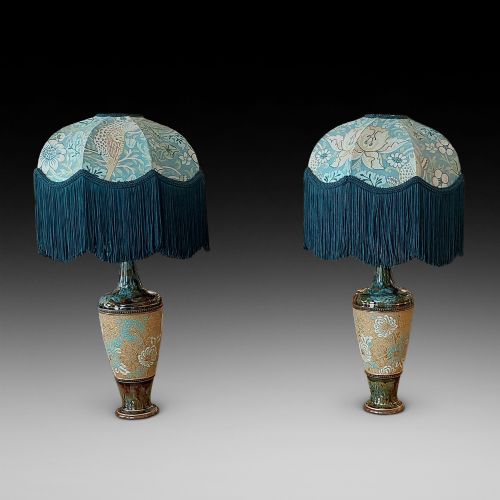
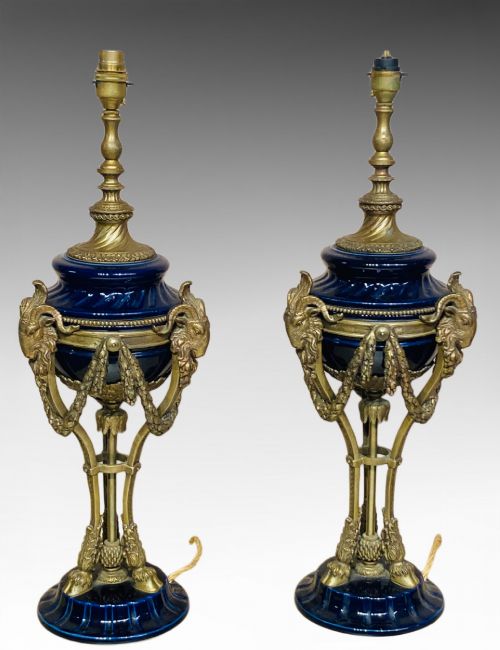
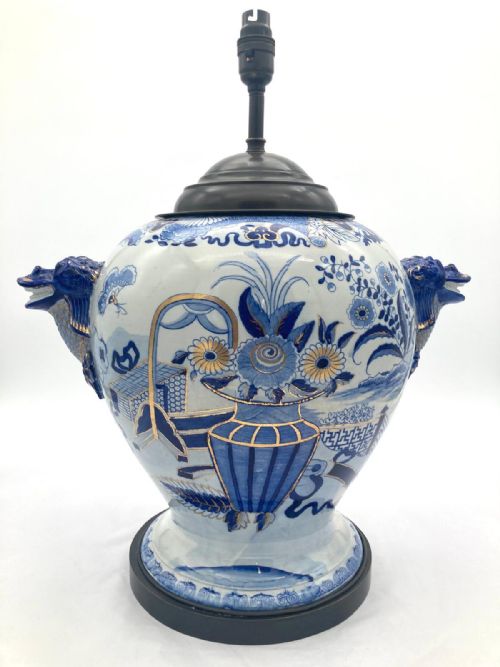


Blue Table Lamp Bases
Blue table lamp bases bring distinctive colour and historical craft into a room, largely through converted ceramic vases and oil lamps.
Blue Table Lamp Bases
Blue table lamp bases mostly take the form of converted antique vases, ginger jars, and oil lamps originating from Chinese export kilns, European porcelain factories, and Japanese workshops. Buyers searching for blue table lamp bases encounter pieces spanning from the eighteenth century through to the mid twentieth century, reflecting varied tastes in domestic illumination over several eras.
Many examples utilise blue and white porcelain, Delftware, or coloured glass mounted onto brass, gilt bronze, or ceramic plinths. The selection ranges from compact porcelain jars to monumental baluster vases and figural compositions adapted to hold electrical fittings.
The conversion of earlier vessels into lamps is a central feature of this category, where historic ceramic and glass bodies are fitted for modern lighting while retaining their original decorative glazes and hand-painted motifs.
How they were made
The bodies of these lamps rely on traditional ceramic and glass manufacturing techniques, including hand-thrown porcelain, moulded ironstone, cut glass, and cloisonné enamelling. Artisans applied cobalt blue pigments under or over the glaze before firing, or shaped rich blue glass into columns and vessels.
Metal mounts in brass, gilt bronze, and ormolu were cast and chased to secure the ceramic and glass bodies, providing stable weighted bases and architectural framing for the lighting components.
Common regional styles among these listings include Chinese Chinoiserie, Japanese Imari, and French Neoclassical designs.
What varies in quality
Quality rests in the crispness of the hand-painting on the ceramic bodies, the depth and consistency of the blue glaze, and the weight of the metal mounts. Superior examples display finely chased ormolu and crisply detailed porcelain without distortion from the kiln.
The integration of the conversion work also separates standard pieces from finer ones, with superior lamps maintaining the visual integrity of the original vessel while safely accommodating modern wiring and hardware.
Hicks and Meigh·Tiffany Studios NYC·Royal Doulton
The Blue Table Lamp Bases Glossary
- Ormolu
- Gilded bronze mounts used to decorate and support ceramic lamp bodies. This technique involves applying a gold amalgam to bronze.
- Celadon
- A pale green or blue-green ceramic glaze originating in East Asia. It often appears on antique vase lamps from the nineteenth century.
- Ginger jar
- A wide-mouthed ceramic storage jar originally used for spices. These vessels frequently form the body of blue and white table lamps.
- Cloisonne
- Enamelling work where metal wire creates raised barriers filled with coloured paste. This technique produces intricate patterned surfaces on metal lamp bases.
- Ironstone
- A type of durable heavy pottery developed in the nineteenth century. It provides a sturdy body for converted vase lamps.
Blue Table Lamp Bases: Frequently Asked Questions
Are these lamps converted from old vases?
Many blue table lamp bases began life as Chinese export porcelain, Japanese Imari, or European Delft vases before being adapted into lamps at a later date.
This method of conversion preserves historical ceramic art while allowing the pieces to serve a functional purpose in contemporary interiors.
How do I date an antique lamp base?
Dating relies on examining the characteristics of the ceramic body, the style of the hand-painted blue decoration, and the composition of any metal mounts.
Clues such as craquelure in the glaze, manufacturing marks, and the weight of the bronze or brass elements help place pieces into periods from the eighteenth century onwards.
What styles are common in these lamp bases?
The selection includes Chinese Chinoiserie motifs, Japanese Arita and Yokohama designs, French Neoclassical ormolu mounts, and Victorian oil lamp configurations.
These varied aesthetic traditions reflect global trade and changing European tastes for exotic ceramics over multiple centuries.
How do I choose the right shade?
Selecting a shade depends on the height and visual weight of the ceramic or glass base, noting that many historic pieces are paired with handmade fabric shades.
Proportion is key to ensuring the completed lamp balances well and complements the decorative motifs on the blue body below.