
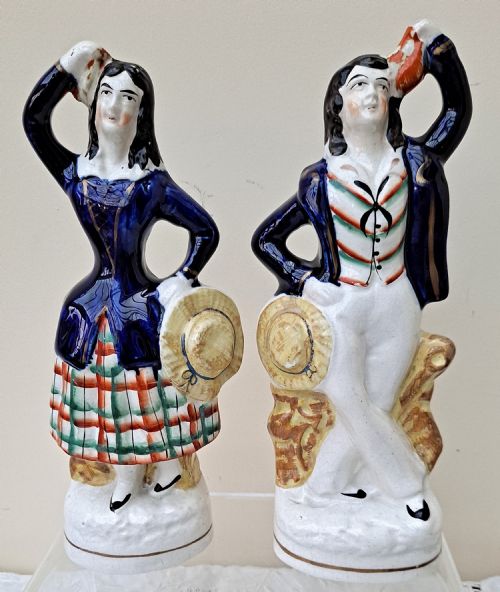


Blue Staffordshire Figures
Blue staffordshire figures bring the portraiture, animals and literary characters of the nineteenth century into the home in moulded ceramic.
Blue Staffordshire Figures
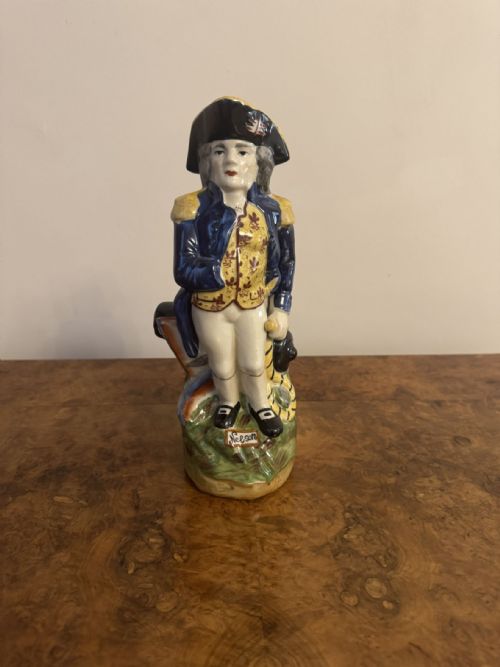
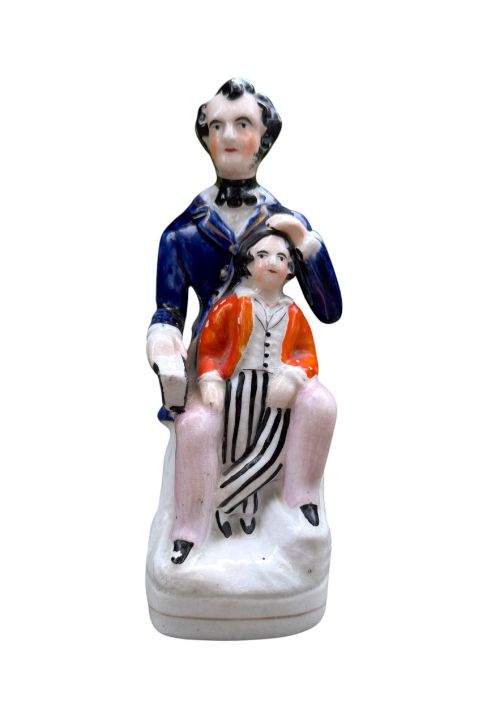
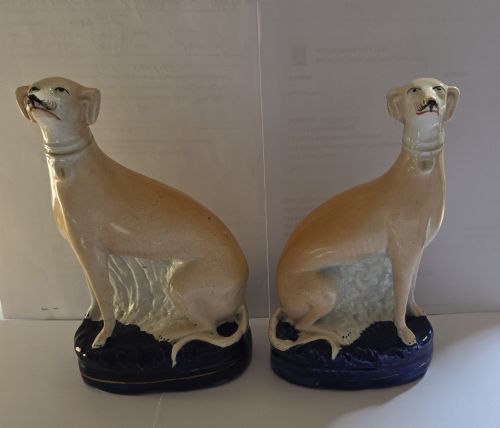
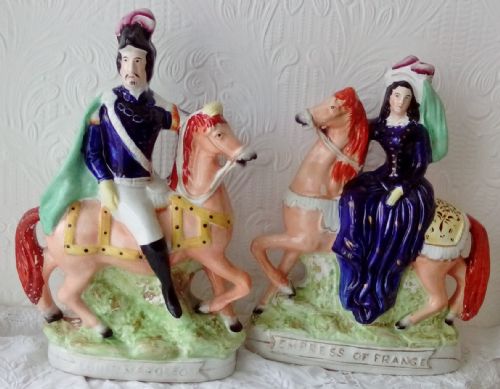
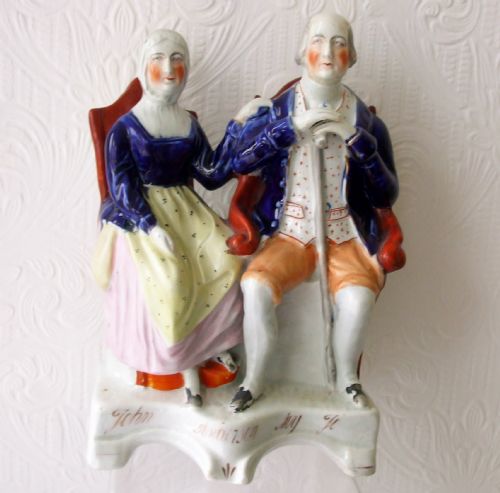
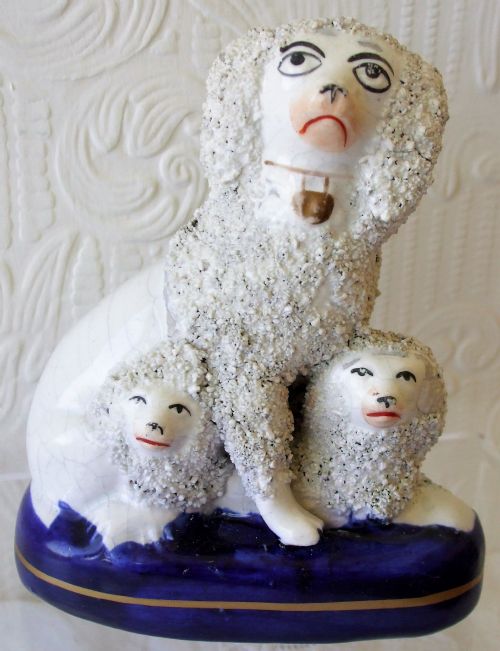
The subjects divide broadly between human figures and animals. Human subjects include royal portrait figures, theatrical characters, literary heroes and historical personalities such as Lord Nelson and Queen Victoria. Animal forms range from seated whippets and dalmatian inkwells to poodles and greyhound quill holders.
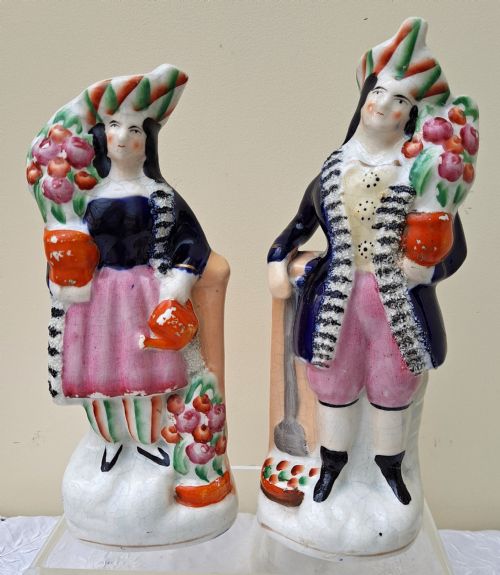
Most pieces take the form of flatback figures designed to stand against a wall on a mantelpiece or shelf. Other functional variations include tobacco jars, spill vases, watch-holders, pepperpots and inkwells alongside freestanding decorative figurines.
How they were made
The foundation of these pieces is earthenware, a porous ceramic body formed in moulds and fired before decoration. Potters applied lead glaze to seal the surface and impart a glossy finish.
Colour comes from enamel paint applied over or under the glaze, frequently featuring cobalt blue alongside other pigments. Gilt highlights and details appear on select portrait and theatrical subjects.
Listings feature earthenware and ceramic bodies finished with lead glaze and enamel paint, spanning the Victorian and Georgian periods.
What varies in quality
Proportion and stance distinguish the better animal models, particularly in pairs of dogs or equestrian groups. The balance of the glaze and the precision of the cobalt blue and gilt accents separate standard decorative wares from notable portrait and theatrical figures.
The Blue Staffordshire Figures Glossary
- Flatback
- A figure moulded with a finished front and a plain, unglazed or lightly finished flat rear designed to sit flush against a wall. These pieces were intended for mantelpieces where only the front view mattered.
- Spill vase
- A hollow cylindrical holder incorporated into a figure group, designed to hold wooden spills for lighting candles or fires. They combine utility with ornamental sculpture.
- Quill holder
- A desk accessory featuring a modelled animal or figure with a fitted slot or trough to rest writing quills. These combine practicality with the popular animal subjects of the period.
- Lead glaze
- A glassy coating containing lead oxide applied to earthenware to create a smooth, waterproof surface. It gives the ceramic body its characteristic shine and protects the pigments underneath.
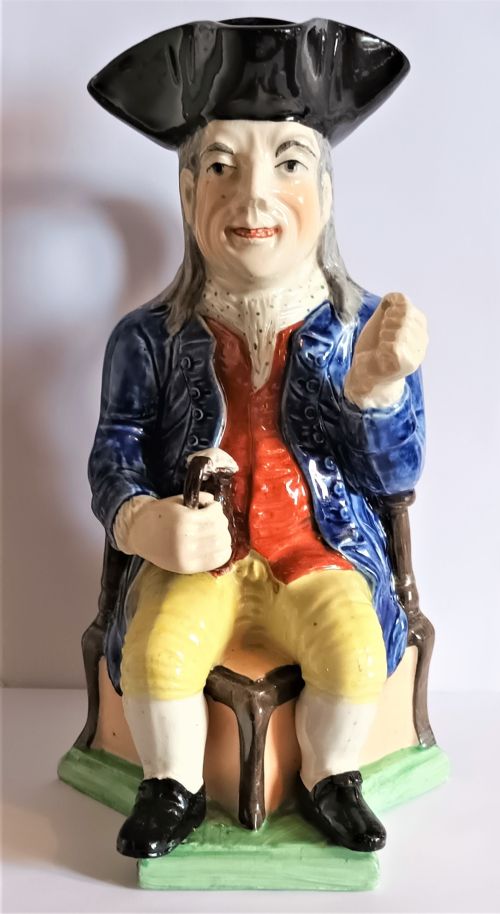
- Toby jug
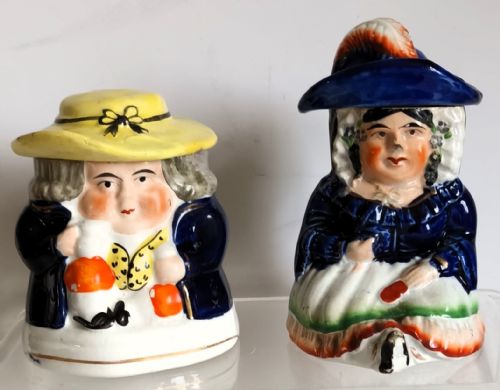
- A pottery jug modelled in the form of a stout, cheerful figure, usually seated and holding a mug or jug of beer. They represent historical or stock characters from British tradition.
Blue Staffordshire Figures: Frequently Asked Questions
What are blue staffordshire figures?
Blue staffordshire figures are nineteenth century ceramic ornaments depicting people, animals and historical events, typically finished with cobalt blue details and lead glaze.
Potters in the Staffordshire potteries produced these earthenware pieces using moulds for domestic display on mantelpieces and shelves.
How were flatback figures displayed?
Flatback figures were designed with a plain or unglazed rear side so they could sit flat against a wall or mirror back on a mantelpiece.
This construction method saved clay and production time while directing all visual detail to the front of the piece.
How do I identify a portrait figure?
Portrait figures usually depict recognisable historical individuals, royalty or military leaders such as Queen Victoria, Lord Nelson or Louis Napoleon, often identified by name on the base or front.
Makers captured contemporary public interest in news, politics and theatre through these commemorative ceramic likenesses.
What animals appear in these figures?
The animal subjects include whippets, greyhounds, dalmatians, poodles and dogs with baskets, often modelled as pairs or incorporated into inkwells and quill holders.
Dog figures were especially popular in Victorian interiors, reflecting both companionship and sporting tastes of the era.