







Blue Soumak Weave
Blue soumak weave textiles are tribal flatweaves prized for their intricate brocaded surfaces and rich indigo palettes.
Blue Soumak Weave
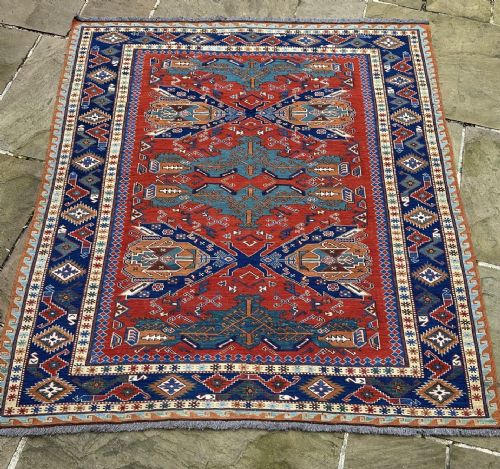
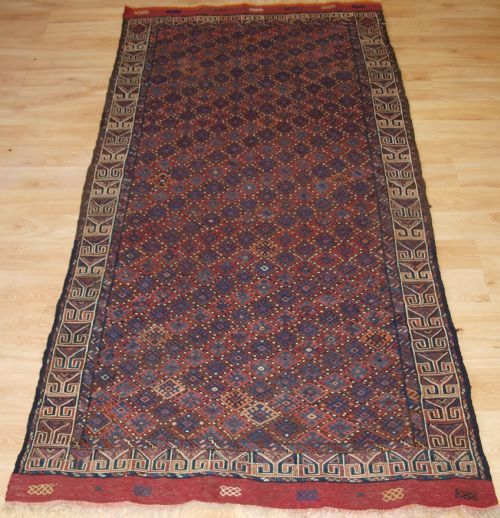
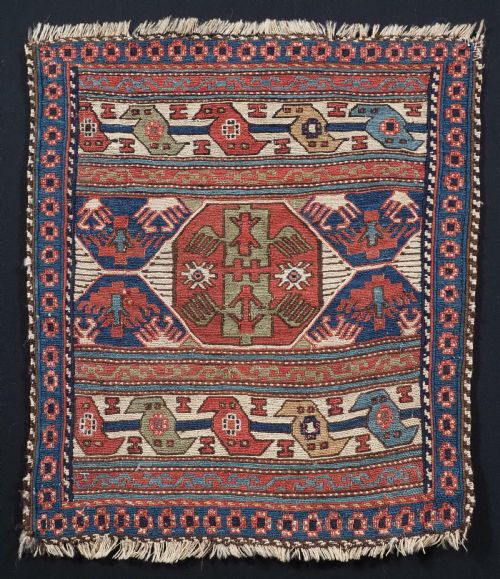
A blue soumak weave is a distinct type of tribal textile created by nomadic and village weavers across the Caucasus and Persia. When you search for blue soumak weave, you encounter flatwoven rugs, carpets, saddlebags, salt bags and mafrash panels dating from the nineteenth and mid-twentieth centuries. These pieces display deep indigo grounds paired with characteristic geometric motifs, animal forms and tribal symbols.
Materials and construction
These textiles rely on hand-spun wool and cotton foundations worked with dense wool supplementary wefts. The soumak technique wraps coloured yarns over the warp threads in a specific sequence, creating a textured surface that resembles embroidery while adding structural durability.
Weavers utilised natural dyes and vegetable dyes to achieve saturated blue tones and contrasting secondary shades. This combination of hand-spinning, natural dyeing and intricate wrapping defines the physical character of the weave.
Blue Soumak Weave Retail Price Guide 2026
Typical asking prices for blue soumak weave among the pieces listed under this phrase on Sellingantiques today, from the lower quarter to the upper quarter. They describe what is for sale here now, not the wider market.
Nomadic weavers hid tiny stylized birds and dragons inside geometric medallions to ward off the evil eye while gossiping by the loom.
Judging quality in tribal weave
Quality rests upon the crispness of the wrapping technique and the complexity of the design layout. Finer examples exhibit tightly packed soumak brocading that holds sharp geometric definition across medallions, birds and dragons.
The depth and consistency of the natural blue dyes also dictate the merit of a piece. Rich indigo shades combined with varied secondary vegetable colours create visual resonance that separates standard production from superior tribal work.
The Blue Soumak Weave Glossary
- Soumak
- A flatweaving technique where coloured weft threads are wrapped over and under warp threads to produce a textured, durable surface. This method creates a patterned face with utilitarian strength.
- Khorjin
- A traditional double saddlebag used by nomadic tribes for transport and storage. These pieces feature decorated faces that survive independently as collectable textile art.
- Mafrash
- A rectangular storage bag panel woven by tribal groups such as the Shahsavan. They formed the sides of bedding chests used inside nomadic tents.
- Vegetable dye
- Colouring matter derived from plants, roots and bark used before the invention of synthetic dyes. These materials produce nuanced, ageing tones on wool.
- Warp
- The stationary vertical threads stretched on a loom that form the structural foundation of the textile. Wefts are interlaced or wrapped across these threads.
Blue Soumak Weave: Frequently Asked Questions
What is a blue soumak weave?
A blue soumak weave is a tribal flatwoven textile produced by nomadic groups in the Caucasus and Persia using a wrapping technique on wool foundations. These pieces feature prominent indigo grounds and complex geometric or zoomorphic designs.
They encompass various utilitarian forms including rugs, carpets, salt bags and saddlebag faces created during the nineteenth and twentieth centuries.
How were these tribal bags used?
Nomadic tribes utilised bags like khorjins, salt bags and mafrash panels for carrying possessions, storing household goods and transporting belongings during seasonal migrations. They combined practical durability with symbolic tribal motifs.
Over time, many of these functional containers were separated or preserved as decorative textile art due to their intricate craftsmanship.
How do I care for antique soumak textiles?
Protect antique flatweaves from direct sunlight to prevent natural dye fading and vacuum them gently with a mesh screen attachment. Keep the wool clean and dry to preserve the integrity of the wrapped structure.
Display smaller bag faces or panels away from high-traffic areas or mount them securely on breathable backing fabrics.
How do I distinguish regional styles?
Regional styles reveal themselves through specific structural formats and distinct iconography associated with particular tribal groups. Shahsavan work often incorporates dragons and birds, while Afshar and Kurdish pieces display alternative geometric layouts.
Examining the handling of natural blue dyes and the tightness of the soumak wrapping helps pinpoint origin and period.