


Blue Sapphire Gold Pendant
A blue sapphire gold pendant brings together deep blue corundum and warm precious metal in designs spanning the Victorian era to the mid-twentieth century.
Blue Sapphire Gold Pendant
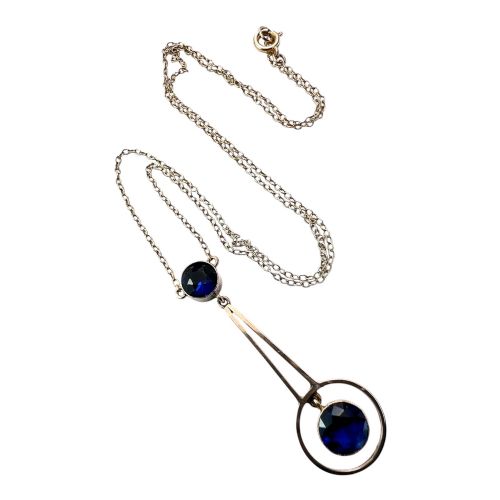
A blue sapphire gold pendant is a neck ornament featuring a blue sapphire set in gold, drawing on periods from Victorian to mid-century designs. You will encounter pieces shaped as drops, crosses, crescents, hearts, and clusters.
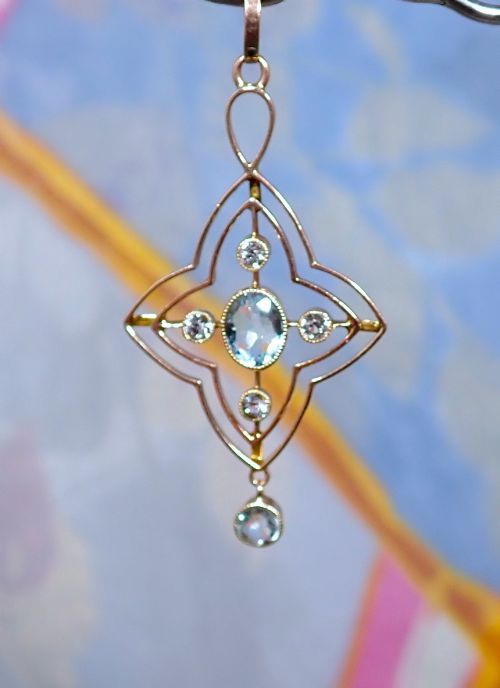
The selection ranges from early twentieth-century Edwardian openwork to structured Art Deco pieces and later twentieth-century styles. Alongside dedicated pendants, you will find convertible brooch-pendants and drops.
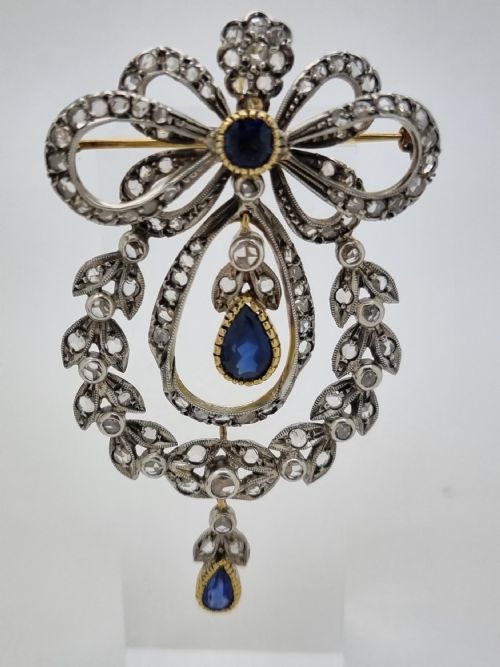
Makers and designers worked within distinct aesthetic movements, producing motifs like bows, fans, and celestial themes. These variations mean each period brings a different character to the gold work and stone arrangement.
Materials and construction methods
Goldsmiths utilised various purities of gold, including 9ct, 14ct, 15ct, and 18ct, often combining yellow gold with silver settings for diamond work in earlier pieces. The metal provides a sturdy foundation for claw, bezel, and flush settings.
Sapphires are frequently paired with diamonds, seed pearls, white zircons, paste, or moonstones to accent the central blue stone. Cutting styles vary from cabochons and rose cuts to old cuts and step cuts depending on the era of manufacture.
Several pieces double as brooches, letting you pin a sapphire bow or heart straight to your lapel when the neck chain stays at home.
Factors influencing quality
Quality rests on the saturation and clarity of the sapphire itself, alongside the precision of the surrounding metalwork and secondary stones like diamonds or pearls. Superior pieces display harmonious proportions between the central gem and the gold mount.
The finesse of hand-piercing, granulation, or engraving in the gold distinguishes finer workshop output from simpler production. Preservation of original settings and minimal wear to the gold surface also elevate a piece.
The Blue Sapphire Gold Pendant Glossary
- Cabochon
- A gemstone shaped and polished with a smooth, rounded surface rather than faceted. This style highlights the deep tone of the sapphire without geometric light reflection.
- Old cut
- A hand-cut diamond style from the eighteenth and nineteenth centuries featuring a small table, high crown, and large culet. These stones exhibit a softer, candlelit sparkle compared to modern cuts.
- Seed pearl
- A very small natural or cultured pearl, often drilled and threaded or pegged onto jewellery. They are frequently used in Victorian and Edwardian clusters and crescent motifs.
- Witches heart
- A jewellery motif featuring an asymmetric heart with a twisted tail, popular in the Georgian and Edwardian periods. It symbolises being captivated or enchanted in love.
- Openwork
- Metalwork pierced through to create a lace-like or airy pattern. This technique is characteristic of Edwardian and Art Deco platinum and gold pieces.
Blue Sapphire Gold Pendant: Frequently Asked Questions
How do I date a blue sapphire gold pendant?
Dating relies on stylistic clues, metal types, and cutting styles. Edwardian pieces often feature intricate openwork in yellow gold or silver-topped gold, while mid-century examples lean towards bolder cluster formations.
Hallmarks, where present, offer precise year and maker indicators. Comparing the setting techniques of the diamonds and sapphires to established historical periods helps narrow down the decade of creation.
Can these pendants be worn daily?
Sapphire is a hard gemstone suitable for regular wear, rating nine on the Mohs scale. However, older settings require careful handling to protect delicate components like seed pearls or fine gold chains.
Removing the pendant before swimming, sleeping, or strenuous activity preserves the integrity of antique claws and delicate metalwork. Periodic checks by a jeweller ensure the stones remain secure in their original mounts.
What is the difference between a pendant and a brooch-pendant?
A standard pendant is designed exclusively to suspend from a neck chain via a fixed loop or bail. A brooch-pendant incorporates a hinged pin and catch on the reverse alongside a loop.
This dual functionality allowed Edwardian and Victorian owners to pin the piece to clothing or hang it from a ribbon or chain. Many survive with both fittings intact, offering versatile ways to wear them.
How should I clean antique gold jewellery?
Gentle cleaning involves warm water and mild washing-up liquid with a soft brush to remove dust behind settings. Harsh chemical dips or ultrasonic cleaners should be avoided, particularly for pieces containing pearls, opals, or softer gems.
Soaking is generally discouraged for antique pieces with foiled backs or closed-back settings where moisture can become trapped. Patting dry with a soft lint-free cloth completes the process safely.