


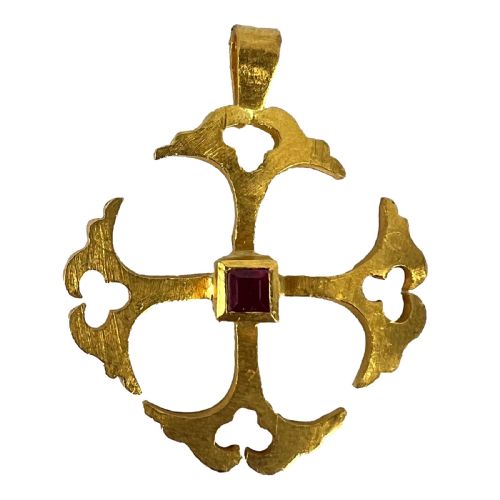


Yellow Gold Cross Pendant
A yellow gold cross pendant brings together devotional form and precious metal, ranging from delicate Victorian engravings to striking modernist diamond settings.
What these pieces are
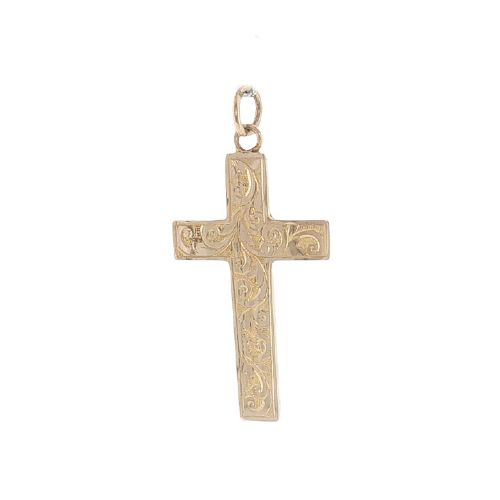
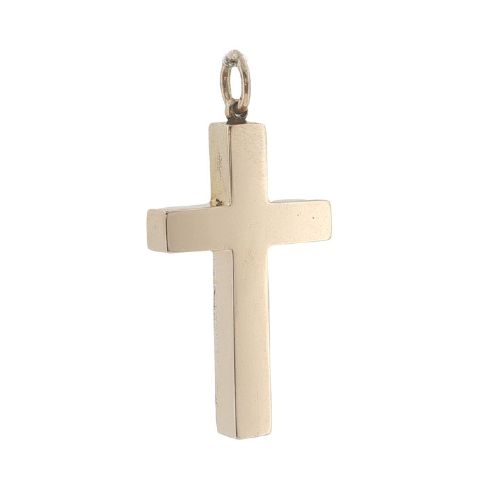
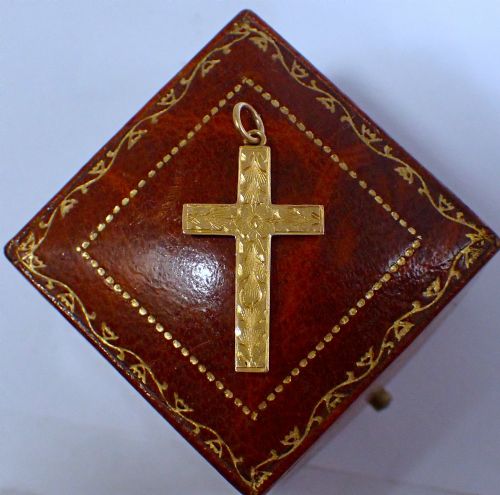
A yellow gold cross pendant is a devotional necklace ornament fashioned in various gold purities, frequently appearing as an engraved Edwardian or Victorian piece alongside mid-century interpretations. These items function equally as personal adornments and historical artefacts, reflecting the aesthetic preferences of eras spanning the late nineteenth century to the mid-twentieth century.
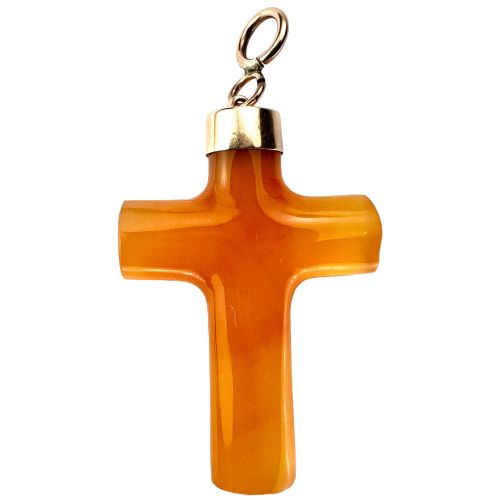
The pieces on this page encompass simple engraved designs, gemstone-set necklaces incorporating sapphires, diamonds, rubies, and blue topaz, and distinctive modernist forms. Buyers frequently encounter nineteenth-century examples featuring intricate hand-engraved patterns alongside twentieth-century creations set with brilliant-cut diamonds or coloured stones.
How they were made
These items are constructed from various gold purities, including nine-carat, fifteen-carat, and eighteen-carat yellow gold, shaped into crosses and drops. Goldsmiths utilised traditional techniques such as hand engraving to decorate the metal surfaces of Victorian and Edwardian examples.
Gemstone setting forms an integral part of construction, with jewellers mounting diamonds, sapphires, rubies, blue topaz, and yellow quartz directly into the gold framework. Pieces from the mid-twentieth century display faceted brilliant-cut stones alongside rose-cut diamonds secured in refined claw or flush settings.
Retail Price Guide 2026
Typical UK retail prices for yellow gold cross pendant, calculated from the Sellingantiques database of over a million retail prices indexed since 2003. This retail price guide relies exclusively on Sellingantiques data; no external sources or auction records are used, so the figures do not describe the wider market.
Some cross pendants double as secret society watch fobs featuring miniature ruby skulls for the discerning historical lodge member.
What varies in quality
The standard of a yellow gold cross pendant depends heavily upon the precision of its metalwork and the depth of its hand engraving. Finer examples display crisp, well-defined motifs carved into higher carat gold, whilst simpler versions rely on lighter nine-carat constructions.
Gemstone selection dictates the upper tier of the range, where matched sapphires, brilliant-cut diamonds, and vibrant blue topaz elevate the piece beyond a standard devotional item. The artistry involved in Italian modernist or French art nouveau designs further separates standard production from exceptional goldsmithing.
Jeannette Savoy
The Yellow Gold Cross Pendant Glossary
- Yellow gold
- A precious metal alloy composed of gold combined with silver and copper, traditionally utilised in jewellery manufacturing across all historical periods.
- Carat
- A unit measuring the purity of gold in an alloy, where twenty-four carats represents pure gold. Listings frequently feature nine-carat, fifteen-carat, and eighteen-carat variations.
- Brilliant cut
- A diamond or gemstone cut featuring numerous facets designed to maximise light return and sparkle. This technique appears frequently in mid-century cross pendants.
- Rose cut
- An antique gemstone cutting style featuring a domed top covered in triangular facets and a flat base. This cut is typical of older diamond-set pieces.
- Engraving
- The process of cutting decorative designs into metal surfaces using sharp handheld tools. Victorian and Edwardian crosses often utilise this technique for surface pattern.
Frequently Asked Questions
What periods do these crosses span?
The pieces span from the late nineteenth century through the Edwardian and Art Nouveau eras up to the mid-twentieth century.
Designs reflect changing stylistic preferences, moving from ornate Victorian engravings to Italian modernist goldwork and sapphire settings.
How do I identify the gold purity?
Gold purity is determined by hallmarks or stamps indicating the carat weight, such as nine-carat, fifteen-carat, or eighteen-carat gold.
Different periods favoured different alloys, with higher carats often appearing in continental or bespoke pieces.
Were these always worn as necklaces?
Whilst primarily created as pendants for necklaces, some examples served alternative functions such as watch fob pendants.
Buyers should examine the suspension loop or bail to understand how the piece was originally intended to be worn.
What gemstones are commonly found?
Commonly integrated stones include diamonds, sapphires, blue topaz, rubies, and yellow quartz.
Gemstones are either flush-set into the gold body or secured within clusters alongside decorative engravings.