



Blue River Oil Painting
When you search for a blue river oil painting, you are looking at canvases and panels capturing waterways through impressionist and traditional lenses.
Blue River Oil Painting
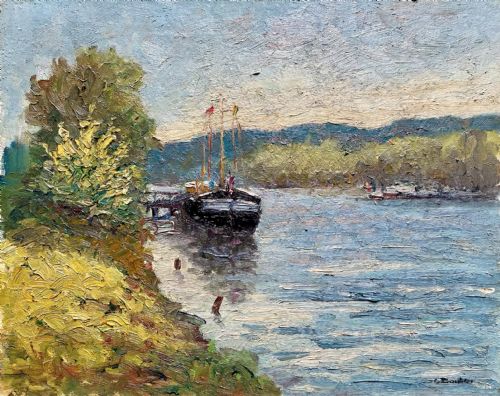
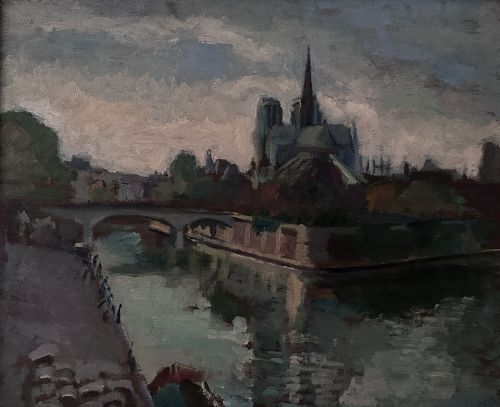
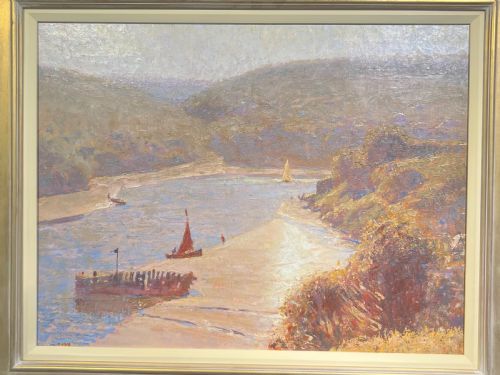
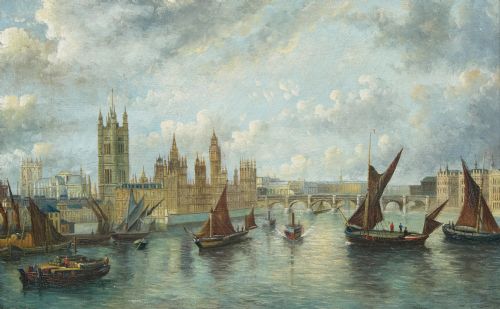
A blue river oil painting depicts aquatic landscapes, ranging from French waterways and the Thames to the Pearl River, executed across the nineteenth and twentieth centuries. These artworks frequently capture scenes of boats, bridges, and riverbanks painted in plein air or studio settings.
The selection encompasses British Impressionism, Post-Impressionism, and Victorian styles, alongside regional schools from Scotland and France. Buyers will encounter both framed canvases and wood panel supports dating from the Victorian era through to the mid-century period.
Materials and construction
Artists apply oil paint to woven canvas stretched over wooden frames, or directly onto rigid supports such as wood panels and board. Gilt wood frames frequently house these works, providing structural support and period context.
Techniques range from smooth academic brushwork to heavy impasto applied by impressionist painters capturing light on water. Pigments are layered to create depth in the rendering of rivers, skies, and surrounding vegetation.
Canvas and wood panel serve as the primary supports for these nineteenth and twentieth-century river artworks.
Evaluating quality and execution
Quality rests upon the artist's handling of light, atmospheric perspective, and the fluidity of brushwork, particularly in the depiction of moving water. Superior pieces demonstrate confident mark-making and balanced composition that anchor the river within its landscape.
The relationship between the support and the pigment layer dictates longevity, with stable canvases and unwarped wood panels preserving the intended vibrancy of the original application.
Albert Bierstadt·Cyril Walduck Edwards·Cecil Allan Mould·Florence Adelina Hess·Hubert Wellington·Archibald Kay·George Vicat Cole·William Grant Murray·John Wright Oakes·Armand Guillaumin·Edmond Defonte·Pauline Boumphrey·Herbert Royle·Antoine Bouvard·Adolphe Gumery·Henri Therme·Owen Bowen·James Scrimgeour Mann·Edward Seago
The Blue River Oil Painting Glossary
- Impasto
- Paint applied thickly to a canvas or panel, standing out in relief from the surface. This technique allows the artist to capture the physical texture of water and light reflections.
- Plein air
- Painting executed outdoors directly in front of the subject rather than in a studio. Artists utilise this approach to capture natural light and atmospheric conditions along riverbanks.
- Oil on panel
- Pigment bound in oil medium applied directly to a flat piece of wood or prepared board rather than woven fabric. This rigid support provides a smooth, unyielding surface for detailed brushwork.
- Post-Impressionism
- An art movement extending beyond impressionism with a greater emphasis on symbolic content, formal order, or expressive use of colour. Painters in this style interpret landscapes with heightened emotional resonance.
- Gilt wood
- Timber frames coated with a thin layer of gold leaf or metallic gilt paint. These surrounds often complement the palette of the enclosed landscape painting.
Blue River Oil Painting: Frequently Asked Questions
What periods do these paintings cover?
The available artworks span from the nineteenth century through the Victorian and Edwardian eras into the mid-twentieth century, including post-war modernism.
Many examples reflect the impressionist and post-impressionist movements popular across British and French schools during these decades.
How should I display a panel painting?
Wood panel paintings require stable indoor environments away from direct heat sources and excessive humidity to prevent warping of the support.
Displaying them in their original or period-appropriate gilt wood frames protects the edges and maintains historical context.
What subjects appear alongside the water?
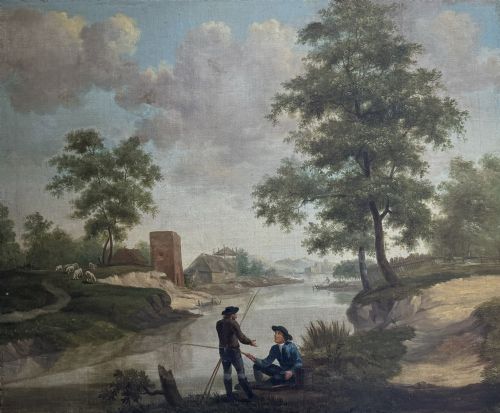
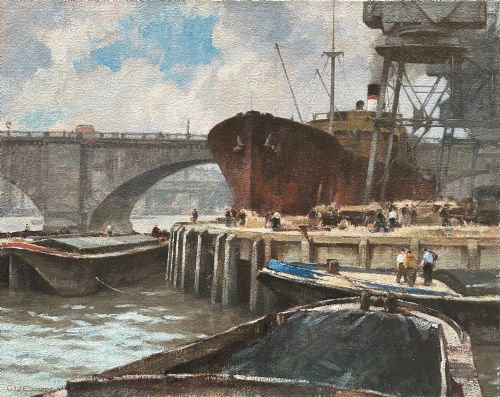
Common secondary motifs include urban bridges, sailing barges, junks, industrial shipping, and pastoral riverbanks with figures or livestock.
These elements help contextualize the geography, ranging from London and Norfolk to the Seine and the Pearl River.
How do I identify a plein air work?
Plein air paintings often exhibit spontaneous brushwork and naturalistic light capturing transient weather conditions observed directly by the artist outdoors.
Such pieces are frequently executed on smaller wood panels or boards suited for outdoor transport.