
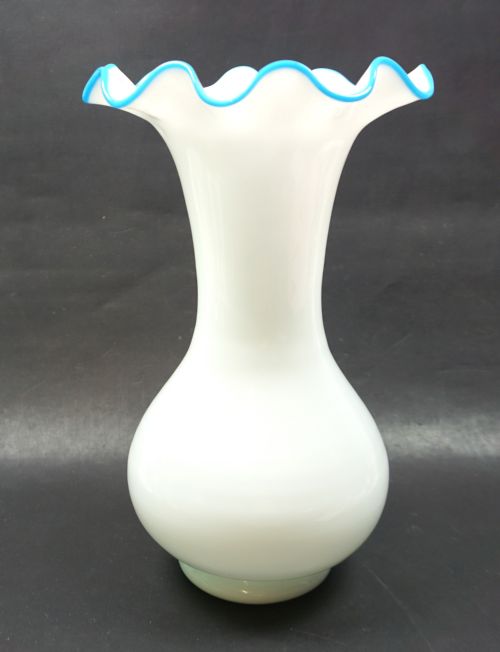


Blue Rimmed Glass
Blue rimmed glass brings together Georgian table wares and Victorian decorative vessels, adding a crisp edge of colour to lead, opaline and satin glass.
Blue Rimmed Glass
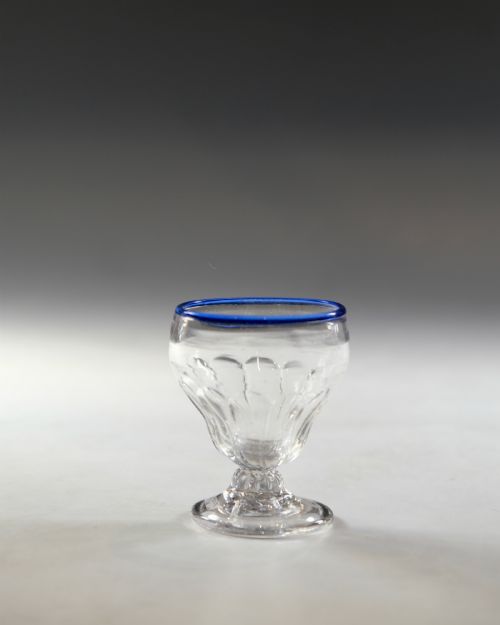
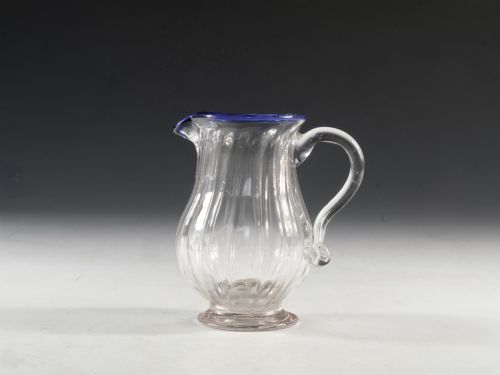
When you search for blue rimmed glass, you encounter everything from eighteenth-century bonnet glasses and sugar bowls to Victorian vases and twentieth-century decanters. These items span domestic table settings and decorative display pieces, reflecting changing tastes across several centuries of glassmaking.
The most common examples on this page are vessels featuring applied or cased coloured borders, particularly Georgian bonnet glasses with blue rims and Victorian opaline or satin glass vases. English and French workshops dominate the selection, offering both clear lead glass and opaque white bodies set off by vivid blue accents.
How they were made
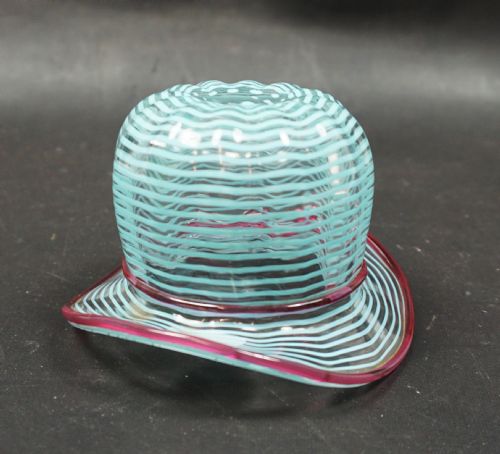
The pieces rely on lead glass, opaline glass, and satin glass, often shaped by blowing or moulding into forms such as bowls, jugs, and hats. Makers introduced colour through cobalt applications, trailed glass canes, and cased layers where a white or clear body received an outer skin of glass.
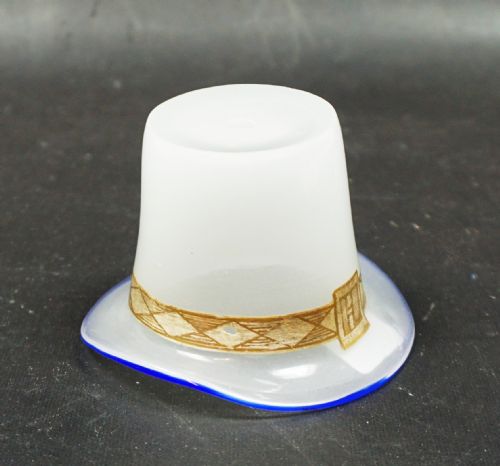
Surface decoration frequently includes enamel work and gilt bands, while later twentieth-century examples integrate silver mountings or silver-plated frames. Nailsea and continental houses like Baccarat utilised specialised cane techniques to embed distinct blue threads directly into the rim structure.
Several nineteenth-century glassmakers shaped molten metal into novelty items like miniature top hats, complete with delicate blue cane rims.
What varies in quality
Quality rests on the precision of the glassblower's hand and the purity of the metal, distinguishing heavy lead crystal from simpler pressed wares. Clean lines in applied rims and even distribution of internal canes show superior control in the hot shop.
The integration of secondary materials, such as finely chased silver mounts or delicate enamel and gilt painting, elevates a decorative object. Finer pieces maintain crisp definition in cut-to-clear patterns and smooth, unblemished surfaces across both the body and the coloured edge.
Baccarat·Webb's·Fritz Heckert·Monart
The Blue Rimmed Glass Glossary
- Opaline glass
- An opaque or translucent pale glass developed in France, often found in white with contrasting coloured rims. It mimics porcelain while retaining the tactile qualities of blown glass.
- Bonnet glass
- A small eighteenth-century vessel featuring a fluted or ogee bowl, typically used for sweetmeats or sugar. The form often incorporates a distinctive folded foot and a contrasting rim.
- Cased glass
- A technique involving two or more distinct layers of glass fused together during gathering and blowing. This method allows artisans to cut through the outer layer to reveal a contrasting interior colour.
- Latticinio
- A decorative glass technique utilising interwoven opaque white or coloured glass threads embedded within clear metal. It creates delicate net-like patterns across bowls and decorative novelties.
- Satin glass
- A Victorian art glass treatment characterised by an acid-etched velvet texture resembling satin. It appears frequently in shaded or monochromatic bodies with polished rims.
Blue Rimmed Glass: Frequently Asked Questions
What is a bonnet glass?
A bonnet glass is an eighteenth-century vessel with a scalloped or ogee bowl, originally designed to hold small sweetmeats or dry sugar at the table. Their diminutive scale and refined proportions make them distinct from larger domestic bowls.
Many examples feature delicate threaded rims or contrasting cobalt borders that frame the upper edge. Collectors prize them for their surviving condition and distinct period form.
How do I care for antique glass?
Antique glass requires careful handling and gentle washing in lukewarm water with mild soap. Avoid sudden temperature changes to protect old metal from thermal shock.
Keep pieces out of direct sunlight if they feature delicate enamel or gilt decorations, which can fade over time. Display them on stable surfaces away from high-traffic areas.
What is opaline glass?
Opaline glass is an opaque or semi-translucent material that gained popularity in nineteenth-century France. It provides a smooth, milky canvas that highlights applied rims and painted accents.
Because it resembles porcelain, makers often utilised it for decorative vases, eggs, and dresser items. The dense body absorbs light differently than clear lead crystal.
How are coloured rims applied?
Coloured rims are typically created by applying a molten trail of glass, such as cobalt, to the edge of the vessel while it is still on the blowing iron. Alternatively, makers used canes fused during the initial gathering stage.
This hot-working method ensures the colour becomes an integral part of the structure rather than a superficial paint layer. Examining the transition point under magnification reveals the method of attachment.