



Blue Porcelain Tureen
A blue porcelain tureen brings deep cobalt and crisp white to the dining table, serving as both a functional vessel and a striking centrepiece.
Blue Porcelain Tureen
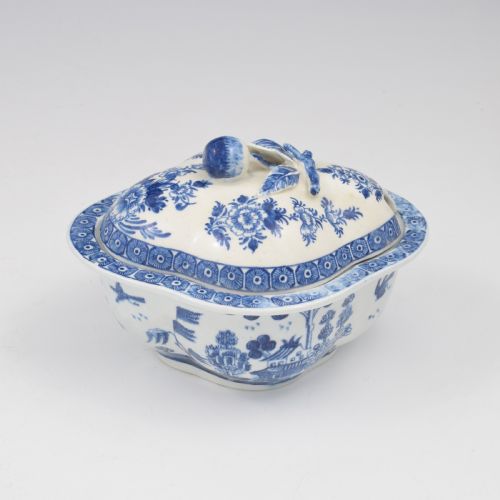
When searching for a blue porcelain tureen, collectors encounter domestic serving vessels spanning the eighteenth and nineteenth centuries. These pieces encompass soup tureens, smaller sauce tureens with stands, and matching covers designed for formal dining.
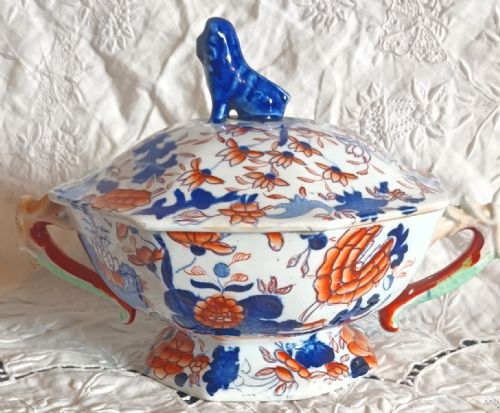
The selection ranges from English factories like Derby, Worcester, and Minton to Chinese Export pieces created during the Qianlong period. English ironstone and earthenware examples from the Victorian era also appear frequently alongside soft-paste porcelain and bone china.
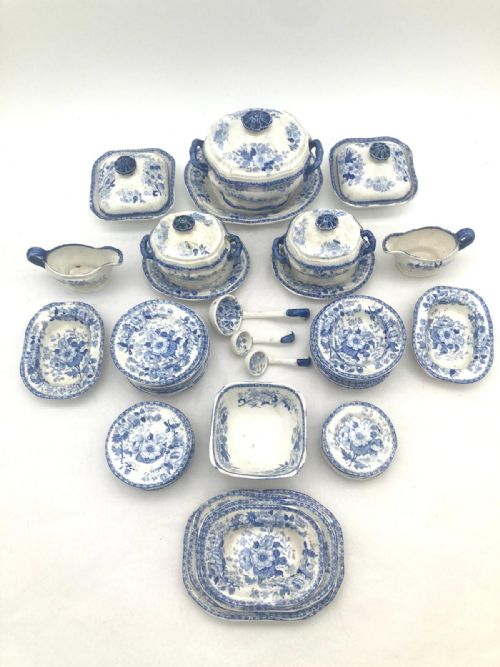
Buyers will find both grand table centerpieces meant for heavy service and delicate miniature dinnerware or child's service tureens. Styles shift from the fluid curves of Rococo Revival and French taste to crisp Georgian and Regency forms.
Judging Quality and Execution
The distinction between standard domestic wares and fine display pieces rests upon the crispness of the cobalt decoration and the refinement of the ceramic body. Early soft-paste bodies and precise Chinese Export throwing demonstrate superior technical accomplishment compared to mass-produced ironstone.
Artistry in the painted or transferred floral and landscape motifs dictates the visual strength of the piece. Crisp moulded handles, well-fitting covers, and intact gilding elevate the status of a tureen within its period.
Blue Porcelain Tureen Retail Price Guide 2026
Typical asking prices for blue porcelain tureen among the pieces listed under this phrase on Sellingantiques today, from the lower quarter to the upper quarter. They describe what is for sale here now, not the wider market.
Listings feature tureens spanning the eighteenth and nineteenth centuries, incorporating periods such as Georgian, Regency, and Victorian.
Chamberlain Worcester·Derby Porcelain·Minton·Wedgwood·Mason's·Mintons·Worcester Dr Wall·Ridgway·Coalport Porcelain·Edm'e Samson
The Blue Porcelain Tureen Glossary
- Soft-Paste Porcelain
- An artificial porcelain composition fired at lower temperatures than true hard-paste porcelain. It was widely used by eighteenth-century English factories such as Derby and Worcester.
- Ironstone
- A dense, durable type of earthenware patented in the nineteenth century by English manufacturers like Mason's. It resists chipping while accommodating rich blue transfer prints.
- Flow Blue
- A nineteenth-century transfer printing technique where cobalt pigment intentionally bled into the surrounding glaze during firing. This created a soft, misty aesthetic popular on Victorian services.
- Sauce Tureen
- A miniature version of a soup tureen designed for gravies and sauces. It usually includes an attached or separate matching stand and a small ladle.
- Qianlong Period
- The era of Chinese imperial rule from seventeen thirty-six to seventeen ninety-five. Export porcelain produced during this time combined traditional Chinese forms with European shapes.
Blue Porcelain Tureen: Frequently Asked Questions
Were these tureens used for actual dining?
Soup and sauce tureens served soups, gravies, and stews at formal dining tables throughout the Georgian and Victorian periods. They kept food warm with fitted covers while sitting on matching stands.
Smaller examples were made for children's services or dessert courses. Today, many collectors use them purely for display or as decorative bowls.
How can I tell eighteenth-century pieces apart from nineteenth-century ones?
Eighteenth-century tureens often employ soft-paste porcelain or hand-painted underglaze blue, frequently featuring Rococo forms or Chinese Export motifs. They feel lighter and show subtle irregularities from early kiln firing.
Nineteenth-century examples frequently utilise ironstone or transfer-printing techniques like flow blue. Heavier bodies and factory marks stamped into the ceramic base become standard during this later era.
What is Chinese Export porcelain?
Chinese Export porcelain refers to ceramics made in China specifically for Western markets from the seventeenth through the nineteenth centuries. Factories adapted traditional shapes like soup tureens to European tastes.
These pieces combined Chinese potting skills with designs requested by foreign merchants. They display distinct cobalt blue hues and finely detailed hand-painted landscapes.